
Report senior financial abuse by protecting the older adult, saving evidence, and contacting Adult Protective Services, police, or the proper regulator.
Senior financial abuse can steal more than money. It can take away housing, health care, trust, and peace of mind. Knowing how to report senior financial abuse helps you act early, even when the suspected abuser is a relative, caregiver, friend, or trusted professional. This guide explains what to look for, who to call, what evidence to save, and how to protect the older adult without increasing risk.
What Is Senior Financial Abuse?
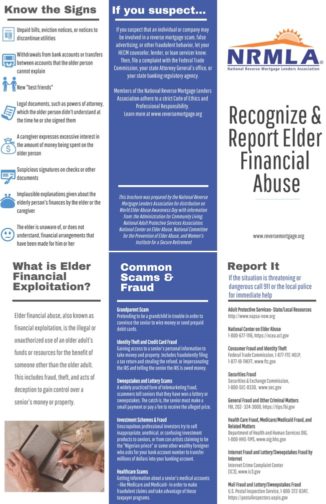
Senior financial abuse is the illegal or improper use of an older adult’s money, property, benefits, or personal information. The abuser may use pressure, lies, threats, deception, or control to gain access.
Common examples include:
• Taking money from a bank account without permission
• Forging a check or signature
• Using a credit card without consent
• Pressuring someone to change a will or beneficiary
• Selling property below its true value
• Stealing Social Security, pension, or veterans’ benefits
• Misusing a power of attorney
• Charging for care that was never given
• Taking an older adult’s home, car, jewelry, or other property
• Using romance, fake investment offers, or online scams to get money
Financial abuse may happen once or continue for years. It can also occur with physical, emotional, or neglectful abuse.
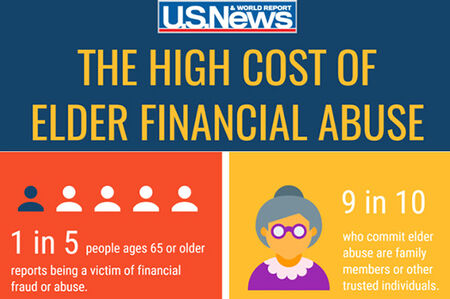
The National Center on Elder Abuse reports that financial exploitation is one of the most common forms of elder abuse. Many cases remain hidden because older adults feel ashamed, fear losing independence, or depend on the person causing harm.
Warning Signs of Financial Exploitation
A single unusual transaction does not always prove abuse. Still, several warning signs together deserve quick attention.
Look for changes such as:
• Unpaid bills despite enough money in the account
• Missing cash, jewelry, checks, or financial papers
• New names on bank accounts
• Sudden changes to a will, trust, or beneficiary
• New “friends” who show unusual interest in money
• Unexplained withdrawals or transfers
• Repeated ATM use in another city
• Checks made out to cash
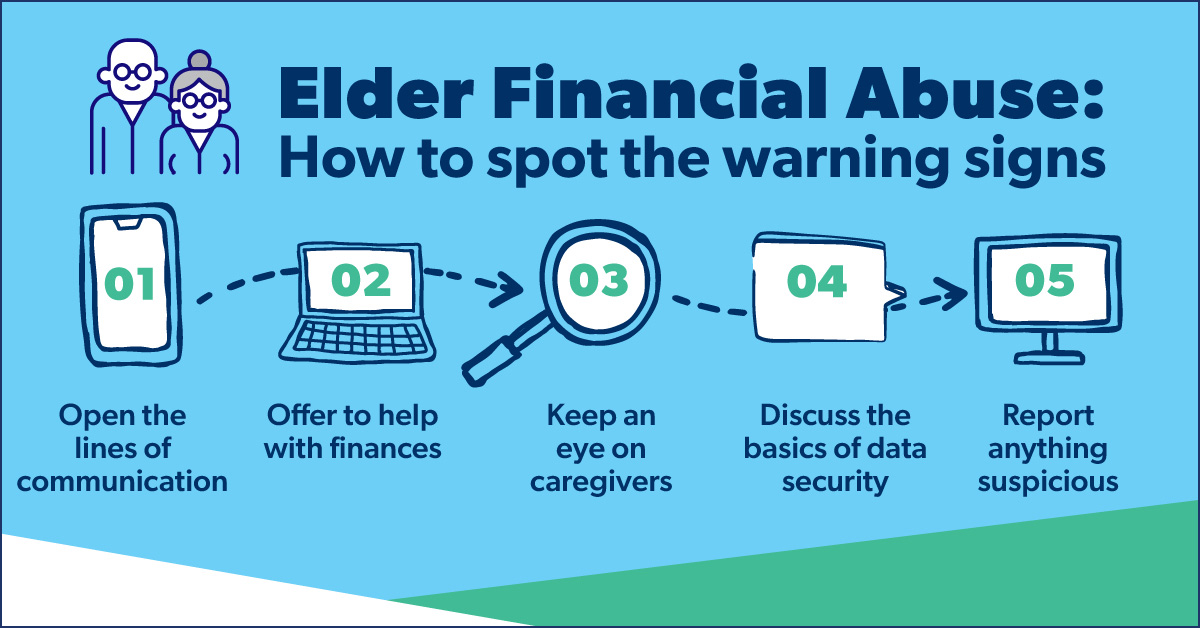
• A caregiver controlling all financial conversations
• The older adult becoming nervous when money is discussed
• New loans, credit cards, or utility accounts
• A caregiver living in the home without a clear agreement
• The older adult saying, “I can’t talk about it,” or “Please don’t upset them”
Watch for digital signs, too. These may include strange emails, remote access to a computer, cryptocurrency payments, gift card purchases, or pressure to keep a transaction secret.
The goal is not to accuse someone based on a guess. The goal is to notice a pattern and act before more harm occurs.
How to Report Senior Financial Abuse Step by Step
Knowing how to report senior financial abuse can make a stressful situation feel more manageable. Take these steps in order, when safe.
1. Check for immediate danger
Call 911 if the older adult faces physical danger, threats, confinement, or an emergency theft in progress. Tell the dispatcher that an older adult may be experiencing financial exploitation and may also be unsafe.
Do not confront a suspected abuser if that could lead to violence. Your first duty is safety, not collecting proof.
2. Speak with the older adult privately
Use a calm tone. Choose a time when the suspected abuser is not present.
You might say:
“I noticed some bills have not been paid. I am worried about you. Has anyone used your money or pressured you to sign something?”
Avoid blame. Financial abuse can feel like a personal betrayal, especially when a family member is involved. The older adult may deny the problem at first because they fear losing a relationship or their home.
3. Contact Adult Protective Services
Adult Protective Services, often called APS, investigates suspected abuse, neglect, and exploitation of vulnerable adults. Each state has its own APS system and reporting process.
You can find the correct office by:
• Calling the Eldercare Locator at 1-800-677-1116
• Visiting the federal Eldercare Locator website
• Searching for your state’s Adult Protective Services office
• Asking a local police department, hospital social worker, or area agency on aging
When you report senior financial abuse to APS, provide facts rather than guesses. Explain what happened, when it happened, how much money may be involved, and why you believe the adult may be unable to protect their interests.
APS may assess safety, interview the older adult, connect the person with services, and coordinate with law enforcement. APS rules and response times vary by state.
4. Report suspected crimes to law enforcement
Contact local police or the sheriff’s office when you suspect theft, fraud, forgery, identity theft, coercion, or another crime. Ask for a report number and keep it in your records.
Some financial abuse cases cross state lines or involve online scams. You may also report them to:
• The Federal Trade Commission through ReportFraud.ftc.gov
• The FBI’s Internet Crime Complaint Center for online crime
• The U.S. Postal Inspection Service for mail fraud
• Your state attorney general’s consumer protection office
• Your state securities regulator for investment fraud
A federal report does not replace a local police or APS report. These agencies have different roles, so more than one report may be appropriate.
5. Notify the bank, credit union, or investment firm
Call the institution’s fraud or elder exploitation team. Ask what steps can be taken to protect the account, review transactions, stop transfers, or replace cards.
The older adult may need to join the call or provide permission. If a power of attorney is involved, the institution may ask for legal documents.
Ask the bank to:
• Place alerts on the account
• Review recent withdrawals and transfers
• Freeze or delay suspicious transactions when possible
• Cancel compromised cards or checks
• Change online banking passwords
• Explain dispute and reimbursement options
• Preserve account records
Banks may not be able to disclose all information because of privacy laws. Even so, reporting the concern creates a record and may help stop further loss.
6. Report identity theft and benefits fraud
If personal information was stolen, visit IdentityTheft.gov for a recovery plan. Consider placing a fraud alert or credit freeze with the three major credit reporting companies.
Report suspected misuse of benefits to the proper agency. Depending on the situation, this may include:
• Social Security Administration
• Department of Veterans Affairs
• Medicare
• Medicaid
• State unemployment or public assistance agencies
Keep copies of every report. Write down the date, time, agency, representative, and next step.

What Information Should You Include in a Report?
A clear report helps an agency understand the risk. You do not need to prove the entire case before making a report.
Include:
• The older adult’s name, age, address, and contact details
• A short description of the suspected abuse
• The suspected abuser’s name and relationship
• Dates, amounts, and types of transactions
• Signs of threats, pressure, confusion, or isolation
• Names of witnesses
• Bank, account, property, or business details
• Copies of relevant documents
• Any immediate safety concern
Use plain facts. For example, say, “Three checks totaling $4,800 were written to a caregiver in one month,” rather than, “The caregiver is a thief.”
Do not alter documents or guess at missing facts. Label estimates as estimates. A report can be updated when new information appears.

How to Preserve Evidence Safely
Evidence can disappear quickly. Save it in a safe place that the suspected abuser cannot access.
Useful evidence may include:
• Bank statements
• Canceled checks
• Wire transfer records
• Credit card statements
• Text messages and emails
• Voicemails
• Social media messages
• Contracts and power-of-attorney documents
• Will or trust changes
• Property records
• Loan documents
• Photos of damaged property
• A timeline of events
Make a simple timeline with four columns:
-
Date
-
Event
-
Amount or property involved
-
Supporting document or witness
Do not secretly access accounts or devices in a way that breaks the law. Do not delete messages, confront the suspected abuser, or publish accusations online. Those actions may create legal and safety problems.

What If a Family Member Is the Suspected Abuser?
Family involvement can make how to report senior financial abuse especially difficult. The older adult may depend on the suspected abuser for rides, meals, housing, or medical care.
Try to separate the person from the behavior. You can care about a relative and still report suspected theft or coercion.
Helpful steps include:
• Talk with the older adult alone
• Ask what support they want
• Avoid family arguments about blame
• Contact APS or a social worker
• Ask a lawyer about power-of-attorney concerns
• Review safe housing and caregiving options
• Keep financial records private
If the older adult has decision-making capacity, respect their choices while explaining the risks. Capacity is specific to a decision and can change over time. A doctor, social worker, or legal professional may help assess the situation.
If the person cannot safely make decisions, a court may need to appoint a guardian or conservator. These tools can help in some cases, but they also limit personal control and should not be used casually.
.jpg)
What If the Older Adult Does Not Want to Report?
Many older adults refuse help. They may feel embarrassed, loyal, afraid, or worried about retaliation.
Listen without arguing. You can say, “I respect your choice, but I am worried about your safety. Would you be willing to speak with a counselor, bank representative, or attorney?”
If there is immediate danger, serious neglect, or a legal duty to report, contact the proper authorities even if the older adult objects. Reporting rules differ by state and by the reporter’s profession.
A report does not always lead to an arrest or removal from the home. APS may offer voluntary services, safety planning, and financial support. Explain this carefully so the older adult does not view help as an automatic loss of independence.

Steps to Protect Money After Abuse Is Suspected
Reporting is important, but protection must continue afterward. Work with the older adult and trusted professionals to reduce future risk.
Consider these actions:
• Change banking and email passwords
• Use multifactor authentication
• Set up account alerts
• Remove unknown authorized users
• Cancel compromised cards and checks
• Place a credit freeze
• Review credit reports
• Redirect mail to a secure address
• Update contact information with banks
• Stop automatic payments that were not approved
• Review powers of attorney with an elder law attorney
• Create a written caregiving and payment agreement
• Use direct deposit for regular benefits
• Keep valuables in a secure location
Never share a Social Security number, one-time security code, or online banking password with an unexpected caller. Real banks and government agencies do not need you to buy gift cards or send cryptocurrency to “protect” your money.

Legal and Professional Help
An elder law attorney can explain options involving powers of attorney, wills, trusts, guardianship, real estate, and recovery of assets. A lawyer may also help send a demand letter, challenge a transfer, or refer the case to law enforcement.
Other helpful professionals include:
• A certified public accountant who can review financial records
• A licensed financial adviser who follows elder abuse reporting rules
• A geriatric social worker
• A hospital or clinic social worker
• A long-term care ombudsman for nursing home or assisted living concerns
• A victim advocate
Ask whether the professional has experience with elder financial exploitation. Some consultations may be free or offered at a reduced cost through legal aid or an area agency on aging.
Be cautious with anyone who promises fast recovery of all lost money. Recovery is possible in some cases, but it may take time and is never guaranteed.
Common Mistakes to Avoid
People often make understandable mistakes when they try to protect a loved one. Avoid these actions:
• Waiting for absolute proof before reporting
• Confronting the suspected abuser alone
• Threatening to take away all of the older adult’s control
• Moving money without legal authority
• Sharing private records with relatives or social media users
• Ignoring small losses because they seem harmless
• Assuming a power of attorney gives unlimited permission
• Paying a “recovery company” upfront
• Failing to record agency contacts and report numbers
One lesson that comes up often is that early, calm action works better than a dramatic confrontation. A private conversation, a dated timeline, and a bank fraud call can create a safer path forward.
How Long Does Reporting Take?
The time varies by agency and case. A bank may act quickly on a suspicious transfer, while an APS investigation may take longer because staff must assess safety, capacity, consent, and evidence.
You can improve the response by:
• Clearly describing urgent risks
• Giving exact dates and amounts
• Providing safe contact information
• Mentioning threats or possible retaliation
• Sending organized records
• Following up with the report number
If you do not receive a response and the older adult remains at risk, contact the agency again. You may also contact another appropriate agency, such as law enforcement, the bank, or a local aging services office.
Frequently Asked Questions About How to Report Senior Financial Abuse
Where should I report senior financial abuse first?
Call 911 if there is immediate danger. Otherwise, contact Adult Protective Services, the older adult’s bank, and local law enforcement when you suspect a crime.
Can I report suspected financial abuse anonymously?
Some agencies accept anonymous reports, but rules vary by state. Providing your contact information may help investigators ask follow-up questions, but you can ask how your identity will be handled.
What if I do not have proof of financial abuse?
You can still report a reasonable concern. Share specific facts, such as unusual withdrawals, missing property, pressure to sign documents, or unpaid bills.
Can a bank stop a suspicious transaction?
A bank may delay, review, or block some transactions, but its powers depend on the account, timing, and state and federal rules. Call the bank’s fraud department as soon as possible.
Should I report a family member for elder financial exploitation?
Yes, if you reasonably suspect illegal or improper use of the older adult’s money. Reporting does not mean you are making a final judgment; it allows trained professionals to assess the facts.
What if the older adult refuses help?
Respect the person’s voice when they can make informed choices, but contact authorities if there is immediate danger or serious risk. A social worker or elder law attorney can help you plan the next step.
Can lost money from senior financial abuse be recovered?
Sometimes, recovery may come through bank disputes, insurance, civil claims, criminal restitution, or other legal remedies. Results depend on the facts, the evidence, the timing, and state law.
Conclusion
Learning how to report senior financial abuse gives you a practical way to protect an older adult. Start with safety, speak privately and without blame, save clear evidence, and contact APS, law enforcement, financial institutions, and the right regulators.
Acting early can stop additional losses and connect the older adult with legal, social, and financial support. If you suspect abuse, write down what you know today and contact the Eldercare Locator, a local agency, or the older adult’s bank. Share this guide with someone who may need it, and explore trusted local aging resources for continued help.

Michael Reynolds is a senior contributor at RetirementGazette.com, where he focuses on helping readers navigate the journey toward a secure and fulfilling retirement. With over a decade of experience in personal finance, retirement planning, and lifestyle writing, Michael combines practical strategies with easy-to-understand guidance tailored for both pre-retirees and those already enjoying their golden years.