Small meals, patient support, tasty foods, and medical care can help seniors eat more safely and often.
Knowing how to get seniors to eat takes patience, respect, and careful attention. Low appetite may come from illness, medicine, dental pain, depression, loneliness, swallowing trouble, or changes in taste and smell. The best plan makes food feel safe, familiar, social, and easy to manage while also checking for health problems.
Why seniors may stop eating
Aging alone does not always cause poor eating. Still, many older adults face changes that make meals harder. A senior may feel hungry less often, get full quickly, or lose interest in food after an illness.
Common causes include:
• Medication side effects, such as nausea, dry mouth, constipation, or a strange taste
• Dental pain, loose dentures, mouth sores, or trouble chewing
• Difficulty swallowing, also called dysphagia
• Depression, grief, anxiety, or loneliness
• Dementia or confusion about meals and eating
• Fatigue, weakness, or trouble using forks and other utensils
• Reduced taste and smell
• Chronic conditions, such as heart disease, kidney disease, diabetes, or cancer
• Poor sleep, dehydration, or a recent hospital stay
• Limited income, transportation, or access to preferred foods
Food refusal can also be a sign of pain or infection. A person with dementia may push food away because the room feels noisy, the food looks unfamiliar, or they do not understand what is expected.
Think of appetite as a small flame. Stress, pain, and fatigue can weaken it. A calm setting, familiar food, and kind support can help it burn again.

How to get seniors to eat more
The most useful approach is gentle and steady. Do not turn each meal into a battle. Pressure may increase fear, shame, or resistance, especially for a person with dementia.
Try these practical steps:
- Offer small meals more often
Large plates can look overwhelming. Serve three small meals and two or three snacks instead. A half sandwich, yogurt, soup, egg, or banana may seem easier than a full dinner.
- Serve food at the right time
Some seniors eat best in the morning. Others prefer a larger meal at noon. Notice when the person seems alert and hungry, then place the main meal in that window.
- Add favorite foods
Use familiar flavors and family recipes. A favorite dish can bring comfort and trigger memories. Ask simple questions such as, “Would you like chicken soup or oatmeal?”
- Make each bite count
Choose foods with useful calories and protein. Good choices include eggs, Greek yogurt, cheese, beans, fish, chicken, tofu, nut butter, avocado, and fortified oatmeal.
- Offer drinks between meals
Water is important, but too much fluid right before a meal may reduce hunger. Offer fluids throughout the day and ask a health professional about fluid limits if the person has heart or kidney disease.
- Make eating easy
Use easy-grip utensils, a non-slip mat, a plate with a high rim, or a cup with two handles. Cut food into small pieces. Make sure the person can sit upright and see the meal.
- Eat together
Companionship can make food more appealing. Sit nearby, share the meal, and keep the conversation warm. Even a short visit may help a lonely senior eat more.
- Give enough time
Some older adults need extra time to chew and swallow. Avoid rushing, correcting, or taking over too quickly. Quiet encouragement often works better than repeated reminders.
How to get seniors to eat is not about winning a food contest. It is about reducing barriers so eating feels manageable and pleasant.

Create a calm and welcoming mealtime
The meal setting matters as much as the food. Bright glare, loud television, strong smells, or a crowded table can make eating difficult. Keep the table simple and remove items that distract from the plate.
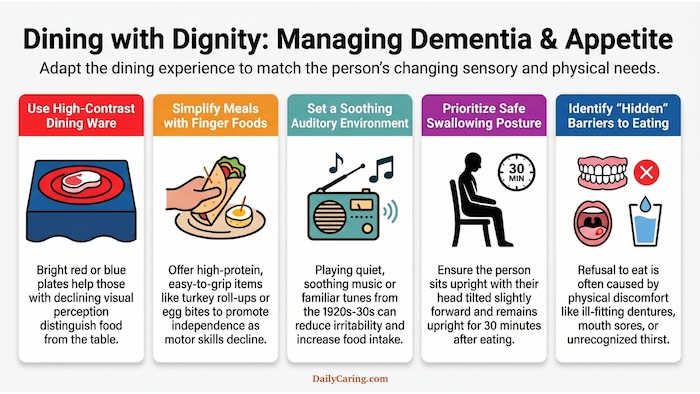
Use clear plates and cups when possible. A strong contrast between the food and plate may help a person with poor vision. For example, mashed potatoes may be easier to see on a blue plate than on a white one.
Try a simple mealtime routine:
• Wash hands and help with mouth care before eating
• Seat the senior upright at a table or in a supportive chair
• Turn off the television if it distracts them
• Place one or two foods within easy reach
• Describe the meal in simple words
• Offer a choice instead of an open-ended question
• Stay calm if the person refuses
• Remove the plate without scolding and try again later
For someone living with dementia, keep the routine familiar. Use the same place, similar dishes, and consistent meal times. You may need to show the first bite or eat the same food to demonstrate what to do.
Avoid arguing about whether the person has already eaten. If they say they are not hungry, respond with kindness: “That is okay. Let us try a little later.”
Choose foods that are easy to eat and rich in nutrients
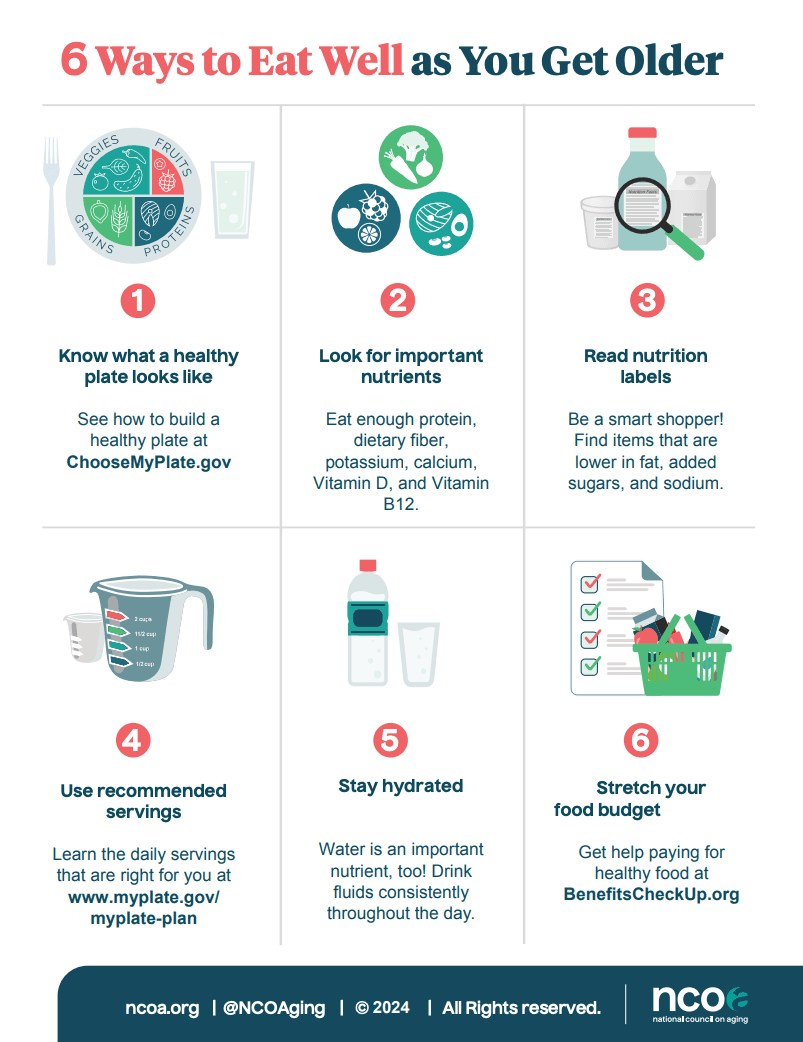
A small appetite means each bite matters. Aim for foods that offer protein, calories, vitamins, and minerals without requiring a large portion.
Helpful choices include:
• Eggs with cheese or avocado
• Full-fat yogurt with soft fruit
• Oatmeal made with milk and nut butter
• Cream soups with beans, chicken, or tofu
• Soft fish with mashed potatoes
• Cottage cheese with peaches
• Hummus with soft pita or cooked vegetables
• Smoothies made with yogurt, fruit, and nut butter
• Rice, pasta, or casseroles with added meat, beans, or cheese
• Pudding or custard enriched with powdered milk
Add calories in small ways. Stir olive oil into vegetables, add cheese to eggs, use milk instead of water in oatmeal, or mix powdered milk into soups and mashed potatoes. Ask a dietitian before using high-calorie supplements, especially when diabetes, kidney disease, or food allergies are present.
Texture matters. If chewing is hard, offer soft, moist foods. If swallowing is difficult, do not guess about the safest texture. A speech-language pathologist can assess swallowing and recommend suitable food and drink thickness.
Do not focus only on calories. Seniors also need fiber, fluids, vitamins, and minerals. A health professional can help create a balanced plan when appetite stays low.
Use appetite-friendly routines and gentle encouragement
Routine can help the body expect food. Try to serve meals at similar times each day. Light activity, if safe, may also support appetite. A short walk, chair exercise, or time in the garden can make the next meal feel more inviting.
These habits may help:
• Offer breakfast soon after the person wakes
• Keep snacks visible and easy to reach
• Limit filling drinks just before meals
• Provide a pleasant smell, such as warm bread or soup
• Use herbs, lemon, garlic, or mild spices to improve flavor
• Check that food is not too hot or too cold
• Offer smaller portions first
• Praise effort, not the amount eaten
Avoid tricks that damage trust. Do not hide medicine in food unless a pharmacist or doctor says it is safe. Do not force food into someone’s mouth. Do not shame a senior for eating slowly or choosing a preferred food.
A helpful phrase is, “Would you like to try two bites?” A small goal feels easier than “You need to finish everything.” If the person refuses, wait 30 to 60 minutes and offer a different option.
Caregivers often learn through trial and error. One common mistake is changing too many things at once. Change one part of the routine, observe the result, and keep what works.

Support seniors with dementia during meals
Dementia can change memory, attention, movement, and behavior. A person may forget how to use a fork, mistake food for something else, or become distracted after a few bites.
To support eating:
• Use short, calm instructions
• Place only the needed utensils on the table
• Serve food in separate sections if mixed foods cause confusion
• Offer finger foods when using utensils is hard
• Use familiar foods and colors
• Reduce noise and extra conversation
• Give visual cues, such as taking the first bite yourself
• Watch for signs of tiredness or frustration
Good finger foods include soft sandwiches, cheese cubes, cooked vegetables, banana pieces, small meatballs, and toast with a spread. Make sure the texture is safe and avoid foods that pose a choking risk.
Never assume refusal is “just dementia.” Pain, constipation, urinary infection, depression, medication effects, or swallowing trouble may cause a sudden change. A sudden loss of appetite deserves medical attention.
Respect also matters. Adults with dementia still deserve choice and dignity. Offer help, but allow independence when possible. Eating should remain a shared human activity, not a task to control.

Check dental, medication, and swallowing problems
When learning how to get seniors to eat, always look for physical barriers. A person may want to eat but be unable to chew, taste, or swallow comfortably.
Ask about mouth symptoms:
• Tooth pain
• Bleeding gums
• Dry mouth
• Ill-fitting dentures
• Mouth sores
• Burning or soreness
A dentist can check these problems. Remove and clean dentures as advised, and make sure they fit well. Avoid very dry foods when the mouth feels dry. Soft foods with sauce or broth may be easier.
Review medicines with a doctor or pharmacist. Some medicines can reduce appetite or change taste. Others may cause nausea, sleepiness, constipation, or dry mouth. Never stop a prescription without medical advice.
Swallowing warning signs include coughing during meals, a wet or gurgly voice, repeated throat clearing, food left in the mouth, weight loss, or frequent chest infections. Keep the senior upright during meals and for about 30 minutes afterward, unless a clinician gives different advice.
If these signs appear, request a swallowing assessment. A speech-language pathologist can help protect the airway and create a safe eating plan.

Know when to call a doctor
Reduced appetite may be temporary, but ongoing poor intake can lead to dehydration, malnutrition, weakness, falls, and slower healing. Contact a health professional if a senior eats very little for more than a few days or continues to lose weight.
Seek prompt medical advice for:
• Sudden confusion or a major behavior change
• Repeated vomiting or diarrhea
• Severe pain
• Trouble swallowing
• Choking
• Signs of dehydration, such as very dark urine, dizziness, dry mouth, or unusual sleepiness
• Unplanned weight loss
• Fever or breathing problems after meals
• Chest pain or severe weakness
A doctor may review medical conditions and medicines. A registered dietitian can suggest higher-protein meals. A dentist can treat mouth problems. An occupational therapist can recommend adaptive tools. A speech-language pathologist can assess swallowing.
Do not rely only on a nutrition drink. Supplements may help some people, but they do not fix pain, depression, infection, unsafe swallowing, or medication side effects. The right plan depends on the person’s health, goals, culture, budget, and food preferences.
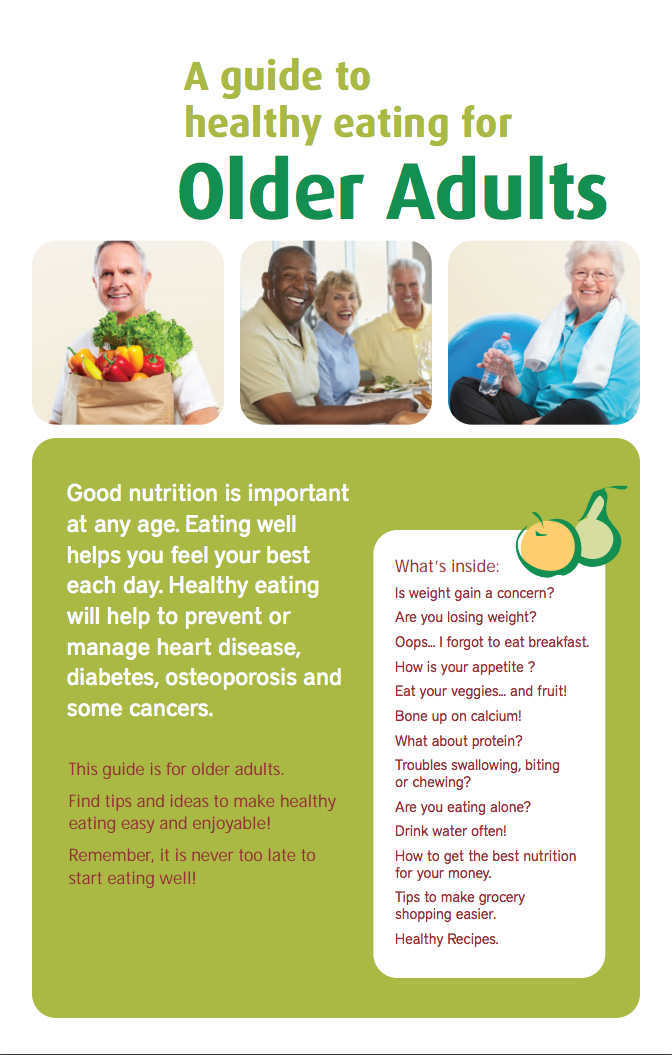
Make a simple senior meal plan
A written plan can reduce stress for both the senior and caregiver. Start with foods the person already accepts, then add small improvements.
Here is a sample day:
• Breakfast: Scrambled eggs, buttered toast, and milk
• Morning snack: Yogurt with soft fruit
• Lunch: Chicken noodle soup, a soft sandwich, and water
• Afternoon snack: Banana with peanut butter, if safe
• Dinner: Baked fish, mashed potatoes, and cooked vegetables
• Evening snack: Pudding or fortified oatmeal
Adjust this plan for allergies, diabetes, kidney disease, heart failure, swallowing needs, and cultural preferences. A senior who enjoys Mexican food may prefer beans, soft tortillas, eggs, and avocado. Someone who grew up with Asian flavors may eat more comfortably with rice, tofu, fish, and mild soup.
Track patterns, not just amounts. Note the time, food, mood, pain, bowel habits, and any coughing. This record can help a clinician find the cause of low appetite.
When I hear caregivers describe a difficult meal, the most useful lesson is often simple: offer less, slow down, and listen more. A meal plan should serve the person, not make the person serve the plan.

Common mistakes to avoid
Even caring helpers can create pressure without meaning to. Small changes in language and timing can protect trust.
Avoid these mistakes:
• Forcing a senior to finish a plate
• Serving large portions
• Arguing about food choices
• Assuming weight loss is a normal part of aging
• Ignoring dental or swallowing problems
• Giving only sweets or low-nutrient snacks
• Offering too many choices at once
• Feeding someone while they are lying down
• Leaving food out for long periods
• Changing a prescribed diet without professional advice
Instead, offer two safe choices, serve small portions, and celebrate small gains. If a person eats three spoonfuls today after eating none yesterday, that is useful progress.
How to get seniors to eat successfully often depends on teamwork. Include the senior in shopping, menu choices, cooking, and table setting when possible. These tasks can restore a sense of control and purpose.
Frequently Asked Questions About How to Get Seniors to Eat
How do you get an elderly person with no appetite to eat?
Offer small portions of familiar, high-protein foods at times when the person feels most alert. Check for pain, medication side effects, depression, dental trouble, dehydration, and swallowing problems if poor appetite continues.
What are the best foods for seniors who do not want to eat?
Soft foods with protein and calories are often useful, such as eggs, yogurt, cheese, beans, smoothies, fish, tofu, and fortified oatmeal. Match the texture to the person’s chewing and swallowing ability.
Should you force a senior to eat?
No. Force can increase fear, resistance, and distress. Offer calm choices, wait, and try again later while seeking medical advice for ongoing poor intake.
How can you help a senior with dementia eat?
Keep meals quiet, familiar, and simple. Use finger foods, clear visual cues, small portions, and short instructions, and watch for pain or swallowing problems.
When should I worry about an elderly person not eating?
Call a health professional for ongoing poor intake, unplanned weight loss, repeated choking, severe weakness, dehydration signs, or sudden confusion. Seek urgent help for severe breathing trouble, chest pain, or a serious choking event.
Do appetite stimulants work for older adults?
Some medicines may increase appetite in specific cases, but they can also cause serious side effects and do not fix the underlying cause. A doctor should review the risks and benefits before prescribing one.
Conclusion
Helping a senior eat starts with empathy, not pressure. Offer small meals, favorite flavors, nourishing snacks, enough time, and a calm place to eat. Then check for medical, dental, emotional, medication, and swallowing problems when appetite stays low.
The best answer to how to get seniors to eat is a personal plan built around safety, dignity, comfort, and choice. Start with one small change today, keep notes on what works, and contact a qualified health professional when concerns continue. Share this guide with another caregiver or explore more trusted senior nutrition resources for support.

Michael Reynolds is a senior contributor at RetirementGazette.com, where he focuses on helping readers navigate the journey toward a secure and fulfilling retirement. With over a decade of experience in personal finance, retirement planning, and lifestyle writing, Michael combines practical strategies with easy-to-understand guidance tailored for both pre-retirees and those already enjoying their golden years.