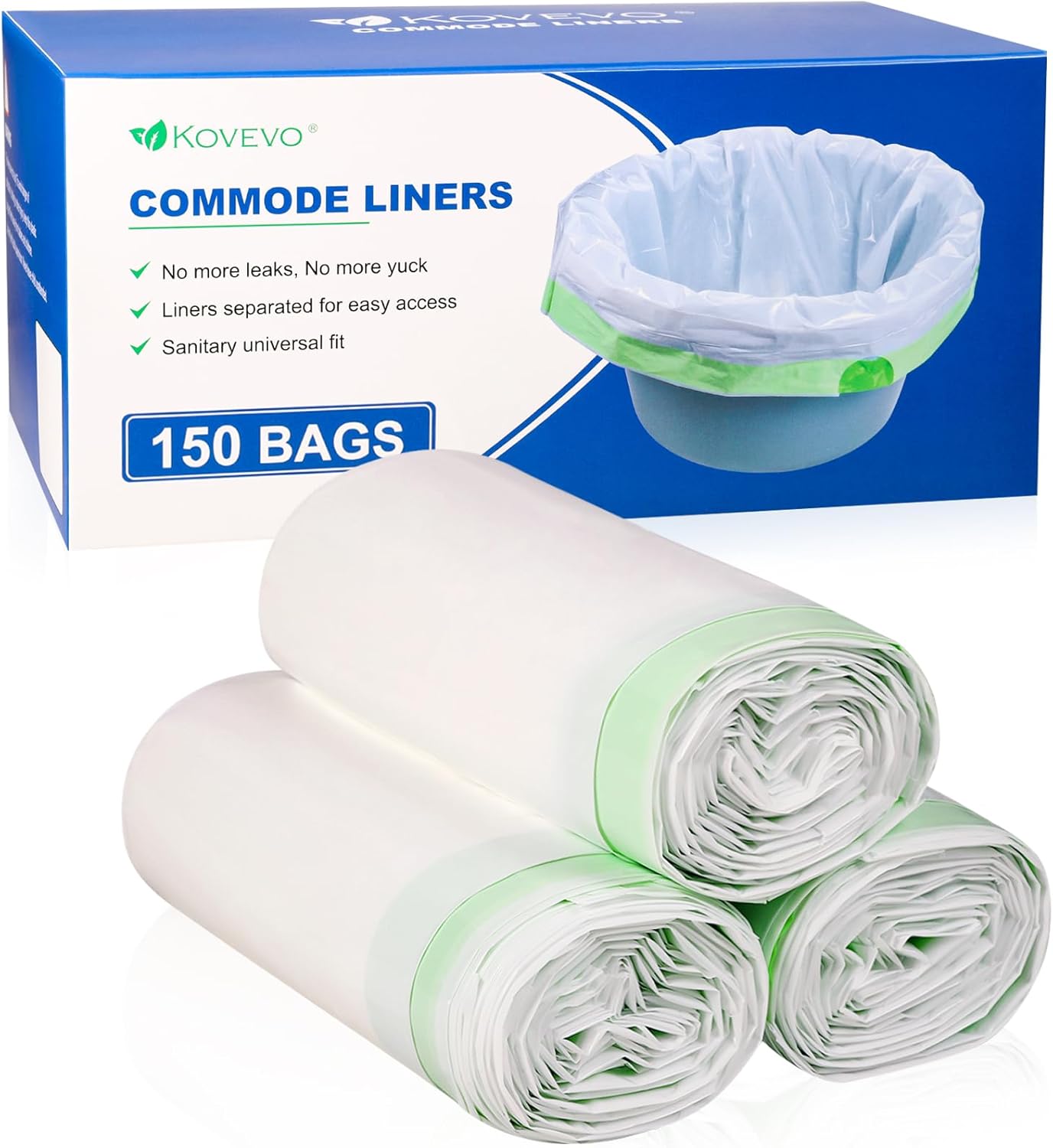
In the United States, used commode liners should usually be sealed and placed in household trash unless your local waste rules, health care provider, or facility policy require another method. Do not flush the liner, absorbent pad, wipes, gloves, or other solid items down a toilet. If the liner contains blood, sharps, or other regulated medical waste, stop and follow your provider’s disposal instructions.
A commode liner is a disposable bag placed inside a bedside commode or portable toilet. It may include an absorbent pad that turns urine and liquid stool into a gel. Proper disposal limits leaks, odors, contact with waste, and exposure to germs.

What You Need Before Removing a Commode Liner
Gather the supplies before you start. Having everything close by reduces the chance of touching nearby surfaces with contaminated gloves.
You may need:
- Disposable gloves
- A second heavy-duty trash bag
- A twist tie, knot, or bag seal
- Paper towels
- EPA-registered disinfectant
- Hand soap and running water
- A leak-resistant trash container with a lid
- A face mask or eye protection if splashing is possible
Wear gloves when handling a used liner. Gloves do not replace handwashing. The Centers for Disease Control and Prevention recommends washing hands with soap and water after glove removal and after contact with human waste.
If the user has diarrhea, an infection, open skin, or a condition that may cause blood in the stool, use extra care. Ask a health care professional about any special precautions.
Check the liner first
Before lifting the bag, look for:
- A torn or loose liner
- Liquid outside the bag
- Visible blood
- Needles, lancets, broken glass, or other sharps
- A missing or damaged absorbent pad
- Waste stuck to the rim or commode seat
Do not reach into the waste. Do not pick up a sharp item by hand. Use tongs or another safe method only if your health care provider has given you instructions for it. For a loose needle or other sharp, contact your local health department or medical waste program.

How to Dispose of a Commode Liner at Home
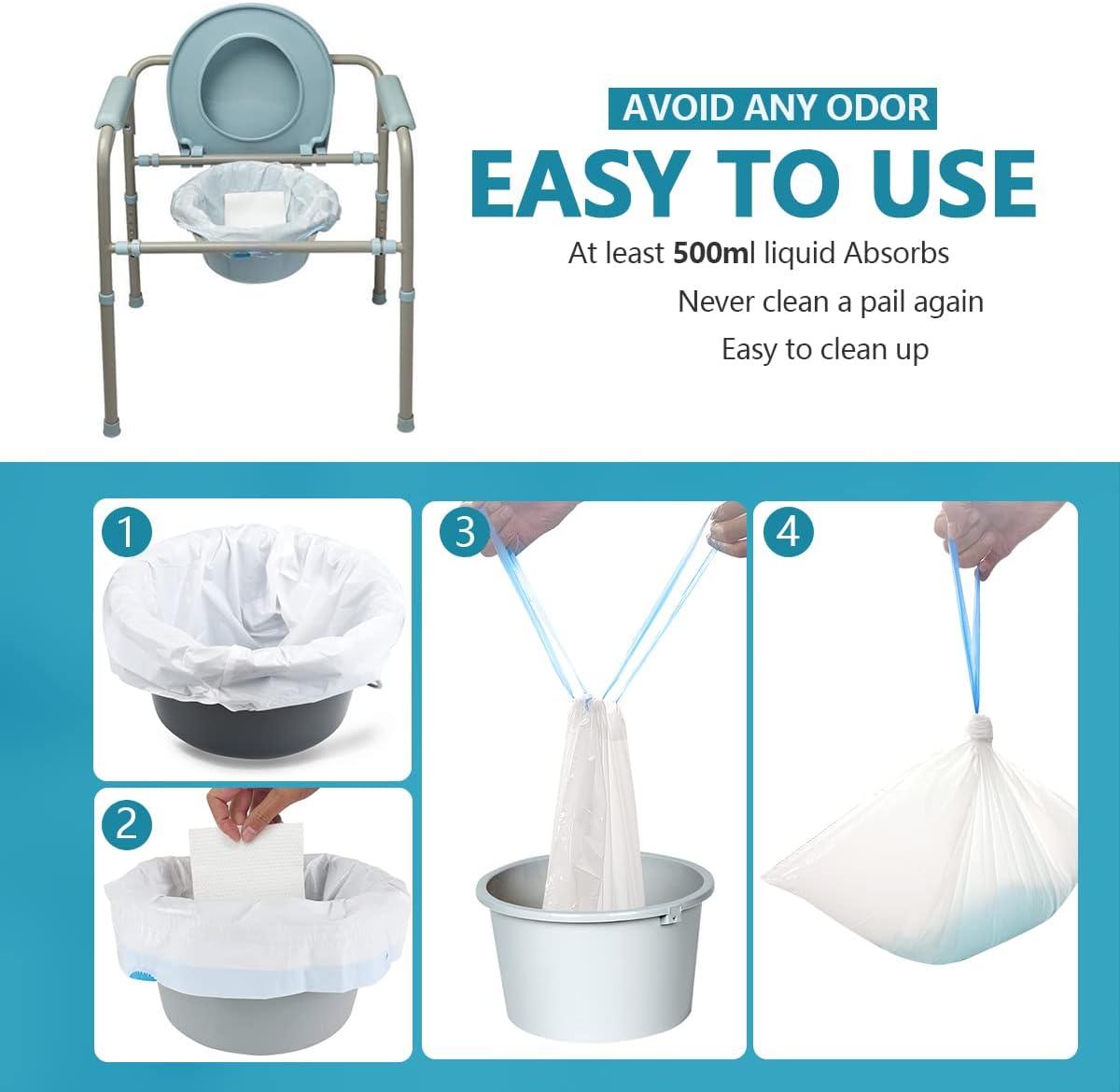
For ordinary household use, follow these steps:
-
Put on disposable gloves.
Add eye protection or a mask if the liner may splash or leak. -
Keep the commode stable.
Place one hand on the commode frame, if needed, while you remove the liner. Avoid pressing the bag against the seat. -
Tie or seal the liner.
Most commode liners have built-in handles or tabs. Pull them upward slowly and tie a firm knot. If the bag has a manufacturer-provided closure, use it as directed. -
Check for leaks.
Hold the sealed area upright. Do not squeeze the bag. If the liner leaks, place it inside a second heavy-duty bag and seal the outer bag. -
Place it in the trash.
Put the sealed bag in a lined, leak-resistant trash can with a lid. Keep the container away from children, pets, food, and areas where the bag could be punctured. -
Clean the commode.
Wipe the seat, frame, splash guard, and any surface that may have been contaminated. Use a disinfectant according to its label. Keep the surface wet for the stated contact time. -
Remove gloves safely.
Turn the gloves inside out as you remove them. Throw them away with the sealed waste unless local instructions say otherwise. -
Wash your hands.
Use soap and water for at least 20 seconds. Clean your hands even if you wore gloves.
When to use a second bag
Double-bag the liner when:
- The first bag is thin or damaged
- The contents are very wet
- The bag has leaked
- The outside is visibly dirty
- The trash container may be moved through a shared space
- A caregiver or facility policy requires it
A second bag can reduce leakage, but it does not make hazardous material safe. It also does not replace local disposal rules.

Can You Put a Used Commode Liner in the Trash?
Often, yes, for routine home use, if the liner is sealed and local rules allow it. Put the sealed liner in a sturdy garbage bag and then into a covered trash container.
Do not leave a used liner:
- Beside the toilet
- In an open bathroom wastebasket
- On a porch or sidewalk
- In a recycling bin
- In a compost bin
- Where children or pets can reach it
Waste rules differ across U.S. cities, counties, and states. Some communities provide special instructions for medical waste, incontinence products, or large amounts of human waste. If your local government or waste hauler gives a different rule, follow that rule.
For a person receiving home health care, ask the nurse or agency:
- Whether the waste is considered routine household waste
- Whether the agency supplies special bags
- Whether pickup is available
- What to do if the liner contains blood
- How to handle sharps or medicine containers
The Occupational Safety and Health Administration’s bloodborne pathogens standard applies to occupational exposure. It requires covered employers to use appropriate controls and procedures for regulated waste. It does not mean that every used commode liner from a private home must automatically go into a red biohazard bag.

When a Commode Liner Needs Special Disposal
A routine liner with urine or stool is different from waste that may be regulated because of blood or sharps.
Blood or visibly bloody waste
If the liner contains a large amount of liquid or semi-liquid blood, or items saturated with blood, do not assume ordinary trash is suitable. Contact the person’s health care provider, home health agency, local health department, or waste service for instructions.
Small streaks of blood from hemorrhoids or a minor skin injury may still require medical advice for the health condition. The correct waste method can depend on the amount, the source, and the rules that apply to the household or care setting.
Needles and other sharps
Never place needles, lancets, syringes with needles, or broken glass inside a commode liner. Never throw loose sharps into a trash bag.
Place used sharps in an approved, puncture-resistant sharps container. The U.S. Food and Drug Administration provides disposal information through its Safe Disposal of Sharps guidance. Local programs may accept full sharps containers at pharmacies, health departments, collection sites, or special events.
Hospital, nursing home, and assisted living settings
A health care facility must follow its own infection-control plan and applicable state and federal rules. Staff should not use household trash procedures unless the facility policy permits them.
Facility workers may need to:
- Use designated waste bags
- Close the bag at the point of use
- Use a labeled waste cart
- Follow exposure-control procedures
- Report spills or injuries
- Use a regulated medical waste vendor
The safest rule is simple: in a facility, follow the facility’s written policy rather than a general home disposal method.

What If the Commode Liner Tears or Leaks?
If a liner tears, keep people and pets away from the area. Do not wipe up the spill with bare hands.
- Put on gloves and eye protection if splashing is possible.
- Keep the commode upright.
- Use paper towels or disposable absorbent material to contain the spill.
- Place the damaged liner and cleanup material into a heavy-duty bag.
- Seal that bag inside a second bag if needed.
- Clean the surface with detergent if visibly dirty.
- Apply an appropriate EPA-registered disinfectant.
- Follow the product label for wet contact time.
- Remove gloves and wash your hands.
- Contact a health care provider if waste entered the eyes, mouth, an open wound, or broken skin.
Do not mix bleach with ammonia, vinegar, toilet bowl cleaner, or other cleaning products. Mixing cleaners can create dangerous fumes.
If a caregiver’s clothing or skin is contaminated, remove the clothing and wash the affected skin with soap and water. Seek medical advice after a significant exposure, especially if blood entered the eyes, mouth, or an open wound.

How to Clean the Commode After Removing the Liner
Cleaning the commode helps control odor and lowers the chance of spreading germs.
First, remove visible soil with disposable paper towels. Then clean the surface with detergent and water if the disinfectant label requires pre-cleaning. Apply an EPA-registered disinfectant that is suitable for the material.
Follow the label for:
- Dilution, if the product is not ready to use
- Wet contact time
- Required ventilation
- Surface compatibility
- Glove or eye protection requirements
- Rinsing instructions
Pay attention to the seat, underside of the seat, bucket support, splash guard, handles, floor, and any nearby surface touched during removal.
Do not spray disinfectant into electrical parts or onto surfaces that the product label does not support. Let the commode dry before using it again.
The CDC provides general information about cleaning and disinfecting. Product labels remain the controlling instructions for the cleaner you use.
Commode Liner Disposal: Home vs. Care Facility
The right method depends mainly on the setting and the type of waste.
| Situation | Usual next step | Important limit |
|---|---|---|
| Routine home use with urine or stool | Seal the liner and place it in household trash | Check local waste rules |
| Leaking or damaged liner | Double-bag it before placing it in the trash | Do not squeeze the bag |
| Visible blood or large blood contamination | Ask a provider, health department, or waste service | Do not assume household trash is allowed |
| Needles or broken glass | Use a sharps container and local sharps program | Never place sharps in the liner |
| Nursing home or hospital use | Follow the facility’s waste policy | Facility rules may be stricter |
| No disposable liner available | Empty the commode bucket into the toilet, if safe, then clean and disinfect it | Never flush the bucket or solid items |
This table is a general guide, not a replacement for local requirements. State and local rules can differ from federal workplace rules and from one facility to another.

Can You Flush a Commode Liner?
No. Do not flush the plastic liner, absorbent pad, wipes, gloves, or other solid items. These items can block household plumbing, septic systems, and municipal sewer lines.
A commode liner may be labeled “flushable” only if the manufacturer gives clear instructions for that exact product and the local sewer authority permits it. Even then, follow the package directions closely. Do not assume that a liner is flushable because it is thin, breaks apart, or contains a water-soluble material.
If you use a commode without a liner, the bucket contents may be emptied into a toilet when the bucket is designed for that use and the waste can be poured without splashing. Then clean and disinfect the bucket. Never flush a plastic bucket or pour waste into a sink, shower drain, storm drain, or outdoor area.

Common Mistakes to Avoid
Avoid these errors when disposing of commode liners:
- Flushing the liner: Plastic and absorbent pads can cause a blockage.
- Leaving the bag open: Open bags increase odor, spill, and contact risks.
- Overfilling the liner: A bag that reaches the seat or rim is more likely to leak.
- Using a weak grocery bag as the only outer bag: Thin bags can split during removal.
- Putting sharps in the liner: Needles can puncture the bag and injure a caregiver.
- Using disinfectant without reading the label: Too little contact time may not disinfect the surface.
- Mixing cleaning chemicals: Some combinations release toxic gases.
- Pouring waste into a sink or yard: This can spread contamination and violate local rules.
- Handling the bag without gloves: Gloves reduce direct contact during removal.
- Ignoring repeated blood in the stool: Blood may signal a medical problem and should be discussed with a health professional.

How to Reduce Odor and Leaks
The best way to reduce odor is to remove and seal the liner soon after use. Do not store a full liner in a warm room or beside the commode for long periods.
These steps can help:
- Use a liner that fits the commode bucket.
- Make sure the liner is fully open before use.
- Keep the absorbent pad flat when the product includes one.
- Do not exceed the manufacturer’s fill line.
- Tie the bag before carrying it.
- Keep a lidded trash container nearby.
- Clean the commode after each use.
- Use ventilation, such as an open window, when safe.
- Do not add bleach, air freshener, or other chemicals to the liner unless the product instructions say to do so.
If the liner repeatedly leaks, check its size, placement, seams, and weight limit. Replace the product if the package is damaged or the liner has expired according to the manufacturer’s instructions.

What to Do If You Cannot Dispose of the Liner Right Away
If trash pickup is delayed, seal the liner and place it in a second sturdy bag. Keep it in a covered, leak-resistant container away from food, heat, children, and animals.
Do not store used liners in a bedroom, kitchen, car, or open outdoor area longer than necessary. If the bag develops a leak, place the entire package in another bag without squeezing it.
For a person with frequent commode use, ask a health care professional or local waste service about a routine plan. A plan may include a larger lidded container, more frequent collection, or a designated medical waste service.
Frequently Asked Questions
Are commode liners considered biohazard waste?
Not always. A routine household liner containing urine or stool is not automatically regulated medical waste. Waste containing significant blood, sharps, or other materials covered by a specific workplace or local rule may require special handling.
Can I put a commode liner in a diaper pail?
You can use a diaper pail only if the manufacturer allows this type of waste and the pail can safely contain the liner. The pail should have a secure lid and should be emptied before it becomes overfull. Follow local waste rules.
Should I double-bag every commode liner?
No. Double-bagging is most useful for a leaking, damaged, wet, or visibly contaminated outer liner. Use it whenever a caregiver, facility, waste company, or local rule requires it.
What should I do if the liner contains a lot of blood?
Do not place it in ordinary trash without checking the applicable instructions. Contact the person’s health care provider, home health agency, local health department, or waste service. Seek urgent medical care for severe bleeding, black stool, dizziness, fainting, or other serious symptoms.
Can I reuse a commode liner?
No. Disposable liners are intended for one use unless the manufacturer clearly states otherwise. Reusing a liner increases the chance of leaks, contamination, and odor.
Final Checklist
Before you finish, confirm that:
- The liner is tied or sealed.
- The bag has no visible leak.
- A second bag was used when needed.
- The package is in a covered, leak-resistant trash container.
- No sharps are inside the bag.
- The commode and nearby surfaces are cleaned and disinfected.
- Gloves were removed safely.
- Hands were washed with soap and water.
- Any special blood, sharps, facility, or local disposal rule was followed.
When in doubt, keep the waste contained and ask the health care provider, local health department, or waste hauler for instructions. The safest routine for most U.S. homes is to seal the used commode liner, double-bag it if needed, place it in covered household trash when local rules allow, and never flush the liner or its absorbent contents.

Michael Reynolds is a senior contributor at RetirementGazette.com, where he focuses on helping readers navigate the journey toward a secure and fulfilling retirement. With over a decade of experience in personal finance, retirement planning, and lifestyle writing, Michael combines practical strategies with easy-to-understand guidance tailored for both pre-retirees and those already enjoying their golden years.