
To apply for senior citizen benefits, identify eligible programs, gather documents, and submit applications through official agencies.
Learning how to apply for senior citizen benefits can feel confusing because each program has its own rules, forms, and deadlines. This guide explains the process in plain English, from checking eligibility to handling delays or denials, so you or a loved one can seek help with confidence.
What Are Senior Citizen Benefits?
Senior citizen benefits are public programs that help older adults pay for basic needs. These needs may include income, health care, food, housing, utilities, transportation, and prescription medicine.
There is no single “senior citizen benefits” application in the United States. Instead, you apply for each program through the agency that manages it. Some benefits are federal, while others depend on your state, county, income, age, disability status, or household size.
Common programs include:
• Social Security retirement benefits for eligible workers and their families
• Supplemental Security Income (SSI) for adults with limited income and resources
• Medicare for most people age 65 or older
• Medicaid for eligible people with limited income and assets
• Supplemental Nutrition Assistance Program (SNAP) for food costs
• Medicare Savings Programs that help with Medicare premiums and other expenses
• Low Income Home Energy Assistance Program (LIHEAP) for heating and cooling bills
• Section 8 and other housing assistance programs
• Property tax relief, transportation help, and state senior programs
The best way to start is to view your benefits as a safety net with several parts. One program may cover medical care, while another helps with groceries or rent.

Who May Qualify for Senior Citizen Benefits?
Eligibility depends on the benefit. Age alone may not be enough for every program. Some programs also review work history, income, savings, disability, citizenship, immigration status, or household circumstances.
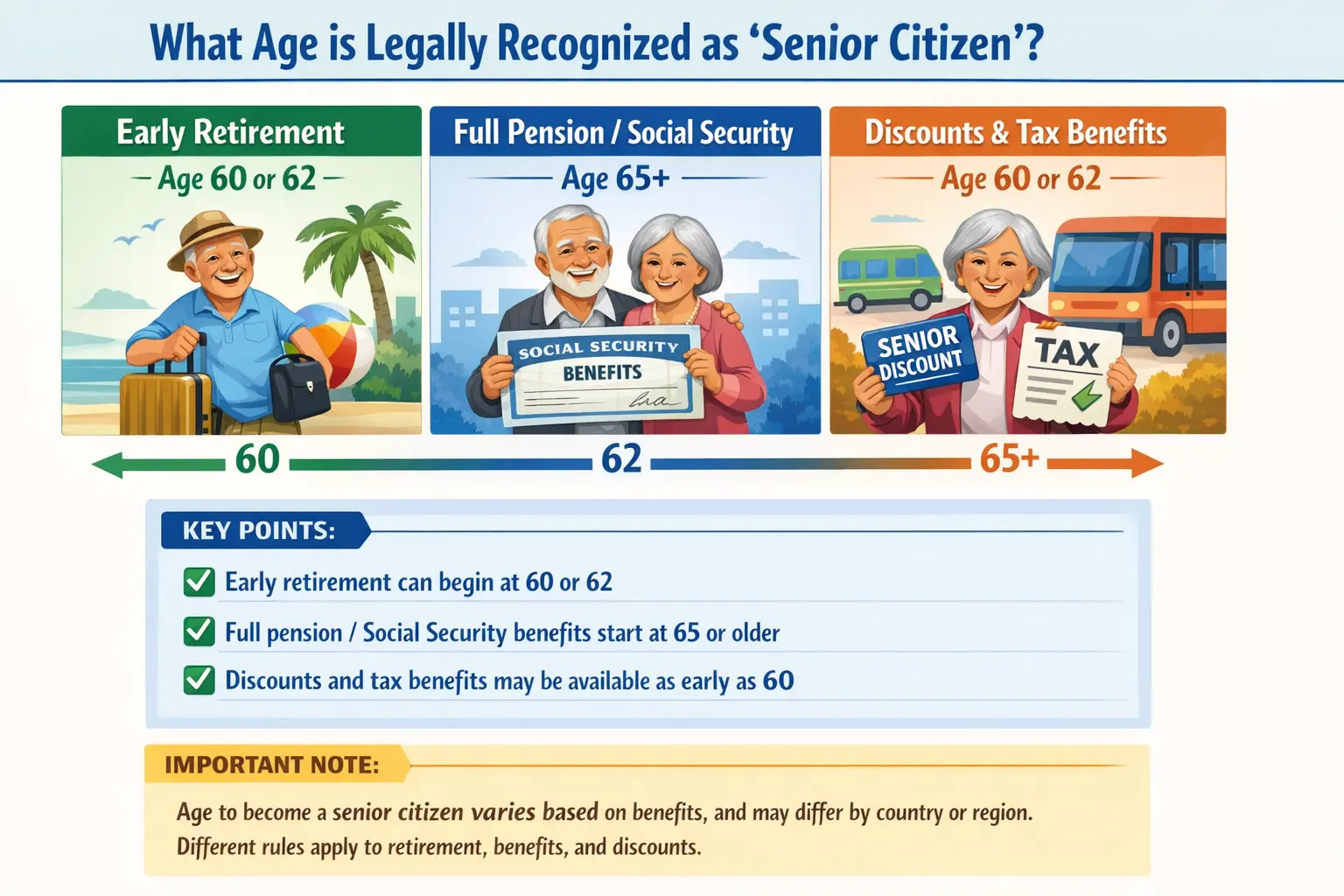
You may qualify for Social Security retirement benefits if you have enough work credits. In many cases, you can begin receiving retirement benefits at age 62, although claiming before your full retirement age may reduce your monthly payment.
Medicare generally starts at age 65. People under 65 may qualify sooner because of certain disabilities or serious medical conditions. If you already receive Social Security benefits, enrollment may happen automatically in some situations.
SSI is based on financial need. The Social Security Administration reviews income and countable resources. The resource limit is generally low, although some assets, such as a primary home and one vehicle used for transportation, may not count.
SNAP, Medicaid, housing assistance, and utility programs often use household income limits. These limits can change and may vary by state or county. A person who does not qualify for one program may still qualify for another.
You may also receive benefits through a spouse, former spouse, or deceased spouse. Family benefits can have special rules, so avoid assuming that your own work record is the only option.

How to Apply for Senior Citizen Benefits Step by Step
Following a clear process can make learning how to apply for senior citizen benefits much easier. Think of each application as a small folder that needs the right information, proof, and follow-up.
1. Make a list of your needs
Start by writing down what you need most. For example, you may need help with Medicare premiums, groceries, rent, heating bills, or monthly income.
A simple list can include:
• Monthly income
• Medical costs
• Prescription expenses
• Food costs
• Rent or mortgage payments
• Utility bills
• Transportation needs
• Property taxes
This step helps you choose the right programs instead of filling out forms at random.
2. Check your age and work history
Review your Social Security record before applying for retirement benefits. You can usually check your earnings history and estimated payments through your online Social Security account.
Look for errors in your earnings record. An incorrect year or missing employer may affect your benefit amount. If you find a mistake, collect pay records, tax forms, or other proof before contacting the agency.
3. Screen for possible programs
Use official benefit screening tools or contact your local aging office. These tools ask about age, income, household size, medical costs, and location.
A benefits counselor can also help you compare programs. This is useful because programs may interact. For example, receiving SSI may affect eligibility for Medicaid in some states, while a Medicare Savings Program may reduce your health care costs.
4. Gather your documents
Most applications ask for proof of identity, age, income, and residence. Prepare copies before you begin.
Common documents include:
• Social Security number or proof of lawful status, when required
• Birth certificate, passport, or other age verification
• Government-issued photo identification
• Social Security award letter
• Pension or retirement statements
• Recent pay stubs
• Bank statements
• Tax returns
• Rent or mortgage records
• Utility bills
• Medical bills and prescription costs
• Insurance cards
• Proof of assets, if the program requests it
Do not mail original documents unless an agency specifically asks for them. Keep copies of everything you submit.
5. Submit the application
The application method depends on the program. You may be able to apply online, by phone, by mail, or in person.
Apply through an official government website, a trusted local office, or a recognized community partner. Avoid links sent by strangers through text messages or social media.
When applying online, save the confirmation number. When applying by phone, write down the date, time, representative’s name, and reference number.
6. Respond to requests quickly
An agency may send a letter asking for more proof. The letter should explain what is missing and provide a deadline.
Send only the requested information. Include your case number on every page. If you cannot meet the deadline, call the agency before it expires and ask for more time.
7. Track the decision
Keep a calendar with application dates, deadlines, interviews, and renewal dates. Benefit offices can be busy, so a polite follow-up call may help you learn whether your application is still pending.
Read the decision notice carefully. It should explain whether you were approved, denied, or approved for a different amount than expected.

How to Apply for Social Security Retirement Benefits
Social Security retirement benefits are based mainly on your work record and the age when you claim. You can generally apply online, by phone, or through a Social Security office.
Before you apply, review:
• Your estimated monthly benefit at different claiming ages
• Your full retirement age
• Your spouse’s possible benefit
• Your expected income from work
• Your health and financial needs
• Possible tax effects
You can apply for benefits several months before you want payments to begin. The exact timing depends on your situation, so check the current rules before submitting your application.
A common mistake is claiming benefits without checking the effect on a spouse’s benefits or survivor protection. Another mistake is assuming that waiting always makes sense. The best choice depends on health, savings, income, family needs, and life expectancy.
If you continue working while receiving benefits before full retirement age, an earnings limit may apply. The rules can change, so use current official information instead of relying on an old article or social media post.

How to Apply for SSI
Supplemental Security Income is different from Social Security retirement benefits. SSI helps people who have limited income and resources and who are aged, blind, or disabled.
To apply for SSI, you usually contact the Social Security Administration. You may complete part of the process online, but an interview is often needed.
Prepare information about:
• Your income
• Bank accounts
• Property
• Living arrangements
• Household members
• Housing costs
• Support from family or friends
• Marital status
Living arrangements matter. For example, receiving free or reduced-cost housing may affect the benefit amount in some cases. Give complete and accurate information, even if a detail seems small.
SSI rules are strict, but applicants should not give up after a first denial. Many denials happen because paperwork is incomplete or a deadline is missed. Read the notice and consider an appeal if you believe the decision is wrong.

How to Apply for Medicare and Medicare Savings Programs
Medicare has several parts. Part A generally covers hospital care, Part B covers medical services, and Part D helps cover prescription drugs. Medicare Advantage plans combine coverage through private insurers approved by Medicare.
You may apply for Medicare through Social Security if you are not automatically enrolled. Your first enrollment period usually surrounds your 65th birthday. Missing an enrollment period can lead to higher premiums or delayed coverage in some cases.
People with limited income may qualify for:
• Medicare Savings Programs
• Extra Help with prescription drug costs
• Medicaid alongside Medicare
These programs can help pay premiums, deductibles, coinsurance, or prescription costs. Apply through your state Medicaid office or the official Medicare assistance channel.
A useful practical lesson is to compare the total yearly cost, not just the monthly premium. Doctor networks, drug lists, deductibles, and out-of-pocket limits can make a major difference.

How to Apply for Medicaid and SNAP
Medicaid helps eligible people pay for health care. SNAP helps households buy food. Both programs are often handled by a state or local human services agency.
You may apply online, by mail, by phone, or in person. Some states use one application portal for several programs, which can save time.
You may need to provide:
• Names and birth dates for household members
• Household income
• Bank or asset information, if required
• Rent or mortgage costs
• Utility expenses
• Medical expenses
• Child care or dependent care expenses
Older adults may receive deductions for certain medical expenses under SNAP rules. Keep receipts for prescriptions, medical supplies, insurance premiums, transportation to medical visits, and other allowed costs.
If you share a home with family, explain who buys and prepares food. SNAP household rules do not always match the number of people living at one address.

How to Apply for Housing, Utility, and Property Tax Help
Housing and utility benefits are often local. Start with your city, county, public housing agency, or state aging department.
Possible programs include:
• Housing Choice Vouchers
• Public housing
• Senior apartment programs
• Emergency rental assistance
• LIHEAP utility assistance
• Weatherization programs
• Property tax exemptions or deferrals
Waiting lists are common for housing assistance. Apply as soon as possible, even if the list is long. Keep your mailing address and phone number updated so the agency can reach you.
Utility programs may have seasonal deadlines or limited funds. Have a recent utility bill ready. If your service is at risk of shutoff, tell the agency clearly and ask whether emergency help is available.
Property tax relief varies widely. Some states offer exemptions, credits, freezes, or payment deferrals for older homeowners. Contact your county tax assessor or state tax department for current rules.
Documents You Should Prepare Before Applying
Good preparation can prevent delays. Create a paper folder or secure digital folder for your records.
Include:
• Photo identification
• Social Security cards or numbers
• Birth or citizenship records
• Proof of address
• Bank statements
• Benefit award letters
• Pension statements
• Tax records
• Insurance information
• Medical receipts
• Rent, mortgage, and utility records
• Court or guardianship documents, when relevant
Check that names and dates match across documents. A small difference, such as a missing middle name or a spelling error, can trigger extra questions.
If you cannot find a birth certificate, contact the vital records office in the state where you were born. If you need help paying for documents, ask a local legal aid office or aging agency whether assistance is available.

How to Apply for Senior Citizen Benefits Online Safely
Online applications are convenient, but older adults are frequent targets for benefit scams. Use a secure device and type the agency’s address into your browser instead of clicking an unknown link.
Protect yourself by following these steps:
• Use official government websites
• Check that the web address ends in .gov when appropriate
• Never share a full Social Security number with an unsolicited caller
• Do not pay someone to “unlock” a government benefit
• Use strong passwords
• Turn on two-factor authentication when available
• Save confirmation pages and application numbers
• Ask a trusted person to review suspicious messages
Government agencies do not normally demand payment by gift card, cryptocurrency, or wire transfer. They also do not threaten immediate arrest because you did not pay a fee.
If you suspect fraud, report it to the appropriate agency and your financial institution. Acting quickly may limit damage.
What to Do if Your Application Is Denied
A denial does not always mean you are ineligible. It may mean the agency did not receive enough information, used outdated records, or calculated your income incorrectly.
Read the denial letter from start to finish. Find:
• The reason for the denial
• The date of the decision
• The appeal deadline
• Instructions for requesting a review
Appeal in writing when possible, and keep proof that you submitted it. Explain why you disagree and attach documents that support your position.
You may ask for help from an elder law attorney, legal aid office, benefits counselor, or local aging agency. Do not wait until the last day if you can avoid it. Appeal deadlines can be strict.
A practical mistake to avoid is starting a brand-new application when an appeal is the correct next step. A new application may not protect your rights from the first decision.
How to Get Help Applying for Benefits
You do not have to handle the process alone. Free or low-cost help may be available through local organizations.
Consider contacting:
• Your Area Agency on Aging
• A state health insurance assistance program counselor
• A Social Security office
• Your state Medicaid or human services office
• A legal aid organization
• A community action agency
• A senior center
• A public library benefits navigator
A trusted family member may help with forms, but you should understand what you are signing. If someone needs to act for you, ask the agency about an authorized representative, power of attorney, or representative payee.
Be cautious with private companies that promise guaranteed approval or charge large fees. Reputable helpers explain the process and do not pressure you to surrender control of your money.
Common Mistakes to Avoid
Knowing how to apply for senior citizen benefits also means knowing what can cause delays or lost assistance.
Avoid these common errors:
• Applying through an unofficial website
• Leaving questions blank instead of writing “not applicable”
• Forgetting to report a pension or small income source
• Failing to include medical expenses
• Sending original documents
• Missing an interview
• Ignoring agency letters
• Forgetting to report a new address
• Assuming a household member’s income never matters
• Waiting to apply for a program with a long waiting list
• Failing to renew benefits on time
Always keep a copy of the complete application. Record the date you submitted it and the name of the agency that received it.
How Long Does the Application Process Take?
Processing time depends on the program, your state, the completeness of your application, and the agency’s workload. Some applications may be reviewed within weeks, while housing assistance can take much longer because of waiting lists.
You can reduce delays by:
• Answering every question
• Uploading clear documents
• Responding before deadlines
• Attending scheduled interviews
• Reporting changes promptly
• Checking your mail and voicemail
If you have an urgent need, such as a utility shutoff, lack of food, or unsafe housing, explain the emergency when you apply. Ask whether expedited processing or emergency assistance is available.
Do not assume silence means denial. Check your application status through the official agency or by calling the number listed on your notice.
Frequently Asked Questions About How to Apply for Senior Citizen Benefits
What is the easiest way to apply for senior citizen benefits?
Start with an official benefits screening tool or your local Area Agency on Aging. Then apply directly through the agency that manages each program, such as Social Security, Medicare, Medicaid, SNAP, or your local housing office.
Can I apply for senior citizen benefits if I have savings?
Possibly. Social Security retirement and Medicare do not usually use the same financial tests as SSI, Medicaid, SNAP, or housing programs. Each program has its own rules about income, assets, and exempt property.
What documents are needed to apply for senior citizen benefits?
Most programs request identification, proof of age, Social Security information, income records, bank statements, and proof of address. Medical, housing, and utility records may also help you qualify for deductions or extra assistance.
Can someone apply for benefits on behalf of an older adult?
Yes, but the agency may require an authorized representative, power of attorney, guardian, or representative payee. The older adult should stay involved whenever possible and understand what information is being submitted.
What should I do if my benefits application is denied?
Read the denial notice and follow its appeal instructions before the deadline. Gather supporting documents and contact legal aid, a benefits counselor, or an aging agency if you need help.
Can I apply for more than one senior benefit at the same time?
Yes. Many older adults apply for several programs, such as Medicare Savings Programs, SNAP, Medicaid, and utility assistance. Applying for one benefit does not guarantee approval for another because eligibility rules differ.
Are senior citizen benefits taxable?
Some Social Security benefits may be taxable depending on your total income and filing status. Other benefits have different tax rules, so consider speaking with a qualified tax professional or using current IRS guidance.
Conclusion
Learning how to apply for senior citizen benefits starts with identifying your needs, checking program rules, gathering documents, and applying through trusted agencies. Social Security, Medicare, Medicaid, SNAP, SSI, housing assistance, utility help, and property tax programs each serve a different purpose.
Keep copies of every form, track deadlines, watch for scams, and ask for help when the paperwork feels overwhelming. Start today by contacting your local aging office or reviewing official benefit information, then share your experience or questions in the comments.

Michael Reynolds is a senior contributor at RetirementGazette.com, where he focuses on helping readers navigate the journey toward a secure and fulfilling retirement. With over a decade of experience in personal finance, retirement planning, and lifestyle writing, Michael combines practical strategies with easy-to-understand guidance tailored for both pre-retirees and those already enjoying their golden years.