You may be unable to apply for Medicare online because your situation needs Social Security review or does not meet online filing rules.
If you are asking, “why can’t I apply for Medicare online,” you are not alone. The online Medicare application works well for many people, but it is not designed for every applicant, enrollment period, or personal situation. This guide explains the most common reasons, what each message may mean, and the best next step to get coverage without delay.
Why can’t I apply for Medicare online?
The most common reason is that the Social Security Administration cannot verify your eligibility through the online form alone. Medicare enrollment often depends on your age, work history, disability status, citizenship or lawful residency, current benefits, and other health coverage.
You may also be trying to use the wrong website. Medicare.gov offers plan information and account tools, but most people apply for Original Medicare Part A and Part B through the Social Security Administration. People with railroad employment usually apply through the Railroad Retirement Board.
Here are the main reasons why you can’t apply for Medicare online:
- You are already receiving Social Security benefits and may be enrolled automatically.
- You are applying through the Railroad Retirement Board.
- You are under age 65 and your disability or medical record needs review.
- You have End Stage Renal Disease, which may require a special application process.
- The system cannot confirm your identity or immigration status.
- You are outside the standard online eligibility rules.
- You are applying during a special enrollment period.
- Your application has unusual details that require help from an agent.
- The website is experiencing a technical problem.
- You have already started an application and need to finish it by phone or in person.
Think of the online form as one door into Medicare. It is not the entire building. If that door does not open, another route may still be available.

Who can usually apply for Medicare online?
Many people can use the online Medicare application when they are close to age 65 and are not already receiving Social Security retirement benefits. The process is often easier for someone who wants to enroll in Part A, Part B, or both during the Initial Enrollment Period.
You may generally be able to apply online if:
- You are at least 64 years and 8 months old.
- You are not already receiving Social Security retirement benefits.
- You do not already have Medicare.
- You live in the United States.
- You are a U.S. citizen or meet lawful residency requirements.
- You want to enroll in Medicare Part A, Part B, or both.
- You do not need to provide complex proof of a Special Enrollment Period.
The Initial Enrollment Period usually starts three months before the month you turn 65. It includes your birthday month and ends three months after your birthday month. The exact start date can vary based on your birthday.
For example, if you turn 65 in October, your Initial Enrollment Period generally runs from July through January. Applying early may help prevent a gap in coverage.
Online filing is not a guarantee of approval. The Social Security Administration still reviews the information and may request documents or clarification.

You may already be enrolled automatically
A common reason why you can’t apply for Medicare online is that you do not need to submit a new application. If you already receive Social Security retirement benefits before turning 65, you are usually enrolled automatically in Medicare Part A and Part B when you become eligible.
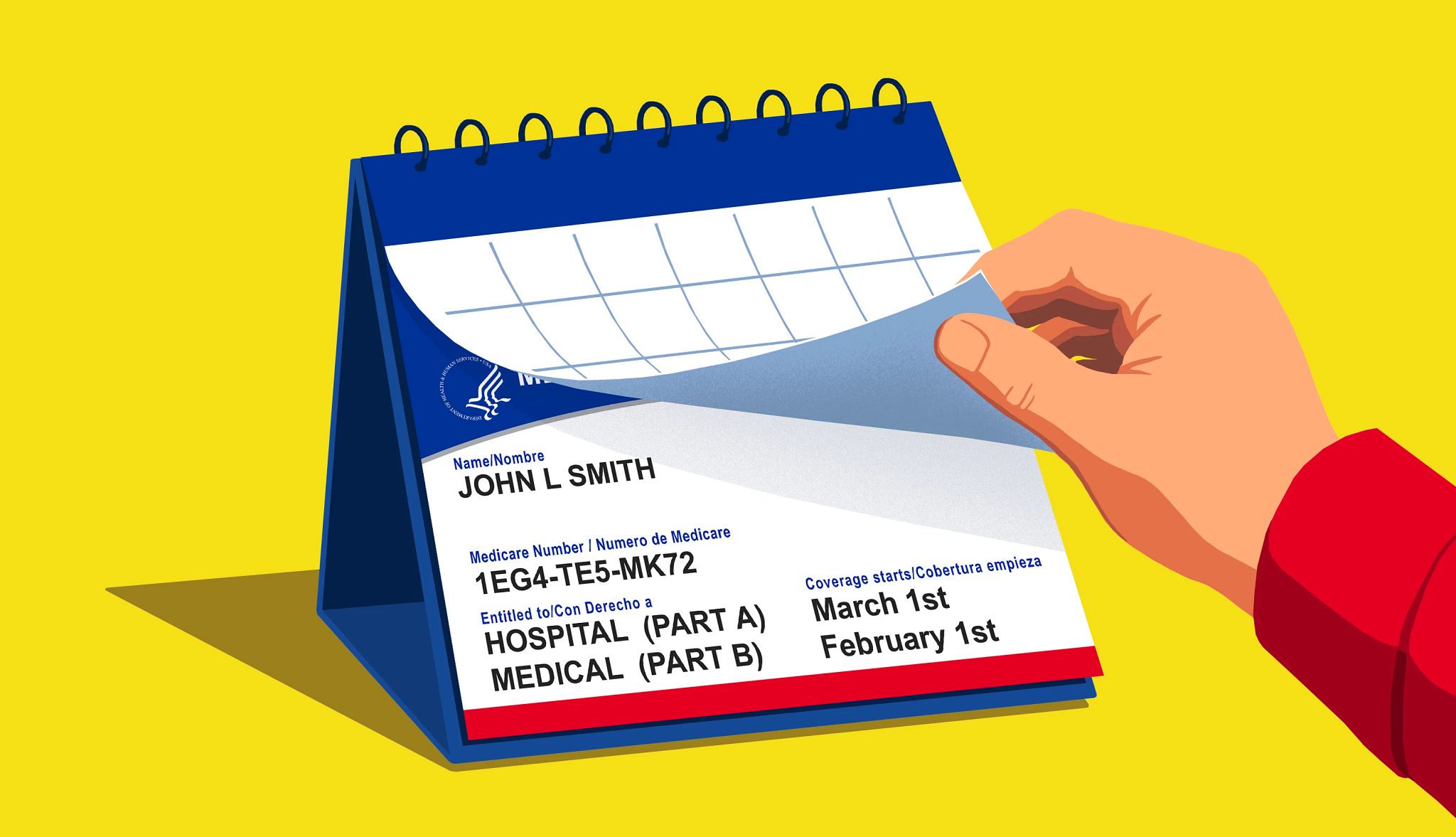
You should receive a Medicare card in the mail before your coverage begins. The card normally shows your Medicare number, Part A effective date, and Part B effective date.
If you receive Railroad Retirement Board benefits, the Railroad Retirement Board may handle your Medicare enrollment instead. In that case, contacting Social Security may not solve the problem. Contact the Railroad Retirement Board to confirm your enrollment status.
Check these items before submitting a new application:
- Your Social Security benefit statement.
- Your Medicare card.
- Your Medicare.gov account.
- Letters from Social Security or the Railroad Retirement Board.
- Your bank statements if you receive automatic benefit payments.
Applying twice can create confusion. First confirm whether you already have Part A or Part B. You can check your Medicare status through your official Medicare account or by calling Medicare.

The online system cannot verify your identity
Identity verification is another frequent answer to why you can’t apply for Medicare online. The system may compare your information with Social Security records. A small mismatch can stop the application.
Common problems include:
- Your name is different after marriage or divorce.
- Your address is not updated.
- Your date of birth is incorrect in one record.
- Your Social Security number does not match the information entered.
- Your credit history does not provide enough information for verification.
- You recently moved.
- You entered an old address or phone number.
- Your personal information contains a typing error.
Do not keep guessing if the system rejects your information. Too many failed attempts may create more delays. Review your Social Security record and contact the agency if you need to correct your name, date of birth, address, or citizenship information.
Have these items ready when you call or visit an office:
- Social Security number.
- Birth certificate or other proof of age.
- Proof of U.S. citizenship or lawful status, if requested.
- Current mailing address.
- Employer and health insurance information.
- Your Medicare number, if you already have one.
A useful lesson from helping people work through online government forms is to treat every error message as a clue, not a final answer. Write down the exact message and the time it appeared. That detail can save time when an agent reviews your case.
You may have a special Medicare enrollment situation
Some people cannot apply for Medicare online because their application depends on a special rule. These cases often require documents, employer forms, or a review by Social Security.
You are under age 65 because of a disability
People under 65 may qualify for Medicare after receiving Social Security Disability Insurance benefits for the required waiting period. Medicare enrollment may happen automatically after eligibility is established.
If you have Amyotrophic Lateral Sclerosis, often called ALS, Medicare may begin without the usual waiting period. People with End Stage Renal Disease may also qualify under special rules.
The online age 65 application is not designed for every disability-related application. Call Social Security if you believe you qualify because of a disability but cannot use the online form.
You have End Stage Renal Disease
People with End Stage Renal Disease may qualify for Medicare based on regular dialysis, a kidney transplant, or related conditions. The start date and eligibility rules can be complex.
Your dialysis center, transplant team, Social Security, or Medicare can explain which forms apply. Do not rely only on the standard age 65 online application.
You are delaying Part B because of employer coverage
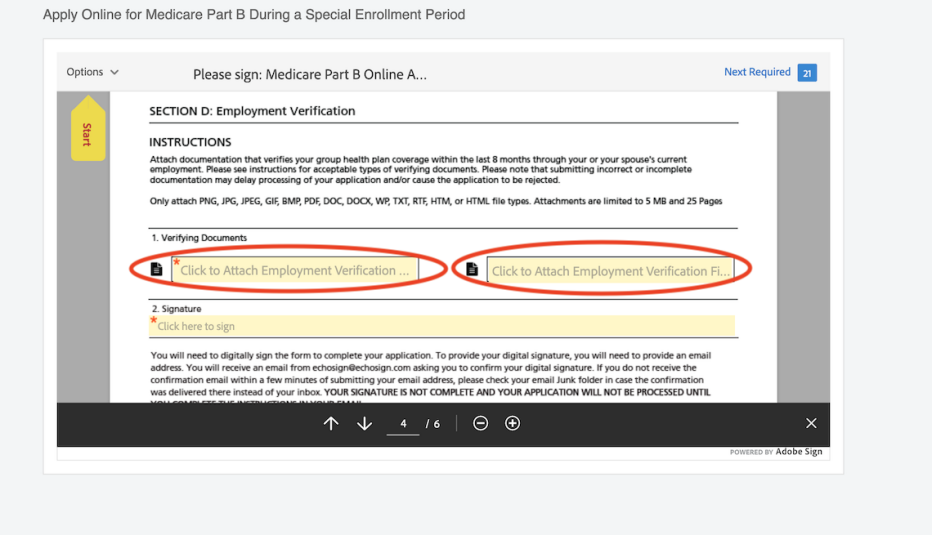
If you or your spouse has active employer group health coverage, you may delay Part B without a late enrollment penalty in many cases. When that coverage ends, you may use a Special Enrollment Period.
You may need:
- Form CMS-40B to request Medicare Part B.
- Form CMS-L564 to show employer health coverage.
- Proof of the dates of your employer insurance.
- Information about whether the coverage was based on current employment.
These documents are a major reason why you can’t apply for Medicare online in a simple way. The system may need evidence that an employer plan covered you.
You have coverage through COBRA or retiree insurance
COBRA and retiree coverage do not always count as active employer coverage for a Part B Special Enrollment Period. Waiting too long can lead to a coverage gap or a late enrollment penalty.
Ask your benefits administrator and Medicare how your coverage affects your enrollment date. Keep written answers and copies of every form.
You may be using the wrong Medicare website
Many people search for Medicare enrollment and land on a page that only compares plans. Medicare.gov is useful for finding Medicare Advantage plans, Part D drug plans, Medigap policies, providers, and coverage information.
However, the application for Original Medicare usually begins with Social Security. The Railroad Retirement Board handles enrollment for certain railroad workers.
Use the correct agency for your need:
- Social Security handles most Medicare applications for people turning 65.
- The Railroad Retirement Board handles Medicare for eligible railroad workers.
- Medicare answers questions about coverage, cards, claims, and plans.
- Your State Health Insurance Assistance Program provides free counseling.
- Your employer benefits office can explain active job-based coverage.
If you are asking why can’t I apply for Medicare online, first identify which agency should receive your application. A correct form sent to the wrong agency can cause unnecessary delays.

The website may be down or the application may have timed out
Sometimes the reason why you can’t apply for Medicare online is technical rather than personal. Government websites may have maintenance periods, browser problems, or temporary outages.
Try these basic steps:
- Confirm that you are on an official government website ending in .gov.
- Use an updated browser.
- Clear your browser cache and cookies.
- Try a private browser window.
- Use a computer instead of a phone.
- Turn off browser extensions that block pop-ups.
- Check your internet connection.
- Try again later.
- Save or print any confirmation page.
- Write down your application confirmation number.
Never send your Social Security number through an unofficial website or social media message. Medicare fraud often begins with a fake enrollment page or a caller who pressures you to act quickly.
If the same error appears after several attempts, stop repeating the process. Call Social Security and explain that the online application is not working. An agent can tell you whether the problem is technical or related to your eligibility.

What to do if you can’t apply for Medicare online
You still have several options. The best choice depends on your age, coverage, and enrollment period.
Apply by phone
Call Social Security to discuss Medicare enrollment. An agent can explain whether you are already enrolled, whether you qualify for an online application, and which documents you need.
Ask the agent to explain:
- Why the online application failed.
- Whether you are in your Initial Enrollment Period.
- Whether you qualify for a Special Enrollment Period.
- Whether Part A, Part B, or both are being requested.
- Whether you need to submit employer forms.
- How long processing may take.
Write down the agent’s name, the date, and any reference number. This simple habit can help if you need to call again.
Make an appointment at a Social Security office
A local Social Security office can help when identity verification fails or your case involves unusual records. Appointments are often better than walking in because you can learn which documents to bring.
Bring original documents or certified copies when requested. Do not mail valuable original documents unless an official representative tells you how they will be returned.
Submit paper forms
Some Medicare applications can be completed on paper. The correct form depends on your situation. For example, a person requesting Part B after employer coverage may need CMS-40B and CMS-L564.
Do not download forms from random websites. Use official government instructions or ask Social Security which form applies.
Contact Medicare for guidance
Medicare can explain coverage rules and enrollment questions. It may direct you to Social Security when the issue involves the application itself.
You can also contact your State Health Insurance Assistance Program. These programs offer free, unbiased help. They do not sell Medicare plans.

How to avoid Medicare application delays
A few careful steps can make the process smoother. Medicare enrollment is less like buying a product online and more like opening a file that must match several government records.
Use this checklist:
- Start during the correct enrollment period.
- Confirm whether you are already receiving Social Security benefits.
- Check your legal name and address.
- Gather employer insurance details.
- Ask whether you need Part A, Part B, or both.
- Keep copies of forms and confirmation pages.
- Record every phone call.
- Watch your mail for requests for evidence.
- Do not ignore a letter from Social Security.
- Ask about appeal rights if your request is denied.
Timing matters. If you miss your Initial Enrollment Period and do not qualify for a Special Enrollment Period, you may need to wait for the General Enrollment Period. You may also face a Part B late enrollment penalty, depending on your circumstances.
The penalty rules have exceptions, so do not assume you owe a penalty without checking. Active employer coverage based on current employment may protect some people from the penalty.

What Medicare parts are you applying for?
Understanding the parts of Medicare can explain why the application asks certain questions.
Medicare Part A
Part A helps cover inpatient hospital care, skilled nursing facility care, hospice care, and some home health care. Many people receive premium-free Part A because they or a spouse paid Medicare taxes through work.
Medicare Part B
Part B helps cover doctor visits, outpatient care, preventive services, durable medical equipment, and other medically necessary services. Most people pay a monthly premium for Part B.
Medicare Part C
Part C refers to Medicare Advantage plans. These plans are offered by private Medicare-approved companies. You generally enroll in Medicare Part A and Part B before joining a Medicare Advantage plan.
Medicare Part D
Part D helps cover prescription drugs. It is offered through private Medicare-approved plans. Delaying drug coverage without other creditable drug coverage may lead to a late enrollment penalty.
When people search why can’t I apply for Medicare online, they may actually be trying to apply for a Medicare Advantage or Part D plan. That process is different from applying for Original Medicare. Start by confirming whether you need Social Security enrollment or a private plan selection.
Common mistakes to avoid
Small mistakes can create large delays. The most common problem is waiting until the last minute because the applicant assumes the website will work like any other online form.
Avoid these errors:
- Applying through an unofficial website.
- Assuming Medicare and Social Security use the same application system.
- Ignoring automatic enrollment letters.
- Delaying Part B without confirming employer coverage rules.
- Treating COBRA as the same as active employer coverage.
- Sending unclear or incomplete documents.
- Failing to report a name change.
- Giving personal information to an unsolicited caller.
- Missing a request for additional evidence.
- Choosing a Medicare plan before confirming your Part A and Part B dates.
A practical approach is to create a Medicare folder, either on paper or on your computer. Store letters, forms, plan information, phone notes, and confirmation numbers in one place.
Frequently Asked Questions About Why Can’t I Apply for Medicare Online
Why can’t I apply for Medicare online if I am turning 65?
You may not meet the online application rules, or Social Security may be unable to verify your information. You may also already be enrolled automatically because you receive Social Security benefits.
Can I apply for Medicare through Medicare.gov?
Medicare.gov provides information, plan comparisons, and account services, but most people apply for Original Medicare through Social Security. Railroad workers may need to apply through the Railroad Retirement Board.
What should I do if the Medicare online application keeps failing?
Record the exact error message, check your personal information, and try an updated browser or computer. If the problem continues, contact Social Security and ask whether you can apply by phone or in person.
Can I apply for Medicare by phone instead of online?
Yes, many people can complete the Medicare enrollment process by phone with Social Security. The agent may ask for documents or schedule an appointment if your case needs additional review.
Why can’t I apply for Medicare online during a Special Enrollment Period?
Special Enrollment Periods often require proof of employer coverage or another qualifying event. You may need to submit forms such as CMS-40B and CMS-L564 instead of using the standard online application.
Can I apply for Medicare online if I already receive Social Security?
You may not need to apply because automatic enrollment usually occurs when you become eligible. Check your Medicare card and benefit notices before starting a second application.
What happens if I miss my Medicare enrollment deadline?
You may have to wait for another enrollment period, and a late enrollment penalty may apply. Contact Social Security or Medicare as soon as possible because exceptions may depend on your work and insurance history.
Conclusion
The answer to why can’t I apply for Medicare online is usually one of three things: your situation needs personal review, you are already enrolled or handled by another agency, or the website cannot verify your information.
Start by checking your Medicare and Social Security records. Then confirm your enrollment period, gather your documents, and contact the correct agency if the online form still fails. Do not share sensitive information with unofficial websites or callers.
Medicare enrollment can feel confusing, but you do not have to solve it alone. Use official support, keep clear records, and explore trusted Medicare resources so you can make an informed choice and protect your coverage.

Michael Reynolds is a senior contributor at RetirementGazette.com, where he focuses on helping readers navigate the journey toward a secure and fulfilling retirement. With over a decade of experience in personal finance, retirement planning, and lifestyle writing, Michael combines practical strategies with easy-to-understand guidance tailored for both pre-retirees and those already enjoying their golden years.