Seniors should exercise with a mix of walking, strength work, balance drills, and gentle stretching each week.
Learning how to exercise for seniors means choosing safe, useful movements that fit a person’s health, strength, balance, and daily needs. This guide explains the best senior exercises, how often to do them, how to stay safe, and how to build a simple routine that feels manageable.
Why Exercise Matters for Seniors
Regular movement can help older adults stay independent and enjoy daily life. Exercise supports the heart, muscles, bones, joints, brain, and mood. It can also make simple tasks, such as climbing stairs, carrying groceries, or getting out of a chair, feel easier.
The Centers for Disease Control and Prevention recommends that older adults include aerobic activity, muscle strengthening, and balance work each week. The amount and intensity should match a person’s abilities and health needs.
Learning how to exercise for seniors is not about training like a professional athlete. It is more like maintaining a home. Small repairs done often can prevent larger problems later.
Regular exercise may help seniors:
• Improve walking speed and stamina
• Build or maintain muscle strength
• Reduce the risk of falls
• Support joint movement and flexibility
• Improve sleep and mood
• Manage blood pressure and blood sugar
• Protect independence
Even short sessions matter. A 10-minute walk, a few chair stands, or gentle balance practice can be a useful start.
How to Exercise for Seniors Safely
Safety comes first, especially for people with heart disease, osteoporosis, arthritis, diabetes, dizziness, or a history of falls. Anyone with a long-term health condition should ask a doctor or qualified physical therapist how to exercise for seniors safely.
A health professional may suggest changes based on medications, pain, joint limits, or recent surgery. Some people may need supervised exercise at first. This is not a sign of weakness. It is a smart way to build confidence.
Use these safety rules:
• Start slowly and increase activity over time.
• Exercise near a sturdy chair, counter, or wall when practicing balance.
• Wear shoes that fit well and have a firm, non-slip sole.
• Choose a bright, clutter-free exercise area.
• Drink water before and after exercise.
• Avoid holding your breath during strength exercises.
• Stop if you feel chest pain, severe shortness of breath, faintness, or sudden weakness.
Mild muscle tiredness is normal. Sharp pain is not. A good routine should challenge the body without making a person feel unsafe.
Warm up for five minutes before exercise. March in place, move the arms gently, or walk at an easy pace. Finish with slow movement and relaxed breathing.
The Four Main Types of Senior Exercise
A well-rounded plan includes four types of movement. Each type has a different job, like four legs holding up a sturdy table.
Aerobic exercise
Aerobic activity raises the heart rate and makes breathing faster. It helps the heart and lungs work better.
Good examples include:
• Walking outdoors or indoors
• Water aerobics
• Swimming
• Riding a stationary bike
• Dancing
• Low-impact fitness classes
A person should usually be able to speak in short sentences during moderate activity. If speaking becomes very hard, slow down and rest.
Strength training
Strength exercises help protect muscle and support bones. They also make daily tasks easier.
Simple options include:
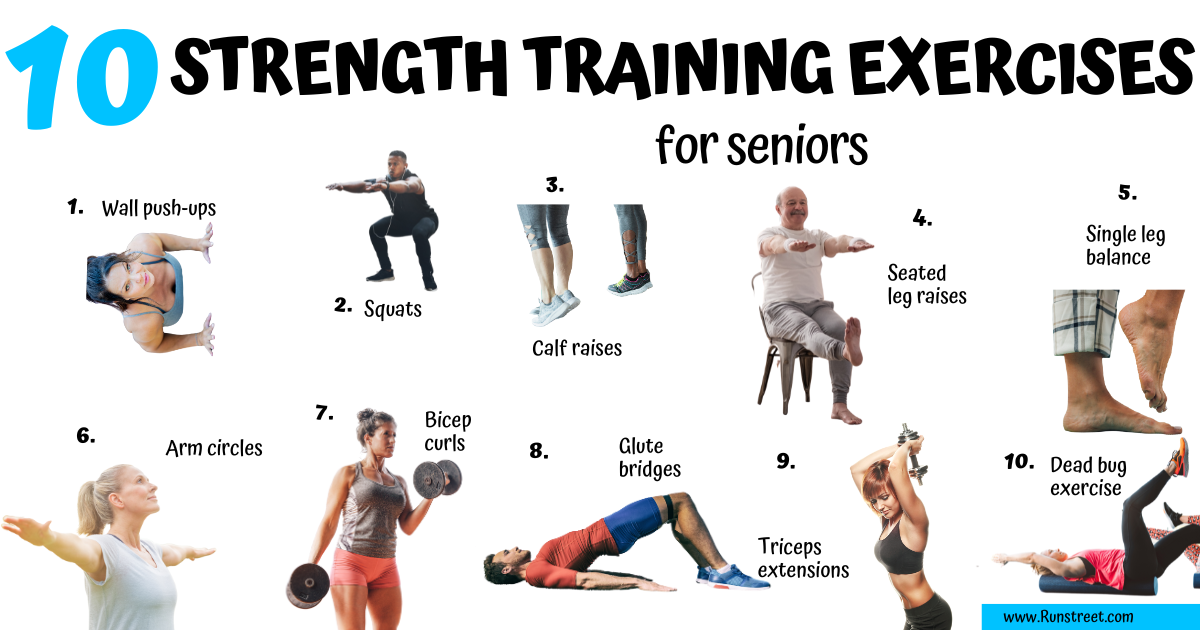
• Standing up from a chair
• Wall pushups
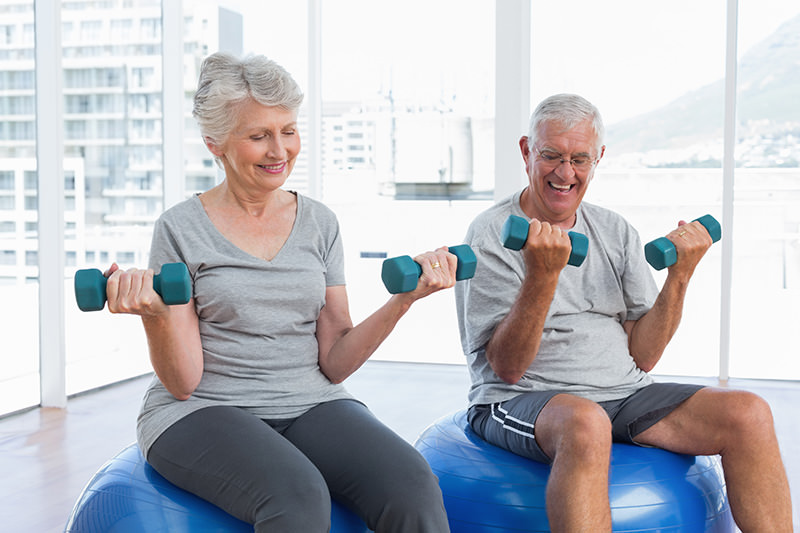
• Lifting light hand weights
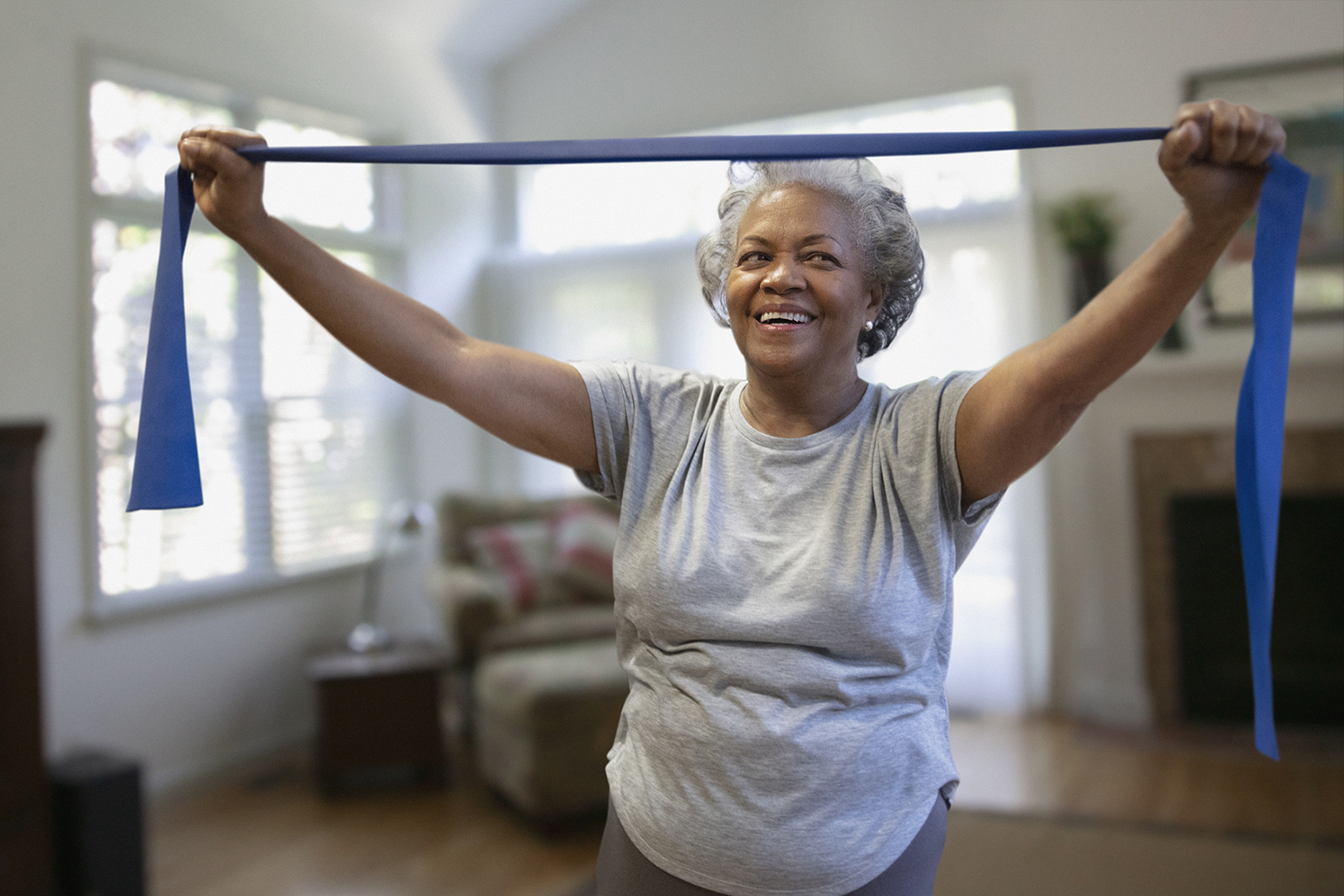
• Pulling a resistance band
• Raising the heels while holding a counter
Start with body weight or very light resistance. The movement should be slow and controlled.
Balance exercises
Balance training helps the body respond when the ground changes or the person turns quickly. It may help lower fall risk when used with other healthy habits.
Examples include:
• Standing on one foot while holding a counter
• Walking heel to toe
• Shifting weight from side to side
• Practicing gentle side steps
• Rising from a chair without using the hands
Never practice difficult balance drills near stairs or on a slippery floor.
Flexibility exercises
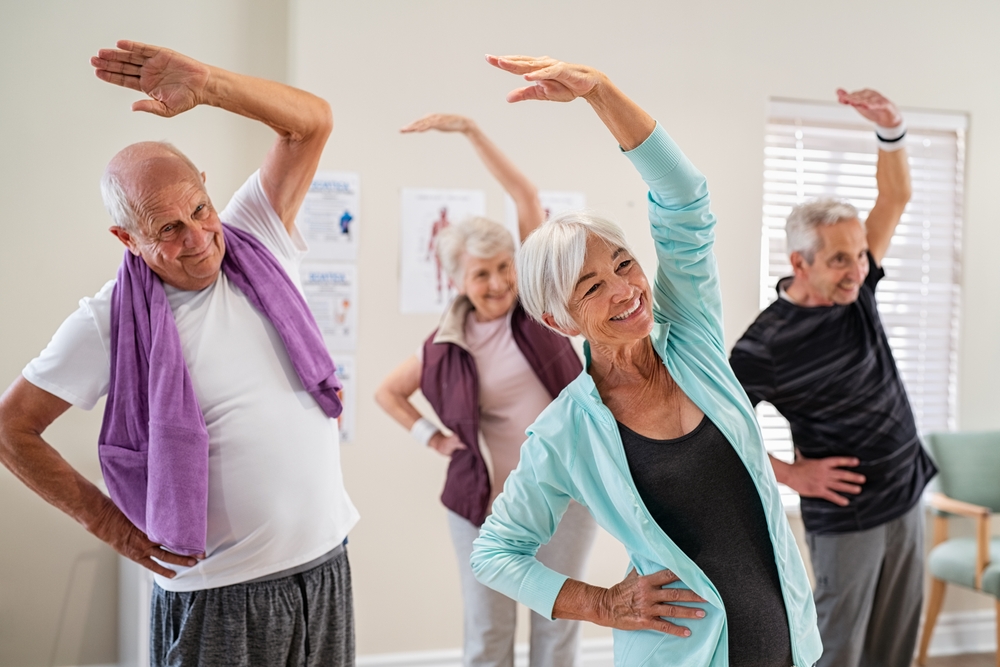
Stretching helps maintain movement in the joints. It can make activities such as reaching, dressing, and turning easier.
Stretch after warming up. Move into a gentle stretch and hold it without bouncing. Stop if the stretch causes sharp pain, numbness, or tingling.

How Often Should Seniors Exercise?
Many older adults can aim for the following weekly pattern:
• At least 150 minutes of moderate aerobic activity
• Muscle strengthening on two or more days
• Balance activities several days each week
These are general targets, not strict rules. A person who is inactive may begin with five or 10 minutes at a time. The goal is to build a steady habit.
Someone with limited mobility can exercise while seated. Chair exercises may include marching, arm raises, ankle circles, and light resistance band work. Seated exercise still helps the body move and can be a useful bridge to standing activity.
A simple weekly plan might look like this:
• Monday: 15-minute walk and gentle stretching
• Tuesday: Chair stands, wall pushups, and heel raises
• Wednesday: Easy walk or water exercise
• Thursday: Rest or gentle mobility work
• Friday: Strength exercises and balance practice
• Saturday: Longer walk, dancing, or cycling
• Sunday: Rest and light stretching
When learning how to exercise for seniors, consistency matters more than perfection. Missing one day does not erase progress. Simply return to the plan when possible.

A Simple Beginner Exercise Routine
This routine can help a healthy beginner get started. Use a chair or counter for support. Complete one set of each exercise, then rest. Over time, work toward two sets if the movements feel comfortable.
1. Seated march
Sit tall in a firm chair. Lift one knee, lower it, and then lift the other knee. Continue for 30 to 60 seconds.
2. Chair stand
Sit near the front of a sturdy chair. Lean forward slightly and stand up without using the hands if you can. Slowly sit back down.
Try five repetitions. Use the hands or a higher chair if needed.
3. Wall pushup
Stand an arm’s length from a wall. Place the hands on the wall at chest level. Bend the elbows to bring the chest closer, then push away.
Keep the body in a straight line. Try eight to 12 repetitions.
4. Heel raise
Hold a counter or chair. Slowly lift the heels so you stand on the toes. Lower the heels with control.
Try eight to 12 repetitions. This strengthens the lower legs and supports walking.
5. Side leg lift
Hold a stable surface. Move one leg out to the side without leaning. Return it slowly, then switch sides.
Try eight repetitions per leg. Keep the movement small and controlled.
6. Ankle movement
Sit or stand safely. Point the toes forward, pull them back, and make slow ankle circles.
This gentle exercise supports ankle movement and may prepare the body for walking.
Finish with two to five minutes of easy walking or relaxed breathing. Beginners should stop while they still feel they could do a little more.
How to Exercise for Seniors With Arthritis or Joint Pain
Exercise can often help people with arthritis, but the right type and dose are important. Gentle movement may reduce stiffness and improve joint function. High-impact exercise may not suit everyone.
Water exercise is often comfortable because water supports part of the body’s weight. Walking on a level surface, cycling, and gentle range-of-motion exercises may also work well.
Try these tips:
• Exercise when joints feel less stiff.
• Warm up before strengthening.
• Use slow movements.
• Choose low-impact activity.
• Reduce the range of motion if pain increases.
• Rest between exercises.
Pain that lasts for hours after exercise may mean the session was too hard. A doctor or physical therapist can help adjust the plan.
People with osteoporosis should ask for guidance before doing exercises that involve forceful twisting or bending. Safe strength work can still be valuable, but technique matters.

How to Exercise for Seniors With Limited Mobility
Limited mobility does not mean a person cannot exercise. Movement can begin in bed, in a chair, or with help from another person.
Chair-based exercises may include:
• Arm circles
• Seated marching
• Reaching forward and overhead
• Squeezing a soft ball
• Straightening one knee at a time
• Turning the head gently from side to side
Keep both feet supported when needed. Use a chair with a firm seat and no wheels. If a person has weakness on one side, a physical therapist can recommend safe movements.
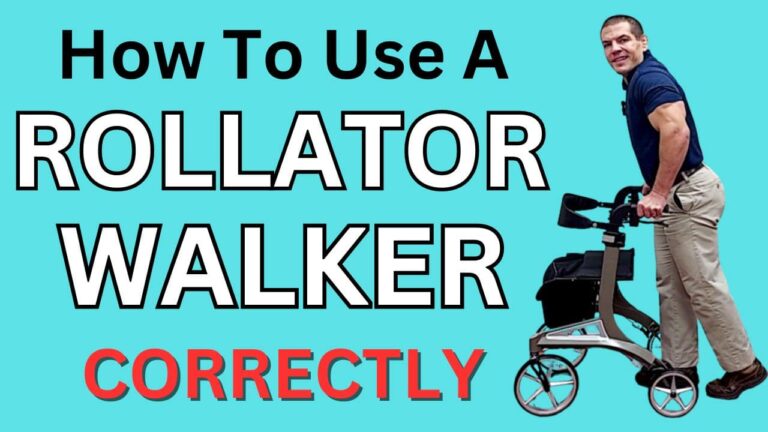
For people who use walkers or canes, exercise should support better movement rather than replace proper mobility training. Keep assistive devices close, but do not pull on a walker to stand unless a professional has taught that method.
A small amount of movement done often can be more useful than one tiring workout each week.

How to Improve Balance and Prevent Falls
Falls can happen during normal activities, such as reaching for a shelf or turning in the kitchen. Balance practice helps, but fall prevention also includes home safety, vision checks, strong footwear, and medication reviews.
Try balance exercises near a secure support:
• Stand with feet close together for 10 seconds.
• Move one foot slightly ahead of the other.
• Practice slow side steps.
• Walk along a counter while touching it lightly.
• Stand up and sit down with control.
As balance improves, reduce hand support. Do not close your eyes or stand on unstable surfaces unless a trained professional is supervising you.
Make the home safer by removing loose rugs, improving lighting, securing electrical cords, and adding grab bars where needed. A strong body and a safer home work together.
Common Mistakes to Avoid
Many people begin with good intentions but make the routine too hard. The best plan is one that can be repeated.
Avoid these common mistakes:
• Doing too much too soon
• Skipping the warmup
• Holding the breath during strength work
• Exercising through sharp pain
• Using unstable furniture for support
• Ignoring dizziness or unusual fatigue
• Training only one type of fitness
• Comparing your progress with someone else’s
One lesson I often emphasize when discussing how to exercise for seniors is that confidence grows through easy wins. A person who completes a short walk three times a week may gain more long-term benefit than someone who attempts a hard workout and quits after one session.
Track how the body feels during and after exercise. If recovery takes much longer than usual, reduce the intensity and seek advice if the problem continues.
How to Stay Motivated
Motivation is easier when exercise connects to a real goal. Instead of saying, “I need to work out,” choose a meaningful reason, such as walking to the mailbox, playing with grandchildren, or standing safely in the shower.
These ideas can help:
• Exercise at the same time each day.
• Put walking shoes near the door.
• Ask a friend or family member to join you.
• Listen to music or an audiobook.
• Join a senior center or community class.
• Mark completed sessions on a calendar.
• Celebrate improved function, not just weight or speed.
Social exercise can reduce loneliness and make activity more enjoyable. Many communities offer walking groups, chair yoga, aquatic classes, and low-cost fitness programs for older adults.
If outdoor walking is not practical, walk inside a shopping center, community center, or large building. The best exercise setting is one that feels safe and easy to reach.
How to Track Progress
Progress may appear in daily life before it appears in a fitness test. You may notice that standing from a chair feels easier, laundry feels lighter, or you can walk farther without stopping.
Track simple details:
• Minutes of activity
• Number of strength repetitions
• Walking distance
• Balance time
• Pain level
• Energy before and after exercise
• Sleep quality
Increase only one factor at a time. For example, add five minutes to a walk before adding speed. For strength work, add a few repetitions before using heavier weights.
Fitness trackers can help some people, but they are not required. A paper calendar works just as well. The purpose of tracking is to learn what helps, not to create pressure.
Frequently Asked Questions About How to Exercise for Seniors
What is the best exercise for seniors?
Walking is a strong starting point because it is simple, affordable, and easy to adjust. A complete routine should also include strength, balance, and flexibility exercises.
How many days a week should seniors exercise?
Most older adults can aim to move on most days, with aerobic activity spread across the week. Strength exercises are often done at least two days weekly, while balance work can be added several days per week.
Can seniors exercise while sitting in a chair?
Yes. Chair exercises can improve muscle strength, joint movement, and circulation. They are useful for people with limited balance or reduced mobility.
Should seniors exercise if they have arthritis?
Many people with arthritis benefit from gentle, low-impact exercise. Water workouts, walking, cycling, and controlled strength exercises may help, but severe or lasting pain should be discussed with a health professional.
What should seniors do if they feel dizzy during exercise?
Stop exercising, sit or lie down safely, and rest. Contact a health professional if dizziness is severe, keeps returning, or occurs with chest pain, fainting, confusion, or unusual weakness.
Is strength training safe for older adults?
Strength training can be safe and helpful when the resistance, technique, and pace are appropriate. Begin with body weight, bands, or light weights, and ask for professional guidance after surgery or with complex health conditions.
How can seniors prevent falls during exercise?
Exercise near a sturdy support, wear stable shoes, keep the floor clear, and avoid challenging balance drills alone. A physical therapist can provide personalized fall prevention exercises.
Conclusion
Learning how to exercise for seniors starts with safe, simple movement. Combine walking or another aerobic activity with strength training, balance drills, and gentle stretching. Start with small steps, listen to your body, and build your routine over time.
Exercise should support real life, from rising out of a chair to walking with confidence. Choose one movement to try today, invite someone to join you, and keep building a routine that helps you stay strong and independent.

Michael Reynolds is a senior contributor at RetirementGazette.com, where he focuses on helping readers navigate the journey toward a secure and fulfilling retirement. With over a decade of experience in personal finance, retirement planning, and lifestyle writing, Michael combines practical strategies with easy-to-understand guidance tailored for both pre-retirees and those already enjoying their golden years.