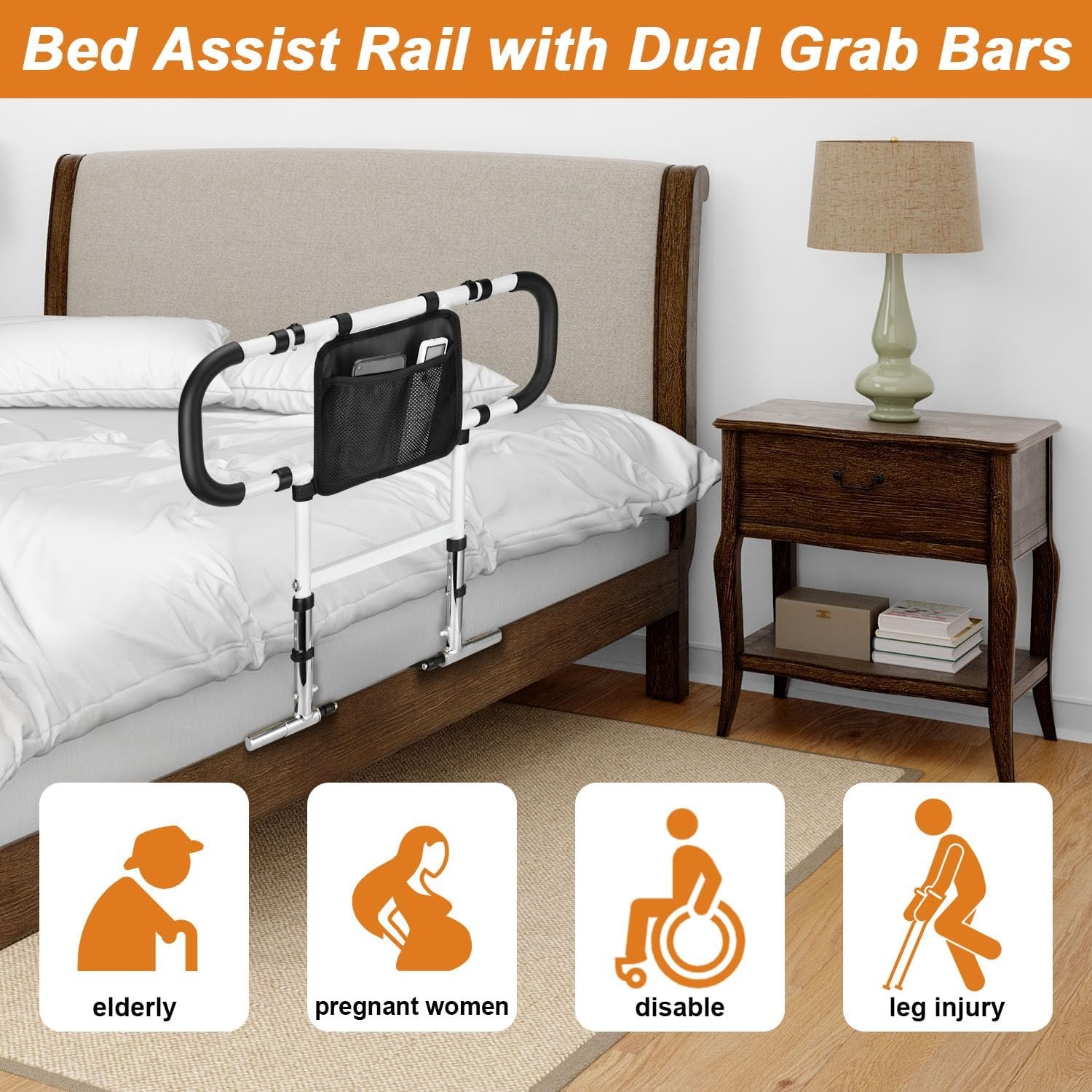
In the United States, an adult bed rail works as a support handle or barrier at the side of a bed. Most models anchor to the bed frame or sit beneath the mattress. They help a person change position, sit up, transfer from the bed, or reduce the chance of rolling out. They do not remove every fall risk and should not replace medical advice, supervision, or a safe care plan.
The rail must match the bed, mattress, user, and intended task. A rail used to help an adult stand is not always suitable for preventing falls. A poorly fitted rail may move, create a gap, or trap a person between the rail and mattress.

What Is an Adult Bed Rail?
An adult bed rail is a device placed along one side of a bed. It may also be called a bed assist rail, bedside rail, support rail, or bed safety rail.
Adult bed rails fall into several common groups:
- Bed assist rails: Short or medium-length rails that provide a handhold for sitting up, turning, or getting out of bed.
- Safety rails: Longer rails designed to provide a side barrier, although their ability to prevent falls depends on the design and installation.
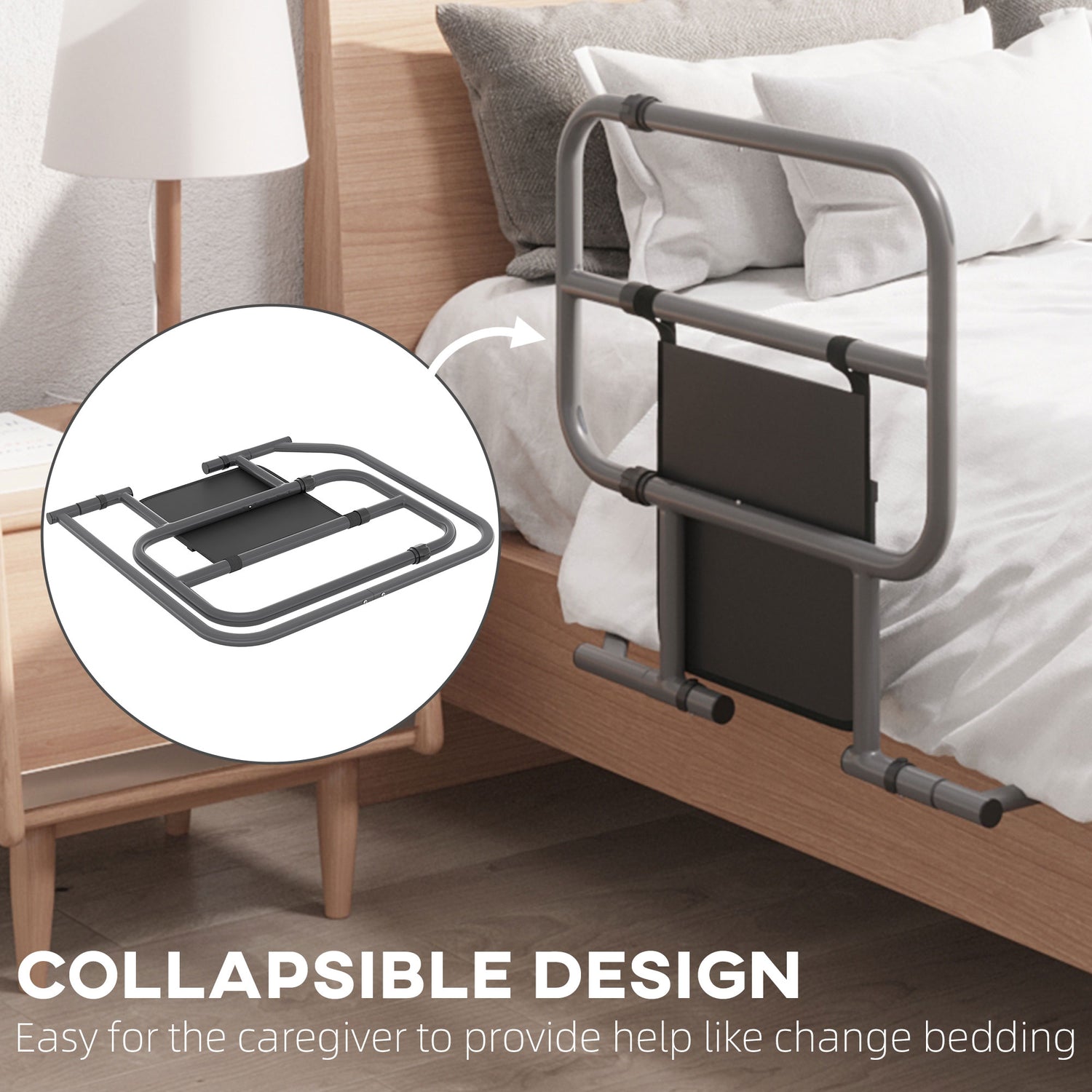
- Adjustable or folding rails: Models that fold down, pivot, or adjust in height.
- Transfer rails: Strong support frames that help a person move between the bed and a wheelchair or standing position.
- Hospital-style side rails: Rails built into a medical bed. Their purpose and controls differ from those of home-use rails.
The phrase “bed rail for adults” does not describe one standard product. Each rail has its own weight limit, mounting system, gap limits, and instructions.
A bed rail is not the same as a grab bar mounted to a wall. It also is not the same as a restraint. A rail should not be used to hold a person in bed unless a qualified care team has assessed the situation and approved that plan.

How Does a Bed Rail for Adults Work?
An adult bed rail works by transferring force from the user’s hand or body into a stable support structure. The structure then spreads that force through the mattress, bed frame, or floor.
A typical portable rail has four main parts:
- The handle or rail: This is the part the user grips.
- The support frame: This holds the handle upright and resists bending.
- The anchor system: Straps, brackets, legs, or clamps keep the rail in place.
- The adjustment or locking system: This sets the height, angle, or folded position.
The basic mechanism
Many home bed rails use a frame that slides between the mattress and bed base. A strap may then wrap around the bed frame or connect to an anchor point. When the user pulls on the handle, the force travels through the rail and into the mattress support or bed frame.
Some models use:
- Safety straps that tighten around the bed frame
- Brackets that attach to a metal or wooden frame
- Legs that reach the floor
- A broad base that sits under the mattress
– Clamps designed for a specific bed frame - Hinges that allow the rail to fold down
The rail works best when the anchor stays fixed and the mattress presses firmly against the support base. If the base slides, the mattress is very soft, or the bed frame is not compatible, the rail may shift under load.
How it helps with movement
A person may use the rail to:
- Roll from the back to the side
- Pull the upper body into a sitting position
- Steady themselves while sitting on the mattress edge
- Move the legs over the side of the bed
- Stand with support from the handle
- Transfer to a walker, wheelchair, or bedside commode
The rail does not lift the user. It gives the user a stable point to push or pull against.

How to Install an Adult Bed Rail Correctly
Correct installation depends on the specific model. Read the manufacturer’s instructions before placing weight on the rail. Do not assume that a rail designed for one bed will work safely on another.
Use this general process:
1. Check bed compatibility
Confirm that the rail is approved for the:
- Bed frame type
- Mattress thickness
- Mattress width
- Box spring or platform design
- Adjustable-bed position, if applicable
- User weight and expected load
Some rails are not designed for platform beds, hospital beds, split mattresses, or adjustable bases. A rail that fits under a standard mattress may not fit securely on a low-profile platform bed.
2. Inspect the rail
Look for:
- Cracks or bent tubing
- Loose bolts
- Damaged straps
- Missing pins
- Weak hinges
- Worn padding
- Sharp edges
- A locking mechanism that does not fully engage
Do not use a rail with a damaged frame or strap.
3. Place the support base
Position the rail according to its instructions. The base usually sits under the mattress, near the user’s upper body or the point where the person exits the bed.
Do not place it only under a loose mattress edge. The support must rest on a stable part of the bed system.
4. Secure the anchor
Tighten the strap, clamp, or bracket. If the rail uses a strap around the bed frame, attach it to the frame rather than to a removable decorative panel.
A strap that feels tight before the mattress is placed may loosen after use. Recheck it after installation.
5. Check the gap
Inspect the space:
- Between the rail and mattress
- Between the rail and headboard
- Between the rail and footboard
- Under the rail
- Between the mattress and bed frame
Large or changing gaps can create an entrapment hazard. The U.S. Food and Drug Administration warns that bed rails may contribute to entrapment, falls, and other injuries when they are poorly selected or installed.
6. Test without the user first
Push and pull the rail in several directions. It should not slide, tip, rotate, or fold unexpectedly.
Then apply gradual weight while standing beside the bed. Do not perform the first test with a person who has limited strength or balance.
7. Recheck after use
Inspect the rail regularly. Recheck it whenever the mattress is removed, the bed is moved, or the frame is adjusted.

Does a Bed Rail Prevent Falls?
A bed rail may reduce some types of falls, but it cannot guarantee fall prevention. A person may climb over the rail, slide under it, fall while reaching around it, or become confused and try to exit in an unsafe way.
A rail can also increase risk if the user:
- Has dementia or significant confusion
- Has uncontrolled movements or seizures
- Is sedated
- Is too weak to use the rail correctly
- May climb over the rail
- Can become trapped in a gap
- Uses the rail as a full-body restraint
- Has a history of getting caught between the mattress and rail
A short assist rail may be safer than a full-length barrier for a person who needs help sitting up. The best choice depends on the person’s strength, balance, judgment, mobility, and night-time behavior.
For a person at high risk of falling, ask a physician, physical therapist, occupational therapist, nurse, or other qualified clinician to assess the bed setup. A professional can also suggest alternatives such as a low bed, floor mat, motion alert, better lighting, or supervised transfers.

Bed Assist Rail vs. Full-Length Bed Rail
The main difference is the task each rail supports.
| Feature | Bed assist rail | Full-length bed rail |
|---|---|---|
| Main purpose | Support sitting, turning, and standing | Create a longer side barrier |
| Typical size | Short or medium length | Extends along much of the bed |
| Best for | A person who can follow directions and use a handhold | A situation where a longer barrier has been professionally assessed |
| Main risk | The user may pull too hard or lose balance | Entrapment, climbing, or use as a restraint |
| Fall protection | Limited | Not guaranteed |
| Transfer use | Often designed for it | May block a safe transfer route |
A longer rail is not automatically safer. It may block the person’s normal exit path or encourage climbing. A shorter rail may offer better support for a person who needs a handhold but can safely leave the bed.
The decision should begin with the user’s movement needs, not with rail length.

What Makes a Bed Rail Stable?
A bed rail is stable when its anchor, frame, and bed structure work together without meaningful movement. Stability depends on more than the rail’s advertised weight capacity.
Important factors include:
Bed frame strength
The frame must resist the pulling and pushing forces created during transfers. A decorative bed rail, loose headboard, or weak side panel may not provide a suitable anchor.
Mattress thickness and firmness
A very soft mattress can allow the rail base to shift. A thick mattress may reduce the rail’s usable height. Always compare the mattress size with the manufacturer’s stated range.
Anchor placement
The support base should sit where the instructions specify. Moving the rail closer to the edge or headboard may change the gap and reduce stability.
User technique
Pulling straight up or toward the center of the bed may place less sideways force on the rail than pulling sharply toward the floor. Even so, users should follow the rail’s instructions rather than rely on technique alone.
Regular maintenance
Straps can loosen. Screws can back out. Hinges can wear. Check the rail on a regular schedule and after any unusual load.

Safety Risks and Warning Signs
Stop using the rail and reassess the setup if you see any of these signs:
- The rail moves when the user grips it
- The mattress shifts away from the rail
- A gap appears between the rail and mattress
- The rail folds without a deliberate release
- The user tries to climb over it
- The user becomes caught or confused
- The user cannot release their grip
- The rail blocks a caregiver’s emergency access
- The bed or rail makes unusual sounds
- The user falls while using the rail
Bed rail entrapment can occur when a person’s head, neck, chest, or limbs become caught in a space around the rail or mattress. This risk may be higher for people with limited movement, frailty, confusion, or poor muscle control.
Never add pillows, blankets, foam, or homemade barriers to close a gap unless a qualified professional and the manufacturer specifically approve the setup. Added materials may shift and create a new hazard.

Who Should Not Use an Adult Bed Rail Without Assessment?
A person should receive professional assessment before using a bed rail if they have:
- Dementia or severe confusion
- Frequent falls
- Limited ability to follow instructions
- Uncontrolled body movements
- Seizures
- Severe weakness
- A history of entrapment
- A tendency to climb over barriers
- Trouble breathing or changing position
- Recent surgery or a major injury
- Medication-related drowsiness
A caregiver should also seek advice when the rail will be used with a hospital bed, adjustable bed, alternating-pressure mattress, or other medical equipment.
For children, use products and guidance intended for children. An adult bed rail is not automatically safe for a child.

How to Choose the Right Bed Rail for an Adult
Choose the rail based on the user’s main task.
| Main need | Features to consider |
|---|---|
| Sitting up | A firm, easy-to-grip handle near the upper body |
| Turning in bed | A rail positioned where the user can reach without twisting |
| Standing | A stable support designed for transfer loads |
| Night-time orientation | A low barrier only if it does not create an entrapment risk |
| Caregiver access | A folding design with a secure lock |
| Adjustable bed use | A model specifically approved for that bed |
| Limited hand strength | A broad, padded grip at a usable height |
Also check the product’s:
- Weight limit
- Mattress range
- Bed compatibility
- Mounting method
- Gap design
- Locking system
- Warranty and replacement parts
- Cleaning instructions
- Need for a second person during installation
Do not select a product based only on a high weight rating. A rail may support a static load but still be unsuitable for repeated pulling, sideways force, or assisted transfers.

Common Mistakes With Adult Bed Rails
Treating the rail as a restraint
A support rail is meant to assist movement. It should not be used to prevent a person from leaving bed unless a qualified care team has assessed the legal, clinical, and safety issues.
Assuming every rail fits every bed
Bed frames, mattresses, and bases vary widely. Confirm compatibility before buying or installing.
Ignoring the gap
A rail can look secure while leaving a dangerous opening beside the mattress. Check all sides of the rail, not only the handle.
Using a loose mattress
A rail may shift when placed under a mattress that slides easily or does not provide enough pressure against the base.
Skipping the load test
Test the rail before the user depends on it. A quick shake may reveal loose parts, but also apply gradual pressure in the directions the user will actually use.
Blocking the normal exit
A rail placed near the foot of the bed may prevent a safe transfer. Consider how the user gets in and out of bed at night.
Failing to reassess
A rail that worked after an injury may become unsafe if the user’s strength, memory, balance, or medication changes.
When to Remove or Replace a Bed Rail
Remove the rail if it no longer serves a clear purpose or if the user’s condition changes. A rail should also be replaced when it has bent tubing, damaged hardware, stretched straps, broken locks, or excessive movement.
Replace the rail when the bed changes unless the manufacturer confirms compatibility with the new setup. A new mattress can change height, firmness, and gap size.
Contact a clinician if the user has fallen, become trapped, repeatedly tries to climb over the rail, or cannot use the rail without major assistance. These events may show that the device is not addressing the real mobility or safety problem.
Frequently Asked Questions
Can a bed rail hold an adult’s full body weight?
Some rails are designed for transfer support, but their rated capacity and intended use vary. A person should not assume that a rail can hold full body weight simply because it has a high advertised weight limit. Check the manual and ask a qualified professional when the user needs substantial lifting or transfer support.
Do bed rails work on adjustable beds?
Some do, but many do not. An adjustable bed changes angle and may move the rail, mattress, or anchor. Use only a model approved for that specific type of adjustable base and follow the installation instructions.
Should a bed rail go near the head or foot of the bed?
The correct position depends on the user’s movement pattern and the rail design. A rail used for sitting up is often placed near the upper body. A rail used for transfers may need to sit near the usual exit point. Do not choose a position that blocks the safest path out of bed.
Can a bed rail stop an older adult from falling out of bed?
It may reduce some accidental roll-outs, but it cannot guarantee safety. It may also create a climbing or entrapment risk. A clinician should assess the person, bed, rail, and alternatives together.
How often should an adult bed rail be checked?
Check it before initial use, after installation changes, after moving the bed, and at regular intervals. Inspect the hardware, straps, locks, gaps, and frame. Follow the manufacturer’s maintenance schedule if it provides one.

Conclusion
An adult bed rail works by giving the user a stable handhold or side barrier. Its frame transfers force into the mattress support or bed frame. When correctly fitted, it may help with turning, sitting up, and bed transfers.
It is not a universal fall-prevention device. The safest choice depends on the user’s mobility, judgment, bed type, mattress, and risk of entrapment. Before use, confirm compatibility, secure every anchor, check the gaps, and test the rail gradually. If the user is confused, weak, prone to climbing, or has already fallen, seek advice from a qualified health professional before relying on a bed rail.
Further reading
- U.S. Food and Drug Administration: A Guide to Bed Safety
- U.S. Food and Drug Administration: Hospital Bed System Dimensional and Assessment Guidance
- U.S. Consumer Product Safety Commission

Michael Reynolds is a senior contributor at RetirementGazette.com, where he focuses on helping readers navigate the journey toward a secure and fulfilling retirement. With over a decade of experience in personal finance, retirement planning, and lifestyle writing, Michael combines practical strategies with easy-to-understand guidance tailored for both pre-retirees and those already enjoying their golden years.