Many seniors can earn about $17,000 to $45,000 federally tax free in 2025, depending on age, filing status, and total income.
The answer to how much can senior citizens earn tax free is not one fixed number. Your tax-free limit depends on whether the money comes from wages, Social Security, pensions, withdrawals, interest, or investments. This guide explains the federal rules, the 2025 senior deduction, state taxes, and simple examples so you can plan with confidence.
What “tax free” means for senior citizens
When people ask how much can senior citizens earn tax free, they often mean how much income they can receive before owing federal income tax. The answer usually starts with the standard deduction.
The standard deduction shelters part of your income from federal tax. If you are age 65 or older, you may also receive an extra deduction. These deductions reduce your taxable income, but they do not always make every type of income tax free.
For example, a senior may receive Social Security and part-time wages. The wages may be taxable, while none, some, or up to 85% of the Social Security benefits may count as taxable income.
Your tax result depends on:
• Filing status
• Age at the end of the tax year
• Total income
• Type of income
• Whether you receive Social Security
• Whether you have deductions or tax credits
• Your state’s tax rules
A person can earn income without owing federal income tax, but that does not mean the income is excluded from the tax system. It may still need to be reported on a tax return.
How much can senior citizens earn tax free in 2025?
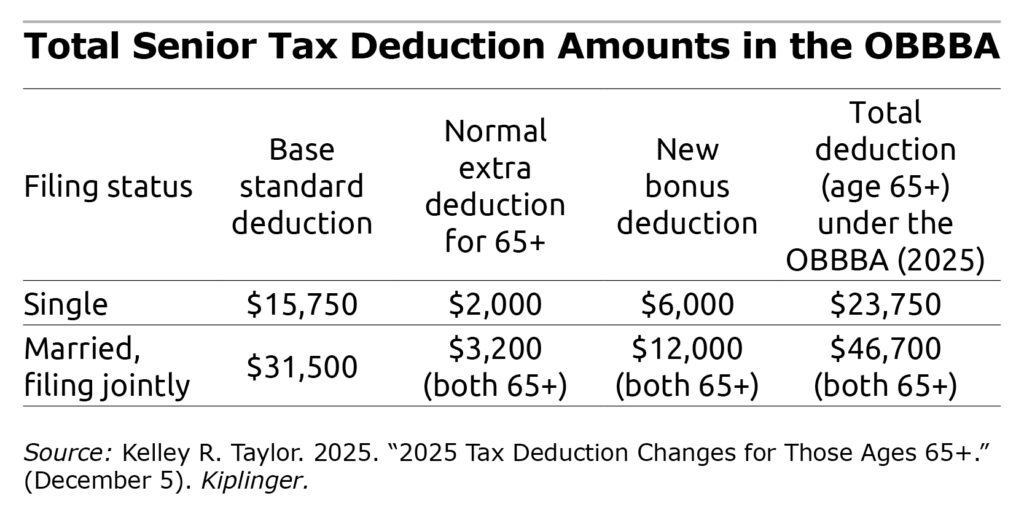
For the 2025 tax year, a person who is at least 65 may be able to receive more income without owing federal income tax because of the standard deduction and age-based deductions.
Basic 2025 federal deduction amounts
The 2025 standard deduction amounts are:
• Single or married filing separately: $15,000
• Head of household: $22,500
• Married filing jointly: $30,000
• Qualifying surviving spouse: $30,000
A taxpayer who is 65 or older may claim an additional standard deduction. The amount depends on filing status and whether one or both spouses qualify.
For many taxpayers, the additional amount is:
• Single or head of household: $2,000
• Married filing jointly: $1,600 for each qualifying spouse
• Married filing separately: $2,000 in many cases when the taxpayer is unmarried for tax purposes, although special rules may apply
Therefore, a single senior may have a basic federal deduction of about $17,000 in 2025. A married couple filing jointly may have a basic deduction of about $33,200 if both spouses are at least 65.
These figures are a starting point. They do not automatically tell you whether Social Security or other income will be taxable.
The special $6,000 senior deduction for 2025
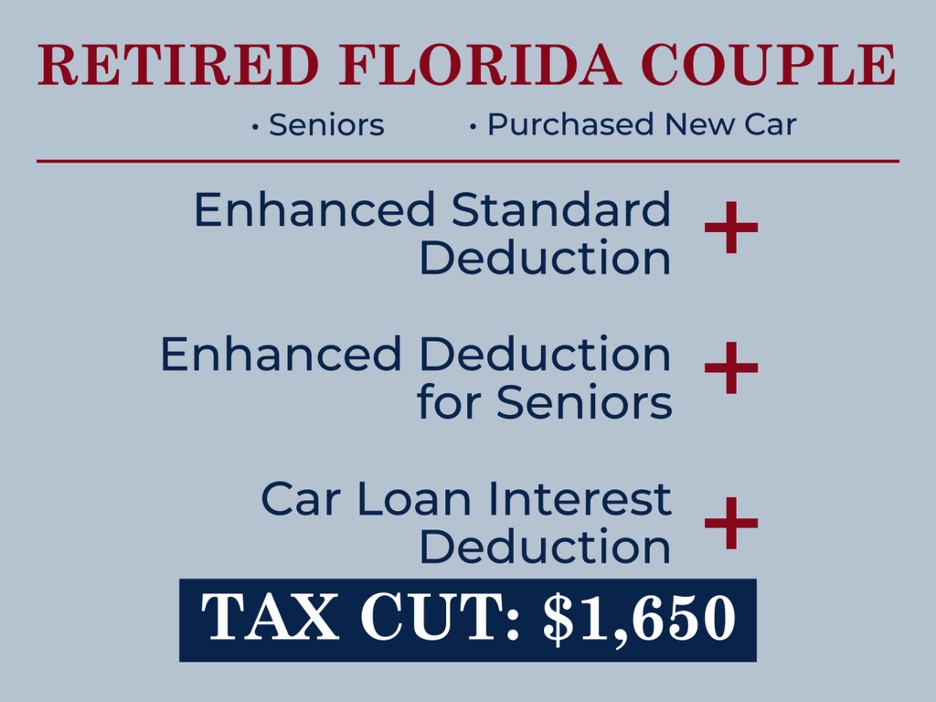
A new temporary federal deduction may provide an additional tax benefit for many people age 65 and older. For tax years 2025 through 2028, eligible seniors may claim up to $6,000 per person.
This deduction is separate from the regular standard deduction and the usual extra deduction for being 65 or older. A married couple who both qualify could potentially claim up to $12,000 before income limitations.
However, this deduction has income limits. It begins to phase out when modified adjusted gross income is above:
• $75,000 for single filers
• $150,000 for married couples filing jointly
The deduction is not the same as earning $6,000 tax free. It reduces taxable income. For example, a $6,000 deduction could lower the amount of income subject to tax, but its actual value depends on your tax bracket.
A senior with modest income may benefit from the full deduction. A senior with higher income may receive a smaller deduction or no deduction at all.
Because this rule is new, taxpayers should check the current IRS instructions or speak with a qualified tax professional before filing.

How Social Security affects tax-free income
Social Security is one of the biggest reasons the answer to how much can senior citizens earn tax free can be confusing.
The IRS uses a calculation called combined income to determine whether Social Security benefits are taxable. Combined income generally includes:
• One-half of your Social Security benefits
• Tax-exempt interest
• Your adjusted gross income from other sources
The thresholds are generally:
• Single, head of household, or qualifying widow or widower: benefits may become taxable when combined income exceeds $25,000
• Married filing jointly: benefits may become taxable when combined income exceeds $32,000
• Married filing separately while living with a spouse: benefits may be taxable at a much lower level
If your combined income is above these amounts, up to 50% of your benefits may be taxable. At higher income levels, up to 85% may be taxable.
Taxable does not mean all your Social Security is taxed. For example, if $10,000 of your benefits is taxable, that $10,000 is added to your other taxable income. Your deductions may still reduce the amount on which you owe tax.
Example: Single senior receiving Social Security
Suppose Maria is 67 and receives:
• $20,000 in Social Security
• $10,000 from part-time work
Half of her Social Security is $10,000. Her combined income is roughly $20,000, which is below the usual $25,000 single-filer threshold.
In this simplified example, her Social Security may not be taxable. Her $10,000 in wages may also be covered by her standard and age-based deductions, so she may owe no federal income tax.
Other income, such as interest or pension payments, could change the result.
How much can a senior earn from work without paying federal tax?
If you are 65 or older and still work, your wages are treated like other earned income. There is no special rule that makes all senior employment income tax free.
For a single senior under the income limits for the 2025 senior deduction, a rough starting point may be:
• $15,000 standard deduction
• $2,000 additional age deduction
• Up to $6,000 temporary senior deduction
That creates a possible deduction total of up to $23,000. However, the special senior deduction has income limits, and other income can affect your tax bill.
Without the temporary senior deduction, a single senior may have about $17,000 of basic deductions. A married couple filing jointly with both spouses age 65 or older may have about $33,200 in basic deductions, before considering the temporary senior deduction.
These are not universal tax-free earning limits. They are deduction amounts. Your wages, pension, investment income, and taxable Social Security must be considered together.
Why withholding can still happen
Your employer may withhold federal income tax from your paycheck even if you expect to owe no tax for the year. Withholding is an advance payment, not a final tax bill.
If your total tax is zero, you may receive the withheld money back as a refund after filing. You can often adjust your Form W-4 to better match your expected tax, but do so carefully.
Medicare and Social Security payroll taxes may still apply to wages even when you owe no federal income tax. These payroll taxes are different from federal income tax.

Tax treatment of pensions, 401(k) withdrawals, and IRA income
Retirement income is not automatically tax free because you are a senior.
Pensions
Most traditional pension payments are taxable as ordinary income. If you paid part of the pension cost with after-tax money, a portion of each payment may be tax free under IRS allocation rules.
Traditional IRA and 401(k) withdrawals
Withdrawals from traditional IRAs and most traditional 401(k) plans are generally taxable. The tax usually applies to the amount that was not previously taxed.
Starting at age 73, many people must take required minimum distributions from traditional retirement accounts. These required withdrawals can increase taxable income even if you do not need the money for living expenses.
Roth IRA withdrawals
Qualified Roth IRA withdrawals are generally tax free. To be qualified, the account usually must satisfy the five-year rule and one qualifying condition, such as reaching age 59½.
Roth IRA withdrawals can be useful for tax planning because they generally do not increase adjusted gross income. Still, special rules apply to conversions, early withdrawals, and earnings.
Annuities
Annuity payments may include both taxable and tax-free portions. The tax-free part is usually a return of your original investment, while the earnings portion is taxable.
Keep your retirement account records. A missing basis record can make a tax-free portion harder to prove.
Required minimum distributions and the age 65 tax-free limit
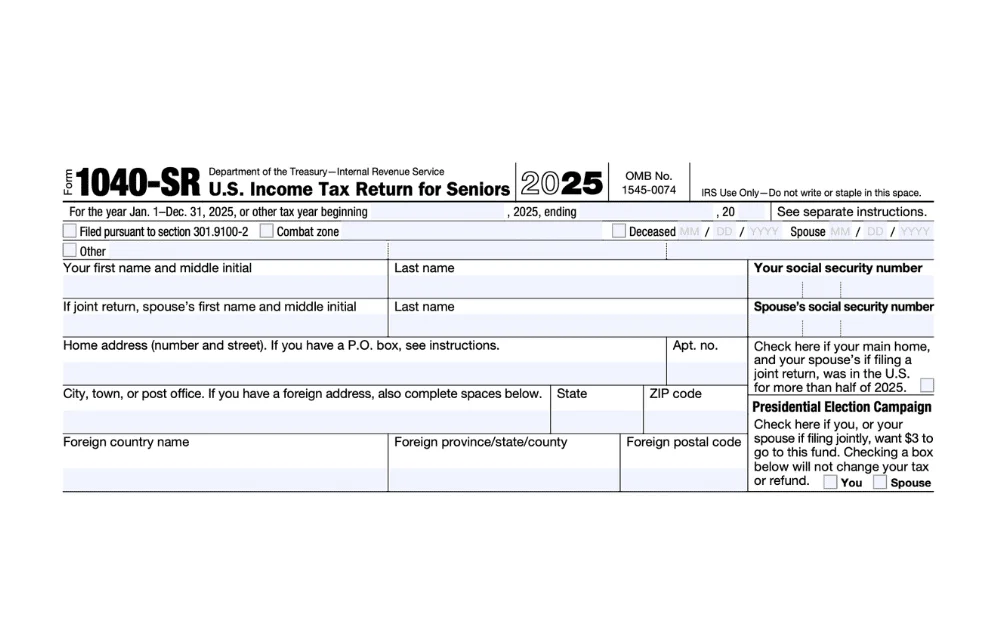
Required minimum distributions, often called RMDs, can change how much a senior citizen can receive without owing federal tax.
RMDs generally apply to traditional IRAs, SEP IRAs, SIMPLE IRAs, and many employer retirement plans. The required starting age is generally 73 under current law, although future legislation may change the rules.
An RMD is usually taxable in the year you receive it. It may also affect:
• How much of your Social Security becomes taxable
• Your Medicare Part B premium
• Your Medicare Part D premium
• Your eligibility for certain tax credits
• Your state income tax
One common mistake is to focus only on the standard deduction. A senior may believe a withdrawal is tax free because it falls below the deduction amount, but the withdrawal could make Social Security taxable as well.
A tax projection before taking a large distribution can help prevent surprises.
State taxes can change the answer
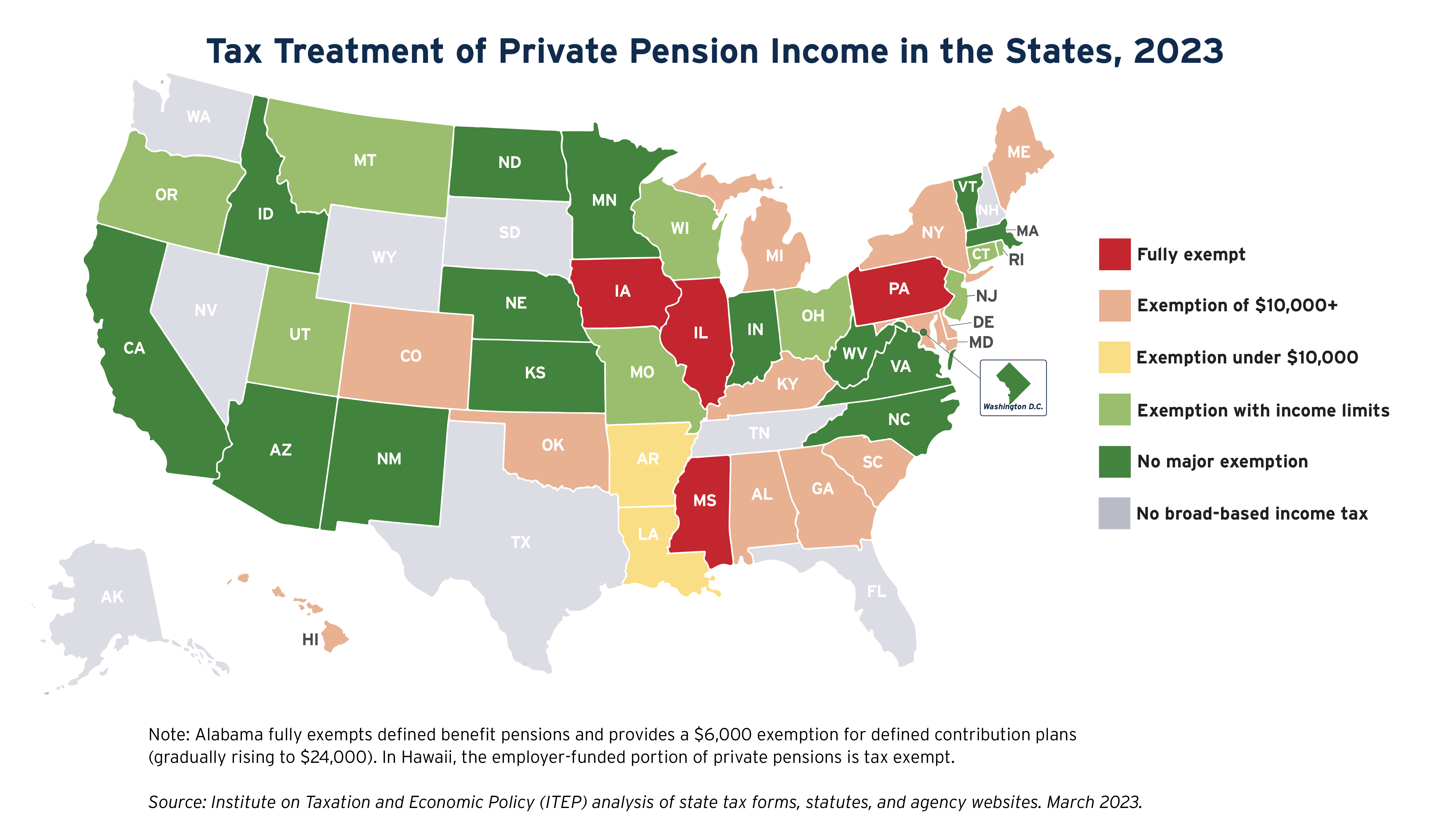
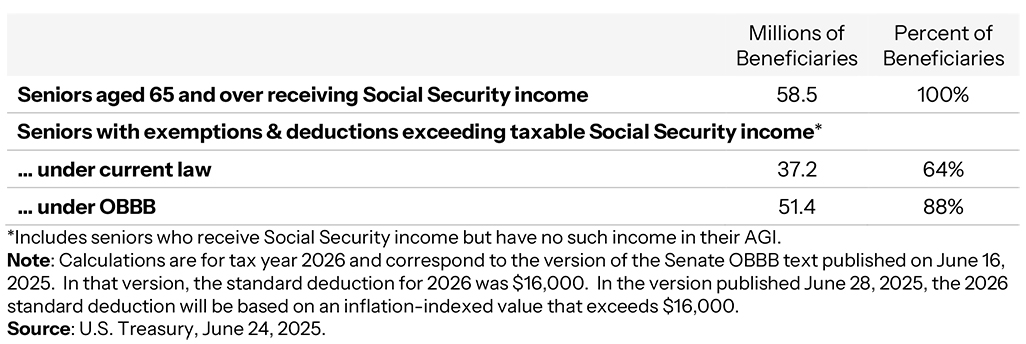
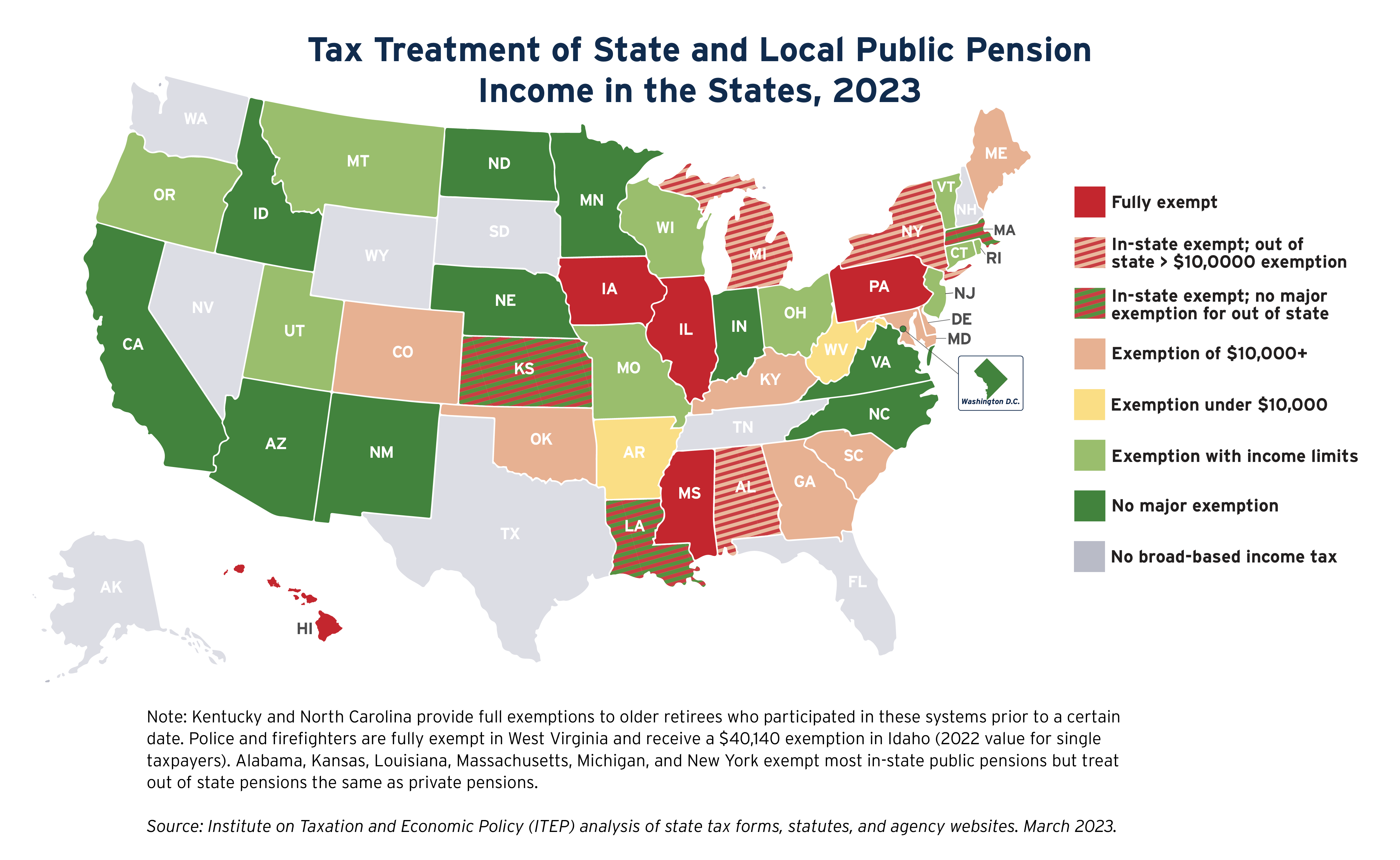
Federal tax rules are only part of the picture. Some states tax wages, pensions, or investment income even when your federal tax is zero.
Other states offer special benefits for older residents, such as:
• Social Security exemptions
• Pension deductions
• Retirement income exclusions
• Higher standard deductions
• Property tax relief
• Senior tax credits
States also differ in how they treat military pensions, public pensions, private pensions, IRA withdrawals, and 401(k) distributions.
For this reason, how much can senior citizens earn tax free depends partly on where you live. Check your state tax agency’s current rules before assuming that federal tax treatment applies to your state return.
Examples of how much seniors may earn tax free
The following examples are simplified. They show how deductions can work, but they are not personal tax advice.
Example 1: Single senior with wages
James is 66 and files as single. He earns $16,000 from part-time work and has no other income.
His income may be below his regular standard deduction plus the additional age deduction. If he qualifies for the temporary senior deduction, his potential deductions may be even higher.
In this simplified case, he may owe no federal income tax. Payroll taxes could still be withheld from his wages.
Example 2: Married couple with Social Security
Linda and Robert are both 70 and file jointly. They receive $35,000 in Social Security and $8,000 in IRA withdrawals.
Their taxable Social Security depends on their combined income. Their joint standard deduction, age deductions, and possible senior deductions may reduce or eliminate their federal income tax.
They should still report all income and review whether an IRA distribution made part of their Social Security taxable.
Example 3: Senior with pension and investment income
Pat is 68 and receives:
• $18,000 from a pension
• $12,000 from an IRA
• $4,000 in bank interest
• $20,000 in Social Security
The pension, IRA withdrawal, and interest may count as taxable income. The Social Security may also be partly taxable because of the other income.
Even if Pat’s total income appears close to the standard deduction, the Social Security calculation can increase taxable income. This is why adding up only wages or retirement withdrawals may produce the wrong answer.
Tax credits that may help senior citizens
Deductions reduce taxable income. Tax credits reduce tax directly, which can be more valuable.
Some seniors may qualify for the Credit for the Elderly or the Disabled. This credit has strict income and filing requirements, so not every older taxpayer will qualify.
Other credits may apply based on personal circumstances, such as:
• Credit for a dependent
• Credit for qualified education expenses
• Residential clean energy credit
• Energy-efficient home improvement credit
• State property tax credits
The Earned Income Tax Credit is usually limited by age and earned-income rules. Older adults should check the current requirements rather than assume they qualify or do not qualify.
Tax credits can be refundable or nonrefundable. A refundable credit may provide a payment even when your income tax is already zero.
How to lower taxes legally in retirement
A careful plan can help you keep more of your retirement income.
-
Compare traditional and Roth withdrawals. Roth withdrawals may avoid increasing taxable income when they are qualified.
-
Spread large withdrawals across tax years. Taking one large distribution may push you into a higher tax bracket and increase taxable Social Security.
-
Review withholding. Pension and IRA payers can withhold federal tax, but the amount may not match your final bill.
-
Use qualified charitable distributions. People who are at least 70½ may be able to send up to the annual limit directly from an IRA to a qualifying charity. A qualified charitable distribution can count toward an RMD and may stay out of adjusted gross income.
-
Track your basis. After-tax IRA contributions, pension contributions, and annuity investments may create a tax-free portion.
-
Watch Medicare income limits. Higher income can lead to Medicare premium surcharges, often based on income from an earlier tax year.
-
Review state rules. Your state may offer a retirement income exclusion that the federal government does not.
The best plan is often a combination of small choices. Retirement taxes are like filling a bucket: wages, pensions, withdrawals, interest, and taxable benefits all add to the same total.
Common mistakes seniors should avoid
Many tax problems come from simple misunderstandings.
• Assuming all Social Security is tax free
• Treating the standard deduction as a total income exemption
• Forgetting required minimum distributions
• Ignoring bank interest or investment income
• Failing to report pension or annuity payments
• Taking a large IRA withdrawal without a tax estimate
• Confusing federal income tax with payroll tax
• Missing state-specific senior deductions
• Believing a tax refund means the income was tax free
• Filing separately when joint filing may be more favorable
A tax return can show zero tax due and still be required. Filing requirements depend on income type, filing status, age, and other factors.
What records should senior taxpayers keep?
Good records make tax filing easier and help support tax-free income claims.
Keep:
• Social Security benefit statements
• Pension and annuity forms
• IRA and 401(k) distribution forms
• Records of after-tax contributions
• Bank and brokerage statements
• Charitable donation receipts
• Medical expense records
• Property tax records
• Estimated tax payments
• Prior-year tax returns
Do not rely only on your bank statement. A deposit shows that money arrived, but it may not show whether the payment was taxable, partly taxable, or a return of your own principal.
If you receive a tax form that appears wrong, contact the payer promptly. Correcting an error before filing is usually easier than explaining it after an IRS notice.
Frequently Asked Questions About How Much Can Senior Citizens Earn Tax Free
How much can a 65-year-old make without paying federal income tax?
A single 65-year-old may have about $17,000 of basic federal deductions in 2025 before considering the temporary senior deduction. The exact tax-free amount depends on other income, Social Security taxation, filing status, and eligibility for additional deductions or credits.
Is Social Security tax free for senior citizens?
Social Security may be completely tax free when combined income is low enough. At higher income levels, up to 50% or 85% of benefits may be included in taxable income.
How much can a married senior couple earn tax free?
A married couple filing jointly with both spouses age 65 or older may have about $33,200 in basic 2025 deductions. If both qualify for the temporary $6,000 senior deduction, their total deductions could be higher, subject to income limits and other rules.
Do seniors have to pay taxes on part-time work?
Yes, wages are taxable income regardless of age. However, deductions and credits may reduce taxable income enough that the senior owes no federal income tax.
Do seniors pay taxes on IRA withdrawals?
Traditional IRA withdrawals are generally taxable, even after age 65. Qualified Roth IRA withdrawals are generally tax free, but contribution, conversion, and five-year rules must be met.
Do seniors have to file a tax return if they owe no tax?
Sometimes. Filing requirements depend on gross income, filing status, age, self-employment income, and other factors. A senior may also want to file to claim a refund or refundable credit.
Does the $6,000 senior deduction mean seniors can earn $6,000 tax free?
No. The deduction reduces taxable income by up to $6,000 for an eligible person in 2025 through 2028. It does not create a separate $6,000 income exemption, and it may phase out at higher income levels.
Can a senior earn money without losing Social Security?
Yes, but working can affect Social Security benefits before full retirement age. Once you reach full retirement age, the earnings limit no longer applies, although earned income can still affect income taxes and Medicare costs.
Conclusion
How much can senior citizens earn tax free depends on more than age. In 2025, the standard deduction, age-based deduction, and possible temporary senior deduction may shelter a significant amount of income, but Social Security, pensions, IRA withdrawals, investments, and state taxes can change the result.
Start by listing every source of income, check your filing status, and estimate your combined income before taking a large withdrawal. Use current IRS guidance or consult a qualified tax professional for advice based on your situation. Reviewing your plan early can help you avoid surprises and keep more of your retirement money.

Michael Reynolds is a senior contributor at RetirementGazette.com, where he focuses on helping readers navigate the journey toward a secure and fulfilling retirement. With over a decade of experience in personal finance, retirement planning, and lifestyle writing, Michael combines practical strategies with easy-to-understand guidance tailored for both pre-retirees and those already enjoying their golden years.