Most seniors need about 1,600 to 2,600 calories daily, based on sex, activity, health, and body size.
Knowing how many calories do seniors need is important for steady energy, muscle strength, healthy weight, and better recovery. As people age, appetite may fade while the need for protein, vitamins, minerals, and fluids remains strong. This guide explains calorie needs by age and activity, shows how to build balanced meals, and highlights when a doctor or dietitian should help.

How many calories do seniors need each day?
Most adults age 65 and older need between 1,600 and 2,600 calories per day. Women often need fewer calories than men, while active seniors usually need more than those who sit most of the day.
The following estimates are a useful starting point:
| Group | Sedentary | Moderately active | Active |
|---|---|---|---|
| Women age 61 and older | About 1,600 calories | About 1,800 calories | About 2,000 to 2,200 calories |
| Men age 61 and older | About 2,000 calories | About 2,200 to 2,400 calories | About 2,600 calories |
These numbers come from general dietary guidance. They are not a personal prescription. A smaller senior with a low appetite may need less food, while a larger adult who walks, gardens, swims, or works out may need more.
So, how many calories do seniors need in real life? The best answer depends on weight, height, muscle mass, activity, health, and whether the person is losing or gaining weight without trying.
Why calorie needs change with age
Calorie needs often decline with age because the body may lose muscle and burn less energy at rest. Many seniors also move less because of pain, fatigue, balance concerns, or health conditions.
However, the body still needs key nutrients. This creates an important idea: older adults may need fewer calories but more nutrition per bite. A small meal should work hard, much like a compact tool kit.
Common reasons calorie needs change include:
• Less muscle mass, which can lower resting metabolism
• Less daily movement and exercise
• Changes in appetite, taste, or smell
• Dental pain or trouble chewing
• Difficulty swallowing
• Medicines that cause nausea, dry mouth, or early fullness
• Depression, loneliness, or memory problems
• Health conditions that increase energy needs
• Recovery after surgery, illness, or injury
A senior who eats 1,600 calories from sweet drinks and refined snacks may still lack protein, fiber, calcium, and vitamins. A senior who eats 1,600 calories from eggs, beans, yogurt, vegetables, fruit, whole grains, nuts, and fish may meet far more nutrition needs.

Calories for seniors by activity level
Activity is one of the strongest factors that affects calorie needs. A sedentary senior may spend much of the day sitting and take only short walks. A moderately active senior may walk regularly, do housework, or attend exercise classes. An active senior may garden, cycle, swim, hike, or train with weights.
Here is a simple guide:
Sedentary older adults
Sedentary women often need around 1,600 calories per day. Sedentary men may need close to 2,000 calories.
This level may fit someone who has limited mobility or spends most of the day sitting. Even then, gentle movement can support strength, digestion, mood, and blood sugar control if a health professional says it is safe.
Moderately active older adults
Moderately active women may need about 1,800 calories. Men may need about 2,200 to 2,400 calories.
A moderate activity level might include a daily walk, regular housework, light gardening, or two to four exercise sessions each week.
Active older adults
Active women may need about 2,000 to 2,200 calories. Active men may need about 2,400 to 2,600 calories or more.
People who exercise often, walk long distances, or recover from illness may need extra food. A sudden drop in weight can be a sign that current calorie intake is too low.

How to estimate personal calorie needs
General tables are helpful, but they cannot account for every body. A simple way to estimate whether calorie intake is suitable is to watch weight, strength, appetite, and daily function over time.
Use these steps:
-
Start with a general range based on sex and activity.
-
Track meals and drinks for three to seven days.
-
Check body weight once or twice each week under similar conditions.
-
Notice changes in strength, walking, mood, and energy.
-
Adjust portions slowly if weight changes are not desired.
If weight stays stable, energy is good, and meals are balanced, the calorie level may be suitable. If weight drops without trying, the person may need more calories or medical evaluation.
A registered dietitian can use body weight, height, age, activity, and health needs to create a more precise plan. Some formulas estimate resting energy use, but these formulas can be less accurate for people with unusual body composition or certain illnesses.

Do seniors need fewer calories but more protein?
Often, yes. Aging can increase the risk of muscle loss, known as sarcopenia. Eating enough protein and doing strength exercises can help protect muscle, balance, and independence.
Many experts suggest that healthy older adults consider about 1.0 to 1.2 grams of protein per kilogram of body weight each day. Some seniors recovering from illness may need more, but people with kidney disease should ask their medical team before increasing protein.
For example, a 150-pound senior weighs about 68 kilograms. A general protein range of 1.0 to 1.2 grams per kilogram would equal about 68 to 82 grams of protein daily.
Good protein choices include:
• Eggs
• Greek yogurt
• Milk or fortified soy milk
• Fish and seafood
• Chicken or turkey
• Lean beef
• Tofu and tempeh
• Beans and lentils
• Cottage cheese
• Nuts and seeds
Try to spread protein across meals instead of eating it all at dinner. A breakfast with eggs and whole-grain toast, lunch with soup and beans, and dinner with fish or chicken may support muscle better than one large protein serving at night.
What should seniors eat for healthy calories?
When learning how many calories do seniors need, food quality matters as much as the number. A balanced plate can provide energy without making meals too large.
A practical plate may include:
• Half vegetables and fruit
• One-quarter protein food
• One-quarter whole grains or starchy vegetables
• A small amount of healthy fat
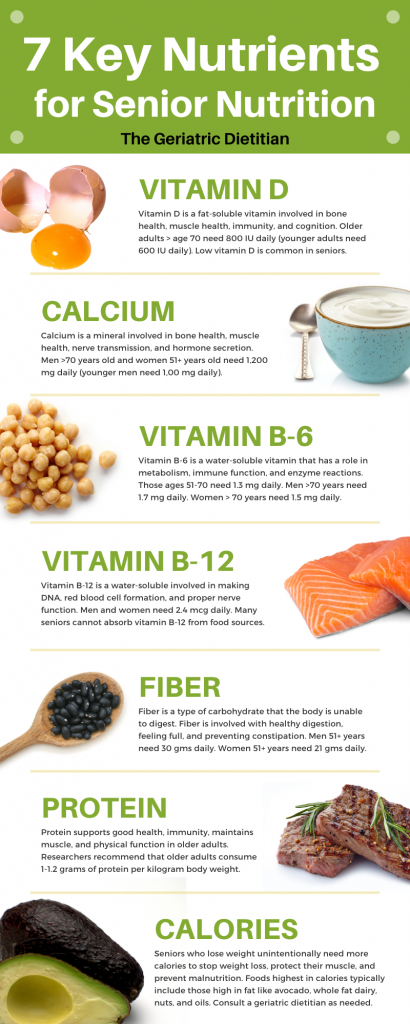
Healthy calorie sources include avocado, olive oil, nut butter, nuts, seeds, oats, brown rice, potatoes, beans, eggs, dairy, and fatty fish. These foods provide energy along with protein, fiber, healthy fats, and key nutrients.
Older adults should pay special attention to calcium, vitamin D, vitamin B12, potassium, fiber, and fluids. Needs vary, and supplements should not replace a balanced diet unless a clinician recommends them.
For seniors with a small appetite, try adding calories without adding much food volume:
• Stir powdered milk into oatmeal or mashed potatoes
• Add olive oil to vegetables and soup
• Mix nut butter into yogurt or a smoothie
• Choose whole milk or fortified soy milk when appropriate
• Add avocado to toast or sandwiches
• Serve cheese with eggs, soup, or vegetables
• Offer small meals every three to four hours
Calorie needs for seniors who are losing weight
Unplanned weight loss deserves attention. Losing weight may happen because of poor appetite, dental problems, depression, medication effects, infection, cancer, or trouble swallowing.
A small amount of weight change may not be serious, but losing 5% or more of body weight within six to twelve months can be a warning sign. For a 150-pound person, 5% equals 7.5 pounds.
Contact a doctor or dietitian if a senior:
• Keeps losing weight without trying
• Eats much less than usual
• Coughs or chokes during meals
• Has new trouble chewing or swallowing
• Feels weak, dizzy, or unusually tired
• Has repeated vomiting or diarrhea
• Shows signs of depression or confusion
A clinician may check for medical causes and review medicines. A dietitian can suggest high-calorie, high-protein meals that match the person’s taste, culture, budget, and chewing ability.
Calorie needs for seniors with overweight or obesity
Some seniors may need weight loss, but strict dieting can cause muscle loss. Losing weight too quickly may reduce strength and make falls more likely.
A safer plan often uses modest portion changes, more protein, more vegetables, and regular movement. The goal is not simply to eat as little as possible. The goal is to improve health while protecting muscle.
Helpful steps may include:
-
Replace sugary drinks with water, milk, or unsweetened beverages.
-
Fill half the plate with vegetables or fruit.
-
Include protein at each meal.
-
Limit large portions of sweets and highly processed snacks.
-
Walk or perform approved strength exercises.
-
Review the plan with a doctor if diabetes, heart disease, or another condition is present.
A senior should not begin a very low-calorie diet without medical supervision. Calorie restriction can interact with medicines and may cause nutrient shortages.
How medical conditions affect calorie needs
Health conditions can change both calorie needs and the best food choices. For example, a person with diabetes may need a regular meal pattern and controlled carbohydrate portions. Someone with heart failure may need guidance about sodium and fluids.
Other examples include:
• Kidney disease may affect protein, potassium, phosphorus, and fluid needs.
• Cancer treatment may increase the need for calories and protein.
• Chronic lung disease may make eating tiring and raise energy needs.
• Hyperthyroidism may increase calorie use and cause weight loss.
• Dementia may lead to missed meals or unsafe eating.
• Dental problems may require soft, moist foods.
• Parkinson’s disease may affect swallowing and meal timing.
These needs can conflict. A food that adds calories may not suit someone who needs strict fluid or mineral limits. This is why online calorie estimates should support, not replace, personal medical advice.
Simple one-day meal example for a senior
A meal plan can show how to meet calorie and protein needs without oversized portions. The following example provides roughly 1,700 to 1,900 calories, depending on portions and ingredients.
Breakfast
• Oatmeal made with milk
• One tablespoon of peanut butter
• One banana
• One boiled egg
Lunch
• Lentil or chicken soup
• Whole-grain toast with avocado
• Plain Greek yogurt with berries
Snack
• A small handful of nuts
• An apple or pear
Dinner
• Baked salmon, chicken, tofu, or beans
• Roasted vegetables
• A medium baked potato with olive oil
• A glass of milk or fortified soy milk
This is only an example. Cultural foods can fit well too. Beans and rice, vegetable curry, fish tacos, tofu stir-fry, or chicken and vegetable stew can all support healthy calorie intake when portions and ingredients match personal needs.
Common mistakes when planning senior nutrition
One common mistake is focusing only on calories. Calories provide energy, but they do not show whether a meal contains enough protein, fiber, vitamins, or minerals.
Another mistake is serving three large meals to someone with a small appetite. Smaller meals and planned snacks may work much better.
Other mistakes to avoid include:
• Serving low-fat foods when the senior needs more calories
• Relying on desserts or sugary drinks for weight gain
• Ignoring dental pain
• Forgetting fluids
• Offering too many unfamiliar foods at once
• Changing a kidney or diabetes diet without professional guidance
• Assuming poor appetite is a normal part of aging
In practical nutrition work, one lesson comes up again and again: the best plan is the one a person will actually eat. A familiar meal with a helpful nutrition boost is often more useful than a perfect meal that sits untouched.
How to help a senior eat enough calories
Food often carries emotion, memory, and comfort. A senior may eat better when meals feel social and familiar rather than rushed or clinical.
Try these ideas:
• Eat together when possible.
• Use bright plates and easy-to-hold utensils.
• Serve smaller portions first.
• Keep nutritious snacks within reach.
• Offer choices instead of giving orders.
• Use herbs, spices, lemon, and sauces to improve flavor.
• Make food soft and moist when chewing is hard.
• Keep a regular meal schedule.
• Limit drinks right before meals if early fullness is a problem.
If cooking is difficult, consider meal delivery programs, community senior centers, family meal preparation, or help from a home-care service. Food safety also matters. Refrigerate perishable food within two hours and reheat leftovers thoroughly.
How many calories do seniors need to gain weight?
Seniors who need to gain weight may start by adding about 250 to 500 calories per day, but a doctor or dietitian should guide this plan when weight loss is unexplained. Use nutrient-rich foods such as milk, yogurt, eggs, nut butter, avocado, olive oil, beans, fish, and fortified shakes.
How many calories do seniors need if they exercise?
Active seniors often need around 2,000 to 2,600 calories daily, though personal needs vary. Exercise may also increase protein and fluid needs, so meals should include protein before or after activity.
Do seniors need fewer calories than younger adults?
Many seniors need fewer calories because metabolism and activity may decline. They still need similar or greater amounts of some nutrients, so meals should be rich in protein, vegetables, fruit, whole grains, and healthy fats.
Frequently Asked Questions
How many calories does a 70-year-old woman need?
A 70-year-old woman may need about 1,600 calories if sedentary, 1,800 calories if moderately active, and up to 2,000 or more if active. Height, weight, muscle mass, and health conditions can change these estimates.
How many calories does a 70-year-old man need?
A 70-year-old man may need about 2,000 calories if sedentary, 2,200 to 2,400 calories if moderately active, and around 2,600 calories if active. Weight changes and energy levels can help show whether intake is suitable.
Is 1,200 calories enough for a senior?
For many seniors, 1,200 calories is too low to provide enough protein and nutrients without careful planning. A clinician should supervise this intake, especially if the person has weight loss, illness, or takes several medicines.
How many calories should a senior eat to maintain weight?
Many seniors maintain weight on about 1,600 to 2,600 calories per day. The right amount depends on body size, sex, movement, metabolism, and medical needs.
What should a senior eat when they have a poor appetite?
Small, frequent meals may be easier than three large meals. Choose high-protein, nutrient-dense foods such as eggs, yogurt, smoothies, soup, beans, fish, nut butter, and fortified milk.
Can seniors use protein shakes?
Protein shakes can help when chewing, cooking, or eating enough is difficult. Choose a product that fits the person’s medical needs, and ask a health professional for advice if kidney disease, diabetes, or fluid limits are present.
When should a senior see a doctor about weight loss?
A senior should seek medical advice for ongoing unplanned weight loss, weakness, swallowing trouble, repeated vomiting, or a major appetite change. Losing about 5% of body weight within six to twelve months may signal a health problem.
Conclusion
The answer to how many calories do seniors need usually falls between 1,600 and 2,600 calories each day. The right amount depends on activity, body size, sex, muscle mass, appetite, and health. Quality matters too, so each meal should bring protein, fiber, vitamins, minerals, healthy fats, and fluids.
Start with a realistic calorie range, watch weight and strength, and make small changes. If a senior is losing weight, eating very little, or managing a complex condition, involve a doctor or registered dietitian. Use this guide to plan better meals, explore trusted nutrition resources, and share your questions or experiences in the comments.

Michael Reynolds is a senior contributor at RetirementGazette.com, where he focuses on helping readers navigate the journey toward a secure and fulfilling retirement. With over a decade of experience in personal finance, retirement planning, and lifestyle writing, Michael combines practical strategies with easy-to-understand guidance tailored for both pre-retirees and those already enjoying their golden years.