The best exercises for seniors combine walking, strength, balance, flexibility, and gentle aerobic activity.
When people ask what are the best exercises for seniors, the answer depends on health, fitness level, comfort, and goals. A safe routine can support stronger muscles, steadier balance, better heart health, and more confidence in daily life. This guide explains how to choose the right senior exercises, how to begin, and which mistakes to avoid.
What Are the Best Exercises for Seniors?
The best exercises for seniors are simple, low-impact movements that improve strength, balance, flexibility, and endurance. A well-rounded plan may include walking, chair exercises, resistance training, stretching, swimming, cycling, and balance drills.
You do not need a gym or costly equipment. A sturdy chair, light hand weights, resistance bands, and comfortable shoes may be enough. The goal is to make movement a normal part of the day, like brushing your teeth or having your morning coffee.
For many older adults, the best exercises for seniors include:
• Walking at a comfortable pace
• Sit-to-stand exercises
• Wall push-ups
• Heel raises
• Step-ups
• Gentle stretching
• Tai chi
• Water aerobics
• Stationary cycling
• Light resistance band exercises
The right mix should feel challenging but not painful. Think of exercise as a dimmer switch, not an on-and-off button. Start with a low setting, then increase the effort slowly.

Why Exercise Matters as You Age
Regular physical activity can help older adults stay independent. Strong legs make it easier to climb stairs, rise from a chair, carry groceries, and get out of bed. Better balance can also lower the risk of falls.
Exercise may support heart health, bone strength, joint movement, mood, sleep, and brain health. Federal activity guidelines encourage older adults to work toward at least 150 minutes of moderate aerobic activity each week, along with muscle-strengthening activity on two or more days.
You do not need to reach that amount on your first day. Five or ten minutes at a time still counts. Several short walks can provide a useful starting point for someone who has been inactive.
One lesson that comes up often in senior fitness planning is that consistency matters more than intensity. A gentle routine done most days is often more useful than a hard workout that leaves you sore and discouraged.

The Main Types of Exercise for Seniors
A complete senior exercise program should cover five areas. Each area supports a different part of healthy aging.
1. Aerobic exercise
Aerobic exercise raises your heart rate and makes you breathe a little faster. You should still be able to speak in short sentences during moderate activity.
Good choices include:
• Brisk walking
• Water walking
• Swimming
• Dancing
• Stationary cycling
• Low-impact aerobics
• Gardening and active housework
Aerobic exercise can support heart and lung health. It may also improve stamina for daily tasks.
2. Strength training
Strength exercises help maintain muscle and support bone health. They can also make daily movements safer and easier.
Useful options include:
• Chair stands
• Wall push-ups
• Resistance band rows
• Light dumbbell curls
• Heel raises
• Side leg lifts
• Seated knee extensions
Strength training does not require heavy weights. Your body weight, a resistance band, or small water bottles can provide enough challenge at first.
3. Balance exercises
Balance training helps your body respond when you turn, step over an object, or walk on an uneven surface. It is an important part of fall prevention.
Try:
• Standing on one foot while holding a counter
• Heel-to-toe walking
• Side steps
• Backward steps
• Tai chi
• Weight shifts from one foot to the other
Always place a sturdy support nearby. Do not practice balance exercises beside a glass table, rolling chair, or loose rug.
4. Flexibility exercises
Stretching helps maintain joint movement. It may make it easier to reach, bend, dress, and turn your head.
Good stretches include:
• Calf stretches
• Chest stretches
• Shoulder rolls
• Neck turns
• Hamstring stretches
• Ankle circles
• Gentle back movements
Move slowly and avoid bouncing. A stretch should feel mild, not sharp.
5. Functional exercise
Functional exercises copy movements used in real life. They help connect fitness with independence.
Examples include:
• Sit-to-stand movements
• Step-ups
• Carrying light objects
• Reaching overhead
• Turning safely
• Walking while changing direction
Functional training is like practicing the exact skills you use at home. It can make exercise feel useful rather than separate from everyday life.

Walking: One of the Best Exercises for Seniors
Walking is often the best starting exercise for seniors. It is easy to understand, simple to adjust, and usually does not need special equipment. You can walk outdoors, in a mall, at a community center, or inside your home.
Begin with five to ten minutes at an easy pace. Add one or two minutes every few sessions if your body feels well. Over time, you may build toward 20 to 30 minutes on most days.
Use these walking tips:
• Wear supportive shoes with a firm sole
• Choose a flat, well-lit path
• Keep your eyes looking ahead
• Swing your arms naturally
• Take shorter steps if your balance feels unsure
• Carry a phone if walking alone
• Rest before you feel exhausted
If outdoor weather is poor, walk through your home or use a shopping mall. Marching in place while holding a counter can also help.
Walking should not cause chest pain, severe shortness of breath, faintness, or unusual weakness. Stop and seek medical advice if these symptoms occur.

Strength Exercises for Seniors
Strength work is one of the best exercises for seniors because muscle loss can make daily tasks harder. The American College of Sports Medicine supports resistance training for older adults when it is adapted to the person’s ability and health needs.
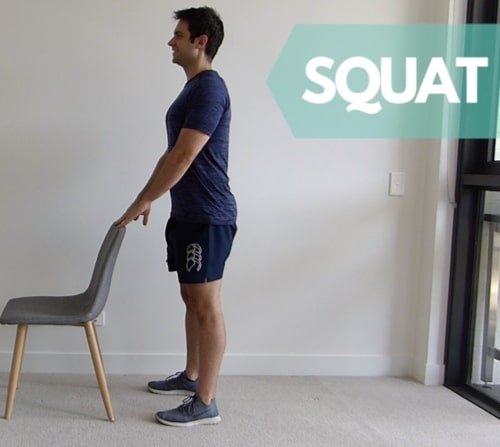
Chair stands
Sit near the front of a sturdy chair. Place your feet about hip-width apart. Lean forward slightly and stand up without using your hands if you can.
Then lower yourself slowly. Repeat five to ten times. Use your hands on the chair or a nearby support if needed.
Wall push-ups
Stand facing a wall. Place your hands on the wall at shoulder height. Bend your elbows and bring your chest closer to the wall, then push back.
Keep your body in a straight line. Do not lock your elbows. Try one or two sets of eight to twelve repetitions.
Heel raises
Hold a counter or sturdy chair. Slowly lift your heels so you rise onto your toes. Pause, then lower your heels with control.
This exercise works the calf muscles and supports ankle strength. Try eight to fifteen repetitions.
Seated knee extensions
Sit tall in a chair with both feet on the floor. Slowly straighten one knee until your leg is almost level, then lower it.
Alternate legs. This movement strengthens the front of the thigh and may help with walking and stair use.
Resistance band rows
Sit or stand tall. Hold a resistance band with both hands. Pull your elbows back while gently squeezing your shoulder blades, then return to the start.
Keep your shoulders relaxed. Avoid jerking the band.
Strength exercises should feel steady and controlled. You should not hold your breath. Exhale as you lift or push, and inhale as you return.
Balance Exercises and Fall Prevention
Falls are a major concern for many older adults, but balance can improve with regular practice. Balance exercises are among the best exercises for seniors who want to feel more secure while walking or standing.
Try these movements near a kitchen counter:
- Stand with both feet together for 10 to 20 seconds.
- Move one foot slightly ahead of the other.
- Practice heel-to-toe steps along the counter.
- Shift your weight from side to side.
- Stand on one foot for a few seconds.
- Repeat on the other side.
Keep one or both hands close to support. As your balance improves, reduce your grip rather than moving far away from the counter.
Tai chi can also be helpful. It uses slow, flowing movements and controlled weight shifts. Some studies suggest that tai chi may improve balance and reduce fall risk, though results can vary from person to person.
Also review your home environment. Remove loose rugs, improve lighting, keep walkways clear, and install grab bars where needed. Exercise is powerful, but a safe home adds another layer of protection.
Chair Exercises for Seniors
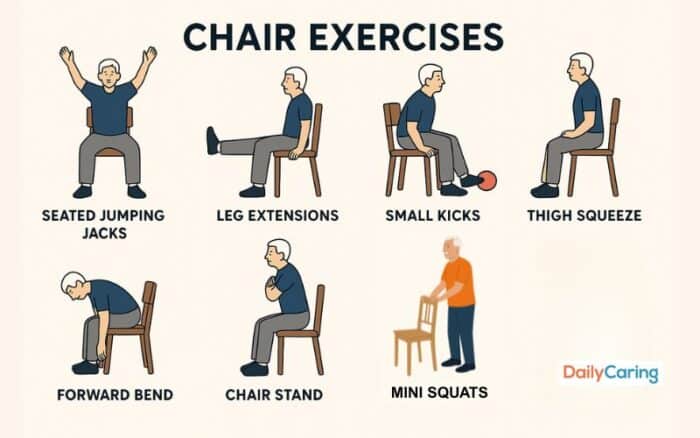
Chair exercises work well for people with limited mobility, joint pain, low stamina, or fear of falling. They allow you to exercise while seated or while using the chair for support.
A simple chair routine may include:
• Seated marching for 30 seconds
• Ankle circles in both directions
• Seated knee extensions
• Arm reaches
• Seated side bends
• Chair stands
• Seated toe taps
Keep the chair on a level surface. Avoid chairs with wheels or very soft cushions.
Chair exercise does not mean the workout is too easy. You can increase the challenge by moving more slowly, adding repetitions, or using light hand weights. The best exercises for seniors are the ones that match current ability and can be done safely.
If standing is difficult, begin with five minutes of seated movement. Even small motions can help reduce long periods of sitting.

Low-Impact Exercise Options
Low-impact exercise places less stress on the joints than running or jumping. It can suit people with arthritis, mild joint pain, or lower fitness levels.
Water exercise
Water supports some of your body weight and can reduce joint pressure. Water walking and water aerobics can improve endurance and strength.
Use a pool with safe steps, handrails, and staff support. Never exercise in water alone.
Stationary cycling
A stationary bike offers a seated way to train the legs and heart. Start with low resistance and a slow pace.
Adjust the seat so your knee stays slightly bent when the pedal is at its lowest point. Stop if you feel knee pain or numbness.
Dancing
Dancing can improve aerobic fitness and mood. Choose slow dance styles or follow a seated dance class if balance is limited.
Keep the floor clear. Avoid fast turns until your balance and leg strength improve.
Gentle yoga
Senior yoga can support flexibility, breathing, and body awareness. Look for a class designed for older adults or people with limited mobility.
Tell the instructor about joint replacements, osteoporosis, balance problems, or other health concerns. Avoid deep twists and extreme positions unless a qualified professional approves them.
How Often Should Seniors Exercise?
A healthy weekly plan can include several types of movement. The exact amount should reflect your health, schedule, and fitness level.
A practical plan may look like this:
• Monday: 20-minute walk and gentle stretching
• Tuesday: Strength exercises for 15 to 20 minutes
• Wednesday: Balance practice and a short walk
• Thursday: Water exercise or stationary cycling
• Friday: Strength exercises and stretching
• Saturday: A longer walk, dancing, or gardening
• Sunday: Rest or gentle mobility work
This plan is only an example. Someone with pain or low stamina may need shorter sessions. Someone who already exercises may need more challenge.
Break long periods of sitting whenever possible. Stand, stretch, or walk for a few minutes every hour. These small breaks can make the day more active without feeling like a formal workout.
When deciding what are the best exercises for seniors, think about the “four S” test: safe, suitable, simple, and sustainable. If an exercise meets those four points, it has a better chance of becoming a lasting habit.
How to Start an Exercise Routine Safely
Starting slowly is not a weakness. It is a smart way to build trust in your body.
Follow these steps:
- Choose one aerobic activity, one strength exercise, and one balance exercise.
- Begin with five to ten minutes.
- Warm up with slow walking or gentle arm movements.
- Use a stable chair or counter for support.
- Increase time or repetitions gradually.
- Keep a simple record of your activity.
- Rest when you need to rest.
A mild muscle ache can happen after new activity. Sharp pain, swelling, dizziness, faintness, severe breathlessness, or chest pressure is not normal exercise discomfort.
Speak with a health professional before starting if you have heart disease, uncontrolled blood pressure, recent surgery, severe osteoporosis, major balance problems, or a new health symptom. A physical therapist can also create a plan for joint pain, weakness, or recovery after an injury.
Avoid comparing your routine with someone else’s. Two people of the same age may have very different health histories. The best exercises for seniors are personal, not one-size-fits-all.
Common Exercise Mistakes Seniors Should Avoid
Many exercise problems come from doing too much too soon. The body needs time to adapt to new demands.
Avoid these common mistakes:
• Skipping the warm-up
• Using poor-fitting shoes
• Holding your breath during strength work
• Exercising through sharp pain
• Increasing weight and repetitions at the same time
• Practicing balance without nearby support
• Ignoring rest and recovery
• Copying advanced exercises from social media
• Training only one area of fitness
• Expecting fast results
Another common mistake is choosing exercises based only on calories burned. Fitness is not just about weight. Stronger legs, safer steps, easier breathing, and better confidence are valuable results.
It also helps to check medication effects. Some medicines may affect heart rate, blood pressure, alertness, or balance. Ask a pharmacist or clinician how your medicines may affect exercise.
Exercise Modifications for Common Health Concerns
Health conditions do not always mean you must stop moving. They may mean you need a different form, pace, or setting.
Arthritis
Choose low-impact activity, such as water exercise, cycling, or walking on a smooth surface. Move joints through a comfortable range and avoid forcing painful positions.
Osteoporosis
Strength training can be useful, but people with osteoporosis may need to avoid forceful forward bending and twisting. Ask a physical therapist for safe exercises.
Diabetes
Check how activity affects your blood sugar. Carry a fast source of glucose if your clinician recommends it, and wear supportive shoes.
Heart or lung disease
Use the effort level advised by your medical team. Start with short sessions and include rest periods.
Balance problems
Use seated exercises, counter-supported movements, or supervised classes. A cane or walker should be fitted by a qualified professional.
These examples do not replace personal medical advice. A condition may vary in severity, and the safest exercise plan depends on your symptoms and treatment.
How to Stay Motivated
Motivation is easier when exercise has a purpose. Instead of saying, “I need to work out,” choose a practical goal such as walking to the mailbox, standing from a chair more easily, or playing with grandchildren.
Try these ideas:
• Exercise with a friend
• Join a senior center class
• Listen to music or a podcast
• Keep shoes near the door
• Schedule movement at the same time each day
• Celebrate small improvements
• Use a calendar to track activity
• Try a new safe activity each month
Make the first step very small. Put on your shoes and walk for five minutes. Once the habit feels normal, add more time.
A supportive environment matters too. Invite family members to join you, or ask a friend to call during your walk. Exercise can become social time rather than another chore.
Frequently Asked Questions About What Are the Best Exercises for Seniors
What are the best exercises for seniors with weak legs?
Chair stands, seated knee extensions, heel raises, and short walks can help build leg strength. Start near a sturdy support and ask a physical therapist for guidance if weakness is new or severe.
Is walking enough exercise for seniors?
Walking is an excellent form of aerobic activity, but it may not train balance, flexibility, or all major muscle groups. Add simple strength, balance, and stretching exercises for a more complete routine.
How much exercise should a 70-year-old get?
Many healthy adults should work toward 150 minutes of moderate aerobic activity each week, plus strength work on at least two days. Start below that level if needed and increase gradually with medical guidance.
What are the best exercises for seniors with arthritis?
Low-impact exercises such as water walking, cycling, gentle yoga, and walking often work well. Exercise should not create sharp pain or lasting swelling, so adjust the activity and seek professional advice when needed.
Can seniors exercise every day?
Yes, many seniors can move every day if they vary the effort and include rest when needed. Gentle walking, stretching, and mobility work may be done often, while hard strength sessions may need recovery time.
Are chair exercises effective for older adults?
Yes, chair exercises can improve strength, mobility, circulation, and confidence. They are especially useful for people who cannot stand for long or who need extra balance support.
Conclusion
The best exercises for seniors include a mix of walking or other aerobic activity, strength training, balance work, flexibility, and functional movements. Start with safe exercises that match your current ability, then build slowly over time.
Small efforts can lead to meaningful changes. A few chair stands today may help you rise more easily next month. A short walk may become better stamina, stronger legs, and greater independence.
Choose one simple exercise and begin this week. If you have a health condition or concerns about safety, speak with your clinician or a physical therapist first. Explore trusted senior fitness resources, share this guide with someone you care about, and leave a comment about the exercises that help you stay active.

Michael Reynolds is a senior contributor at RetirementGazette.com, where he focuses on helping readers navigate the journey toward a secure and fulfilling retirement. With over a decade of experience in personal finance, retirement planning, and lifestyle writing, Michael combines practical strategies with easy-to-understand guidance tailored for both pre-retirees and those already enjoying their golden years.