To apply for Senior Freeze in NJ, confirm eligibility, gather records, complete PTR-1 or PTR-2, and file by the deadline.
New Jersey’s Senior Freeze program can reimburse eligible older homeowners and people with disabilities for part of their property tax increase. The process is manageable when you know which form to use, what income counts, and which records to keep. This guide explains how to apply for senior freeze in NJ with clear steps, practical examples, and tips based on official New Jersey program rules.
What Is the New Jersey Senior Freeze Program?
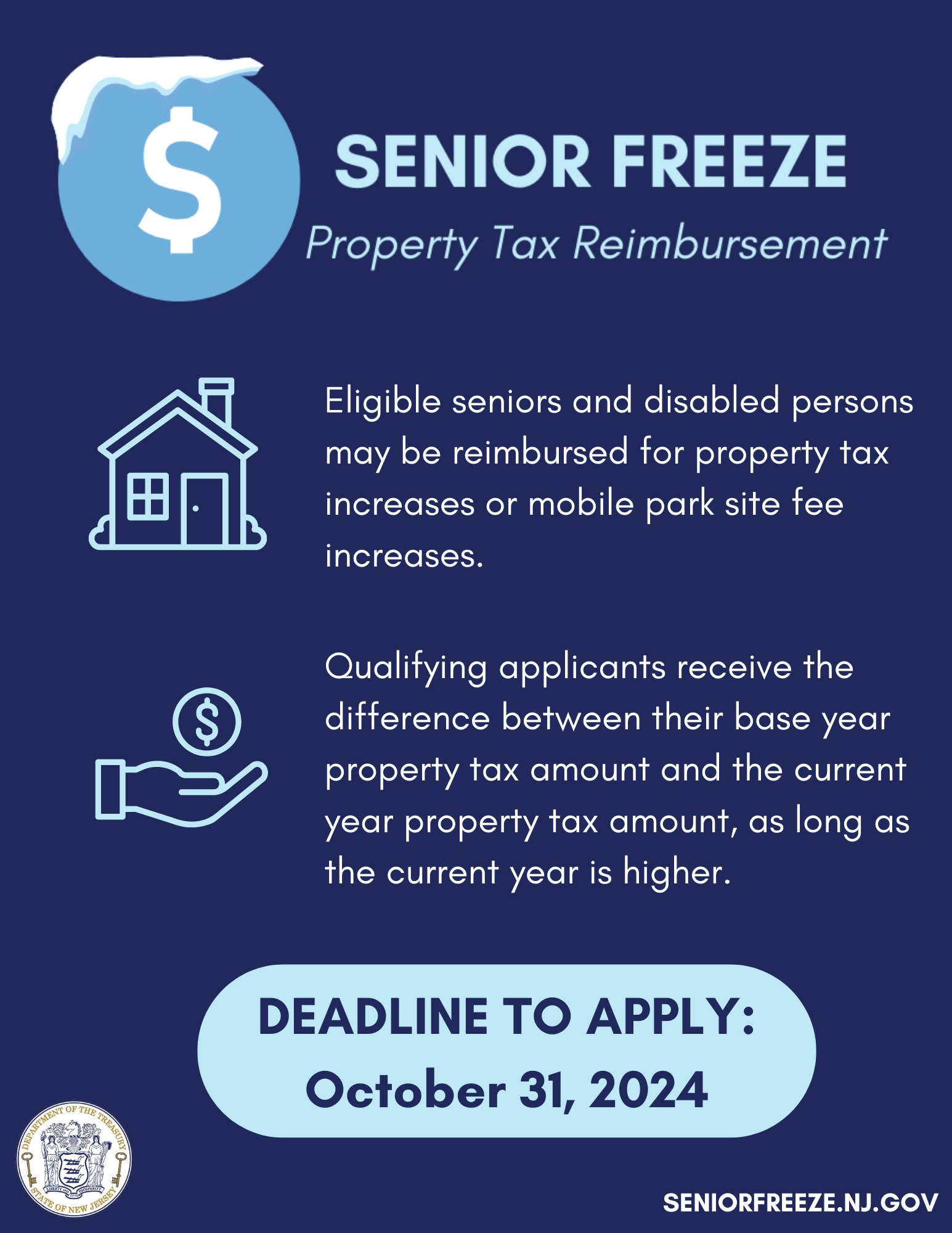
The New Jersey Senior Freeze, also called the Property Tax Reimbursement Program, helps eligible residents offset increases in property taxes. It does not usually refund your entire property tax bill. Instead, it compares your property taxes in a base year with your taxes in the year for which you apply.
For example, imagine that your property taxes were $6,000 in the base year and $8,000 in the filing year. If you meet every rule, the program may reimburse the $2,000 increase, subject to the program’s requirements and limits.
The program is different from a property tax deduction. A deduction lowers taxable income. A Senior Freeze payment is a reimbursement sent after the state reviews and approves your application.
When learning how to apply for senior freeze in NJ, remember these key points:
• You must meet age or disability rules.
• You must satisfy New Jersey residency and ownership rules.
• Your income must fall within the limit for the filing year.
• You must have paid your property taxes on time.
• You must file the correct form by the stated deadline.

Who Can Apply for Senior Freeze in NJ?
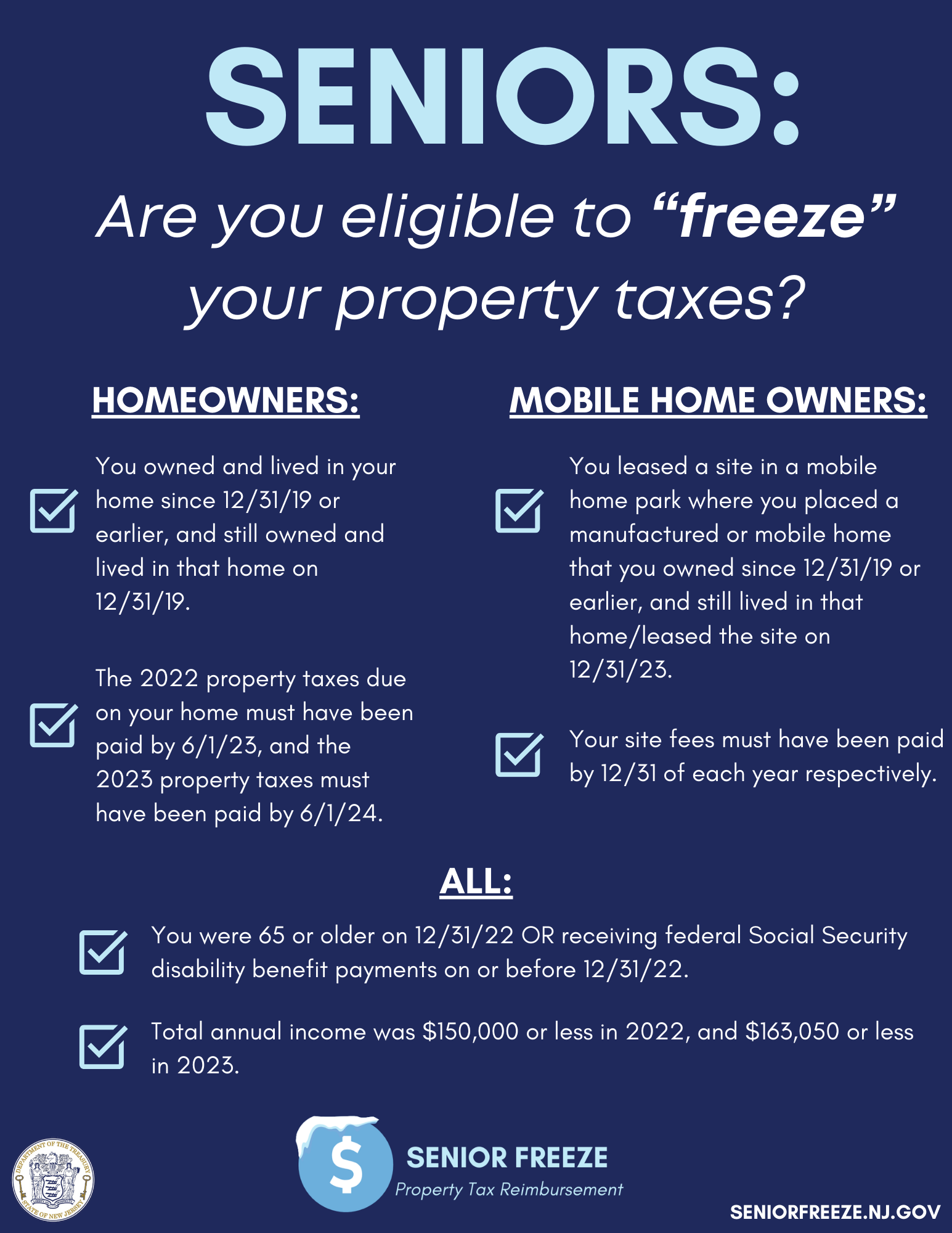
Eligibility can change by filing year, so always read the instructions for the specific application you are submitting. In general, applicants must meet age, residency, ownership, income, and property tax payment requirements.
You may qualify if you are:
• Age 65 or older by the required date for the program year
• Receiving Social Security disability payments and meeting the program’s other rules
• A New Jersey resident for the required period
• The owner of and resident in your New Jersey home for the required period
• Within the annual income limit
• Current on your property taxes and other required municipal charges
The program may cover a house, condominium, cooperative unit, or qualifying mobile home. Rules can differ based on the type of property, so do not assume that every home receives the same treatment.
Age and disability requirements
For many program years, an applicant must be at least 65 by December 31 of the applicable year. Some people under 65 may qualify if they receive Social Security disability benefits. Supplemental Security Income, or SSI, is not always treated the same as Social Security disability benefits.
Check the current form carefully. The state may ask for proof of age or disability status.
New Jersey residency requirements
The Senior Freeze is meant for people who maintain a long-term New Jersey home. The rules generally require a continuous New Jersey residence for at least 10 years and ownership of the current home for at least three years.
You also must live in the property as your main residence. A vacation home, rental property, or second home normally does not qualify.
Income requirements
The program counts more than wages. Depending on the year, income may include:
• Social Security benefits
• Pension payments
• Withdrawals from retirement accounts
• Interest and dividends
• Rental income
• Business income
• Capital gains
• Tax-exempt income
The income ceiling is updated from time to time. Do not rely on an old number from a neighbor, website, or prior application. Use the income limit printed in the current New Jersey Senior Freeze instructions.
Documents to Gather Before You Apply
Good records make the process easier. Before starting how to apply for senior freeze in NJ, create a folder for the filing year. A paper folder works well, but a secure digital folder is also useful.
Gather these items when they apply to you:
• Your Social Security number or taxpayer identification information
• Your spouse’s or civil union partner’s information
• Proof of age or disability
• Federal and New Jersey income tax records
• Social Security or pension statements
• Bank, investment, and retirement income records
• Your property tax bills
• Proof that property taxes were paid
• Mortgage or escrow statements, if taxes were paid through a lender
• Deed or ownership records, if requested
• Mobile home registration or site fee records, if applicable
• Prior Senior Freeze application information
Your property tax bill may show the amount billed, but the state may also need proof of payment. If your mortgage company pays your taxes, ask the lender for an annual escrow statement or payment history.
One common mistake is using the tax amount billed instead of the amount actually paid. Keep receipts, canceled checks, municipal payment records, or lender statements in case the state asks for verification.

How to Apply for Senior Freeze in NJ Step by Step
The basic process is simple, but accuracy matters. Here is how to apply for senior freeze in NJ from start to finish.
1. Confirm the filing year
First, identify the year covered by the application. The age rule, income limit, base year, and deadline can change. Read the current instructions before entering any figures.
New Jersey may publish updated information through its Division of Taxation website, online filing system, and printed forms.
2. Decide whether you need PTR-1 or PTR-2
Most first-time applicants use Form PTR-1. This is generally the application for people who did not receive a Senior Freeze payment for the previous year.
Many prior recipients use Form PTR-2. The state may send this form to people who received a payment before. A PTR-2 can include some information from your prior filing, but you still must review every line.
If you are unsure which form applies, contact the New Jersey Division of Taxation before filing. Sending the wrong form can delay your reimbursement.
3. Complete your personal information
Enter your name, address, Social Security number, date of birth, and contact details. If you are married or in a civil union, provide the requested information for your partner.
Use the address of the home that qualifies for the program. If you moved during the year, explain the move when the form asks for it.
4. Report all required income
Use the form’s instructions to report income for the correct year. Do not include only the income shown on your federal tax return if the Senior Freeze instructions ask for additional types of income.
Review these areas carefully:
• Pension and annuity income
• Social Security payments
• IRA and 401(k) withdrawals
• Interest and dividends
• Rental income
• Tax-exempt interest
• Business income
• Gains from property or investments
If you and your spouse file jointly, the state may count both people’s income. Omitting a spouse’s income can lead to a request for more information or a later adjustment.
5. Enter property tax information
Report the property taxes for the base year and the application year. The form may ask for the tax amount, payment dates, and other property details.
Use municipal records when possible. If the tax bill includes charges that are not property taxes, do not automatically add them. Follow the form’s instructions for qualifying taxes and charges.
6. Choose online or paper filing
Many residents can file online through New Jersey’s tax services system. Online filing may help reduce math errors and give you a confirmation record.
Paper filing may be better for people who prefer printed documents or who need to include supporting records. Sign the form, attach requested documents, and use the mailing instructions shown on the form.
7. Submit before the deadline
The filing deadline is set by the state for each program year. It is often in the fall, but the exact date can change. Check the current instructions rather than assuming the deadline from a prior year still applies.
Save proof of filing, such as:
• An online confirmation number
• A copy of the completed application
• A certified mail receipt
• A delivery confirmation
This is one of the most important steps in how to apply for senior freeze in NJ. A complete application filed late may not qualify unless the state provides an extension or special exception.
How Much Money Can the Senior Freeze Provide?
The reimbursement is usually based on the difference between your property taxes in the base year and the property taxes in the application year. It is not automatically a fixed payment for every senior homeowner.
The amount can depend on:
• Your base-year property taxes
• Your current-year property taxes
• Whether you paid the required taxes
• Your income
• Your ownership and residency history
• The program rules for that year
• Any statutory limits or adjustments
For example:
• Base-year taxes: $5,500
• Application-year taxes: $7,000
• Possible tax increase: $1,500
This example does not guarantee a $1,500 payment. The state must confirm your eligibility and calculate the approved reimbursement under the rules for that year.
The Senior Freeze also does not stop your property taxes from rising in the future. It is a reimbursement program, not a permanent freeze on your municipal tax bill. You generally need to apply again for each year you want to claim a benefit.

Common Mistakes That Delay an NJ Senior Freeze Application
Many problems are preventable. When helping someone understand how to apply for senior freeze in NJ, I would emphasize careful records more than fast filing. A rushed form can create weeks of delay.
Watch for these common mistakes:
• Using the wrong form
• Leaving income sections blank
• Reporting income for the wrong year
• Forgetting a spouse’s income
• Using the tax amount billed instead of the amount paid
• Failing to sign the application
• Sending unclear copies
• Missing the filing deadline
• Using a new address without explaining a move
• Assuming SSI automatically meets the disability rule
• Failing to keep proof of submission
A practical example is a homeowner who pays property taxes through an escrow account. The homeowner may have a tax bill but no receipt from the town. In that case, an escrow statement or lender payment record may help prove that the taxes were paid.
If the state sends a letter asking for more information, respond by the deadline in that letter. Keep a copy of everything you send.

What Happens After You Submit the Application?
After filing, the New Jersey Division of Taxation reviews your application. The state may verify your income, property ownership, residency, age, disability status, and tax payments.
Processing time varies. It may take longer when:
• The application is incomplete
• Supporting documents are missing
• Your income does not match state records
• You recently moved
• Ownership changed during the year
• The tax payment record needs verification
The state may contact you by mail or through the online system. Check your mail often and keep your contact information current.
If approved, the reimbursement is generally issued through the payment method allowed for that program year. If denied, read the explanation carefully. Some applicants may be able to correct an error, provide documents, or appeal under the state’s procedures.
Do not submit a second application just because you have not received an immediate response. First, check your filing confirmation or contact the program using the official contact information.
How to Apply for Senior Freeze in NJ Online
Online filing can be convenient if you have your records ready. Start from the official New Jersey Division of Taxation website, not from an advertisement or an unofficial form site.
Before you begin, have these items nearby:
• Your prior-year Senior Freeze information, if applicable
• Property tax bills
• Income records
• Social Security or pension details
• Bank information, if direct deposit is offered
• A valid email address
Work through the application slowly. Save the form as you go if the system allows it. At the end, print or download the confirmation page.
If you cannot complete the application online, use the paper form or ask a trusted family member, tax professional, county office, or senior assistance organization for help. Never share your Social Security number with an unverified website or caller.

Special Situations to Consider
Some applicants have circumstances that require extra care. These situations do not always disqualify you, but they may change which records you need.
You moved during the year
The program usually focuses on your principal residence and specific ownership dates. If you moved, review the instructions closely and explain when each property was your main home.
You own a condominium or cooperative
Condominium and cooperative owners may have special ways to document property taxes. Ask the association or managing agent for the records required by the current form.
You own a mobile home
Mobile home applicants may need records for both the home and the land or site fees. The current instructions will explain which costs qualify.
You own the home with another person
Ownership questions can become complex when a home is jointly owned with a child, relative, trust, or partner. Provide the ownership information exactly as requested and keep copies of legal documents.
Your spouse died
A surviving spouse may still qualify, but the application may ask for updated household and ownership details. Include only the information requested and contact the state if the form does not match your situation.
These examples show why how to apply for senior freeze in NJ is not always identical for every household. The general process is the same, but the proof needed can vary.

Ways to Get Help With Your Application
You do not have to handle a confusing application alone. Start with official New Jersey tax information and the instructions that came with your form.
Helpful options may include:
• New Jersey Division of Taxation assistance
• Your municipal tax collector
• County senior services
• A trusted tax preparer
• An accredited legal aid or senior assistance organization
• A family member who can help organize records
Be cautious with anyone who promises a guaranteed payment or asks for a large fee before reviewing your eligibility. The program has strict rules, and no private service can guarantee approval.
If you hire a tax professional, ask whether they have handled New Jersey property tax reimbursement applications. Give them complete income and property tax records so they can prepare an accurate filing.
Frequently Asked Questions About How to Apply for Senior Freeze in NJ
What form do first-time applicants use for the New Jersey Senior Freeze?
First-time applicants generally use Form PTR-1. Prior recipients may use Form PTR-2, but you should follow the instructions for the specific filing year and contact the state if you are uncertain.
Can I apply for Senior Freeze if I am under 65?
You may qualify if you receive qualifying Social Security disability benefits and meet the other program requirements. SSI alone may not satisfy the disability rule, so review the current instructions carefully.
Does the Senior Freeze refund my entire property tax bill?
No. The program generally reimburses an approved increase between your base-year property taxes and your application-year taxes. It does not normally pay your full annual property tax bill.
What income counts for the Senior Freeze?
The program may count wages, pensions, Social Security, retirement withdrawals, interest, dividends, rental income, business income, and other amounts listed in the instructions. Always report income according to the current form, even if some income is not taxable on your federal return.
Can I apply if my mortgage company pays my property taxes?
Yes, you may still qualify if you meet the program rules. You will need reliable proof that the taxes were paid, such as a mortgage escrow statement or lender payment record.
How do I check the status of my application?
Use the official New Jersey tax services options or contact the Division of Taxation with your application details. Keep your confirmation number and copies of all submitted documents.
Do I need to apply every year?
Usually, yes. The Senior Freeze is generally claimed for a specific program year, so receiving a payment once does not automatically guarantee future payments. Prior recipients may receive a PTR-2 form, but they still need to review, complete, and submit it.
Conclusion
Knowing how to apply for senior freeze in NJ can make a major difference for eligible homeowners facing higher property taxes. Confirm the current rules, choose PTR-1 or PTR-2, report all required income, prove that your taxes were paid, and file before the official deadline.
Treat the application like a small file project: gather your records, check every number, and save proof of submission. Visit the official New Jersey Division of Taxation resources for the latest form and deadline, then share this guide with a neighbor or family member who may qualify.

Michael Reynolds is a senior contributor at RetirementGazette.com, where he focuses on helping readers navigate the journey toward a secure and fulfilling retirement. With over a decade of experience in personal finance, retirement planning, and lifestyle writing, Michael combines practical strategies with easy-to-understand guidance tailored for both pre-retirees and those already enjoying their golden years.