
Introduction
A bedside commode is a portable toilet chair used when walking to a bathroom is hard, unsafe, or not possible. In the United States, it is often used after surgery, during illness, after an injury, or by people with limited strength or balance.
To use one safely, place it on a firm, level floor near the bed, lock the wheels if it has wheels, check that the bucket and seat are secure, and transfer slowly. Never use a bedside commode if you cannot sit, stand, or transfer safely without the right help.
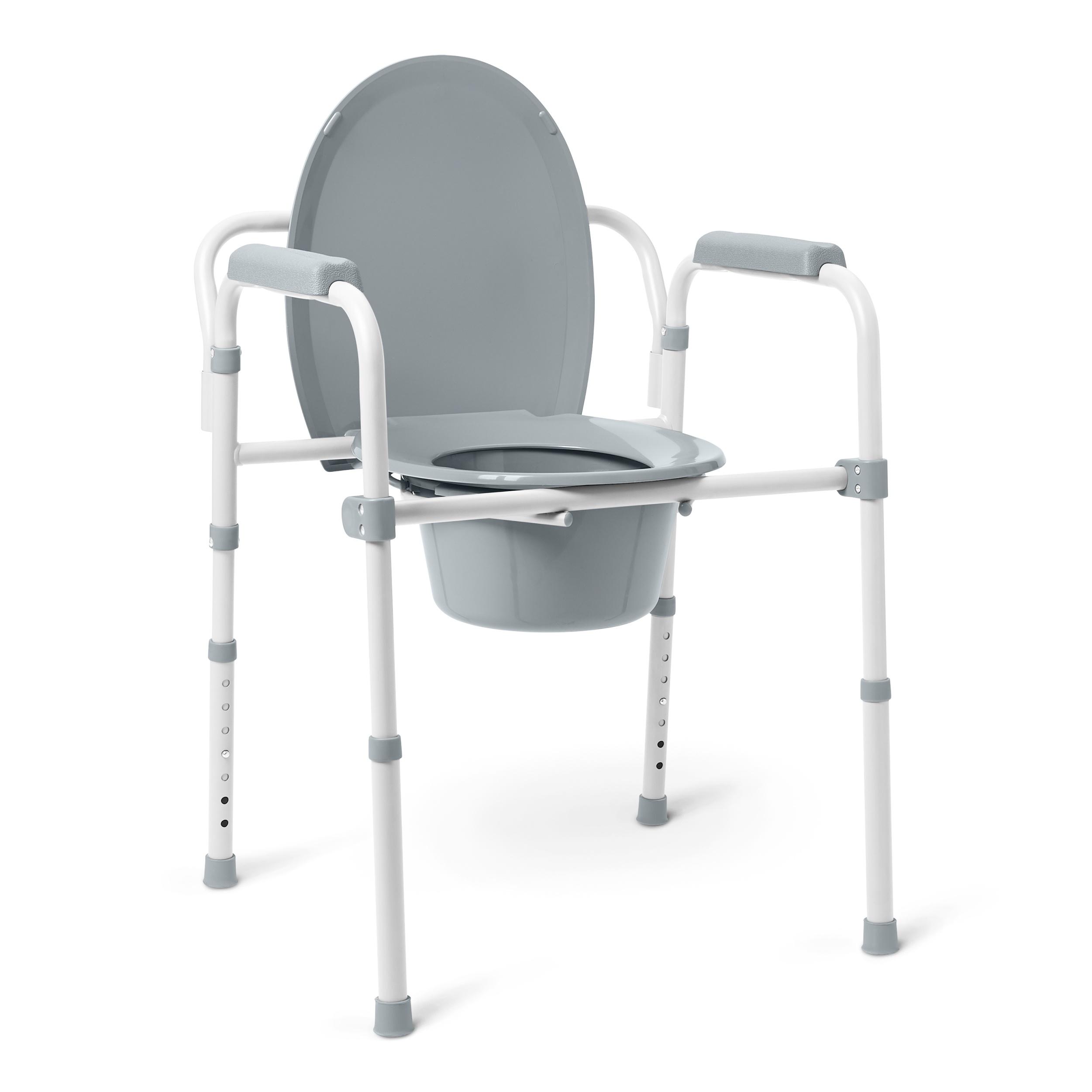
This guide explains how to set up a bedside commode, move onto it, use it at night, clean it, and handle common problems. Follow your clinician’s instructions and the instructions for your specific commode.
What Is a Bedside Commode?
A bedside commode is a chair with a toilet seat and a removable container. It does not connect to household plumbing. The container catches urine and stool, which must be emptied and cleaned after use.
Common types include:
- Standard commode: A fixed chair with a removable bucket.
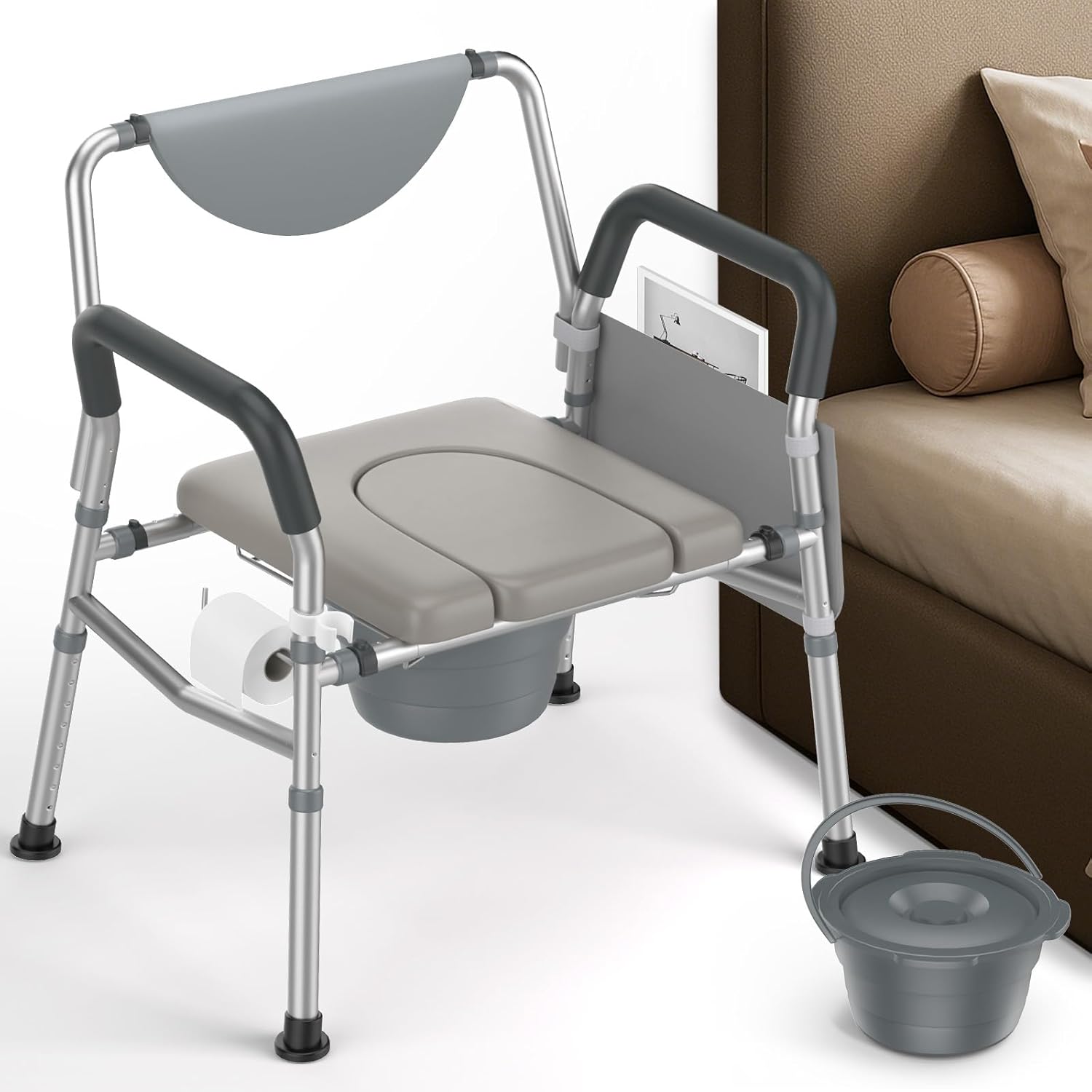
- Drop-arm commode: Has a side arm that lowers or swings away. This can help with lateral transfers from a bed or wheelchair.
- Rolling commode: Has casters and may be moved short distances when the wheels are locked. Use it over a toilet only if the manufacturer allows it.
- Three-in-one commode: May work as a bedside toilet, raised toilet seat, or toilet safety frame. Each use has different setup rules.
Check the label or manual for the commode’s weight limit, height range, wheel use, and cleaning instructions. A commode that looks stable may still be unsafe if it is too narrow, too low, damaged, or not rated for the user.
Before Using a Bedside Commode
Prepare the area before the person needs to use the commode. Most falls happen during rushed transfers, poor lighting, clutter, or attempts to move without enough support.
Check the commode
Inspect these parts:
- Seat and lid
- Legs and rubber tips
- Screws, pins, and height-adjustment holes
- Armrests and backrest
- Bucket, splash guard, and lid
- Wheels, wheel locks, and frame
- Any cracks, loose parts, rust, or sharp edges
Do not use the commode if it rocks, has a cracked seat, has a loose leg, or has broken wheel locks. Ask a health care professional, medical equipment supplier, or caregiver to check it.
Choose a safe location
Place the commode:
- On a hard, level floor.
- Close enough to the bed for a safe transfer.
- Away from rugs, cords, clutter, and wet spots.
- Where the person can reach it without twisting far.
- Near a night-light or other steady light.
Do not place it on a slippery bath mat. Do not use a bedrail, walker, rolling table, or towel rack as a substitute for a proper handhold.
Adjust the height
The seat should usually be high enough for the person’s feet to rest flat on the floor. When seated, the knees should be close to a right angle, unless a clinician gave different instructions.
A seat that is too low can make standing harder. A seat that is too high can leave the feet unsupported and make balance worse. Adjust both legs evenly and make sure every locking pin is fully in place.
Set up the bucket
Place the bucket under the seat before use. Make sure it sits in the frame and cannot slide out when the person sits down.
Some buckets use a disposable liner. If you use one:
- Use a liner made for the commode or one recommended by the manufacturer.
- Fit it securely around the bucket.
- Do not fill it beyond the marked limit.
- Keep absorbent material away from the person’s skin unless the product is designed for this use.
Never place the commode over a toilet unless the seat, bucket, and frame are removed as directed and the model is designed for that purpose.
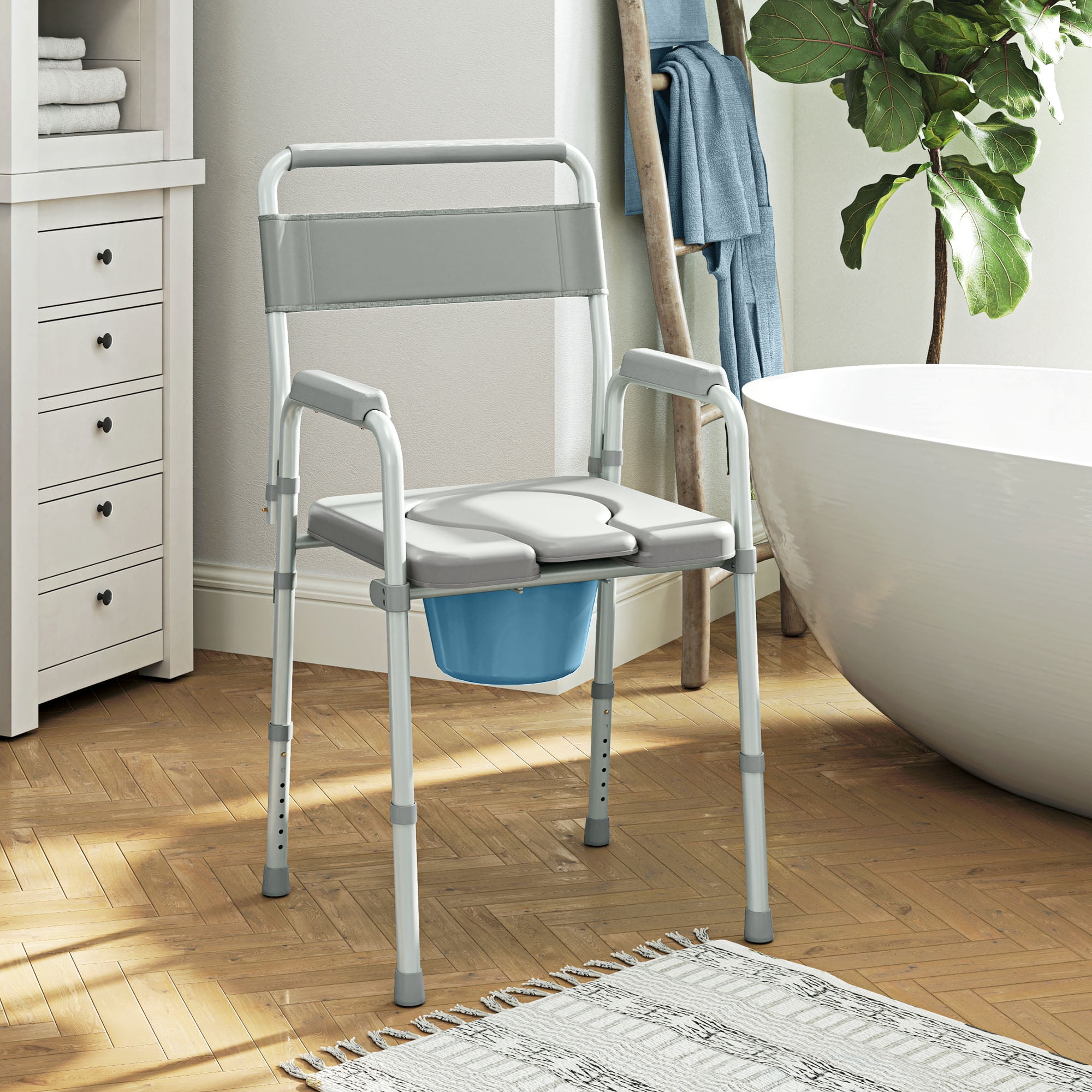
How to Use a Bedside Commode Step by Step
The safest method depends on the person’s strength, balance, weight-bearing limits, and transfer plan. If a physical therapist or nurse taught a different method, use that method.
1. Get ready
Before standing:
- Put on shoes or nonslip footwear.
- Move clothing down only as far as needed.
- Remove blankets and other items that may catch on the feet.
- Make sure the path to the commode is clear.
- Keep needed toilet paper, wipes, and a call device within reach.
Avoid loose socks on smooth floors. Do not rush because of urgency.
2. Position the commode
Place the commode beside the bed, usually on the stronger side if a clinician has recommended one. Turn it so the seat faces the person’s transfer path.
If the commode has wheels, lock every wheel before the person stands or sits. If it does not have wheels, confirm that all four legs are flat and stable.
3. Sit at the edge of the bed
The person should:
- Roll onto their side if needed.
- Move the legs over the edge of the bed.
- Push up with the arms.
- Sit for a moment before standing.
Pause if there is dizziness, weakness, chest pain, shortness of breath, or a sudden change in balance. Do not continue the transfer until the symptom has passed and the person is safe. Seek medical help for severe or new symptoms.
4. Stand safely
Place both feet on the floor. Move toward the edge of the bed. Push up from the bed or mattress with the hands.
Do not pull up on the walker, commode, caregiver, or another moving object. Once standing, pause and gain balance before taking steps.
A caregiver should use a gait belt only if trained to do so and if it is suitable for the person. A caregiver should not lift a person by the arms, neck, or clothing.
5. Turn toward the commode
Take small steps. Turn until the backs of the legs touch the commode seat.
The person should keep the body close to the commode and reach back for the armrests only after feeling the seat behind the legs. Do not sit while still turning.
6. Sit down slowly
Reach back for the armrests. Bend at the hips and knees. Lower the body slowly until fully seated.
If the commode has drop arms, make sure the arm is raised only when the person is ready to transfer and lowered or secured before sitting, according to the manufacturer’s instructions.
7. Use the commode
Sit in the center of the seat. Keep both feet supported unless a clinician has given different instructions.
Do not stand on the commode. Do not lean far forward or sideways. If the person feels faint, call for help and lower the head only as directed by a health care professional.
8. Stand and return
After finishing:
- Wipe and adjust clothing while seated.
- Place both feet flat on the floor.
- Push up from the armrests.
- Pause when standing.
- Turn with small steps.
- Back up until the bed touches the legs.
- Reach for the bed and sit slowly.
- Move back into a safe lying or sitting position.
Wash the hands after using the commode. A caregiver should wash hands after helping, emptying the bucket, or cleaning the chair.

How a Caregiver Can Help With a Bedside Commode
A caregiver should provide support without taking over the person’s movement. Explain each step before it happens and agree on simple signals such as “stand,” “turn,” and “sit.”
Before helping, ask:
- Can the person bear weight on both legs?
- Can the person follow directions?
- Can the person sit upright?
- Has a clinician set a weight-bearing limit?
- Does the person need a transfer belt, slide board, or two caregivers?
- Is the commode suitable for the person’s size and condition?
If the person cannot bear weight, has poor trunk control, becomes confused, or needs more lifting than the caregiver can safely provide, stop. Do not attempt a manual lift. Contact the care team about a safer transfer method or suitable equipment.
Use a two-person transfer when instructed
Some people need two trained caregivers. One person may control the upper body while the other helps with the legs or equipment. The exact method depends on the person’s condition and the equipment.
Caregivers should not improvise a lift. Back injuries and patient falls can occur when one person tries to move someone who needs more support.
Protect privacy and dignity
Close the door or curtain when safe. Keep supplies ready. Speak directly to the user, not only to the caregiver. Give the person enough time, but stay close if there is a fall risk.

How to Empty and Clean a Bedside Commode
Empty the container soon after use. This reduces odor, spills, and exposure to germs.
Safe emptying steps
- Put on disposable gloves.
- Keep the commode stable.
- Remove the bucket carefully.
- Carry it with both hands if it is heavy.
- Empty it into a toilet.
- Avoid splashing.
- Rinse the bucket if the manufacturer allows it.
- Clean and disinfect the bucket and contact surfaces.
- Let parts dry before replacing them.
- Remove gloves and wash hands with soap and water.
Do not pour urine or stool into a sink used for handwashing, food preparation, or drinking water.
Follow the disinfectant label for the correct surface, contact time, dilution, and ventilation. Never mix bleach with ammonia, acids, toilet cleaner, or other chemicals. Mixing cleaners can release dangerous gases.
If a disposable liner leaks, seal it according to local waste rules and clean the commode and nearby floor. Ask the health care agency or local waste service how to discard contaminated materials. People who handle stool or urine should use extra care if someone in the home has an infection or is receiving certain medical treatments.
Clean the chair
Clean the seat, armrests, frame, and any surface that may have been soiled. Check the manufacturer’s manual because some materials can be damaged by bleach, alcohol, or harsh cleaners.
Replace the bucket, splash guard, and liner correctly before the next use. A clean bucket is not enough if the frame or seat remains wet or soiled.

Using a Bedside Commode at Night
Night use needs extra planning because darkness and sleepiness increase fall risk.
Keep these items within easy reach:
- A steady night-light
- Toilet paper or wipes
- Nonslip footwear
- A call bell, phone, or alert device
- A walker, if prescribed
- A urinal or bedpan if walking is not safe
Do not leave a person alone if they normally need help with transfers. A caregiver should respond promptly when the person calls. If the commode is placed too far from the bed, the person may try to walk alone.
Avoid relying on a phone flashlight while standing. It may leave one hand unavailable for balance. Use a fixed light or motion-activated night-light instead.
Common Problems and Safe Fixes
| Problem | Possible cause | Safer next step |
|---|---|---|
| The commode moves | Wheels are unlocked, legs are uneven, or the floor is slippery | Lock all wheels, level the legs, and move it to a firm floor |
| The person cannot stand | Seat is too low, weakness has increased, or pain limits movement | Sit back down, do not pull on the commode, and contact the care team |
| The person feels dizzy | A sudden position change, dehydration, medication effect, or illness | Sit or lie down safely and seek medical advice, especially if symptoms persist |
| The bucket shifts | It is not seated in the frame or is the wrong size | Stop use and reinstall the correct bucket |
| Urine or stool leaks | The liner is loose, the bucket is full, or the person is not centered | Replace the liner, empty the bucket, and check the seat and bucket fit |
| The person cannot reach the commode | It is too far away or the path is blocked | Move it closer and clear the route before the next transfer |
| The person has trouble wiping | Limited reach, pain, or poor balance | Provide wipes or a long-handled aid and ask a clinician about toileting support |
| The commode smells | It is not emptied or cleaned soon after use | Empty it promptly and follow the cleaning directions |
A fall, near fall, or repeated failed transfer is a reason to reassess the setup. The person may need a different commode height, a drop-arm model, a transfer aid, home health support, or physical therapy.
When to Call a Health Care Professional
Contact a clinician if the person has repeated falls, new weakness, increasing confusion, worsening pain, or a new inability to transfer. Ask for help choosing equipment if the person has changed weight, strength, balance, or weight-bearing status.
Seek urgent medical help for:
- Chest pain
- Severe shortness of breath
- Fainting
- Sudden confusion
- New one-sided weakness
- A serious fall or head injury
- Heavy bleeding
- Severe abdominal pain
- Inability to urinate with painful pressure
- Black, tar-like stool or large amounts of blood in stool
Call 911 in the United States for life-threatening symptoms. Do not move someone after a major fall if a neck, back, or hip injury may have occurred, unless there is immediate danger.

How to Choose the Right Bedside Commode
The best commode is the one that fits the user, the transfer method, and the room. A model that works for one person may be unsafe for another.
Consider:
- Seat height: Can the user sit and stand without excessive effort?
- Seat width and depth: Can the user sit fully back with both arms supported?
- Weight capacity: Does the manufacturer’s rated limit exceed the user’s weight?
- Transfer style: Is a drop-arm design needed for a wheelchair or lateral transfer?
- Mobility: Are wheels needed, or would fixed legs be safer?
- Stability: Does the frame remain firm on the intended floor?
- Bucket access: Can a caregiver remove and clean it without unsafe lifting?
- Armrests: Do they support pushing up and sitting down?
- Cleaning: Can the surfaces be cleaned with products available at home?
- Bathroom use: Is it actually approved for use over a toilet?
Do not choose a commode based only on price or appearance. Ask a doctor, nurse, occupational therapist, physical therapist, or medical equipment professional for help when the transfer is difficult.

Key Takeaways
- Place the commode on a firm, level floor near the bed.
- Lock the wheels before every transfer.
- Keep both feet supported when seated.
- Push from the bed or armrests; do not pull on the commode or walker.
- Use small steps and sit down slowly.
- Do not attempt a transfer alone if the person cannot bear weight or follow directions.
- Empty and clean the bucket after use.
- Get professional help after a fall, repeated near falls, or a major change in strength or balance.
Frequently Asked Questions
Can a bedside commode be used over a toilet?
Some three-in-one commodes are designed for use over a toilet. Remove the bucket only as the manufacturer directs, and confirm that the frame fits securely around the toilet. Never place a standard commode over a toilet unless its instructions specifically allow it.
Can someone sleep on a bedside commode?
No. A bedside commode is designed for toileting, not sleeping or prolonged sitting. Extended sitting can increase discomfort and may raise the risk of skin injury, especially for people with limited movement.
Should the commode be placed on the stronger side?
Often, placing it toward the stronger side can make a transfer easier. However, the correct side depends on the person’s movement plan, surgery, injury, and room layout. Follow the instructions from the person’s clinician or physical therapist.
How often should a bedside commode be cleaned?
Empty it after each use and clean any soiled surface at once. Disinfect the bucket and touch points according to the manufacturer’s instructions and the disinfectant label. Clean more often if there is leakage, infection risk, or visible soil.
What should I do if the person falls while using the commode?
Do not immediately pull the person up. Check for severe pain, bleeding, head injury, breathing trouble, or loss of consciousness. Call 911 for an emergency. If there is no apparent emergency, keep the person still until a trained professional gives guidance, especially if a hip, neck, or back injury is possible.
Does Medicare cover a bedside commode?
Medicare coverage depends on the person’s eligibility, medical need, supplier rules, and current coverage requirements. Check the official Medicare durable medical equipment guidance or contact Medicare and the prescribing clinician before purchasing.
Where can I find reliable instructions for a specific model?
Use the product manual first because height adjustment, wheel locks, bucket placement, and cleaning rules vary. If the manual is missing, contact the manufacturer or the medical equipment supplier. For transfer problems, ask a physical or occupational therapist for an in-home assessment.
Conclusion
Using a bedside commode safely requires more than placing a chair next to the bed. The commode must fit the user, stand firmly, and support a controlled transfer. Good lighting, locked wheels, clear floors, proper cleaning, and trained assistance reduce avoidable falls and spills.
If the person cannot transfer safely, do not force the task. Stop and ask a health care professional to review the equipment and teach a safer method.

Michael Reynolds is a senior contributor at RetirementGazette.com, where he focuses on helping readers navigate the journey toward a secure and fulfilling retirement. With over a decade of experience in personal finance, retirement planning, and lifestyle writing, Michael combines practical strategies with easy-to-understand guidance tailored for both pre-retirees and those already enjoying their golden years.