An older adult in a U.S. home, assisted-living apartment, or nursing facility may slide forward in a recliner because of poor seat fit, weak leg control, low muscle strength, pain, dizziness, or an unsafe sitting position. The safest first steps are to improve the chair fit, place the hips fully back, support the feet, and ask a health professional to check for medical causes.
Do not tie an older person into a recliner or use a tray, belt, or improvised strap as a restraint. These methods can cause injury, limit breathing, increase pressure on the skin, or make it harder to escape during an emergency.
Why Do Older Adults Slide Out of Recliners?
Sliding usually happens when the body moves forward while the pelvis tilts backward. The knees may rise, the feet may lose contact with the floor, or the seat may be too deep. Weak abdominal, hip, or leg muscles can make it hard to correct the position.
Common causes include:
- A recliner seat that is too deep or too wide
- A seat cushion that slopes forward or has become compressed
- Weak legs or poor trunk control
- Pain in the hips, knees, or back
- Numbness or reduced feeling in the legs
- Drowsiness from medicines
- Low blood pressure or dizziness
- A footrest that does not support the lower legs
- Sitting with the pelvis near the front edge
- A recliner that does not fit the person’s height and weight
- Poor lighting or rushed transfers
Repeated sliding is more than a comfort problem. It can lead to a fall, skin damage from shear, bruising, or difficulty standing up. The CDC lists falls as a major health concern for older adults in the United States, and fall risk can rise when strength, balance, vision, medicines, or the home environment change.
The goal is not simply to hold the person in place. The goal is to create a stable seating position that still allows normal movement and a safe exit.

1. Check the Recliner Fit
A properly fitted recliner is often the most effective long-term solution. The person should sit with the hips near the back of the seat, the lower back supported, and the feet supported without pressure behind the knees.
Check these points:
- Seat depth: When the person sits all the way back, there should usually be a small gap between the front edge of the seat and the back of the knees. A seat that is too deep may push the pelvis forward.
- Seat height: The feet should reach the floor or a stable footrest. The knees should not be much higher than the hips unless a clinician recommends that position.
- Seat width: The body should not lean to one side to find support.
- Back angle: A slightly reclined back may reduce forward sliding, but a very reclined position can make transfers harder.
- Cushion shape: A cushion that slopes sharply toward the front can encourage the body to slide.
- Armrests: The arms should rest comfortably without forcing the shoulders upward.
- Footrest: The footrest should support the lower legs and feet. It should not press hard into the calves or leave the feet hanging.
If the chair is too large, a qualified occupational therapist may recommend a suitable insert or positioning cushion. Avoid adding thick pillows behind the back without checking the result. A pillow can push the hips forward and make sliding worse.
A simple fit check
Ask the person to sit fully back while you observe from the side:
- Are both hips against the back of the seat?
- Is the lower back supported?
- Are both feet supported?
- Are the knees comfortably bent?
- Is the person leaning or twisting?
- Can the person reach the recliner control?
- Can the person get out without pulling on the footrest?
If several answers are no, the chair may not be the right size or style.

2. Reposition the Person Safely
When the person has slid down, do not pull sharply on the arms, neck, or shoulders. A sudden pull can injure the skin or joints and may cause the helper to lose balance.
Use this safer sequence:
- Stop the recliner. Keep the footrest closed unless the person needs it for support.
- Explain what will happen. Tell the person to remain still and avoid reaching for nearby furniture.
- Check for pain or injury. Ask about hip, back, knee, or shoulder pain. Look for dizziness, shortness of breath, or unusual weakness.
- Place both feet on a firm surface. Use the floor or a stable footstool. Do not use a rolling table or light chair.
- Ask the person to lean forward slightly. The nose should move toward the toes if the person can do so safely.
- Ask them to push through the armrests or a stable surface. Do not have them pull on the moving footrest.
- Help only as trained. Use a gait belt only if a nurse, physical therapist, or occupational therapist has taught the caregiver how to use it.
- If the person cannot stand safely, call for help. In the United States, call 911 for a fall with serious injury, severe pain, trouble breathing, loss of consciousness, or possible head, neck, or hip injury.
For a person who cannot follow directions, has severe weakness, or has fallen, do not attempt a forceful lift alone. Ask a healthcare professional or trained caregiver for a transfer plan.
How often should repositioning occur?
There is no single safe schedule for every person. Reposition the person whenever they begin to slide, report discomfort, or lose a stable posture. Someone with limited movement or a high risk of pressure injury may need a formal seating and skin-care plan from a nurse or rehabilitation professional.
Frequent sliding, even after repositioning, means the underlying problem needs assessment rather than repeated pushing.

3. Support the Feet and Lower Legs
Unsupported feet can allow the body to move forward. When the heels hang in the air, the legs may pull the pelvis toward the front of the seat.
Use one of these options when it fits the chair and the person:
- The recliner’s built-in footrest
- A firm, non-skid footstool
- A properly fitted leg support
- A manufacturer-approved ottoman or accessory
The support should be stable and wide enough for both feet. It should not slide across the floor or tip when the person presses down.
Check the lower legs after the person has been seated for a while. The support should not create strong pressure behind the knees, pinch the calves, or cause numbness. A person with poor circulation, diabetes, swelling, or reduced sensation may need professional guidance before using added leg support.
Do not use loose boxes, soft pillows, stacked books, or light tables as foot supports. They can move suddenly and cause a fall.

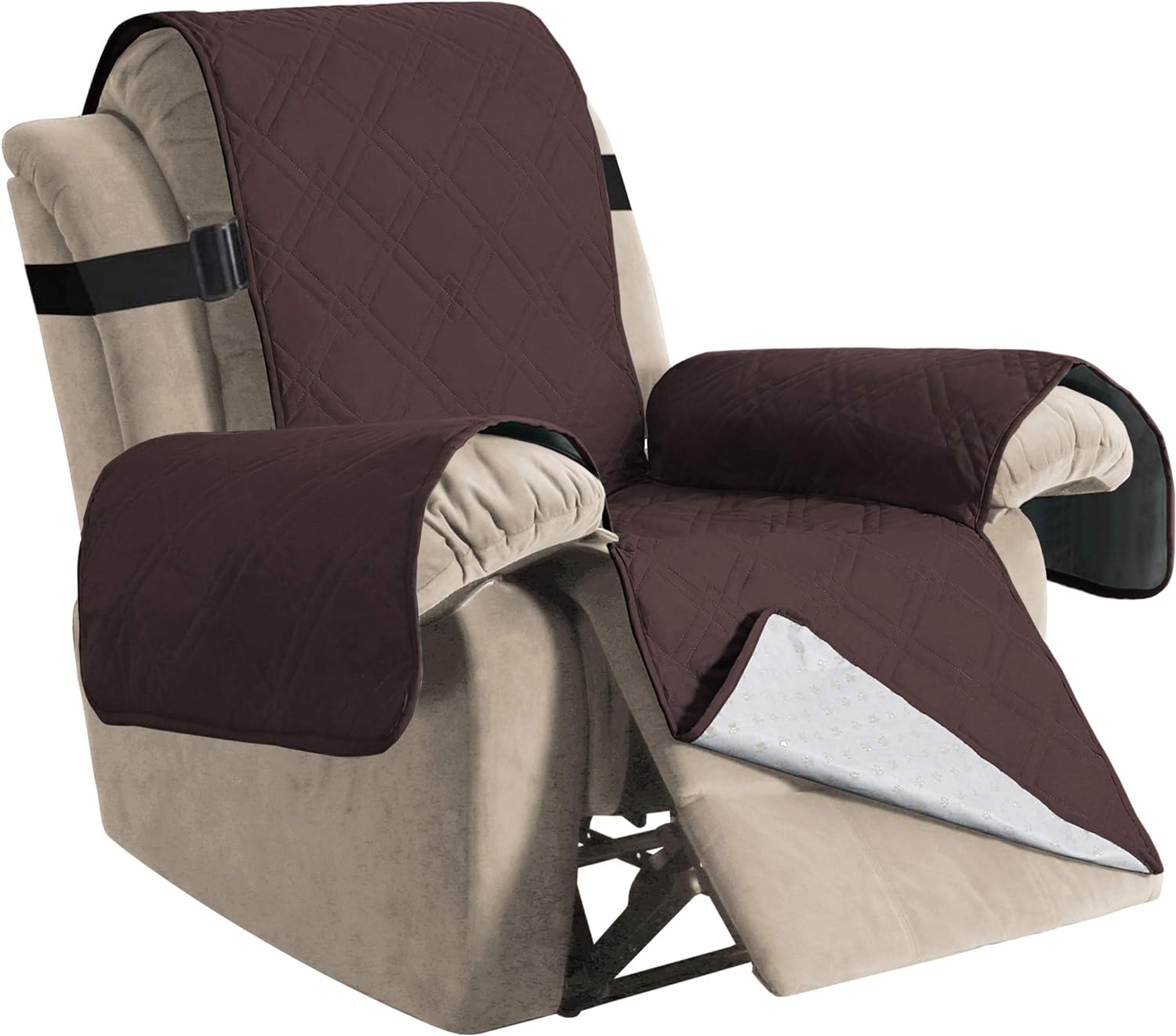
4. Use a Suitable Anti-Slide Cushion
A non-slip seating cushion may help when the person is alert, can shift position, and has enough trunk control to sit upright. Choose a cushion made for seating and follow its instructions.
Look for:
- A firm, stable base
- A cover that does not bunch or wrinkle
- A size that fits the recliner
- A design that supports upright sitting
- Materials that do not create excessive heat
- Compatibility with the recliner’s moving parts
- Clear cleaning and inspection instructions
A cushion should reduce movement without trapping the person. It must not force the pelvis into an unnatural angle or raise the person so high that standing becomes unsafe.
Avoid placing a slippery plastic sheet, smooth blanket, or loose towel under the person. These materials may increase sliding. Also avoid thick cushions that reduce the depth of the seat or prevent the recliner from closing correctly.
Inspect the cushion often. Replace it if it becomes flattened, torn, wet, or unstable.
When should you not use a cushion without professional advice?
Ask a physical therapist or occupational therapist first if the person:
- Cannot sit upright without support
- Has frequent falls
- Has severe dementia or cannot follow safety directions
- Has a pressure sore or fragile skin
- Has major weakness on one side
- Has uncontrolled movements
- Uses oxygen tubing, feeding equipment, or other medical devices
- Slides down despite repeated repositioning
The right product cannot correct every seating or medical problem.
5. Adjust the Recliner Position
The safest recliner position depends on the person and the chair. In many cases, a slightly reclined back with the legs supported is more stable than sitting upright with the body tilted forward. However, a deeply reclined position can make it difficult to stand.
Try small changes:
- Start with the back slightly reclined.
- Support both feet.
- Keep the hips near the back of the seat.
- Make sure the knees are not forced sharply upward.
- Ask the person whether they feel pressure, dizziness, pain, or fear.
- Test whether they can return to an upright position safely.
Follow the chair manufacturer’s instructions. Keep hands, clothing, blankets, and medical tubing away from moving parts. Children and pets should not operate the recliner around the seated person.
If the chair has a lift function, use it only as directed. A lift recliner may help some people stand, but it is not a substitute for a transfer assessment. The user still needs stable feet, a clear path, and enough strength to complete the movement.

6. Check Medicines and Medical Causes
A new sliding problem can signal a change in health. It may follow a medication change, illness, stroke, worsening arthritis, loss of strength, or a balance problem.
Contact the person’s doctor or nurse if sliding is:
- New or suddenly worse
- Linked with dizziness or faintness
- Associated with sleepiness or confusion
- Occurring after a medicine change
- Accompanied by weakness, numbness, or pain
- Happening with repeated falls
- Associated with trouble speaking, facial drooping, or a severe headache
Call 911 for possible stroke symptoms, serious injury, chest pain, severe breathing trouble, or loss of consciousness. Use the CDC’s fall-prevention resources and the STEADI approach as a starting point for discussing fall risk with a U.S. healthcare provider.
Do not stop prescription medicine without medical advice. A clinician or pharmacist can review medicines that may contribute to dizziness, low blood pressure, sedation, or poor coordination.
A physical therapist can assess strength, balance, and transfers. An occupational therapist can assess the recliner, room layout, cushions, and daily activities. A nurse can help with skin checks and pressure-injury prevention.

7. Keep the Area Around the Recliner Safe
A stable chair can still become unsafe if the surrounding area creates a difficult transfer.
Improve the area by:
- Removing rugs and loose cords
- Keeping a clear path to the bathroom
- Adding bright, even lighting
- Placing the call button or phone within reach
- Keeping frequently used items nearby
- Locking the wheels of nearby equipment
- Using a firm table that will not roll if support is needed
- Keeping pets and clutter away during transfers
- Placing nonslip footwear within reach
Do not place a walker far away. The person should not have to twist, lean, or stand before reaching it. A walker must be positioned correctly and used only if the person has been trained to use it.
A bedside or chair alarm may alert a caregiver when someone tries to stand, but it does not prevent a fall. Use alarms as part of a care plan, not as a replacement for supervision or safe seating.
Products and Methods to Avoid
Some quick fixes appear to stop sliding but create a greater hazard.
Avoid tying the person to the recliner
Do not use rope, belts, scarves, sheets, or straps unless a qualified clinical team has created and documented a lawful care plan for that specific person and setting. In many care situations, these devices may be considered restraints and can have serious safety and legal consequences.
Avoid using a tray as a barrier
A tray can block a person from getting out. It may also cause chest or abdominal injury if the person slips forward or falls against it. A tray should not be used to hold someone in a chair.
Avoid adding several loose pillows
Loose pillows can shift, fall under the feet, block the exit, or push the body into a poor position. Use only supports that are stable, suitable for the chair, and part of a safe seating plan.
Avoid pulling the person upward by the arms
This can injure the shoulders and may cause the helper to fall. Use trained transfer methods instead.
Avoid ignoring repeated sliding
Repeated sliding may be a sign that the recliner does not fit or that the person’s health has changed. Treat it as a warning, not as a habit to manage indefinitely.

A Quick Decision Guide
| What you observe | Likely concern | Safer next step |
|---|---|---|
| The person slides only in one chair | Poor chair fit or cushion shape | Compare the chair with another stable seat |
| The feet do not reach the floor | Poor leg support | Use a stable, suitable footrest and check knee pressure |
| Sliding began after a medicine change | Drowsiness, dizziness, or weakness | Call the prescribing clinician or pharmacist |
| The person cannot sit upright | Poor trunk control or illness | Arrange a PT or OT seating assessment |
| The person has pain after sliding | Possible injury or pressure problem | Stop the transfer and seek medical guidance |
| The person tries to climb over a tray | Unsafe restraint-like setup | Remove the barrier and create a supervised transfer plan |
| Sliding happens with falls or fainting | High fall or medical risk | Seek prompt medical assessment; call 911 for emergency signs |
| A cushion helps but makes standing harder | Cushion is too thick or poorly placed | Stop using it until the setup is reassessed |
The best solution is the one that improves stability while preserving the person’s ability to breathe, move, communicate, and leave the chair safely.

How to Prevent Sliding During Daily Use
Use the same seating routine each time:
- Place the recliner on a stable, level surface.
- Lock or secure the chair as the manufacturer directs.
- Help the person sit with the hips fully back.
- Place both feet on the floor or proper footrest.
- Check the back, hips, knees, and feet.
- Keep the control within reach.
- Recheck comfort and posture after several minutes.
- Watch for redness, pain, numbness, dizziness, or fatigue.
- Record what causes the sliding and what improves it.
- Share the pattern with the healthcare team.
Skin checks matter when a person slides often. Friction and shear can damage skin even when there is no obvious fall. Check the tailbone, hips, thighs, and heels for lasting redness, warmth, swelling, blisters, or open areas. Contact a healthcare professional if skin changes do not quickly improve or if the person has diabetes, poor circulation, or fragile skin.

Key Takeaways
- Start with chair fit, hip position, foot support, and the recliner angle.
- Reposition gently; never pull the person by the arms or neck.
- Use only stable, suitable cushions and supports.
- Do not use ropes, belts, trays, or improvised restraints.
- Repeated sliding may indicate a medical or mobility problem.
- Ask a physical therapist or occupational therapist for a seating and transfer assessment.
- Call 911 for serious injury, stroke symptoms, severe breathing trouble, chest pain, or loss of consciousness.
Frequently Asked Questions
Is it safe to use a belt to stop an elderly person from sliding out of a recliner?
Usually, no. A belt can act as a restraint and may increase injury risk if the person slips, tries to stand, or becomes entangled. Do not improvise a belt or strap. Ask the person’s healthcare team for a documented seating and safety plan.
Will a non-slip pad stop someone from sliding?
It may help when the main problem is a slippery seat surface, but it will not correct weakness, poor trunk control, a deep seat, or a medical problem. The pad must fit the chair and must not interfere with standing or the recliner mechanism.
Should the recliner be fully upright or fully reclined?
Neither position is automatically best. A slight recline with supported feet may improve stability, while a deep recline may make standing difficult. Test the position with the person and follow the chair’s instructions.
How can I help someone who has slid to the front of the chair?
Stop the chair, check for pain or injury, place the feet on a firm surface, and ask the person to lean forward and push from the armrests if they can do so safely. Do not lift alone if the person is weak, injured, confused, or unable to follow directions.
Can sliding out of a recliner be a sign of a stroke?
It can be related to weakness or another medical problem, but sliding alone does not diagnose a stroke. Call 911 immediately for sudden one-sided weakness, facial drooping, speech trouble, severe confusion, sudden vision changes, or a severe sudden headache.
Who can assess the best recliner setup?
A physical therapist can assess strength, balance, and transfers. An occupational therapist can assess the chair, cushion, room setup, and daily function. A nurse or doctor can check for skin problems, illness, and medicine effects.
Conclusion
The safest way to keep an elderly person from sliding out of a recliner is to correct the cause instead of trapping the person in the chair. Check the fit, place the hips fully back, support the feet, use a safe recline angle, and remove hazards around the chair.
If the problem continues, arrange a professional seating and transfer assessment. New or worsening sliding, dizziness, weakness, pain, confusion, or falls deserve medical attention.
Sources and Further Reading
- CDC: Older Adult Fall Prevention
- CDC STEADI: Stopping Elderly Accidents, Deaths & Injuries
- National Institute on Aging: Falls and Older Adults
- Agency for Healthcare Research and Quality: Preventing Falls in Hospitals
- U.S. Food and Drug Administration: Medical Device Safety

Michael Reynolds is a senior contributor at RetirementGazette.com, where he focuses on helping readers navigate the journey toward a secure and fulfilling retirement. With over a decade of experience in personal finance, retirement planning, and lifestyle writing, Michael combines practical strategies with easy-to-understand guidance tailored for both pre-retirees and those already enjoying their golden years.