To find senior care, assess daily needs, compare trusted providers, visit options, and review costs and contracts.
Learning how to find senior care can feel like solving a puzzle while emotions are high. The right choice depends on health needs, safety, location, budget, and your loved one’s wishes. This guide explains each step in plain language, using practical checks that can help your family choose care with greater confidence.

Start by identifying the type of care needed
The first step in how to find senior care is to understand what help your loved one needs today. Do not choose a facility or service based only on age. Two people of the same age may need very different levels of support.
Begin with a simple care review. Watch how your loved one manages daily tasks at home. These tasks are often called activities of daily living, or ADLs.
Look at whether your loved one can:
• Bathe and use the toilet safely
• Dress without help
• Eat and prepare simple meals
• Walk, transfer, or use stairs
• Take medicines on time
• Manage money and appointments
• Keep the home clean and safe
• Drive or use local transport
• Stay safe when alone
Also consider memory, mood, and social needs. A person may manage physical tasks but feel lost, lonely, or unsafe due to memory loss.
A doctor, nurse, occupational therapist, or social worker can provide a formal assessment. This assessment may uncover needs that are easy to miss, such as fall risk, poor nutrition, medication problems, or early dementia.
Common types of senior care
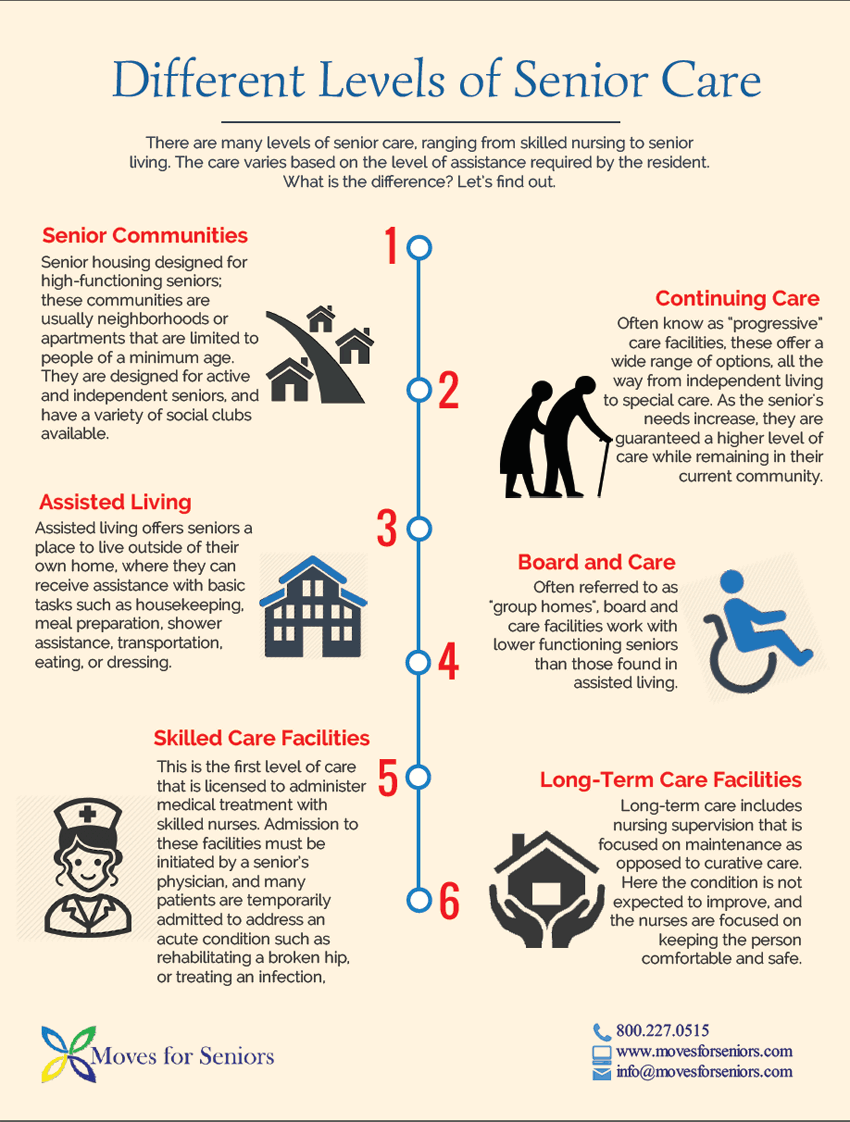
Understanding care options makes how to find senior care much easier. The main choices include:
• In-home care: A caregiver visits the home to help with personal care, meals, errands, light chores, or companionship.
• Home health care: A licensed professional provides medical services at home. This may include nursing, physical therapy, or wound care.
• Adult day care: A senior spends part of the day in a supervised setting and returns home at night.
• Independent living: A housing community offers meals, activities, and maintenance for older adults who mostly live on their own.
• Assisted living: Staff help with daily tasks while residents keep a level of privacy and independence.
• Memory care: A secure setting provides specialized support for Alzheimer’s disease and other forms of dementia.
• Skilled nursing care: A nursing facility provides 24-hour medical care and rehabilitation for people with complex health needs.
• Continuing care retirement communities: These communities offer more than one level of care, allowing residents to move as their needs change.
The best option may change over time. A person may start with meal delivery, then need home care, and later require assisted living or skilled nursing care.
Talk with your loved one before searching
A good plan should include the older adult whenever possible. Senior care works better when the person receiving care feels heard rather than managed.
Choose a calm time for the conversation. Avoid starting it during an argument, after a fall, or during a medical crisis. You might say, “I want to help you stay safe and comfortable. Can we talk about what support would make life easier?”
Ask open questions such as:
• What part of the day feels hardest?
• Do you feel safe at home?
• What kind of help would you accept?
• Would you prefer care at home or a community setting?
• What are your biggest concerns about senior care?
• What would help you keep your normal routine?
Listen for fear beneath resistance. Many older adults worry about losing privacy, control, pets, familiar neighbors, or money. These concerns are real. A respectful conversation can turn senior care from a threat into a shared plan.
If memory loss affects decision-making, include a trusted family member, health care professional, or elder care advisor. In some cases, legal documents may clarify who can help with health and financial decisions. Legal rules differ by state, so use a qualified professional for advice.
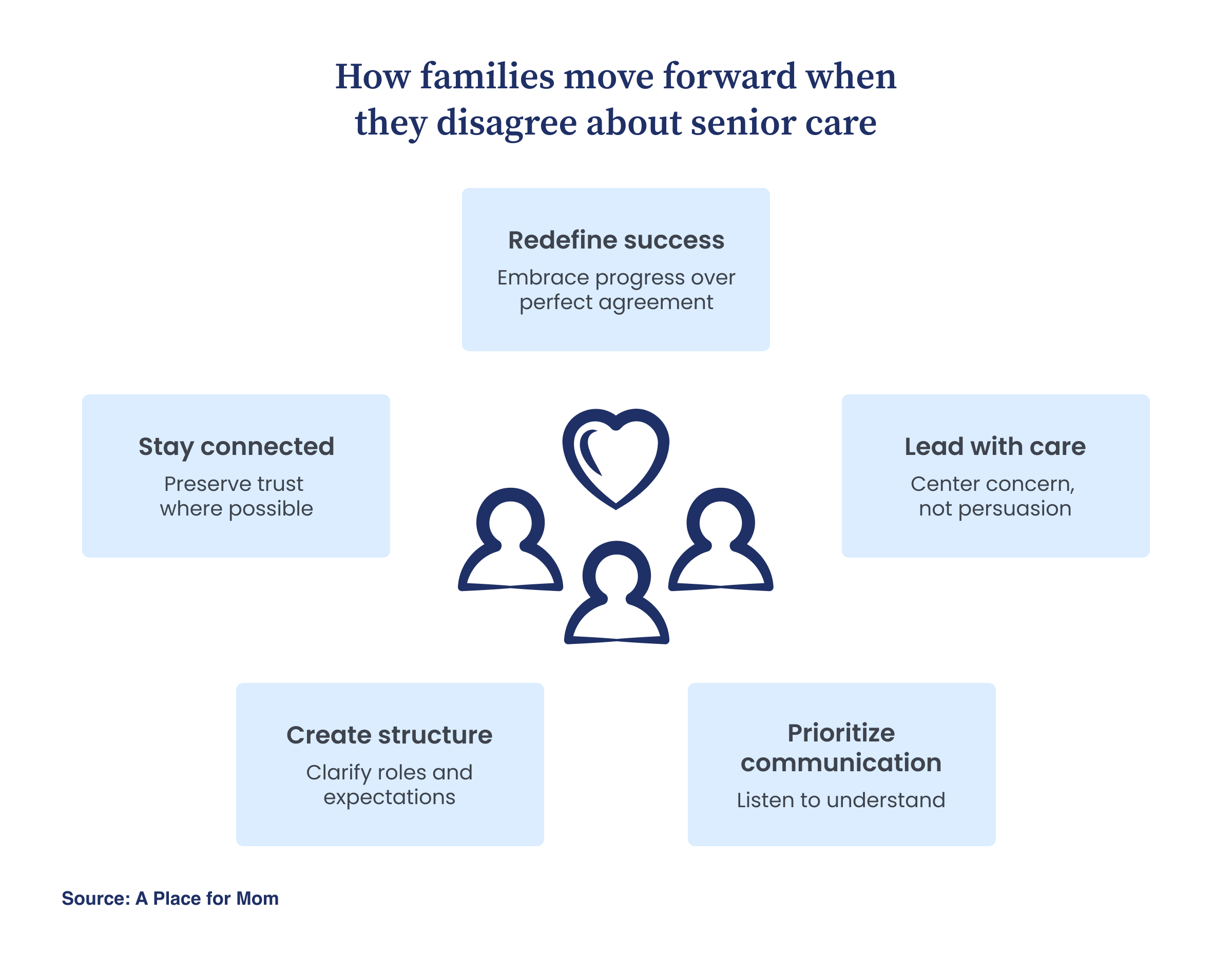
A lesson families often learn is that one large conversation rarely solves everything. Short, kind talks are often more useful than one long debate.

Set a realistic senior care budget
Cost is a major part of how to find senior care. Ask what your family can pay each month, but also consider future costs. A low starting price may rise when your loved one needs more help.
Create a simple budget that includes:
• Monthly care fees
• One-time entrance or community fees
• Medication costs
• Transportation
• Meals and personal supplies
• Medical equipment
• Home repairs or safety changes
• Respite care for family caregivers
• Deposits and move-in charges
• Possible increases in rent or care fees
Ask providers to explain what is included. Some communities use an all-inclusive price. Others charge separate fees for bathing, medication reminders, laundry, transportation, or memory support.
How families usually pay for care
Payment may come from several sources, including:
• Personal savings and retirement income
• Social Security benefits
• Long-term care insurance
• Veterans benefits
• Medicaid, if eligibility rules are met
• Medicare, for certain covered medical services
• Home equity or other assets
• Help from family members
Medicare generally does not pay for long-term custodial care, such as ongoing help with bathing, dressing, or eating. It may cover certain skilled services when eligibility rules are met. Medicaid may help with some long-term care costs, but requirements vary by state and income.
Ask a licensed benefits counselor or social worker to review your options. The State Health Insurance Assistance Program, Area Agencies on Aging, and Veterans Affairs offices may offer guidance at little or no cost.
Never sign a contract before asking for a full fee schedule. Request the information in writing and compare it with your budget.

Search for senior care providers
Once you know the level of care and budget, begin your search. This is where many families ask how to find senior care online, through friends, or through a health care provider.
Useful places to search include:
• Your local Area Agency on Aging
• A doctor, hospital discharge planner, or social worker
• State licensing agencies
• Medicare’s Care Compare tools for eligible providers
• Veterans Affairs care coordinators
• Long-term care ombudsman programs
• Professional caregiver associations
• Trusted friends, neighbors, and faith communities
• Local senior centers
• Reputable home care agencies
Use several sources. One website may show ratings, while another may show state inspection records or complaints. Online reviews can offer helpful clues, but they do not replace a license check or an in-person visit.
When searching online, use specific phrases. Examples include:
• “Assisted living near me”
• “Licensed home care agency in [your city]”
• “Memory care for dementia near me”
• “Medicaid assisted living options in [your state]”
• “Senior transportation services near me”
Keep a search list with each provider’s name, address, phone number, care level, price, and notes. A simple spreadsheet can prevent details from blending together.

Check licenses, inspections, and staff quality
A provider’s marketing materials show what it hopes to offer. Licenses, inspection reports, and staff practices show how it operates.
Contact your state health department or licensing agency. Ask whether the provider is licensed for the services it offers. Also ask about recent inspections, serious complaints, enforcement actions, and whether the license is current.
For a home care agency, ask:
• Are caregivers employees or independent contractors?
• Does the agency conduct background checks?
• How does it verify training?
• Who supervises caregivers?
• What happens if a caregiver calls out?
• Is there a nurse or manager available after hours?
• Does the agency carry liability insurance?
• How does it handle medication reminders and emergencies?
For assisted living or memory care, ask:
• What is the staff-to-resident ratio?
• Is a nurse on site, and during which hours?
• What training do staff receive?
• How often does staff turnover occur?
• How are falls, injuries, and medication errors handled?
• Can the community support increasing care needs?
• What happens if a resident needs more care?
• Is there a plan for severe weather or power loss?
Staff kindness matters, but systems matter too. A warm tour guide cannot make up for poor staffing, unclear policies, or weak emergency procedures.

Visit senior care communities in person
A tour is one of the most important steps in how to find senior care. Try to visit more than once. If possible, visit during a meal, in the evening, or on a weekend when different staff may be working.
Notice the atmosphere as soon as you enter. Does the place smell clean but not strongly of chemicals? Are residents dressed, alert, and treated with respect? Do staff greet residents by name?
Look at practical details:
• Handrails in hallways
• Good lighting
• Clean bathrooms
• Safe floors and clear walkways
• Working call buttons
• Secure doors in memory care areas
• Comfortable outdoor spaces
• Fresh and appealing food
• Quiet places for rest
• Activities that match residents’ interests
Watch how staff speak with residents. Do they knock before entering rooms? Do they explain what they are doing? Do residents appear rushed during meals or personal care?
Ask to speak privately with a current resident or family member, if allowed. A provider may show only its best areas, so also ask whether you can see a typical room, shared bathroom, dining area, and activity space.
Trust your senses, but do not rely only on first impressions. A beautiful lobby is helpful, yet daily care happens in bedrooms, bathrooms, dining rooms, and staff work areas.

Compare home care and residential care
Choosing between care at home and a senior living community is a common part of how to find senior care. Neither option is always better. The right choice depends on safety, health needs, family support, and personal preference.
Home care may work well when:
• Your loved one wants to remain at home
• The home can be made safe
• Family members can help with care planning
• Medical needs are stable
• A reliable caregiver schedule is available
• Social isolation is limited
Residential care may be better when:
• Falls or wandering create serious risks
• The home needs major changes
• Family caregivers feel exhausted
• Several daily tasks require help
• Medication management is difficult
• The person needs regular social contact
• Emergency support must be available at all times
Home care can feel familiar, but it may become difficult to coordinate several caregivers. Residential care can offer structure and social activity, but moving can cause stress and may feel like a loss of independence.
Try a short-term arrangement when possible. Respite care, adult day care, or a trial stay can show what works before making a long commitment.
Review contracts and care policies
Contracts deserve careful attention. Read every page, including attachments and fee schedules. Ask for time to review the agreement with a trusted family member or attorney.
Look for information about:
• Base rent and care fees
• Annual price increases
• Deposits and refund rules
• Minimum stay requirements
• Transportation costs
• Medication management
• Room changes
• Medical emergencies
• Hospital stays
• Discharge or move-out rules
• Personal belongings
• Pets and visitors
• Billing disputes
• Privacy and permission to share health information
Ask, “What would cause my loved one to need a higher level of care?” Get the answer in writing. Some providers may require a move to another building or discharge a resident whose needs become too complex.
Be careful with vague terms such as “as needed” or “additional services.” Ask for examples and current prices. If a representative pressures you to sign quickly, treat that as a warning sign.
An elder law attorney or long-term care advisor can help explain complex agreements. This cost may prevent a larger problem later.

Prepare for the move or care start
After choosing a provider, create a transition plan. A smooth start can reduce worry for both the older adult and the family.
Share important information with the care team, such as:
• Medical conditions and allergies
• Medication list
• Preferred daily routine
• Food likes and dislikes
• Sleep habits
• Communication needs
• Cultural or religious preferences
• Names of close family members
• Doctor and pharmacy details
• Signs of pain, confusion, or distress
Label clothing and personal items if your loved one moves into a community. Bring familiar photos, a favorite chair, music, or a small keepsake. Familiar objects can make a new room feel less strange.
Schedule follow-up visits during the first few weeks. Ask your loved one how things are going, but also observe changes in mood, weight, hygiene, sleep, and behavior.
Keep a written record of concerns. Include dates, names, and the response you received. Clear records help families solve small problems before they become serious.
Watch for senior care warning signs
Knowing how to find senior care also means knowing when to reject an option. Warning signs may appear during a tour, phone call, or contract review.
Be cautious if:
• Staff avoid direct questions
• The provider will not show a license
• Fees are unclear
• The community smells strongly of urine or spoiled food
• Residents appear ignored or poorly cared for
• Staff seem rushed or unavailable
• There are repeated unexplained injuries
• Medication records are incomplete
• The provider promises services that are not in the contract
• You feel pressured to pay a deposit immediately
• The facility has many empty rooms but will not explain why
• Family members report poor communication
One concern does not always prove neglect. Staff may be handling an emergency during a visit. However, repeated concerns deserve action.
If you suspect abuse, neglect, or exploitation, report it to Adult Protective Services, the long-term care ombudsman, state regulators, or emergency services when immediate danger exists. Keep your loved one safe first.
Build a family care team
Senior care is easier when one person does not carry every task. Choose a small care team and assign clear roles.
One person may manage appointments. Another may review bills. Someone else may visit in person or handle transportation. Write down who is responsible for each task.
Use a shared calendar or care notebook for:
• Appointments
• Medication changes
• Caregiver schedules
• Important symptoms
• Questions for the doctor
• Billing concerns
• Family updates
Set a regular check-in. A short weekly call can help everyone stay informed. It also gives your loved one a chance to share concerns privately.
Respect privacy and dignity. Family involvement should support the older adult, not take over every decision. When possible, let your loved one choose clothing, meals, activities, visitors, and personal routines.
Common mistakes to avoid
Families often ask how to find senior care only after a crisis. Starting early gives you more choices and time to compare them.
Avoid these common mistakes:
• Waiting until after a major fall
• Choosing the lowest price without checking quality
• Trusting online reviews alone
• Ignoring your loved one’s preferences
• Failing to check state records
• Forgetting to ask about future care needs
• Assuming Medicare pays for all long-term care
• Not reading the contract
• Failing to create a backup caregiver plan
• Letting one family member manage everything
• Avoiding difficult talks about money and legal authority
A practical approach is to make a care plan before an emergency. List preferred providers, medical contacts, legal documents, payment resources, and emergency instructions. Update the plan at least once a year.
How to find senior care with a simple checklist
Use this checklist when comparing options:
-
Write down your loved one’s health, safety, and daily care needs.
-
Ask your loved one what type of help feels acceptable.
-
Set a realistic monthly budget and identify possible benefits.
-
Search through state agencies, health professionals, senior groups, and trusted referrals.
-
Check licenses, inspection records, complaints, insurance, and staff training.
-
Visit each provider at different times of day.
-
Ask for a written price list and complete contract.
-
Compare staffing, services, activities, transportation, and emergency plans.
-
Create a transition plan with medical and personal information.
-
Review the care plan after the first few weeks and make changes as needed.
This process may take time, but it turns a stressful decision into a series of manageable steps.
Frequently asked questions about how to find senior care
How do I know when my loved one needs senior care?
Look for changes in bathing, dressing, eating, walking, medication use, finances, memory, or home safety. A doctor or care professional can assess needs and suggest the right level of support.
What is the first step in finding senior care?
Start with a care needs assessment and a conversation with your loved one. Then decide whether in-home care, adult day care, assisted living, memory care, or skilled nursing may fit.
How much does senior care cost?
Costs vary by location, care level, provider, room type, and services. Request a written estimate that lists base fees, extra charges, deposits, and possible price increases.
Does Medicare pay for senior care?
Medicare may cover certain short-term skilled services when eligibility rules are met. It usually does not cover ongoing custodial help with daily tasks or long-term room and board.
How can I check whether a senior care provider is trustworthy?
Confirm the provider’s license with your state agency and review inspection records and complaints. Visit in person, ask about staffing and training, and read the full contract before paying.
Is home care better than assisted living?
Neither option is best for every person. Home care may suit someone who is safe at home and wants familiar surroundings, while assisted living may offer more structure, supervision, and social support.
What questions should I ask during a senior care tour?
Ask about staff numbers, training, emergency response, medication help, meals, activities, fees, room changes, and discharge rules. Also observe how staff speak with residents and whether the setting feels clean and respectful.
Conclusion
Knowing how to find senior care begins with understanding daily needs, listening to your loved one, and setting a clear budget. Compare several care options, check licenses and inspection records, tour providers, review contracts, and plan for changing needs.
The goal is not to find a perfect option. It is to find safe, respectful care that fits your loved one’s health, personality, finances, and wishes. Start your checklist today, contact a local aging agency for guidance, and share your questions or experience with others facing the same decision.

Michael Reynolds is a senior contributor at RetirementGazette.com, where he focuses on helping readers navigate the journey toward a secure and fulfilling retirement. With over a decade of experience in personal finance, retirement planning, and lifestyle writing, Michael combines practical strategies with easy-to-understand guidance tailored for both pre-retirees and those already enjoying their golden years.