About 7 million Americans age 60 and older receive SNAP benefits in a typical year.
The answer to “how many seniors are on SNAP” depends on the year and the way “senior” is defined. Federal data usually counts older adults as people age 60 or older. Recent national estimates show that roughly 7 million seniors use the Supplemental Nutrition Assistance Program, also called SNAP. This guide explains the numbers, why older adults need food help, and how the program works.
How many seniors are on SNAP?
About 7 million seniors receive SNAP benefits in the United States, based on recent federal data. Older adults make up about 11% to 12% of all SNAP participants, although the total changes as enrollment, income, and economic conditions change.
The most useful national figures come from annual SNAP reports. These reports count people who received benefits during the fiscal year. They may not match a monthly enrollment number because some people receive SNAP for only part of the year.
When people ask how many seniors are on SNAP, they may be asking about one of three different measurements:
• The number of people age 60 or older who received SNAP during a year
• The number of older adults receiving SNAP in an average month
• The number of households with at least one senior member
These numbers are not the same. One household may include two older adults, while another may include one senior living with children or other relatives.
Federal reports often use “elderly” for people age 60 or older. That is different from the age used for Social Security retirement benefits, Medicare, or other programs. Always check the age definition when comparing statistics.

What the latest SNAP data tells us
Recent USDA data shows that seniors are a smaller share of SNAP participants than children and working-age adults. Still, millions of older adults rely on SNAP to help pay for food.
A typical breakdown of SNAP participants looks like this:
• Children account for about two-fifths of participants
• Nonelderly adults account for about half of participants
• Older adults age 60 or older account for roughly one in nine participants
The exact share changes from year to year. SNAP participation rose during the COVID-19 pandemic, then shifted as emergency allotments ended and household income changed.
It is also important to separate “people” from “households.” A federal report may say that about one-fifth of SNAP households include an older adult. That does not mean one-fifth of all SNAP participants are seniors. It means the household has at least one person age 60 or older.
For example, imagine 100 SNAP households:
• Twenty may include at least one senior
• Some of those households may include two seniors
• Others may include a senior, an adult child, and grandchildren
The household count and the individual count answer different questions.
Why estimates can differ
Different organizations may report different numbers for several reasons:
• They may use different years
• They may count annual participation or monthly participation
• They may define seniors as age 60 or age 65 and older
• They may use survey data instead of administrative records
• They may count people who applied, were approved, or actually received benefits
For this reason, a careful answer to how many seniors are on SNAP is usually a range rather than one permanent number. “About 7 million” is a practical national estimate, but the exact number depends on the data set.

Why do so many seniors need SNAP?
Many older adults live on fixed incomes. Their Social Security check, pension, or retirement savings may not rise as quickly as food, rent, medicine, and utility costs.
Food is often the budget item people cut first. A senior may skip fresh fruit, meat, or other healthy foods to keep up with rent or prescription costs. SNAP helps fill part of that gap.
Common reasons older adults apply for SNAP include:
• Low Social Security income
• High rent or mortgage payments
• Rising grocery prices
• Medical bills and prescription costs
• Utility expenses
• Loss of a spouse or caregiver
• Limited savings
• Disability or reduced ability to work
• Support for grandchildren or other family members
A senior living alone may face special pressure. Even a small monthly increase in rent or medicine can affect the entire food budget. SNAP benefits can act like a small bridge between one payment and the next.
Older adults may also have higher health needs. A person with diabetes, high blood pressure, or dental problems may need specific foods. Yet those foods can cost more than highly processed options. SNAP cannot solve every health or income problem, but it can make a healthy diet more possible.

SNAP participation among older adults
SNAP reaches millions of seniors, but many eligible older adults do not participate. Researchers often call this the senior SNAP participation gap.
Some older adults may qualify but never apply. They may feel embarrassed, believe the program is only for families with children, or worry that receiving help reflects badly on them.
Others may face practical barriers:
• Confusing application forms
• Limited internet access
• Transportation problems
• Difficulty reaching a local office
• Trouble reading small print
• Hearing or vision limitations
• Fear of making a mistake
• Uncertainty about immigration or public benefit rules
Some seniors also assume their Social Security income is too high. In reality, eligibility depends on household size, income, allowable expenses, and state rules. Medical expenses can be especially important for households with an older or disabled member.
A person who was denied years ago may also assume the answer will be the same today. That may not be true. Income, rent, medical costs, household size, and SNAP rules can change.
From a practical review of benefit questions, one mistake appears again and again: people estimate eligibility using only their gross income. SNAP agencies may consider deductions for shelter, medical costs, dependent care, and other expenses. A senior should apply or ask a trained benefits counselor instead of ruling out help too quickly.

How SNAP works for seniors
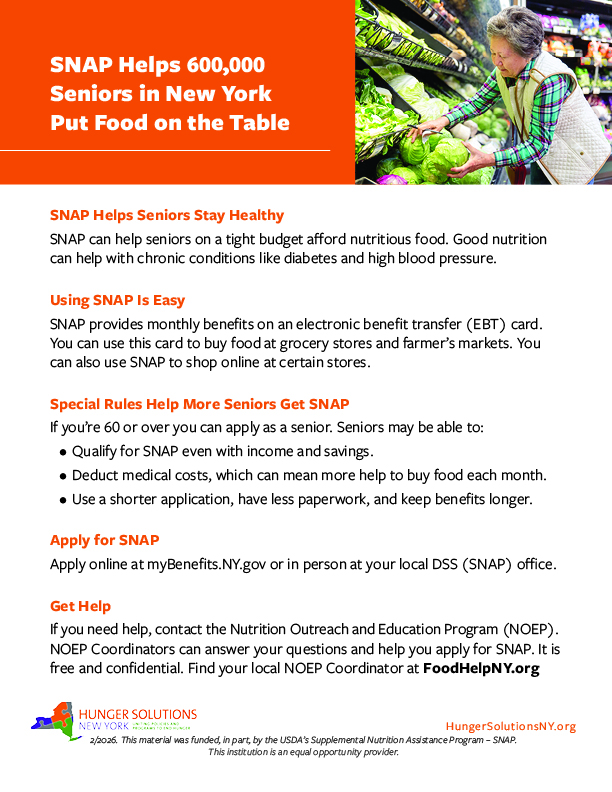
SNAP provides monthly food benefits through an electronic benefit transfer card. The card works much like a debit card at approved grocery stores and markets.
SNAP can generally be used to buy:
• Fruits and vegetables
• Meat, poultry, and fish
• Dairy products
• Bread and cereals
• Seeds and plants that produce food
SNAP generally cannot be used to buy:
• Alcohol
• Tobacco
• Vitamins and medicine
• Hot foods prepared for immediate eating
• Nonfood items such as soap or paper products
The benefit amount depends on household income and expenses. A senior household with high rent, utilities, or qualifying medical expenses may receive a different amount from a household with the same income but lower costs.
Rules vary by state. Applications usually go through a state human services, social services, or SNAP agency. Some states allow applications online, by phone, by mail, or in person.
Older adults may qualify for simplified application or reporting rules. Some states also offer special procedures for households in which every member is age 60 or older or has a disability. These rules can reduce paperwork, but they do not remove the need to provide accurate information.

How medical costs affect senior SNAP eligibility
Medical expenses can make a major difference for older adults. In many cases, a household with a member age 60 or older may deduct certain out-of-pocket medical costs when SNAP eligibility is calculated.
Possible expenses may include:
• Doctor visits
• Prescription drugs
• Health insurance premiums
• Dental care
• Eyeglasses
• Hearing aids
• Medical equipment
• Transportation for medical care
• In-home care costs
The expense usually must be paid by the household and not reimbursed by insurance or another program. Rules and minimum expense requirements can vary.
Keep receipts, bills, payment records, and insurance statements. A common mistake is failing to report medical costs because the applicant assumes they are too small to matter. Several modest costs may add up over a month.
Ask the SNAP office which expenses count in your state. A local aging agency or benefits counselor may also help organize documents and explain the process.

How seniors can apply for SNAP
The application process differs by state, but the basic steps are similar.
-
Find the official SNAP agency in your state. Use a government website or call a trusted local aging agency.
-
Gather basic information. This may include Social Security numbers, income records, rent details, utility bills, bank information, and medical expenses.
-
Submit the application. Apply online, by phone, by mail, or in person, depending on the options in your state.
-
Complete the interview. The agency may ask questions about household members, income, expenses, and living arrangements.
-
Send requested proof. Provide copies of documents by the deadline given by the agency.
-
Review the decision. If the application is denied or the benefit seems incorrect, read the notice and ask about appeal rights.
Do not send personal information to an unverified website. Scammers sometimes promise instant approval or request a fee to apply. SNAP applications are handled through official state agencies, and legitimate enrollment help should not require a payment.
If mobility is a concern, ask whether the agency offers a phone interview, home visit, accessible office, or authorized representative option. A trusted person may be able to help with paperwork if the proper form is completed.
What seniors should know about SNAP and Social Security
Social Security income usually counts when SNAP eligibility is calculated. This includes retirement benefits, survivor benefits, and certain disability payments.
That does not automatically disqualify a senior. SNAP looks at the full household situation, including income, household size, shelter costs, and allowable deductions.
Supplemental Security Income, or SSI, also affects the calculation. In most states, people who receive SSI can apply for SNAP. Some states use a combined application process or special outreach for SSI recipients.
A senior should report all income honestly. The agency will determine what counts and which deductions apply. Guessing or leaving out income can cause delays, overpayments, or penalties.
The best approach is to prepare a simple monthly budget:
• List all income
• Write down rent or mortgage costs
• Record utilities
• Add medical expenses
• Note who buys and prepares food together
• Keep proof of major costs
This budget can help an applicant explain the household situation clearly.

The benefits and limits of SNAP for older adults
SNAP can improve food access and reduce pressure on a senior’s monthly budget. It may help a person buy more produce, keep food in the home, and avoid choosing between groceries and medicine.
Research has linked food assistance with better food security. Food security means having reliable access to enough safe and nutritious food. For an older adult, that stability can support independence and reduce stress.
SNAP also supports local stores and farmers markets. In many areas, approved markets accept electronic benefit transfer cards, and some programs offer extra value for fruits and vegetables.
Still, SNAP has limits. Benefits may not cover a full month of groceries, especially for people with special diets or high food prices. SNAP also cannot pay rent, utilities, transportation, or medical bills.
Other programs may help fill those gaps:
• The Commodity Supplemental Food Program
• Meals on Wheels
• Congregate senior meals
• The Senior Farmers’ Market Nutrition Program
• Local food banks
• Medicaid or Medicare Savings Programs
• Low Income Home Energy Assistance
• Housing assistance
A benefits counselor can screen an older adult for several programs at once. SNAP is one piece of a larger support system.

Common mistakes seniors should avoid
Applying for SNAP does not require perfect paperwork on the first day. However, avoiding common mistakes can make the process smoother.
• Do not assume Social Security makes you ineligible. Many seniors with Social Security still qualify.
• Do not forget medical expenses. Ask which out-of-pocket costs can be deducted.
• Do not confuse household members with everyone at the same address. SNAP may focus on people who buy and prepare food together.
• Do not miss interview or document deadlines. Contact the agency if you need more time or an accommodation.
• Do not use a paid third-party service without checking it first. Official help is often available at no cost.
• Do not give up after one denial. Read the notice and ask about a fair hearing or appeal.
• Do not wait until food runs out. Applications and reviews can take time.
A helpful habit is to keep a benefits folder. Store award letters, rent receipts, medical bills, utility notices, and agency contacts in one place. This small step can save time during renewals.
Frequently Asked Questions
How many seniors are on SNAP in the United States?
About 7 million adults age 60 and older receive SNAP in a typical recent year. The exact number changes based on the year, the data source, and whether the count measures annual or monthly participation.
What percentage of SNAP recipients are seniors?
Older adults generally make up about 11% to 12% of all SNAP participants. The percentage can vary when enrollment changes or when a report uses a different age definition.
Do seniors on Social Security qualify for SNAP?
Yes, some seniors who receive Social Security qualify for SNAP. Social Security counts as income, but rent, utilities, medical costs, household size, and other deductions may affect eligibility.
Can seniors deduct medical expenses for SNAP?
In many cases, households with an older or disabled member can receive a deduction for eligible out-of-pocket medical expenses. The rules differ by state, so applicants should keep proof and ask the SNAP agency which costs count.
Is SNAP the same as food stamps?
SNAP is the current official name for the program once commonly called food stamps. Benefits are now issued through an electronic benefit transfer card rather than paper coupons.
Can a senior apply for SNAP online?
Many states allow online applications, while others also offer phone, mail, or in-person options. Seniors should use their state’s official benefits website or contact a local aging agency for reliable help.
Does living with family affect a senior’s SNAP application?
It can. SNAP often considers people who live together and buy and prepare food together, but household rules can be complex. The senior should explain the actual food arrangement during the application interview.
Conclusion
About 7 million seniors receive SNAP, making the program an important source of food support for older Americans. The exact number changes by year, but the need is clear: fixed incomes, medical costs, rent, and rising grocery prices can place real strain on a senior household.
If you or an older family member may qualify, do not rely on assumptions. Check the current state rules, gather income and expense records, and ask about medical deductions and other assistance programs. Visit your state’s official SNAP agency or contact a local aging services organization to take the next step.

Michael Reynolds is a senior contributor at RetirementGazette.com, where he focuses on helping readers navigate the journey toward a secure and fulfilling retirement. With over a decade of experience in personal finance, retirement planning, and lifestyle writing, Michael combines practical strategies with easy-to-understand guidance tailored for both pre-retirees and those already enjoying their golden years.