Introduction
The safest way to shower with a walker is usually not to bring the walker into the wet shower area. Instead, use the walker to reach a stable shower chair or transfer bench, sit before stepping over the shower threshold, and keep the walker outside the wet area unless the manufacturer says it is safe for that use.
This guide is for adults in the United States who use a standard walker, rolling walker, or another walking aid. Your balance, strength, weight-bearing limits, home layout, and shower type may change the safest method. If you are unsure, ask a physical therapist, occupational therapist, nurse, or doctor to watch your transfer and recommend equipment.

What You Need Before You Shower
Gather all supplies before you enter the bathroom. Reaching, turning, or walking while wet increases the chance of a fall.
You may need:
- A shower chair or transfer bench
- A handheld showerhead
- A nonslip bath mat placed outside the shower
- Grab bars that are properly installed into the wall
- A towel within easy reach
- Soap, shampoo, and a washcloth
- A long-handled sponge, if reaching is hard
- A waterproof phone or call device nearby
- Clean clothes placed where you can reach them
- A caregiver or trusted person nearby, if your care plan requires help
Choose the right bathing seat
A shower chair works when you can safely step over the shower edge and sit down. A transfer bench may be safer when you have trouble lifting one leg over the tub wall. A transfer bench spans the tub or shower edge, allowing you to sit first and slide across.
The seat should:
- Fit fully inside the shower or tub
- Have rubber feet or another stable base
- Sit level on the floor
- Support your weight
- Have a back and arms if they improve your balance
- Leave enough room to move your legs
- Not block the bathroom door or your helper
Do not use a kitchen chair, folding chair, stool, or plastic patio chair unless it is specifically designed and approved for bathing. These chairs may slide, tip, or weaken when exposed to water.
Check your walker
Before every shower, check that:
- The legs or wheels are secure
- Rubber tips are not worn or split
- The brakes on a rolling walker work
- The walker height allows you to stand upright
- The frame is dry and free of soap or oil
A rolling walker with a seat is not automatically a shower chair. Its seat may not be waterproof, stable on a wet floor, or designed for bathing.

How to Set Up the Bathroom
A safe shower starts before the water runs. Remove hazards and create a clear path from the walker to the shower seat.
1. Clear the route
Move laundry baskets, rugs, cords, pets, and small furniture out of the way. Keep the walker path wide enough for the walker and your feet.
Do not use a loose rug beside the shower. If you need a mat, choose one with a nonslip backing and keep it flat.
2. Dry the floor
The floor outside the shower should be dry before you begin. Place a towel or nonslip mat where your wet feet will land, but make sure it cannot bunch or slide.
3. Set the shower controls
if possible, turn on and test the water before transferring into the shower. A handheld showerhead lets you control the water while seated.
Use warm water rather than very hot water. Hot water can make some people feel weak, dizzy, or faint. People with reduced sensation, diabetes, or nerve problems may not feel a burn quickly, so test the water with a less sensitive part of the body or ask someone to check it.
4. Place supplies within reach
Put soap, shampoo, and towels where you can reach them without bending far or twisting. A shower caddy or wall-mounted shelf may help, but it must not become a handhold unless it is designed and installed as one.
Never use a towel rack, shower curtain, sliding door, or soap dish to support your body. These items can pull loose.
5. Lock or stabilize the seat
If the shower chair has locking legs, lock them. If it has wheels, use a model made for bathing and lock the wheels before sitting. Do not sit until the seat is stable.
The U.S. Centers for Disease Control and Prevention recommends using grab bars and nonslip surfaces in bathrooms as part of fall prevention. A grab bar should be installed into suitable wall framing or with an approved structural system. Suction-cup bars are not reliable for catching a falling adult.

Step-by-Step: How to Shower With a Walker
Use the following method when your shower chair is inside the shower and your walker stays outside the wet area. If your physical therapist gave you different instructions, follow that plan.
1. Sit at the edge of the bed or a stable chair first
Put on a robe or clothing that will not drag on the floor. Sit for a moment before standing. If you feel dizzy, light-headed, weak, or short of breath, stop and ask for help.
2. Move to the bathroom with the walker
Stand up slowly. Place both hands on the chair or bed to push up. Do not pull yourself up by the walker unless a clinician has specifically taught you to do so.
Once standing, place both hands on the walker handles. Walk at a steady pace. Do not carry bottles, towels, or clothing while using the walker.
3. Position the shower chair
Approach the chair with the walker. Keep your body centered between the walker handles. Turn with small steps until the backs of your legs touch the chair.
Do not back up quickly. Do not twist your body while your feet stay planted.
4. Sit down safely
Reach back for the chair arms or seat only after you feel the chair behind your legs. Lower yourself slowly.
If you have a rolling walker, engage the brakes before turning or sitting. Do not use the walker as the only support while lowering yourself unless your therapist has taught you that technique.
5. Move your legs into the shower
If you are using a shower chair, lift one leg at a time over the threshold while seated, if you can do so safely. If lifting your legs is hard, use a transfer bench or ask a trained helper to assist.
Do not stand on one leg to step into the shower when you are already unsteady. A shower threshold may look small but can cause a serious trip.
6. Transfer from the walker to the shower seat
If the seat is already inside the shower, sit on it before moving farther into the wet area. Keep the walker outside the shower unless it is specifically rated for wet use.
Use grab bars or the chair arms for support. Move slowly. Keep your weight over your feet and avoid reaching for items that are behind or above you.
7. Wash while seated
Use the handheld showerhead and keep your hips on the chair. Wash one area at a time. A long-handled sponge can reduce bending and twisting.
Keep the shower curtain or door positioned so water does not spread onto the floor. Do not stand to wash your legs or feet unless your clinician has confirmed that you can stand safely and you have a stable handhold.
8. Turn off the water and dry while seated
Turn off the water before standing. Dry your arms, legs, and feet while seated. Dry the bottom of each foot as well as the floor area where you will step.
Place a towel over your shoulders or use a robe so you do not need to carry a towel while walking.
9. Exit the shower using the same safe transfer
Move your legs out one at a time while seated. Stand only after both feet are on a dry, nonslip surface.
Hold the grab bar or chair arms while standing. Once upright and balanced, reach for the walker. Make sure the walker is close, open, and stable before taking a step.
10. Walk to a stable chair
Move to a dry chair or the edge of the bed. Turn with small steps, feel the chair behind your legs, and lower yourself slowly.
Do not rush to dress. Sit until you feel steady and fully dry.
When to Use a Transfer Bench Instead
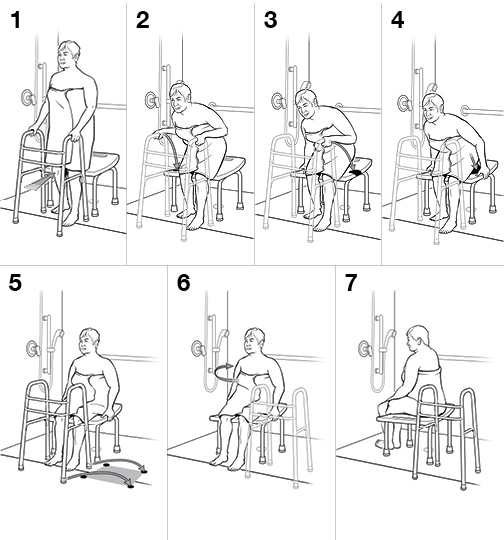
A transfer bench is often safer than a shower chair when the shower has a high tub wall or when you cannot safely step over the threshold.
Use a transfer bench only after it has been adjusted and installed correctly. The bench must be long enough to bridge the tub or shower edge and stable enough to support you during the transfer.
A typical transfer sequence is:
- Place the bench so it is level and stable.
- Stand with the walker outside the tub or shower.
- Turn until the backs of your legs touch the bench.
- Sit down slowly.
- Slide across the bench while seated.
- Move your legs over the tub wall or threshold.
- Wash while seated.
- Reverse the steps to exit.
A transfer bench does not remove the need for balance and upper-body strength. If you cannot sit, slide, or move your legs without losing control, ask a therapist to teach the transfer.
Walker Types and Shower Safety
The kind of walker you use changes how you approach the shower.
| Walker type | Main concern | Safer approach |
|---|---|---|
| Standard walker | Must be lifted and placed | Use it to approach the seat; do not lift it while stepping over the threshold |
| Two-wheel walker | Front wheels may roll | Keep it on dry flooring and make sure the rear tips are secure |
| Four-wheel rolling walker | Can roll unexpectedly | Engage the brakes before sitting or standing |
| Rollator with a seat | Seat may not be designed for bathing | Use a proper shower chair or transfer bench |
| Platform walker | Arm support may affect transfers | Get individualized instruction from a therapist |
| Bariatric walker | Needs adequate width and weight capacity | Match the shower seat and bench to the same needs |
Do not place a standard walker or rollator in a wet shower unless the manufacturer specifically states that it is intended for that environment. Water can reduce traction, damage parts, or make the walker harder to control.
When You Should Not Shower Alone
You should not shower alone if you:
- Have fallen recently
- Often feel dizzy or faint
- Cannot stand from a chair without help
- Cannot transfer to a shower chair safely
- Have severe weakness on one side
- Have poor judgment, confusion, or memory problems
- Take medicine that makes you sleepy or unsteady
- Have a new injury or surgery with movement limits
- Cannot reliably use the walker and grab bars
- Need help managing oxygen tubing, drains, or medical equipment
A caregiver should not simply hold the walker from behind. The helper needs to know the transfer plan and where to stand. A physical therapist or occupational therapist can teach proper guarding and body mechanics.
If you fall, hit your head, cannot get up, have severe pain, or may have broken a bone, call 911 in the United States. Do not try to stand if you may have a serious injury.

Common Mistakes to Avoid
Taking the walker into the shower
Most walkers are made for walking on dry floors, not for wet bathing areas. The tips or wheels may slip. Keep the walker outside unless it is designed for shower use.
Using a towel bar as a grab bar
A towel bar can detach when used for body weight. Use a professionally installed grab bar instead.
Standing to turn around
Turning while wet is risky. Sit for the transfer, move in small steps, and avoid fast pivots.
Locking the walker brakes too late
With a rolling walker, engage the brakes before sitting or standing. Test them before you begin.
Keeping the floor wet
Water outside the shower can turn the bathroom floor into a slip hazard. Use a properly placed nonslip mat and dry spills at once.
Reaching for dropped items
Do not bend or twist to pick up soap or a towel. Ask for help or use a long-handled reacher after you are safely seated or stable.
Using a bath mat that slides
A soft mat is not safe if it moves under your feet. Replace it with a nonslip option that lies flat.
Showering when exhausted
Fatigue can change your balance. Choose a time when you have the most strength. A shorter shower may be safer than trying to finish while tired.
What to Do If the Transfer Feels Unsafe
Stop before entering the shower if you cannot maintain your balance or control your legs. Sit in a stable chair and call for help.
If the shower is too narrow for the walker and a helper, consider a transfer bench, a different shower chair, a handheld showerhead, or a temporary sponge bath. A home health occupational therapist can assess the bathroom and recommend changes based on your actual space.
Ask a clinician to review your plan if you feel dizzy during or after bathing. Dehydration, medication effects, low blood pressure, illness, and overheating can contribute to dizziness. Sudden weakness, chest pain, trouble breathing, fainting, or new confusion needs urgent medical attention.
How to Make Shower Transfers Easier
Small changes can lower the effort needed for each transfer:
- Keep the shower routine short.
- Sit for washing, drying, and dressing when needed.
- Use a handheld showerhead with an easy-to-operate control.
- Place commonly used items at waist level.
- Choose clothing that is easy to pull on while seated.
- Use a raised toilet seat or toilet safety frame if the toilet transfer is also difficult.
- Keep a phone or emergency call device within reach, but do not rely on a phone as a substitute for supervision.
- Review the setup after any change in strength, pain, surgery status, or weight-bearing restriction.
The best setup is the one that lets you complete each transfer with control. More equipment is not always better if it crowds the bathroom or creates new obstacles.

Frequently Asked Questions
Can I use my walker inside the shower?
Usually, no. A standard walker or rollator may slip on a wet floor and may not be made from materials suitable for shower use. Use a shower chair or transfer bench instead, and keep the walker on dry flooring unless the manufacturer specifically approves wet use.
Is a shower chair safer than standing in the shower?
For many people with poor balance, weakness, pain, or fatigue, sitting reduces the time spent standing on a wet surface. A shower chair is not automatically safe, though. It must fit the shower, stay stable, support your weight, and allow a controlled transfer.
How do I get over a shower threshold with a walker?
Do not step over the threshold while carrying or lifting the walker. Approach with the walker, sit on a shower chair or transfer bench, and move your legs across while seated. A therapist can teach a different method if your equipment or home layout requires it.
Can someone help me shower if I use a walker?
Yes, but the helper should understand your transfer plan and know how to provide support without pulling your arms or walker. If you need regular help, ask your healthcare team about home health services or an occupational therapy assessment.
What should I do if I feel dizzy in the shower?
Turn off the water, stay seated, and call for help. Do not stand or walk until you feel fully steady. Repeated dizziness, fainting, chest pain, shortness of breath, or new confusion requires medical evaluation; severe or sudden symptoms may require 911.
Conclusion
To shower safely with a walker, use the walker on dry flooring, transfer to a stable shower chair or bench, and remain seated while washing whenever possible. Prepare the bathroom first, use properly installed grab bars, keep the floor dry, and avoid rushing.
If you cannot complete the transfer with control, do not practice alone. Ask a physical or occupational therapist to assess your walker, shower, chair, and transfer technique. The next practical step is to set up the equipment while the bathroom is dry and have a qualified person review the transfer before your next shower.

Michael Reynolds is a senior contributor at RetirementGazette.com, where he focuses on helping readers navigate the journey toward a secure and fulfilling retirement. With over a decade of experience in personal finance, retirement planning, and lifestyle writing, Michael combines practical strategies with easy-to-understand guidance tailored for both pre-retirees and those already enjoying their golden years.