A safe bathroom for an older adult should reduce fall risks, support balance, provide enough light, and allow the person to bathe and use the toilet with less help. In a U.S. home, start with a fall-risk check, then add properly installed grab bars, a raised toilet or toilet safety frame when needed, a safer shower setup, non-slip flooring, brighter lights, and an easy way to call for help.
Bathroom changes should match the person’s strength, balance, vision, mobility device, and level of memory or confusion. A setup that works for one older adult may not work for another. When possible, ask a physical or occupational therapist to assess the bathroom before major remodeling.
The Centers for Disease Control and Prevention identifies falls as a major health risk for older adults. Its STEADI program recommends checking fall risks, reviewing medications, and improving home safety. The National Institute on Aging also recommends practical changes such as better lighting, handrails, and safer walking areas.
Start With a Bathroom Safety Assessment
Begin by watching how the older adult uses the bathroom during normal tasks. Look for points where they reach, twist, step over an edge, lose balance, or need to hold a towel bar or sink for support.
Check the room for:
- Slippery floors or bath surfaces
- Loose rugs and bath mats
- Poor light or glare
- A high bathtub wall
- A low toilet
- Lack of stable handholds
- Clutter near the toilet or shower
- Doors that are hard to open
- A path that is too narrow for a walker or wheelchair
- Water that is too hot or difficult to control
- No clear way to call for help
Ask the person which tasks feel hard or unsafe. A person may feel steady while walking but struggle when standing from a low toilet. Another may have enough leg strength but poor vision or reduced sensation in the feet.
Consider the person’s needs
Use these questions to guide the setup:
- Can the person stand from a chair without using their hands?
- Can they step over a tub wall safely?
- Do they use a cane, walker, or wheelchair?
- Do they become dizzy when standing?
- Do they have arthritis, stroke-related weakness, Parkinson’s disease, or neuropathy?
- Can they remember to lock a wheelchair or use a grab bar?
- Can they control water temperature?
- Can they call for help after a fall?
A doctor, physical therapist, or occupational therapist can help identify risks that are not obvious. This is especially useful after a fall, hospital stay, stroke, or major change in mobility.
Install Grab Bars Correctly
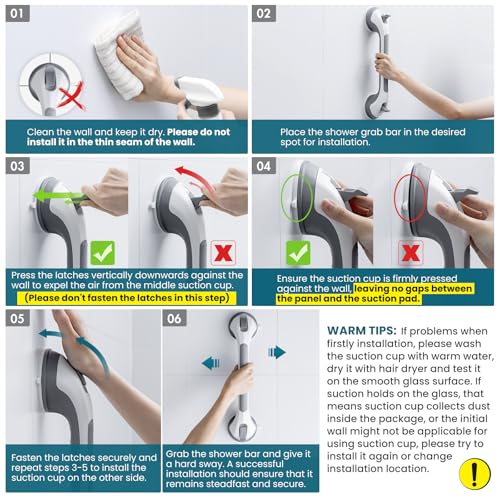
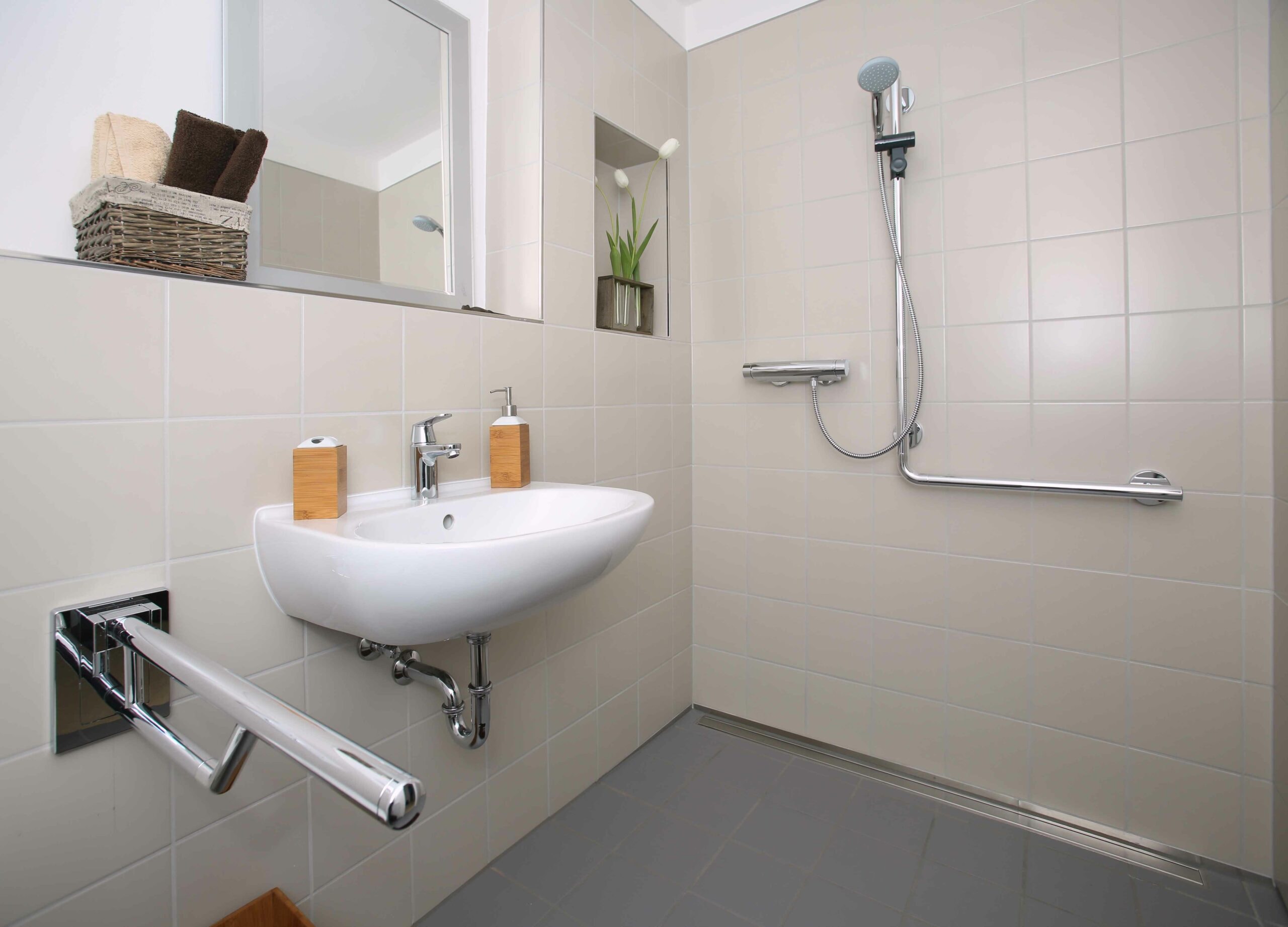
Install grab bars at the toilet and in the bathing area. A grab bar should be anchored to wall framing or installed with a method rated for the expected load. Suction-cup bars are not a substitute for permanently mounted grab bars because they may release without warning.
The U.S. Access Board and the 2010 ADA Standards provide design guidance for many public and commercial facilities. These standards can inform home planning, but they do not automatically make every private home bathroom compliant or suitable for a specific person.
Useful grab-bar locations
Common locations include:
- A vertical bar near the shower or tub entrance
- A horizontal bar along the long wall of a shower
- A bar on the back wall near the shower seat
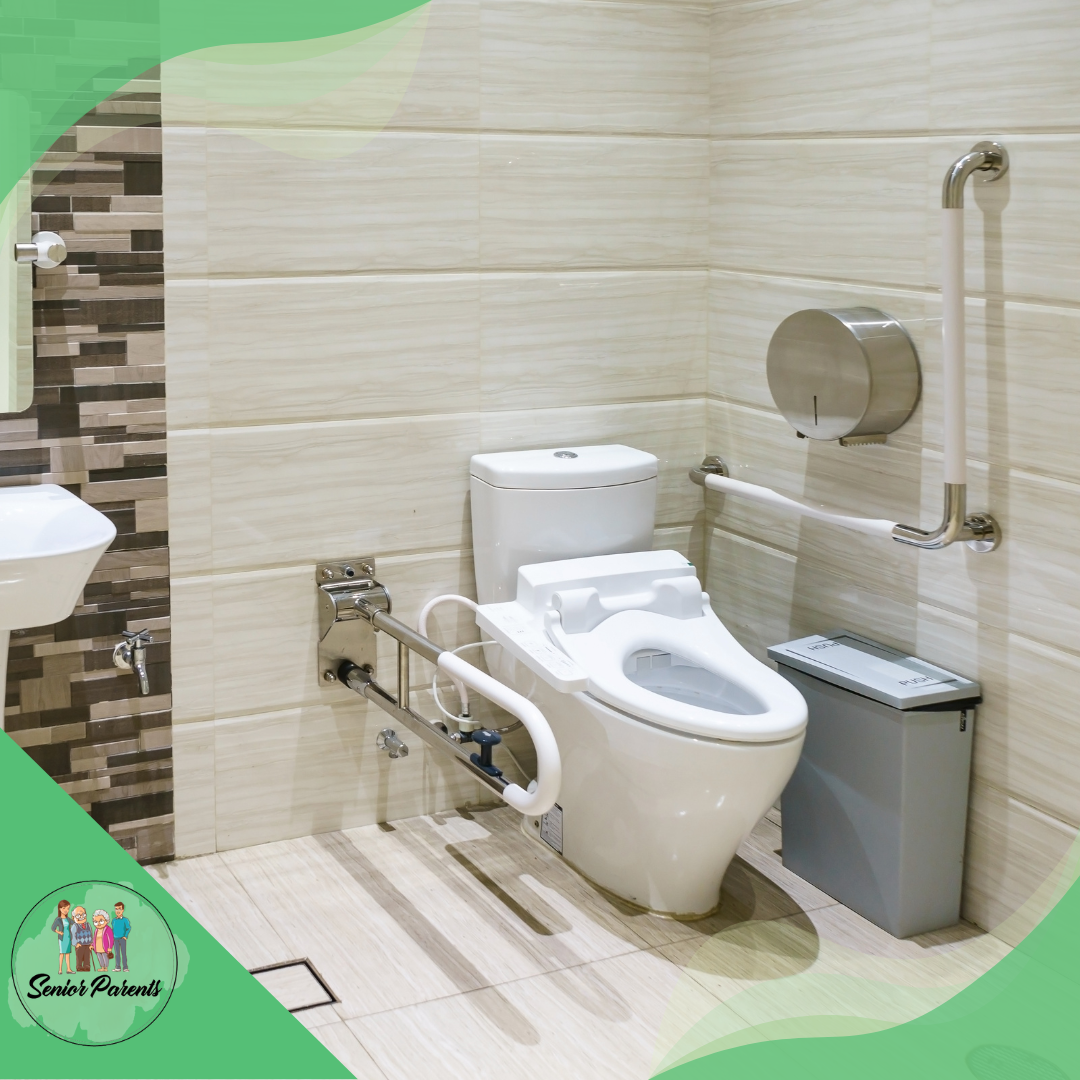
- A horizontal or angled bar beside the toilet
- A vertical bar near the toilet for standing support
The best position depends on the person’s height, reach, transfer method, and mobility device. Do not place a bar where it forces the person to twist or lean too far.
A towel bar, shower-door frame, sink edge, or toilet paper holder is not a grab bar. These items may pull loose or break when used for support.
Installation checklist
Before installation:
- Find the wall studs or add suitable blocking.
- Choose bars with a textured, easy-to-grip surface.
- Confirm that the bar can support the intended use.
- Keep enough space around the bar for the hand.
- Test the bar firmly before use.
- Hire a qualified contractor if the wall must be opened or reinforced.
If the person needs to pull up strongly to stand, standard placement may not be enough. An occupational therapist can recommend a transfer method and bar position.
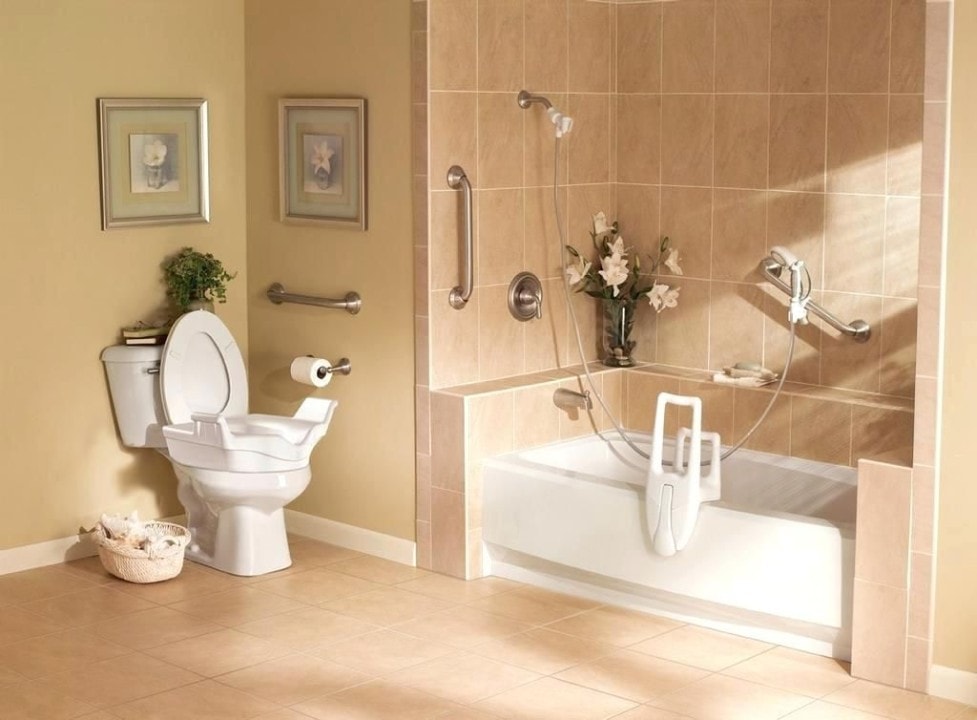
Make the Shower or Tub Safer
The bathing area is often the highest-risk part of the bathroom. Water, soap, bare feet, and a raised tub edge can make balance problems worse.
For many older adults, a curbless or low-threshold shower is easier to enter than a standard bathtub. However, conversion work can affect drainage, waterproofing, plumbing, and floor structure. A licensed contractor should evaluate the project before work begins.
Add a stable shower seat
A shower chair or built-in seat can reduce fatigue and fall risk for a person who cannot stand for long. Choose a seat that:
- Has rubber feet or secure mounting
- Fits fully inside the shower
- Has a weight rating above the user’s weight
- Is wide enough for stable sitting
- Does not block the shower entrance
- Keeps the user’s feet clear of the drain and spray
A wall-mounted folding seat may save space, but it must be attached to proper structural support. A portable shower chair may be easier to install and replace.
Do not use a regular household chair in the shower. It may slide, tip, or deteriorate when exposed to water.
Use a handheld showerhead
A handheld showerhead lets the person bathe while seated. Place the holder where the user can reach it without standing or stretching.
Use an easy-to-turn control if hand strength or arthritis is a concern. A thermostatic or pressure-balancing valve may help reduce sudden temperature changes, but the exact product and plumbing setup matter. A plumber can confirm compatibility.
Reduce water and soap hazards
Use:
- A non-slip shower surface
- Mild soap that rinses clean
- A pump dispenser instead of a slippery bar of soap
- A shower caddy within easy reach
- A bath mat that lies flat and has a slip-resistant backing
Avoid loose mats inside the shower. Keep shampoo bottles off the floor so the person does not need to bend or twist.
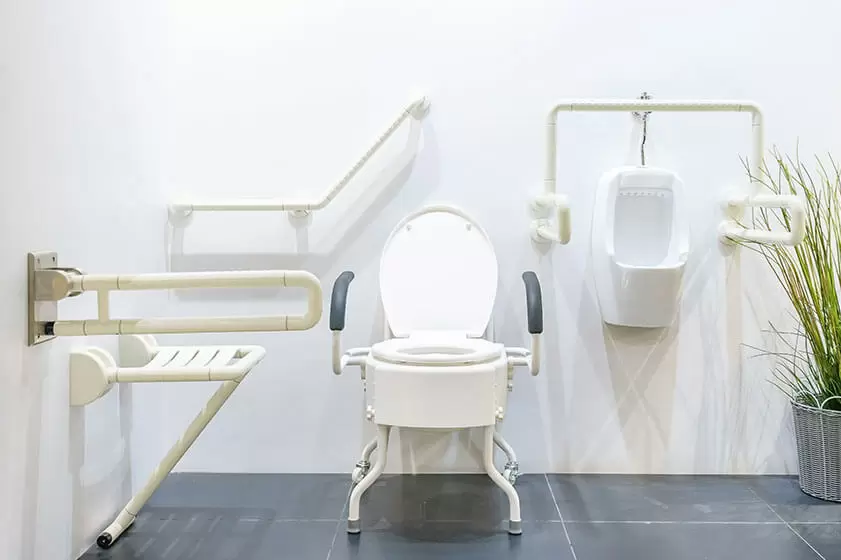
Improve Toilet Safety and Transfers
A toilet that is too low can make sitting down and standing up difficult. A raised toilet seat, toilet safety frame, or higher toilet may help, but the correct choice depends on the person’s balance and transfer method.
Choose the right toilet aid
| Bathroom need | Possible solution | Important limitation |
|---|---|---|
| Toilet is too low | Raised toilet seat | Must lock securely and fit the toilet |
| Person needs arm support | Toilet safety frame | Must rest firmly on the floor |
| Person needs more height | Comfort-height toilet | May be difficult for a shorter person |
| Person needs help with hygiene | Bidet attachment or handheld aid | Requires safe controls and proper installation |
| Person transfers from a wheelchair | Side grab bar or transfer support | Needs room and professional planning |
A raised toilet seat can make standing easier, but it can also make the person’s feet less stable if it is too high. The person should be able to sit with both feet supported and stand without sliding forward.
A toilet safety frame can help with pushing up, but it should not shift when weight is applied. Some frames attach to the toilet; others stand on the floor. Follow the manufacturer’s instructions and check the fit often.
Do not use a towel bar or sink as a support during toilet transfers. The sink may pull away from the wall, and the towel bar is not designed to carry body weight.
Keep the path clear
Place toilet paper, wipes, soap, and hygiene supplies within easy reach. Avoid storage that requires bending low or reaching behind the body.
If a walker or wheelchair is used, measure the route from the doorway to the toilet. A narrow path can create a risk even when the toilet itself is safe.
Improve Lighting and Visibility
Use bright, even lighting throughout the bathroom and along the path to it. Older eyes may need more light to detect changes in floor height, water, and objects.
Helpful lighting changes include:
- A bright ceiling light
- A light near the shower
- A night-light between the bedroom and bathroom
- Illuminated or high-contrast light switches
- Low-glare lighting near mirrors
- Motion-activated lighting when the person forgets to turn lights on
Keep light switches easy to reach from the doorway. Do not rely only on a motion sensor if it turns off while the person is sitting or bathing.
Reduce glare from glossy tile and mirrors. Use contrasting colors when possible. For example, a toilet seat that contrasts with the floor may be easier to see.
Make sure the person can read faucet markings and identify hot and cold controls. If vision is poor, raised labels or high-contrast markings may help.
Control Water Temperature and Bathroom Equipment
Burn prevention matters because some older adults have reduced sensation, slower reaction time, or memory changes. The water heater temperature should be checked by a qualified person, especially if the home has a history of scalding or the resident cannot judge heat well.
Use faucet controls that are easy to turn and clearly marked. A single-lever handle may be easier than separate knobs for someone with arthritis, but the control should still be simple to understand.
Consider:
- Anti-scald protection
- A pressure-balancing or thermostatic valve
- Clearly marked hot and cold settings
- A handheld showerhead with an accessible shutoff
- Electrical outlets protected by ground-fault circuit interrupter protection
- Electrical devices kept away from wet areas
Do not use portable heaters, extension cords, or electrical grooming tools near water. Keep hair dryers, radios, and charging devices away from the sink, tub, and shower.
A licensed electrician should inspect outlets and wiring when the bathroom has older electrical equipment, frequent breaker trips, or signs of moisture.
Make the Bathroom Accessible for a Walker or Wheelchair
A person who uses a walker or wheelchair needs more than a grab bar. The full route must allow safe movement, turning, and transfers.
Check:
- Door width and swing
- Threshold height
- Floor transitions
- Turning space
- Clearance beside the toilet
- Space beside or inside the shower
- Sink height and knee clearance
- Whether the bathroom door can be unlocked from outside during an emergency
A door that opens inward may trap a person who falls behind it. In some bathrooms, an outward-swinging door or sliding door can improve emergency access. This change must not block a hallway or violate local building requirements.
Do not remove a bathroom door or alter a wall without checking local code and obtaining permits when required. Plumbing, electrical, ventilation, and waterproofing work may need licensed trades.
For a wheelchair user, have an occupational therapist or accessibility specialist observe the actual transfer. A measurement that looks adequate on paper may not work with a particular chair or transfer technique.
Add a Reliable Way to Call for Help
Every older adult at fall risk should have a way to call for help from the bathroom. A phone placed outside the room is not enough.
Options include:
- A waterproof medical alert device
- A wall-mounted emergency call button
- A waterproof smart speaker configured for emergency calls
- A cordless phone kept within reach
- A caregiver check-in plan
Test the device from the floor, not only from standing height. The person may be unable to reach a counter after a fall.
Keep the bathroom door unlocked when appropriate, especially if the person lives alone or has a history of falls. Privacy needs and emergency access should be balanced with the person and their caregivers.
A device is useful only if the person can remember to wear or use it. For memory loss, a monitored alert system or scheduled check may provide more reliable protection than a button that depends on the person taking action.
Use a Safety Setup Based on Mobility Level
The best bathroom setup changes with the person’s abilities.
| Mobility level | Key bathroom changes |
|---|---|
| Walks independently but feels unsteady | Remove loose rugs, improve lighting, add grab bars, use non-slip surfaces |
| Uses a cane or walker | Clear the route, add stable supports, provide a seated bathing option |
| Needs help standing | Install transfer grab bars, consider a raised toilet, use a shower chair |
| Cannot safely step over a tub | Consider a low-threshold or curbless shower |
| Uses a wheelchair | Assess door, turning space, transfer clearance, sink access, and shower entry |
| Has dementia or confusion | Use simple controls, reduce clutter, control water temperature, and add supervision or alerts |
These categories are a planning guide, not a diagnosis. A person may need different equipment on different days because of fatigue, pain, medication effects, or illness.
If the person has dizziness, repeated falls, sudden weakness, fainting, or a new change in walking, contact a health care professional. Bathroom equipment cannot correct an untreated medical problem.
Common Mistakes to Avoid
The most common mistake is adding equipment without checking how the person will use it. A grab bar in the wrong place can encourage a risky reach. A shower chair that blocks the exit can make an emergency harder.
Avoid these errors:
- Using suction-cup grab bars as primary support
- Treating a towel bar as a grab bar
- Leaving loose rugs on the floor
- Choosing a shower chair that is too high or too narrow
- Installing a raised toilet seat without checking stability
- Placing soap or towels where the person must bend
- Using small bath mats that slide
- Relying on dim night-lights
- Leaving cleaning products within reach of someone with memory loss
- Adding a lock that prevents emergency entry
- Installing equipment without checking wall strength
- Making a major remodel without addressing drainage and waterproofing
Inspect grab bars, seats, toilet aids, and non-slip surfaces on a regular schedule. Replace equipment that cracks, loosens, rusts, or moves under pressure.
When to Hire a Professional
Hire a qualified professional when the project involves structural changes, plumbing, electrical work, waterproofing, or wheelchair access. Use a licensed contractor, plumber, or electrician as the work requires. Check local permit and inspection rules in your city or state.
An occupational therapist can be especially helpful when the older adult has:
- A recent fall
- A stroke or one-sided weakness
- Parkinson’s disease
- Dementia
- Severe arthritis
- Vision loss
- A need for wheelchair transfers
- Trouble rising from the toilet
- Trouble entering or exiting the shower
Ask whether the therapist provides a home safety assessment. Some hospitals, aging services, and Area Agencies on Aging may help families find local resources. The Eldercare Locator can help people in the United States locate aging services by ZIP code.
A Practical Bathroom Safety Checklist
Use this checklist before considering the bathroom ready:
- The route to the bathroom is clear.
- The floor is dry and free of loose rugs.
- Lighting is bright from the bedroom to the bathroom.
- Grab bars are securely mounted.
- The shower or tub has a stable seat when needed.
- The shower has a non-slip surface.
- The handheld showerhead is reachable while seated.
- The toilet height supports safe sitting and standing.
- Toilet aids do not move when used.
- Soap, towels, and toilet paper are easy to reach.
- Water controls are simple and clearly marked.
- Scald protection has been considered.
- Electrical devices are kept away from water.
- A call-for-help device works from the floor.
- The door can be opened during an emergency.
- The setup has been tested by the person who will use it.
After installation, have the older adult perform each task slowly: walk in, turn, sit, stand, enter the shower, sit, wash, exit, and reach for a towel. Correct any point that causes a stretch, twist, slip, or loss of balance.
Frequently Asked Questions
What is the most important bathroom safety change for an elderly person?
There is no single change for every person. For many older adults, the best starting points are removing slip hazards, improving lighting, installing properly mounted grab bars, and adding a stable shower seat when standing is difficult.
Are suction grab bars safe for seniors?
Suction grab bars should not be the main support for standing or transferring. Suction can weaken because of tile texture, moisture, age, or poor sealing. Use a permanently installed grab bar that is anchored correctly.
Should an elderly person use a shower chair?
A shower chair may help someone who feels weak, tired, dizzy, or unsteady while standing. It must fit the shower, remain stable, and allow a clear path in and out. A health professional can help choose and position one.
How high should a toilet be for an older adult?
The correct height depends on the person’s leg length, balance, hip strength, and transfer method. A higher toilet can make standing easier, but excessive height may leave the feet unsupported. Test the setup before making a permanent change.
How can I make a bathtub safer without remodeling?
Add a properly mounted grab bar, a stable bath seat or transfer bench, a handheld showerhead, and a non-slip surface. A tub transfer bench may help someone who cannot safely step over the tub wall, but it requires enough space and correct positioning.
Does Medicare pay for bathroom safety equipment?
Coverage depends on the item, the person’s plan, medical documentation, and current program rules. Many common bathroom changes are not automatically covered. Check directly with Medicare, a Medicare Advantage plan, Medicaid, or a local aging service before purchasing.
Conclusion
Set up an elderly-friendly bathroom by matching the room to the person’s real abilities. Remove trip hazards, improve light, control water temperature, add secure grab bars, make bathing and toilet transfers easier, and provide a reliable way to call for help.
The safest next step is to observe one complete bathroom routine and write down every reach, step, twist, and moment of instability. Use that list to make simple changes first, then ask an occupational therapist or qualified contractor to review any equipment or remodeling plan that involves transfers, plumbing, electrical work, or wheelchair access.

Michael Reynolds is a senior contributor at RetirementGazette.com, where he focuses on helping readers navigate the journey toward a secure and fulfilling retirement. With over a decade of experience in personal finance, retirement planning, and lifestyle writing, Michael combines practical strategies with easy-to-understand guidance tailored for both pre-retirees and those already enjoying their golden years.