Suction grab bars can be useful for light balance support, but they are not as reliable as permanently mounted shower grab bars. In a U.S. home, a suction bar should not be treated as a full weight-bearing safety device unless the manufacturer clearly states that use and provides tested limits.
The main risk is simple: a suction bar may look secure while the seal is slowly weakening. Steam, soap, rough tile, grout lines, body oils, and small air leaks can reduce holding power. If the bar releases while someone is stepping over a tub or standing on a wet floor, the result can be a serious fall.
For people who need firm support during transfers, standing, or sitting, a professionally installed grab bar attached to suitable wall structure is the safer choice.
Are suction grab bars safe to use?
Suction grab bars are reasonably safe only when used within strict limits. They work best as temporary balance aids on clean, smooth, nonporous surfaces. They are not a dependable substitute for a structurally mounted grab bar.
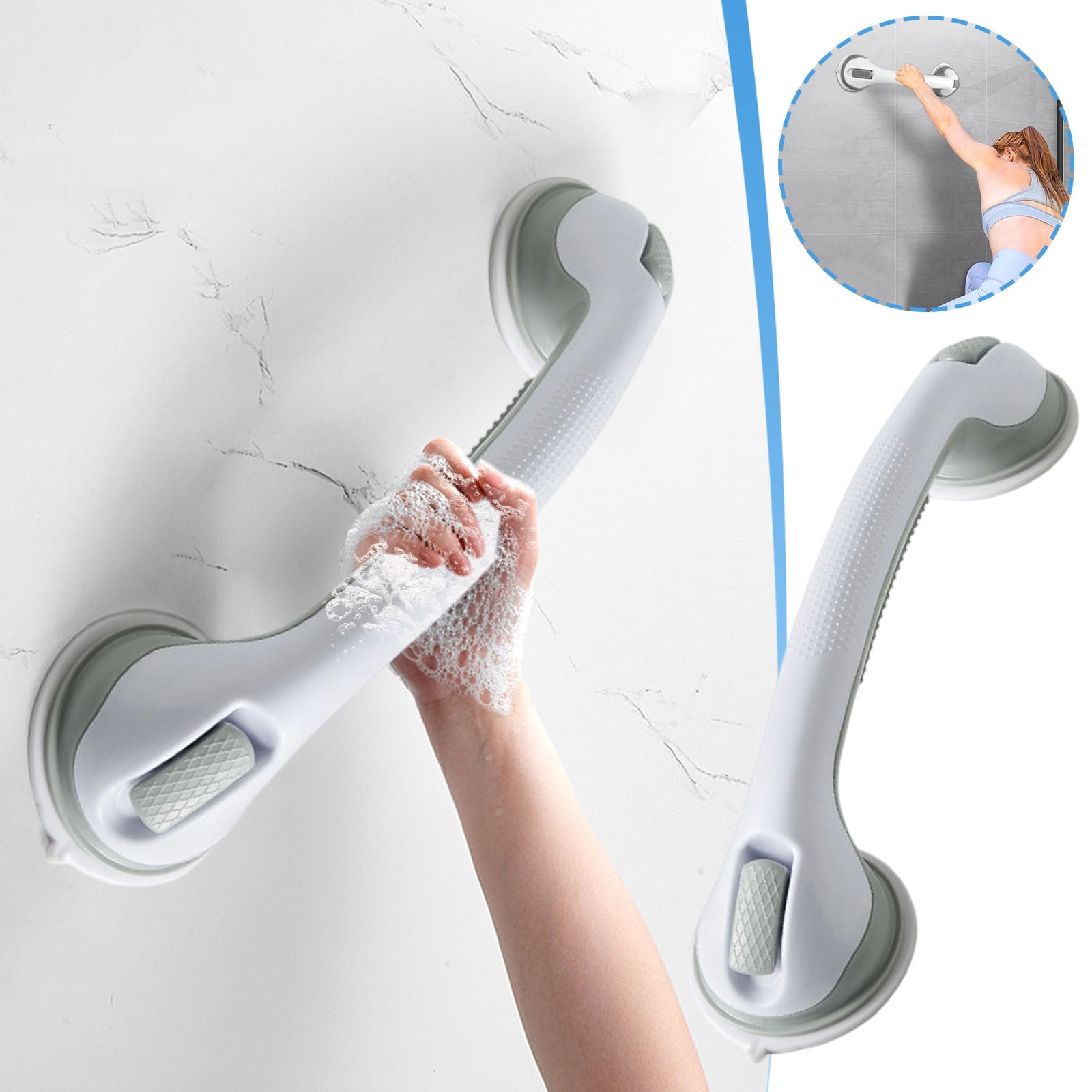
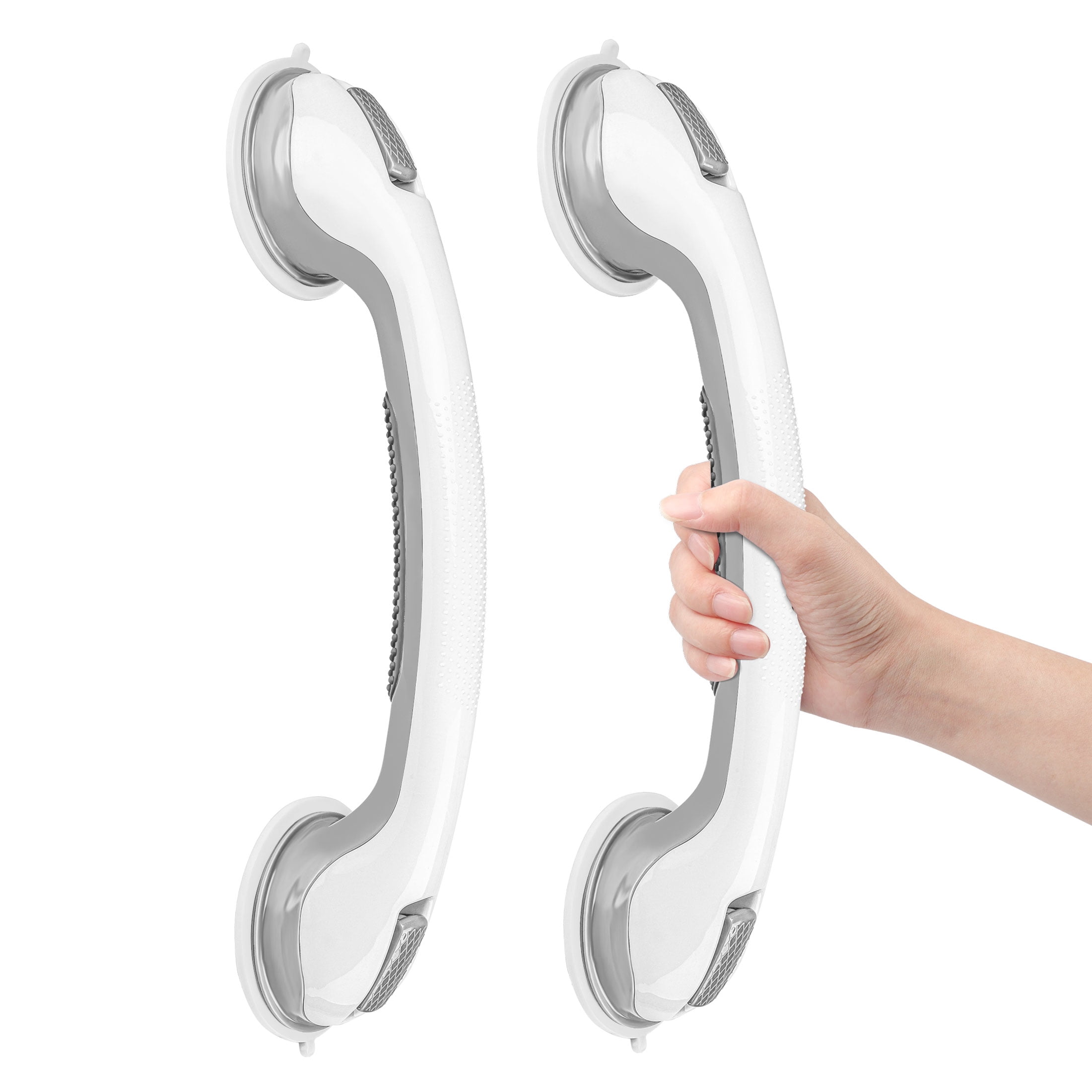
A suction grab bar attaches with one or more cups. A lever or locking mechanism pushes air out from under each cup. The lower air pressure helps atmospheric pressure press the cup against the wall.
That seal can weaken when:
- The wall has texture, deep grout, cracks, or raised patterns.
- The cup sits partly over a grout line.
- Soap, oil, dust, or hair is under the seal.
- The surface is wet during installation.
- The cup or locking mechanism is worn.
- The wall flexes when pressure is applied.
- The user pulls down or outward with a sudden movement.
A suction cup does not attach to the wall like a screw. It depends on a temporary seal between the cup and the surface. Once that seal fails, the bar may release with little warning.
What suction grab bars can and cannot do
| Use | Suitability |
|---|---|
| Light touch for balance | Often suitable when correctly installed |
| Steadying yourself while turning | May be suitable, with caution |
| Pulling up from a seated position | Generally not suitable |
| Supporting full body weight | Do not assume it is safe |
| Helping someone transfer into a tub | Use a fixed, professionally installed bar |
| Preventing a fall after a slip | Not reliable enough |
| Travel or short-term use | May be practical if the surface is compatible |
The word “grab bar” can create a false sense of security. A suction product may be sold as a grab bar, but its attachment method and intended use differ from a permanently mounted bar.

Why suction grab bars can fail in a shower
The seal is the key safety factor. A suction cup holds only while it maintains enough contact with the wall. The holding force depends on the cup area, the pressure difference, the surface condition, and the direction of the load.
In simplified terms:
Holding force depends on seal quality and pressure difference—not just the number printed on the package.
A bar may resist a slow, light touch but fail under a fast pull. A person who slips may apply a sudden force far greater than their body weight. This is called a dynamic load. Product packaging may list a maximum weight, but that number may not represent every movement or fall scenario.
Surface type matters
Suction grab bars work best on:
- Smooth ceramic tile
- Smooth porcelain tile
- Glass
- Other hard, flat, nonporous surfaces approved by the manufacturer
They may not work well on:
- Textured tile
- Natural stone with an uneven finish
- Small mosaic tile
- Deep grout lines
- Painted drywall
- Fiberglass with a textured pattern
- Acrylic panels that flex
- Rough or cracked surfaces
Even a smooth wall can be unsafe if the cup crosses a grout line. The uneven joint may create a path for air to enter.
Water and soap are not the only problems
Many people focus on water, but a wet surface is only one concern. Soap film and body oils can be just as damaging because they prevent the cup from making a clean seal.
Steam may also cause condensation between the cup and wall. Repeated heating and cooling can affect the seal and may make some materials less flexible over time.

Suction grab bars versus permanent grab bars
A permanent grab bar transfers force through screws, mounting hardware, and the wall structure. A suction bar transfers force only through the cup seal and the surface beneath it.
For public buildings covered by the Americans with Disabilities Act, the 2010 ADA Standards state that grab bars must withstand a force of 250 pounds applied at specified points. The standards also address structural support and mounting requirements. These rules apply to covered public accommodations and commercial facilities; they do not automatically require every U.S. residence to meet ADA design standards.
The ADA standard is not proof that a consumer suction bar is safe for home use. A product would need to meet the relevant requirements under the conditions tested. Many suction bars are intended for balance support, not for the 250-pound structural load used in ADA grab-bar provisions.
The U.S. Department of Justice ADA requirements can be reviewed in the 2010 ADA Standards for Accessible Design.
The practical difference
| Feature | Suction grab bar | Permanently mounted grab bar |
|---|---|---|
| Installation | No drilling in many cases | Requires secure fasteners |
| Surface dependence | Very high | Lower, if mounted correctly |
| Portability | Usually good | Usually fixed |
| Use on textured walls | Often poor | Often possible |
| Resistance to sudden force | Limited and product-specific | Better when structurally installed |
| Best role | Light balance support | Weight-bearing support and transfers |
| Inspection need | Before every use | Regular hardware checks |
A fixed bar is not automatically safe, either. If screws are placed only into drywall or the wall structure is weak, the bar can pull out. Installation must match the wall construction. A building professional, occupational therapist, or qualified installer can help select the right location and hardware.

How to use a suction grab bar more safely
Follow the product manual first. Instructions differ by model, cup design, surface, and load rating.
1. Check whether the product fits your need
Do not use a suction bar for a task that requires you to pull, lift, or catch yourself. If you need help getting into or out of a tub, lowering onto a shower seat, or standing from a low position, choose a fixed grab bar or another professionally assessed support.
Check the label for:
- Intended use
- Maximum stated load
- Whether the load must be applied vertically or horizontally
- Approved surface types
- Installation limits
- Inspection instructions
- Replacement parts and warranty terms
A listed weight limit is not a guarantee that the bar will stop a fall.
2. Inspect the bar before installation
Do not use the product if you see:
- A torn, curled, hardened, or cracked cup
- Loose handles or hinges
- Broken locking levers
- Missing parts
- Corrosion
- A cup that no longer lies flat
A worn cup may look normal but fail to maintain a seal.
3. Prepare the wall
Clean the area with a mild cleaner that does not leave a residue. Rinse away soap film and dry the surface fully. Do not place the cup across grout, a crack, a seam, or a raised texture.
Do not add oil, petroleum jelly, or an unapproved lubricant to improve suction. These substances can damage some materials or make the surface slippery.
4. Install the bar exactly as directed
Place every cup fully on the approved surface. Lock the levers or activate the mechanism as the manual shows. Do not use a bar if one cup is partly lifted or if the indicator shows a weak seal.
Some products include a visual indicator. Treat that indicator as a useful warning, not as proof that the bar will hold under every force.
5. Perform a gentle check
After installation, apply light pressure in the direction of intended use. Do not jerk the bar, hang from it, or test it with your full weight. If it shifts, lifts, clicks, or feels loose, remove it and reinstall it on a better surface—or stop using it.
6. Recheck it before each use
Look at the cups and locking indicators every time. Recheck the bar after a shower, cleaning, or any change in temperature. If the product has lost suction once, replace it or use a different support. Repeated failure is a safety warning, not a minor inconvenience.

When should you choose a permanent shower grab bar?
Choose a permanently mounted grab bar when a person may place substantial weight on it or may need it to prevent a fall. This includes people with poor balance, muscle weakness, dizziness, limited mobility, recent surgery, or difficulty stepping over a tub wall.
A fixed bar is also the better option for:
- Tub transfers
- Shower-chair transfers
- Getting up from a bench
- Supporting a person with limited leg strength
- Helping a caregiver assist another adult
- Any situation where a fall could have severe consequences
The safest location depends on the user and the bathroom layout. A horizontal bar may help with transfers, while a vertical bar may help with entry and stability. A licensed contractor or occupational therapist can assess the wall, user, and placement.
In the United States, the CDC STEADI initiative provides fall-prevention resources for older adults and health professionals. Falls are not caused by one product alone, so lighting, floor surfaces, footwear, medication effects, vision, and shower access should also be considered.
Do not rely on suction bars for high-risk users
A suction bar may be unsuitable for someone who:
- Has fallen recently
- Cannot stand without pulling on a support
- Has severe balance problems
- Has fainting or dizziness episodes
- Has significant weakness on one side
- Cannot judge whether the bar is secure
- Needs a caregiver to help with transfers
In these cases, ask a health professional or occupational therapist for a bathroom safety assessment. A shower chair, handheld showerhead, nonslip flooring, improved lighting, or a correctly mounted bar may work together as part of a safer setup.
Common mistakes that make suction bars less safe
The most common mistake is using a suction bar as though it were anchored to the wall. Other errors include:
Installing over grout
A cup that crosses grout may never form a complete seal. Move it to a single, smooth tile or another surface approved by the manufacturer.
Trusting the maximum weight number
A maximum load may apply only under stated test conditions. It may not account for a sudden downward pull, sideways force, wet hands, or an imperfect wall.
Using the bar to catch a fall
A fall creates sudden force. The bar, cup, wall surface, or user’s shoulder may be injured even if the bar does not release. Use it for prevention and balance, not as an emergency restraint.
Skipping the pre-use check
A bar can loosen after cleaning or several days of use. Check it each time rather than assuming yesterday’s installation is still secure.
Mounting it too high or too low
A poorly placed bar can cause awkward reaching and increase the chance of losing balance. Placement should match the user’s height, movement, and type of support needed.
Adding a suction bar to a damaged wall
Do not install over loose tile, cracked grout, peeling paint, or a flexible panel that moves under pressure. Repair the surface or use a different mounting method.

Are suction grab bars covered by safety standards?
Some suction grab bars may be tested or certified to specific product standards, but a general claim that a product is “tested” does not show that it will meet every user’s needs. Look for the exact standard, testing organization, product model, and intended use.
A manufacturer’s load rating is a product claim under stated conditions. It is not the same as independent proof of performance in every shower.
The U.S. Access Board explains accessible bathing-room provisions, including grab bars and their required structural support in covered settings. The ADA National Network also provides guidance on accessible bathroom features.
For home use, the most useful questions are practical:
- Is the wall smooth and suitable?
- Can the user avoid putting full weight on the bar?
- Can the bar be checked before every use?
- Would a release create a serious injury risk?
- Is a permanent bar feasible?
If the answer to the fourth question is yes, a suction bar is usually the wrong primary support.

Quick decision guide
Use this guide as a starting point, not as a personal medical assessment.
| Your situation | Better choice |
|---|---|
| You want a temporary balance aid on smooth tile | A properly installed suction bar may work |
| You travel and need short-term support | A removable product may help, after surface checks |
| You need to pull up from a shower seat | Permanently mounted grab bar |
| You need help stepping over a tub wall | Permanently mounted bar and possibly professional assessment |
| You have frequent dizziness or falls | Bathroom safety evaluation |
| The wall is textured or heavily grouted | Do not rely on suction |
| The user may fall without the bar | Fixed support, not suction alone |
| You are unsure about the wall or installation | Ask a qualified installer |
The deciding trade-off is convenience versus reliability. Suction bars are easier to install and move, but their safety depends much more on surface condition and regular checks.

Frequently asked questions
Can a suction grab bar hold a person’s full weight?
Do not assume it can. Some products may advertise a high load limit, but real use can involve sudden force, sideways pulling, wet hands, and imperfect seals. Unless the product is specifically documented and appropriate for that use, treat it as a balance aid only.
Will suction grab bars stick to fiberglass showers?
Some may, but fiberglass and acrylic shower walls vary. A smooth, rigid surface may work, while a textured or flexible panel may not. Follow the exact product instructions and never rely on suction if the wall bends or has a pattern.
How often should a suction grab bar be replaced?
Replace it when the cup becomes hard, cracked, curled, stained, or unable to hold a seal. There is no universal replacement schedule because materials, use, heat, cleaners, and storage differ. If it repeatedly loses suction, stop using it.
Can I use a suction grab bar over tile grout?
It is generally unsafe to place the cup over grout or across a tile edge. The joint can allow air to enter and prevent a full seal. Install each cup on a clean, flat area of tile approved by the manufacturer.
Are suction grab bars ADA compliant?
A product should not be called ADA compliant merely because it is marketed as a grab bar. ADA requirements for covered facilities include structural support and specified load performance. Check the product’s exact documentation, but for home safety, use a permanently mounted bar when weight-bearing support is needed.
Bottom line
Suction grab bars can offer convenient, temporary support for light balance on a clean, smooth, nonporous surface. They are not a dependable replacement for a fixed shower grab bar, especially when someone may pull, lift, transfer, or catch themselves.
Before using one, inspect the bar, prepare the wall, follow the manufacturer’s instructions, and check the seal every time. If a fall could cause serious harm, install a properly anchored grab bar and consider a professional bathroom safety assessment.
Sources reviewed
- U.S. Department of Justice: 2010 ADA Standards for Accessible Design
- U.S. Access Board: Bathing Rooms
- CDC: STEADI—Stopping Elderly Accidents, Deaths & Injuries
- ADA National Network: Accessible Bathrooms

Michael Reynolds is a senior contributor at RetirementGazette.com, where he focuses on helping readers navigate the journey toward a secure and fulfilling retirement. With over a decade of experience in personal finance, retirement planning, and lifestyle writing, Michael combines practical strategies with easy-to-understand guidance tailored for both pre-retirees and those already enjoying their golden years.