Medicare and Medicaid are important because they help millions of Americans afford vital health care and long-term support.
Understanding why is Medicare and Medicaid important can make health coverage feel much less confusing. These programs are more than government benefits. They help older adults, people with disabilities, children, low-income families, pregnant people, and individuals who need long-term care.
This guide explains how Medicare and Medicaid work, why they matter, where they differ, and how they affect daily life. It also covers common mistakes, eligibility basics, costs, and ways to find trusted help.

Why is Medicare and Medicaid important?
Medicare and Medicaid are important because they protect people from large medical bills. Without these programs, many people could face a painful choice between getting care and paying for food, rent, or other basic needs.
Medicare mainly serves older adults and some people with disabilities. Medicaid mainly helps people with limited income and resources, although each state sets its own rules within federal guidelines.
Together, these programs help people:
• Visit doctors and specialists
• Get hospital care
• Pay for prescription medicines
• Receive preventive services
• Access mental health treatment
• Get nursing home or home-based care
• Receive care during pregnancy and childhood
• Manage long-term health conditions
Health insurance is like a financial safety net. It does not prevent every health problem, but it can keep one illness from causing a family’s financial collapse.
The answer to why is Medicare and Medicaid important also involves public health. When people can see a doctor early, they are more likely to treat problems before they become emergencies. This can improve health outcomes and reduce avoidable hospital visits.

What is Medicare?
Medicare is a federal health insurance program. It mainly covers people age 65 and older. It also covers some younger people who have certain disabilities, end-stage renal disease, or amyotrophic lateral sclerosis, also known as ALS.
Medicare has several parts. Each part covers a different type of care.
Medicare Part A
Part A helps cover inpatient hospital care. It may also cover limited skilled nursing care, hospice care, and some home health care.
Many people do not pay a monthly premium for Part A if they or a spouse paid Medicare taxes long enough while working. However, deductibles and other costs may still apply.
Medicare Part B
Part B helps pay for medically necessary services and preventive care. Examples include:
• Doctor visits
• Outpatient procedures
• Lab tests
• Medical equipment
• Screenings and vaccines
Part B usually has a monthly premium. The amount can change each year and may be higher for people with greater incomes.
Medicare Part C
Part C is also called Medicare Advantage. Private insurance companies offer these plans through contracts with Medicare.
Medicare Advantage plans must cover services included under Parts A and B. Many plans also include prescription drug coverage and extra benefits, such as dental, vision, or hearing services. Rules, networks, premiums, and out-of-pocket costs vary by plan.
Medicare Part D
Part D helps pay for prescription drugs. Private insurance companies offer Part D plans approved by Medicare.
Each plan has its own list of covered medicines, called a formulary. Before choosing a plan, it is wise to check whether it covers your drugs and whether your preferred pharmacy is in the plan’s network.
Medigap policies
Some people with Original Medicare buy a Medicare Supplement Insurance policy, often called Medigap. These policies can help pay certain deductibles, coinsurance, and copayments.
Medigap does not usually cover prescription drugs, long-term care, dental care, or routine vision care. It is separate from Medicare Advantage, and a person generally cannot have both at the same time.
What is Medicaid?
Medicaid is a joint federal and state program. It provides health coverage to eligible people with low income and certain health needs.
Medicaid eligibility can depend on:
• Household income
• Family size
• Age
• Disability
• Pregnancy
• Immigration status under applicable rules
• State residency
• Need for long-term services
Because states manage their own Medicaid programs, benefits and eligibility rules can differ. A person who qualifies in one state may not qualify in another.
Medicaid may cover services such as:
• Doctor and hospital visits
• Laboratory services
• Prescription drugs
• Children’s health care
• Pregnancy care
• Mental health services
• Transportation to medical appointments
• Nursing facility care
• Home and community-based services
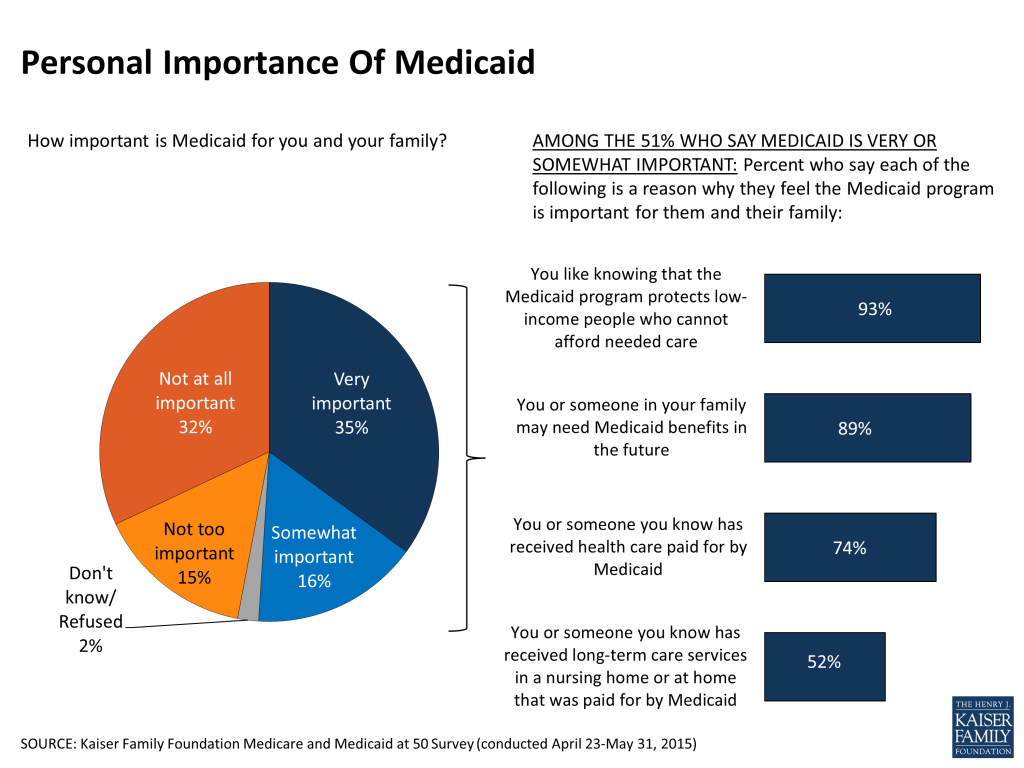
One reason why is Medicare and Medicaid important is that Medicaid often covers services that Medicare does not fully cover. Long-term care is a key example. Medicare may cover short-term skilled care after a qualifying hospital stay, but it generally does not pay for ongoing custodial care. Medicaid may help eligible people pay for nursing home care or certain home-based services.
Medicaid also supports children through programs such as the Children’s Health Insurance Program, known as CHIP. These programs help families obtain regular checkups, vaccines, dental care, and treatment for childhood illnesses.
Medicare vs. Medicaid: What is the difference?
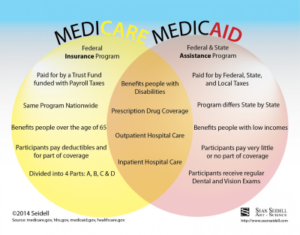
Medicare and Medicaid are not the same program. Their main differences involve who qualifies, who runs the program, and what services each program covers.
| Feature | Medicare | Medicaid |
|---|---|---|
| Main purpose | Health coverage for older adults and some disabled people | Health coverage for eligible people with limited income and certain needs |
| Administration | Federal government | Federal and state governments |
| Main eligibility factor | Age, disability, ESRD, or ALS | Income, household circumstances, state rules, and health needs |
| Long-term care | Limited coverage | May cover qualifying long-term care |
| Premiums and costs | Premiums, deductibles, and coinsurance may apply | Costs are often low, but rules vary by state |
| Coverage area | Generally consistent across the country | Benefits vary by state |
Some people qualify for both programs. They are often called dual eligible beneficiaries.
For these individuals, Medicare usually pays first for Medicare-covered services. Medicaid may help with Medicare premiums, deductibles, coinsurance, and services that Medicare does not cover.
Knowing the difference helps prevent a common mistake: assuming that Medicare covers every health care expense after age 65. It does not. Likewise, Medicaid is not limited to doctor visits. It can support long-term care, transportation, home care, and other essential needs.
Why Medicare and Medicaid matter to families
The importance of Medicare and Medicaid extends beyond the person enrolled. These programs often support entire families.
An older parent may need help with diabetes, heart disease, or mobility. Medicare can help cover medical visits and treatment. Medicaid may help with home care or nursing services if the person meets the rules.
A child may need regular asthma care or speech therapy. Medicaid or CHIP can help the family obtain that care without taking on overwhelming debt.
A pregnant person may need prenatal visits, testing, delivery care, and postpartum support. Medicaid covers a large share of births in the United States and plays a major role in maternal and infant health.
The answer to why is Medicare and Medicaid important becomes clear during a health crisis. A serious diagnosis can affect income, work, housing, and family stability. Health coverage gives people a better chance to focus on recovery instead of delaying treatment because of cost.
These programs also support caregivers. When a person receives covered home and community-based services, family members may have more help with daily needs. That support can reduce stress and make it easier for caregivers to remain employed.
How Medicare and Medicaid improve access to care
Insurance coverage can improve access in several practical ways.
Preventive care
Preventive care helps find health risks early. Medicare covers many preventive services, including certain screenings and wellness visits. Medicaid coverage also includes preventive services, although details vary by state and plan.
Early care may help identify high blood pressure, cancer, diabetes, or depression before symptoms become severe.
Treatment for chronic conditions
Many people live with chronic conditions such as arthritis, asthma, kidney disease, or heart disease. Regular care helps them manage these conditions and avoid complications.
Medicare and Medicaid may pay for visits, medicine, testing, therapy, and equipment. The exact benefit depends on the program, plan, and medical need.
Mental health care
Mental health is part of overall health. Medicare and Medicaid can help eligible people access counseling, psychiatric care, substance use treatment, and other behavioral health services.
Access may still be difficult in areas with few providers. Coverage does not always mean that an appointment is easy to find. This is an important limitation to keep in mind.
Prescription medicines
Many people take several medicines each month. Medicare Part D and Medicaid prescription benefits can lower the cost of these drugs.
Still, formularies, prior authorization, and pharmacy networks can affect access. Patients should ask their doctor or pharmacist about lower-cost alternatives when a medicine is not covered.

Economic importance of Medicare and Medicaid
Medicare and Medicaid protect household finances and support the broader economy.
Medical bills are a major source of financial stress in the United States. Coverage can reduce the amount people must pay directly for care. It can also help hospitals, clinics, nursing facilities, and pharmacies receive payment for services.
These programs support jobs in:
• Hospitals
• Medical offices
• Nursing facilities
• Home health agencies
• Pharmacies
• Medical equipment companies
• Behavioral health centers
Medicaid also helps people with disabilities and caregivers remain connected to work when support services are available. For example, home-based care may help a person live safely at home instead of entering a facility sooner than necessary.
Medicare supports older adults who may no longer have employer-sponsored insurance. This is especially important because health needs often increase with age.
A useful way to understand why is Medicare and Medicaid important is to view them as both health programs and stability programs. They help people receive care, protect savings, and reduce pressure on families during difficult times.

Limitations and challenges of Medicare and Medicaid
These programs are important, but they are not perfect. Understanding their limits can help people plan better.
Medicare may not pay all medical costs. Beneficiaries can face premiums, deductibles, coinsurance, and costs for services that are not covered. Dental care, hearing aids, routine vision care, and long-term custodial care may require separate coverage or personal payment.
Medicaid rules can be complex. Eligibility may change when income, household size, disability status, or state residency changes. Some people must renew their coverage regularly.
Provider access is another challenge. Not every doctor accepts every Medicare Advantage or Medicaid plan. A plan may cover a service, but the person may still have trouble finding an available provider nearby.
Common problems include:
• Missing enrollment deadlines
• Failing to report a change in address
• Not checking a plan’s drug list
• Assuming every doctor accepts the plan
• Ignoring renewal notices
• Confusing Medicare coverage with long-term care coverage
A practical lesson is to read every notice from the health plan or government agency. If something is unclear, call the number on the notice and ask for an explanation. Keep notes about the date, the representative’s name, and any next steps.
How to apply for Medicare and Medicaid
The application process depends on the program.
Applying for Medicare
People usually become eligible for Medicare around age 65. Some people qualify earlier because of a disability or certain medical conditions.
Before enrollment, review:
-
Your initial enrollment period
-
Whether you have coverage through an employer or union
-
Medicare Part A and Part B costs
-
Prescription drug coverage
-
Medicare Advantage and Medigap options
-
Your doctors, hospitals, and medicines
People who continue working may have special enrollment choices, but the rules can be technical. Do not assume that delaying Part B is always safe. Ask a benefits counselor or the appropriate federal office before making a decision.
Applying for Medicaid
Medicaid applications are usually handled through the state Medicaid agency or a health insurance marketplace. Applicants may need information about:
• Income
• Household members
• Social Security numbers
• Immigration documents when required
• State residency
• Current health insurance
You can apply even if you are unsure whether you qualify. Eligibility rules differ by state, and some people qualify through pathways they did not expect.
If you are denied, read the notice carefully. It should explain the reason and how to appeal. Appeal deadlines matter, so act quickly.
Practical tips for choosing and using coverage
Choosing health coverage can feel like comparing dozens of unfamiliar products. A simple checklist can help.
• List your doctors and preferred hospitals.
• Write down every prescription medicine you take.
• Check premiums, deductibles, copayments, and yearly out-of-pocket limits.
• Confirm whether your providers are in network.
• Review dental, vision, hearing, and transportation benefits.
• Ask whether referrals or prior authorization are required.
• Compare the plan’s drug formulary with your medication list.
• Save letters, bills, explanations of benefits, and appeal records.
Do not choose a plan only because it has the lowest monthly premium. A low premium may come with higher costs when you need care.
Also, be careful with unsolicited calls or messages. Government agencies and legitimate plans will not ask for unnecessary personal information through suspicious links. Never share your Medicare number or banking details unless you know who you are dealing with.
For free, unbiased help, look for a State Health Insurance Assistance Program counselor, a licensed insurance professional, or your state Medicaid office. Counselors can explain choices, but they cannot replace advice from your doctor or a qualified legal or financial professional.
A real-life example of why coverage matters
Imagine a 68-year-old person with Medicare who develops heart problems. Medicare may help cover hospital treatment, follow-up visits, testing, and prescribed medicine. If that person also has limited income, Medicaid may help with Medicare cost-sharing or additional support, depending on state rules.
Now imagine a single parent whose child needs frequent medical visits. Medicaid or CHIP may help the child receive treatment without forcing the parent to choose between care and household bills.
These examples show why is Medicare and Medicaid important in everyday life. Coverage is not an abstract policy. It affects whether someone fills a prescription, keeps a doctor’s appointment, receives help at home, or seeks emergency care.
One lesson many families learn the hard way is that preparation matters. Keep benefit letters in one place, renew on time, and ask questions before a crisis occurs.
Frequently Asked Questions About Why Is Medicare and Medicaid Important
Why is Medicare and Medicaid important for older adults?
Medicare helps older adults pay for hospital care, doctor visits, preventive services, and prescription drugs. Medicaid may provide extra financial help and may cover qualifying long-term care that Medicare usually does not cover.
Can a person have both Medicare and Medicaid?
Yes, some people qualify for both programs. Medicare generally pays first, while Medicaid may help with certain costs and services that Medicare does not cover.
Is Medicaid only for people who are unemployed?
No. Medicaid eligibility is based on state rules, income, household factors, age, pregnancy, disability, and other conditions. Some employed people may qualify if their income is within the applicable limits.
Does Medicare cover all health care costs?
No. Medicare beneficiaries may still pay premiums, deductibles, coinsurance, and costs for services that Medicare excludes. Supplemental coverage or financial assistance may help with some expenses.
Does Medicaid cover nursing home care?
Medicaid may cover nursing facility care for eligible people who meet financial and medical requirements. Rules differ by state, and applicants should seek guidance before making major financial decisions.
Why is Medicare and Medicaid important for people with disabilities?
Medicare may cover certain people with disabilities after they meet eligibility requirements. Medicaid can provide additional coverage, including home-based services and support that may help a person live more independently.
Conclusion
Medicare and Medicaid are important because they help people access health care, manage chronic illness, afford medicine, and protect their finances. Medicare mainly supports older adults and some people with disabilities, while Medicaid helps eligible people with limited income and certain health needs.
The programs have limits, and their rules can be complex. Still, learning the basics, checking plan details, meeting deadlines, and asking for trusted help can prevent costly mistakes.
Take time to review your coverage or your family member’s benefits today. Explore official Medicare and state Medicaid resources, speak with a qualified counselor, and share your questions or experience in the comments.

Michael Reynolds is a senior contributor at RetirementGazette.com, where he focuses on helping readers navigate the journey toward a secure and fulfilling retirement. With over a decade of experience in personal finance, retirement planning, and lifestyle writing, Michael combines practical strategies with easy-to-understand guidance tailored for both pre-retirees and those already enjoying their golden years.