At age 65, Medicare may cost $0 for Part A, $185 monthly for Part B, plus drug and coverage costs.
Understanding how much Medicare costs at age 65 for seniors can feel like putting together a puzzle. The answer depends on your work history, income, prescription plan, location, and whether you choose Original Medicare or Medicare Advantage. This guide explains the main costs, common mistakes, ways to save, and what to expect when enrollment begins.

How much does Medicare cost at age 65?
For most people, Medicare costs more than one simple monthly premium. Your total bill may include Part B, prescription coverage, supplemental insurance, copayments, deductibles, and income-related surcharges.
For 2025, many new Medicare members pay:
• $0 monthly premium for Medicare Part A if they or their spouse paid Medicare taxes for about 10 years
• $185 per month for the standard Medicare Part B premium
• $257 annual Part B deductible
• A separate Part D prescription drug premium, which varies by plan
• An optional Medigap premium, often ranging from about $50 to more than $300 per month
• Copayments, coinsurance, and deductibles for medical care
People with higher incomes may pay more for Part B and Part D. These extra charges are called Income-Related Monthly Adjustment Amounts, or IRMAA.
So, how much Medicare costs at age 65 for seniors depends on the coverage you select. A person with premium-free Part A, standard Part B, a low-cost drug plan, and no supplement may pay around $200 per month before medical expenses. Another person with Medigap and prescription coverage may pay $300 to $500 or more each month.
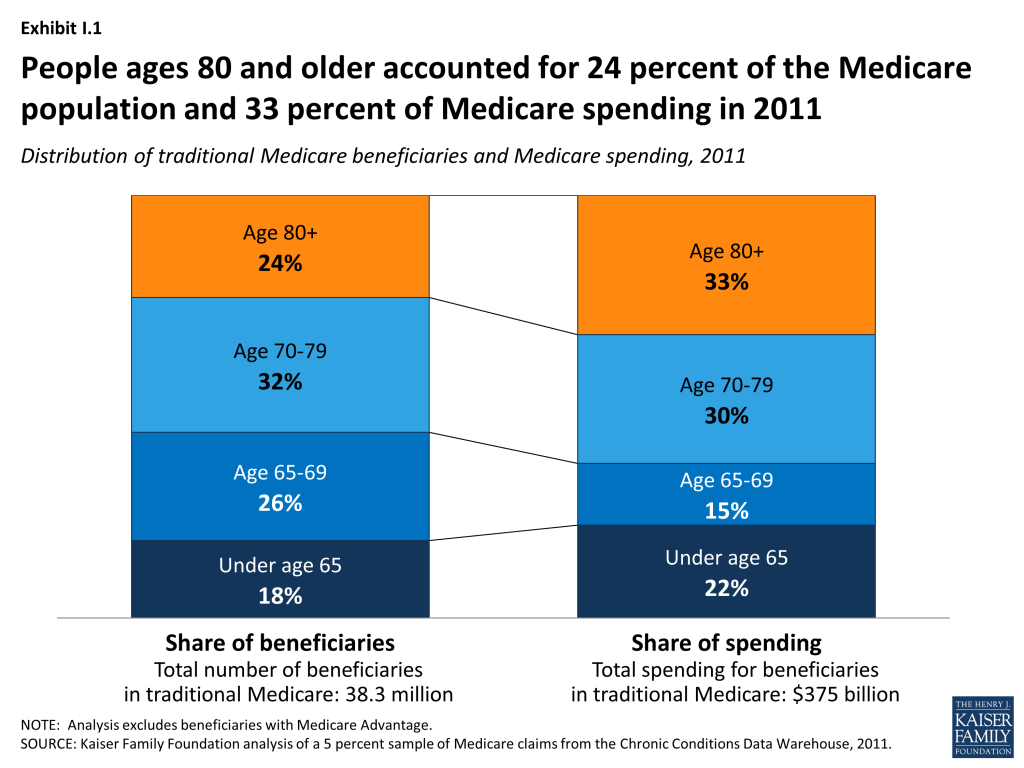
Medicare costs at age 65: the four parts
Medicare has four main parts. Each one covers a different type of care and has its own costs.
Medicare Part A costs
Part A covers inpatient hospital care. It also helps pay for skilled nursing facility care, hospice care, and some home health care.
Most people do not pay a monthly Part A premium. You usually qualify for premium-free Part A if you or your spouse worked and paid Medicare taxes for at least 40 quarters, which is about 10 years.
If you do not have enough work credits, you may pay a monthly premium. In 2025, the premium can be:
• $285 per month for people with 30 to 39 quarters of Medicare-covered work
• $518 per month for people with fewer than 30 quarters
Part A also has a hospital deductible. In 2025, the deductible is $1,676 for each hospital benefit period. This is not an annual deductible. You may pay it again if you have a new benefit period after being out of the hospital for at least 60 days.
After the deductible, Medicare pays most covered hospital costs for a limited period. Longer stays can lead to daily coinsurance charges.
Medicare Part B costs
Part B covers doctor visits, outpatient care, preventive services, medical equipment, lab tests, and many other services.
The standard Part B premium is $185 per month in 2025. The premium is usually taken from your Social Security check. If you do not receive Social Security yet, Medicare may bill you directly.
The Part B deductible is $257 in 2025. After you meet it, you typically pay 20% of the Medicare-approved amount for covered services. There is usually no yearly limit on your out-of-pocket costs under Original Medicare.
This is one of the most important points when considering how much Medicare costs at age 65 for seniors. A low monthly premium does not always mean low total costs. Medical visits, treatments, and hospital care can create significant bills without supplemental coverage.
Medicare Part C costs
Medicare Part C is another name for Medicare Advantage. Private insurance companies offer these plans under Medicare rules.
Many Medicare Advantage plans advertise a $0 monthly plan premium. However, you must still pay your Part B premium unless a special program helps cover it.
Medicare Advantage plans may include:
• Hospital and doctor coverage
• Prescription drug coverage
• Dental, vision, or hearing benefits
• Annual out-of-pocket limits
• Copays for visits, tests, and hospital stays
Costs vary by plan and location. A plan with a $0 premium may still have deductibles, provider networks, referral rules, or higher copays for certain services.
Medicare Part D costs
Part D helps pay for prescription drugs. You buy it through a private insurance plan approved by Medicare.
The monthly premium depends on your plan, location, and drug list. In 2025, the standard Part D deductible cannot exceed $590. Plans then charge a share of drug costs based on their formulary and coverage rules.
A major 2025 change is the $2,000 annual out-of-pocket limit for covered Part D drugs. This limit can make prescription costs easier to plan. Starting in 2025, people can also spread large prescription payments across monthly installments through the Medicare Prescription Payment Plan.
Part D plans are not all alike. A plan that works well for one person may be costly for another because drug prices, pharmacies, and coverage tiers differ.

What is the average Medicare cost at age 65?
There is no single average that fits every senior. Still, a simple estimate can help with planning.
A person with Original Medicare may have these monthly costs:
• Part A: $0 for most people
• Part B: $185 in 2025
• Part D: Often about $10 to $100 or more, depending on the plan
• Medigap: Commonly about $50 to $300 or more
This can place basic monthly premiums between roughly $245 and $585 before medical services. In some areas, Medigap premiums are higher, especially for older enrollees or people who do not qualify for the best underwriting terms.
A Medicare Advantage member may pay:
• Part B: $185 per month in 2025
• Medicare Advantage plan premium: Often $0, but not always
• Part D premium: Often included in the plan
• Copays and coinsurance for services
The best way to estimate how much Medicare costs at age 65 for seniors is to review both fixed and possible costs. Fixed costs are premiums. Possible costs include deductibles, copays, coinsurance, dental work, glasses, hearing aids, and services Medicare does not cover.

How income affects Medicare premiums
Your income may affect how much you pay for Part B and Part D. Medicare generally uses your federal tax return from two years earlier to calculate IRMAA.
For example, your 2025 premiums may be based on your 2023 modified adjusted gross income. If your income has dropped because of retirement, divorce, loss of a pension, or another major life event, you can ask Social Security to reconsider the surcharge.
IRMAA applies when your income is above certain limits. The higher your income, the more you may pay each month for:
• Medicare Part B
• Medicare Part D
The income calculation usually includes adjusted gross income plus tax-exempt interest. Selling a home, taking a large retirement distribution, or converting money to a Roth IRA may raise your income for one year.
Before making a large financial move, speak with a tax professional and check how it could affect future Medicare premiums. A one-time income increase may affect your costs for a full year.

Medicare enrollment costs and deadlines
Knowing when to enroll is just as important as knowing how much Medicare costs at age 65 for seniors.
Your Initial Enrollment Period usually lasts seven months:
• Three months before the month you turn 65
• The month you turn 65
• Three months after the month you turn 65
If you are already receiving Social Security benefits, you may be enrolled in Parts A and B automatically. If you are not receiving benefits, you may need to enroll through Social Security.
People who have active employer coverage may be able to delay Part B without a late enrollment penalty. However, this depends on the employer’s size and the type of coverage. COBRA coverage and retiree coverage usually do not count as active employer coverage for delaying Medicare.
Late enrollment can create long-term costs. The Part B penalty may be 10% of the standard premium for each full 12-month period you could have had Part B but did not enroll. The penalty generally lasts as long as you have Part B.
Part D also has a late enrollment penalty if you go 63 days or longer without creditable prescription coverage. Ask your employer or plan for written proof that your drug coverage is creditable.
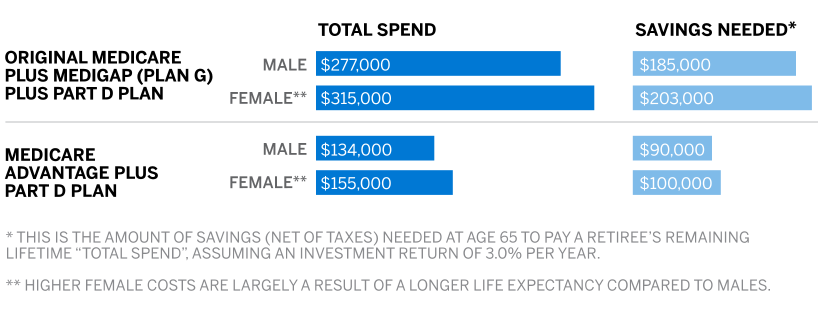
Original Medicare versus Medicare Advantage
Choosing between Original Medicare and Medicare Advantage can change your total spending.
Original Medicare
Original Medicare includes Part A and Part B. You can usually see any doctor or hospital that accepts Medicare.
You may add:
• Part D prescription coverage
• Medigap supplemental insurance
Original Medicare offers broad provider access, but it does not have a yearly out-of-pocket maximum for most covered services. Medigap can reduce surprise bills, but it adds another monthly premium.
Medicare Advantage
Medicare Advantage combines Part A and Part B through a private plan. Most plans also include Part D.
These plans often have:
• Provider networks
• Copays for services
• Annual out-of-pocket limits
• Extra benefits
• Rules for referrals or prior approval
A Medicare Advantage plan can be a good fit for someone who wants one plan and extra benefits. It may be less convenient for someone who travels often or wants to see providers outside a network.
Neither option is automatically best. Compare doctors, hospitals, medications, total yearly costs, and travel needs before choosing.

Costs that Medicare usually does not cover
Many seniors are surprised by the services Medicare does not fully cover. These expenses should be part of your retirement budget.
Medicare generally does not cover routine:
• Dental exams, fillings, dentures, or most dental treatment
• Eye exams for glasses
• Hearing aids and fitting exams
• Long-term custodial care
• Cosmetic procedures
• Most care outside the United States
Medicare may cover limited services in these areas when they are medically necessary. For example, it may cover an eye exam for diabetes or certain dental services tied to a covered medical procedure.
Long-term care is a major concern. Medicare may cover skilled care for a limited time after a qualifying hospital stay, but it does not pay for most ongoing help with bathing, dressing, eating, or living in a nursing home.
Ways to lower Medicare costs
You may be able to reduce how much Medicare costs at age 65 for seniors by checking assistance programs and comparing plans each year.
Try these steps:
-
Check whether you qualify for premium-free Part A.
-
Compare Part D plans using your exact medications and preferred pharmacy.
-
Review Medicare Advantage plans during the annual election period.
-
Apply for Medicare Savings Programs if your income and resources are limited.
-
Check Extra Help for prescription drug costs.
-
Ask about Medicaid if you meet state eligibility rules.
-
Use preventive services covered by Medicare.
-
Choose doctors and facilities that accept Medicare assignment.
-
Review Medigap plans during your six-month Medigap open enrollment period.
Medicare Savings Programs may help pay Part A or Part B premiums and, in some cases, deductibles and coinsurance. Eligibility rules differ by state, so contact your state Medicaid office or a State Health Insurance Assistance Program counselor.
Preventive care can also help. Medicare covers many screenings and wellness services at no cost when you use participating providers and meet the coverage rules.
Common mistakes to avoid at age 65
A few small errors can create years of extra expense.
One common mistake is waiting too long to enroll in Part B. Some people assume any health insurance lets them delay Medicare, but that is not always true. Confirm your status with Social Security before deciding.
Another mistake is choosing a drug plan based only on its monthly premium. A low premium can hide higher costs for your prescriptions. Enter every medication, dose, and pharmacy into Medicare’s plan comparison tool.
Some people also forget to review their coverage each year. Drug formularies, premiums, provider networks, and copays can change. A plan that was affordable last year may not be the best option this year.
Finally, be cautious with unsolicited calls. Medicare will not call and ask for your Medicare number without a valid reason. Do not share personal information with an unknown caller.
A practical Medicare budget example
Imagine Maria turns 65 in 2025. She qualifies for premium-free Part A and pays the standard Part B premium of $185 per month.
She chooses a Part D plan that costs $32 per month and a Medigap plan costing $145 per month. Her regular monthly premiums total:
• Part B: $185
• Part D: $32
• Medigap: $145
• Total: $362 per month
This $362 does not include the Part B deductible, drug deductible, doctor costs, dental care, or other services. It is a planning estimate, not a guarantee.
Now imagine another person chooses Medicare Advantage with a $0 plan premium. That person may still pay $185 for Part B and copays when using health care. If the plan has a $4,000 annual out-of-pocket maximum, that amount should be part of the person’s emergency savings plan.
These examples show why how much Medicare costs at age 65 for seniors cannot be answered by looking at the monthly premium alone.
Frequently Asked Questions About How Much Medicare Costs at Age 65 for Seniors
Is Medicare free when you turn 65?
Medicare is not completely free for most people. Part A is often premium-free, but most people pay a monthly Part B premium and may also pay for Part D, Medigap, or Medicare Advantage coverage.
How much is Medicare Part B at age 65?
The standard Medicare Part B premium is $185 per month in 2025. People with higher incomes may pay more through IRMAA, while some assistance programs may help eligible people pay the premium.
Do seniors pay for Medicare Part A?
Most seniors do not pay a monthly Part A premium if they or a spouse worked and paid Medicare taxes for about 10 years. People with fewer work credits may pay a monthly Part A premium.
Does Medicare cover prescription drugs?
Original Medicare does not usually include prescription drug coverage. You generally need a separate Part D plan or a Medicare Advantage plan that includes drug coverage.
Is Medicare Advantage cheaper than Original Medicare?
Medicare Advantage may have a lower monthly premium, sometimes $0, but you pay copays and coinsurance when receiving care. Original Medicare with Medigap may cost more each month but can offer more predictable medical expenses.
Can Medicare premiums be deducted from Social Security?
Yes. Part B and some other Medicare premiums can usually be deducted automatically from Social Security payments. If you are not receiving Social Security, Medicare may bill you directly.
What happens if I cannot afford Medicare?
You may qualify for a Medicare Savings Program, Medicaid, or Extra Help with prescription costs. Contact your state Medicaid office or a SHIP counselor to review your options.
Conclusion
How much Medicare costs at age 65 for seniors depends on more than the Part B premium. Most people pay $185 per month for Part B in 2025, while Part A is often free. Your final budget may also include prescription coverage, Medigap or Medicare Advantage costs, deductibles, copays, and services Medicare does not cover.
Start by checking your work history, enrollment deadline, medications, doctors, income, and expected health needs. Compare total yearly costs instead of focusing only on the monthly premium. For personalized help, use Medicare’s official plan comparison tools or speak with a licensed adviser or SHIP counselor, then share your questions or experience in the comments.

Michael Reynolds is a senior contributor at RetirementGazette.com, where he focuses on helping readers navigate the journey toward a secure and fulfilling retirement. With over a decade of experience in personal finance, retirement planning, and lifestyle writing, Michael combines practical strategies with easy-to-understand guidance tailored for both pre-retirees and those already enjoying their golden years.