
Seniors usually qualify for SNAP by meeting age, income, residency, and household eligibility rules set by their state.
Knowing how do seniors qualify for SNAP can make a big difference when food costs rise. The rules may seem complex, but older adults often receive special treatment for income, medical costs, and deductions. This guide explains the process in plain language, including income limits, assets, Social Security, medical expenses, and how to apply.
What Is SNAP, and Why Does It Matter for Seniors?
SNAP stands for the Supplemental Nutrition Assistance Program. It helps eligible households pay for food through an electronic benefit transfer, or EBT, card. The card works much like a debit card at approved grocery stores and many farmers markets.
SNAP can help seniors buy healthy food while protecting money needed for rent, medicine, utilities, and transportation. Even a modest monthly benefit can help fill the gap between a fixed income and rising grocery prices.
When people ask how do seniors qualify for SNAP, the answer depends on more than age. The state reviews income, household size, living costs, immigration status, and certain expenses.

How Do Seniors Qualify for SNAP?
Seniors generally qualify for SNAP when they meet the following basic requirements:
• They are at least 60 years old, or they receive benefits because of a qualifying disability.
• They live in the state where they apply.
• Their household meets the program’s income rules.
• They meet citizenship or qualified immigration requirements.
• They provide the documents needed to verify their application.
A senior does not always need to be completely without income. Many people who receive Social Security, Supplemental Security Income, pensions, or retirement payments still qualify. SNAP looks at income after allowed deductions, not just the amount shown on one benefit check.
For many older households, the most important point is this: the gross income test may not apply when every household member is elderly or has a qualifying disability. However, the household usually must still meet the net income test after deductions.
Rules vary by state. Some states also use broad-based categorical eligibility, which can change income and asset rules. That is why a senior should apply even when their income seems slightly above a basic SNAP chart.
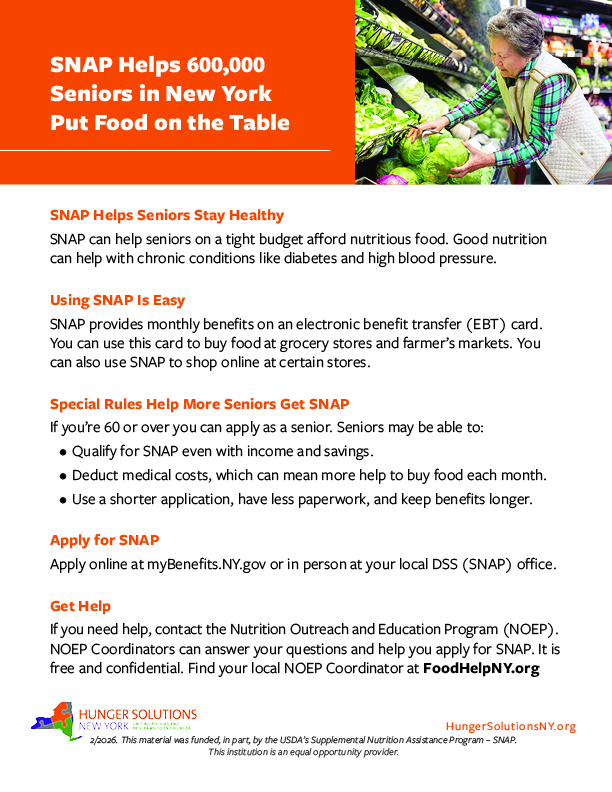
SNAP Age and Disability Rules for Older Adults
For SNAP purposes, a person is usually considered elderly at age 60 or older. The age rule applies even if the person is still working, receiving retirement income, or living with family.
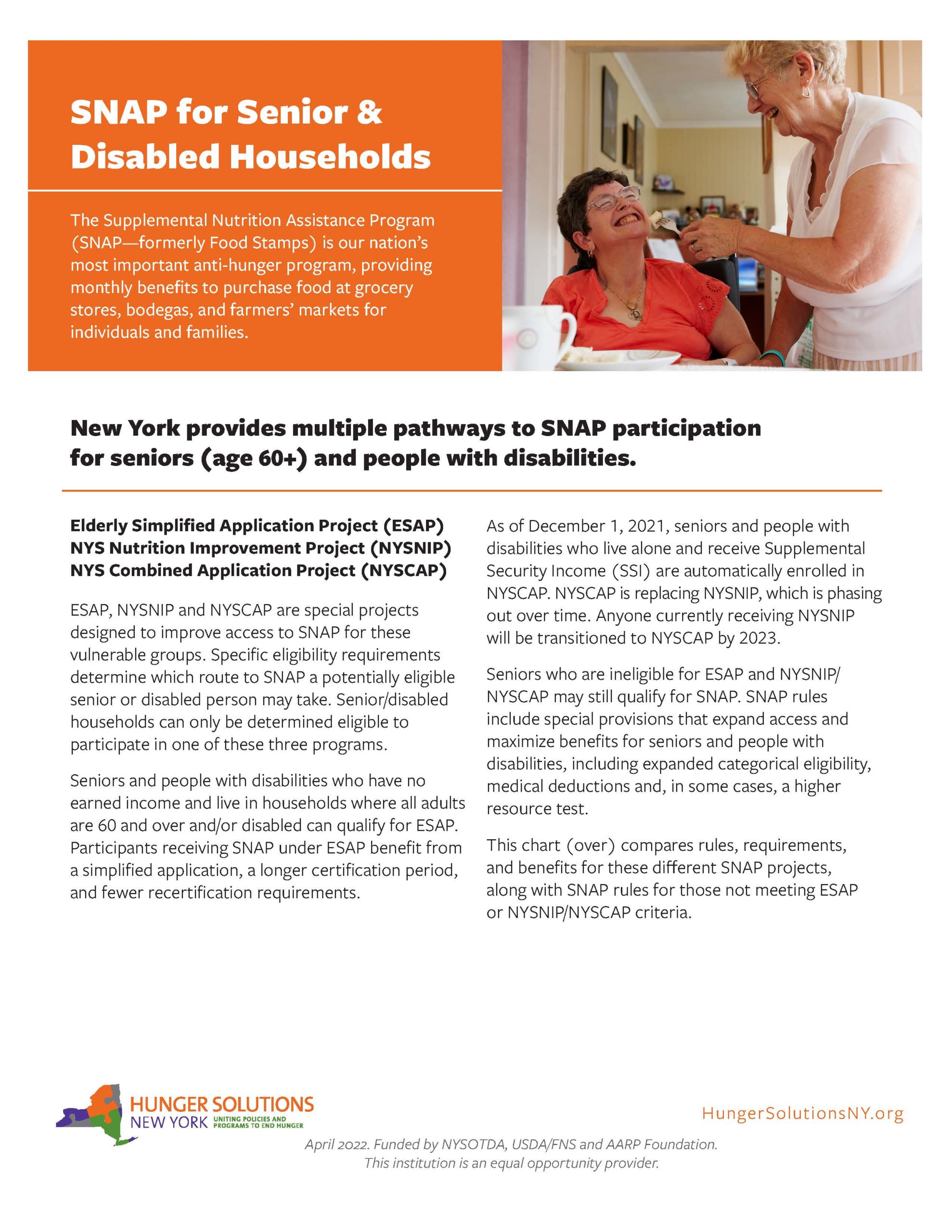
A household may also receive special SNAP treatment when a member has a qualifying disability. The disability rules can include a person who receives federal disability benefits or has a recognized long-term disability under program rules.
The household definition matters. SNAP usually groups people who live together and buy and prepare food together. A married couple is generally one SNAP household, even if the couple prepares meals separately.
An older adult may apply alone if they live alone or buy and prepare food separately. A senior who lives with adult children may still qualify as a separate household in some situations, but the state will review the living and food arrangements.
SNAP Income Limits for Seniors
Income is one of the main parts of how do seniors qualify for SNAP. The state may review several types of income, including:
• Social Security retirement benefits
• Social Security Disability Insurance
• Supplemental Security Income
• Pension payments
• Veterans benefits
• Wages from a job
• Self-employment income
• Unemployment benefits
• Annuity or retirement account payments
• Regular financial support from another person
SNAP income limits change each year and can differ by household size and state policy. The federal program usually publishes maximum income standards, but some states use expanded eligibility rules.
A senior household with an elderly or disabled member often has an important advantage. It may not need to meet the gross income limit. Instead, the state may calculate net income after deductions such as shelter costs and medical expenses.
Gross Income and Net Income
Gross income is money received before deductions. Net income is the amount left after SNAP-approved deductions.
For example, imagine a senior receives $1,700 each month in Social Security. That amount may look too high under a simple gross income chart. But the state may subtract part of the senior’s rent, utilities, and medical costs. The resulting net income may be low enough to qualify.
This is why a senior should not assume they are ineligible based only on Social Security or pension income. The final decision requires a full application and a state calculation.
How Social Security Affects SNAP
Social Security usually counts as income for SNAP. This includes retirement and disability payments.
A senior may still qualify because SNAP considers the whole financial picture. Rent, utilities, and medical expenses can lower countable income through deductions. Annual cost-of-living increases can also affect SNAP benefits, so seniors should report changes when asked.
SSI rules can be more complicated. SSI is counted differently in some state systems, and SSI recipients may receive simplified or automatic SNAP access in certain states. The safest step is to apply through the state SNAP office and ask how SSI is handled locally.

Medical Expense Deductions for Seniors
Medical deductions are one of the most helpful parts of SNAP eligibility for older adults. A senior or disabled household member may be able to deduct qualifying out-of-pocket medical costs.
Common examples can include:
• Doctor visits
• Prescription medicines
• Hospital bills
• Health insurance premiums
• Medicare premiums
• Dental care
• Eye exams and glasses
• Hearing aids and related care
• Transportation to medical appointments
• Medical equipment
• Home health care
• Over-the-counter medicine when allowed by the state
The expense usually must be paid by the household and not fully covered by insurance or another program. The state may require receipts, bills, statements, or proof of regular payments.
Keep a simple folder for medical costs. Include Medicare premium notices, pharmacy receipts, insurance statements, and transportation records. Many applications are delayed because people forget to report expenses that could lower their net income.
Some states apply a standard medical deduction when expenses meet a minimum amount. Other states calculate the actual deduction. Ask the caseworker what proof is needed.
Housing and Utility Deductions
Shelter costs can also affect how do seniors qualify for SNAP. A senior may report rent, mortgage payments, property taxes, homeowner insurance, and certain utility costs.
Utility deductions may include:
• Electricity
• Natural gas
• Heating oil
• Water
• Sewer service
• Telephone service
The exact deduction depends on state rules. Some states use standard utility allowances instead of calculating the exact bill. A senior may qualify for a utility allowance even when the bill is not in their name, depending on the living arrangement and state policy.
Shelter deductions are especially important for seniors who live on a fixed income. A person may appear to have moderate monthly income, but a large rent or mortgage payment can leave little money for food.
Provide a current lease, rent receipt, mortgage statement, utility bill, or landlord verification when applying. If a senior pays rent to a family member, written proof can help show that the expense is real and regular.
SNAP Asset and Resource Rules
Assets are money and property a household owns. They may include:
• Cash
• Checking and savings accounts
• Stocks and bonds
• Some retirement funds
• Vehicles
• Real estate other than the home in which the household lives
Asset rules for seniors are often different from rules for younger households. Federal SNAP standards may set a higher resource limit for households with an elderly or disabled member. However, many states use broad-based categorical eligibility and may have higher limits or no asset test for some households.
A primary home is generally not counted as a SNAP resource. The treatment of vehicles, retirement accounts, and other property can vary.
Do not hide or transfer money to appear eligible. Provide accurate information. A state agency may verify bank records or other information, and false statements can lead to repayment demands or penalties.
Because resource rules change, check the current rules in your state. The state SNAP office is the best place to confirm whether a bank account, vehicle, or retirement fund affects eligibility.

Citizenship and Immigration Requirements
SNAP is generally available to U.S. citizens and some qualified noncitizens. A person may need to provide proof of citizenship or immigration status.
Qualified noncitizens may include certain lawful permanent residents, refugees, asylees, and people with other protected statuses. Waiting periods can apply in some cases, although exceptions exist.
A mixed-status household may still apply. For example, an eligible older adult may apply for themselves even when another person in the home does not qualify. The state should explain which household members must provide information.
Applying for SNAP for an eligible family member generally does not mean an ineligible person will receive benefits. Seniors and families should ask the agency about privacy and public charge concerns. Rules can be sensitive and may change, so legal aid or a qualified benefits counselor can provide added guidance.
How to Apply for SNAP as a Senior
The application process is usually handled by the state or county human services agency. Many states offer online, phone, mail, and in-person options.
Follow these steps:
-
Find your state SNAP agency through the official state government website.
-
Submit an application as soon as possible. Benefits may be based on the application date.
-
Gather proof of identity, address, income, expenses, and household members.
-
Complete the interview by phone or in person if the state requires one.
-
Send requested documents by the deadline.
-
Read the approval or denial notice carefully.
-
Ask for a fair hearing if the decision appears wrong.
Documents may include:
• Government-issued identification
• Social Security numbers for people applying
• Social Security or pension award letters
• Bank statements, when required
• Lease or rent receipts
• Utility bills
• Medical bills and Medicare premium notices
• Proof of disability
• Immigration documents for qualified noncitizens
A senior who cannot complete the process alone may name an authorized representative. This person can help with the application, interview, and paperwork. The representative should be someone the senior trusts.

What Happens During the SNAP Interview?
The SNAP interview helps the caseworker understand the household’s living situation. It is not a test. The caseworker may ask who lives in the home, who buys food, and how food is prepared.
The interview may also cover:
• Monthly income
• Rent or mortgage costs
• Utility expenses
• Medical bills
• Bank accounts and assets
• Disability status
• Citizenship or qualified immigration status
Answer clearly and honestly. If a question is confusing, ask the caseworker to explain it. A senior should also mention expenses even if they are unsure whether the expenses count.
A common mistake is reporting only rent and forgetting Medicare premiums or prescription costs. Another mistake is assuming that living with family automatically disqualifies the senior. The state must review the actual household arrangement.
How Much SNAP Can Seniors Receive?
The benefit amount depends on household size and net income. In general, a household with less net income may receive more SNAP, while a household with more net income may receive less.
The benefit is placed on an EBT card each month. It can usually be used for eligible food items such as:
• Fruits and vegetables
• Meat, poultry, and fish
• Dairy products
• Bread and cereal
• Seeds and plants that grow food
SNAP generally cannot pay for alcohol, tobacco, vitamins, hot prepared meals, or household goods. Some states have restaurant meal programs for certain elderly, disabled, or homeless people, but availability is limited.
SNAP is meant to support a food budget. It does not pay rent, medical bills, or utility bills. Seniors may qualify for other programs too, such as Medicare Savings Programs, energy assistance, food banks, or senior farmers market benefits.

Special SNAP Rules for Seniors Who Live Alone
A senior who lives alone may qualify as a one-person SNAP household. The state may use the person’s income, expenses, and resources to calculate eligibility.
Living alone does not guarantee approval. However, a one-person household may receive a different benefit calculation than a senior who shares food with others.
If a senior lives in a care facility, the rules can change. People who receive most meals through an institution may not qualify for regular SNAP. Some assisted living arrangements may be treated differently, especially when residents buy and prepare their own food.
Ask the facility’s benefits office or the state agency before applying. Do not assume that assisted living automatically prevents eligibility.
SNAP for Seniors Living With Family
Many older adults live with children, grandchildren, or roommates. The key question is usually whether people purchase and prepare food together.
For example, a grandmother who buys and cooks her own food may qualify as a separate SNAP household in some circumstances. If she shares all food and meals with her adult child, the state may treat them as one household.
A senior should explain the arrangement in plain terms:
• Who buys the groceries?
• Who prepares meals?
• Are food costs shared?
• Does anyone give the senior regular financial support?
The caseworker will use this information to decide who belongs in the SNAP household. Accurate details matter more than the family relationship alone.
Reasons a Senior SNAP Application May Be Denied
A denial does not always mean the senior can never qualify. Applications may be denied because:
• Documents were missing.
• The interview was missed.
• Income was calculated incorrectly.
• Medical expenses were not reported.
• Shelter costs were not verified.
• The household failed to respond on time.
• Immigration or identity information was incomplete.
Read the denial notice carefully. It should explain the reason and provide appeal instructions. A senior usually has a limited time to request a fair hearing.
If the agency made a mistake, gather proof and appeal promptly. Legal aid offices, senior centers, and benefits counselors may help with the process at little or no cost.
Practical Tips to Improve a SNAP Application
The following tips can make the process smoother:
• Apply even if you are unsure about eligibility.
• Keep copies of every form and document.
• Write down the date, time, and name of each agency contact.
• Report Medicare premiums and other medical costs.
• Report rent, utilities, and property expenses.
• Ask whether your state has an asset test.
• Use an authorized representative if paperwork is difficult.
• Respond to agency letters before the deadline.
• Request an interpreter or disability accommodation when needed.
• Ask about expedited SNAP if you have very little money or food.
Some households may receive expedited benefits when they meet urgent financial or food-related conditions. The state decides whether the household meets the requirements, but seniors should explain immediately if they have no food or limited funds.
In my experience helping people work through public benefit questions, the biggest barrier is often not the rule itself. It is missing paperwork or failing to list a small expense. A simple folder and a written monthly budget can prevent many avoidable delays.
How Do Seniors Qualify for SNAP When Rules Change?
SNAP rules can change each fiscal year. Income standards, maximum benefits, utility allowances, and asset limits may be updated.
State rules can also differ. A neighbor in another state may have a different result with the same income and expenses. Online calculators can offer estimates, but only the state agency can make an official decision.
Use current information from:
• Your state SNAP or human services agency
• A county benefits office
• An Area Agency on Aging
• A senior legal aid program
• A qualified benefits counselor
This article explains common federal rules, but it cannot replace a state eligibility decision. Always check current limits and application instructions where you live.
Frequently Asked Questions About How Do Seniors Qualify for SNAP
Can seniors get SNAP if they receive Social Security?
Yes. Social Security usually counts as income, but seniors may still qualify after allowed deductions. Medical costs, rent, utilities, and other approved expenses can reduce countable net income.
Does a senior need to have no money in the bank to get SNAP?
No. Asset rules vary by state, and households with elderly members may receive a higher resource limit. Some states do not apply an asset test to certain households.
Can a senior qualify for SNAP while receiving SSI?
Possibly. SSI does not automatically prevent SNAP eligibility, and some states offer simplified access for SSI recipients. The senior should apply through the state agency because SSI treatment and application steps can vary.
Can seniors who live with their children receive SNAP?
They may qualify if they buy and prepare food separately from their children. The state reviews the household’s food arrangements, not only the family relationship.
Are Medicare premiums counted for SNAP?
Medicare premiums may qualify as an allowable medical expense for an elderly household member. The senior should report the premium and provide proof when requested.
Can a senior apply for SNAP online?
In many states, yes. Most states also offer phone, mail, or in-person applications. The official state benefits agency can explain the available options.
What if a senior cannot attend the SNAP interview?
The senior should contact the agency quickly and request another appointment or an accommodation. An authorized representative may also help with parts of the process.
Can a senior appeal a SNAP denial?
Yes. The denial notice should explain how to request a fair hearing and the deadline. Seniors should appeal quickly if they believe income, expenses, household size, or documents were misunderstood.
Conclusion
Understanding how do seniors qualify for SNAP starts with looking at the full household picture. Age 60 or older may provide special consideration, but income, medical bills, housing costs, assets, household structure, and state rules all matter.
Social Security or a pension does not automatically disqualify a senior. Applying with complete documents, reporting every approved expense, and asking about state-specific rules can improve the chance of receiving a fair decision.
If you or an older family member needs help, contact the state SNAP office, an Area Agency on Aging, or a local benefits counselor. Take the next step today, and share your questions or experience with SNAP in the comments.

Michael Reynolds is a senior contributor at RetirementGazette.com, where he focuses on helping readers navigate the journey toward a secure and fulfilling retirement. With over a decade of experience in personal finance, retirement planning, and lifestyle writing, Michael combines practical strategies with easy-to-understand guidance tailored for both pre-retirees and those already enjoying their golden years.