A shower chair can make bathing safer, steadier, and less tiring when standing in a bathtub is hard. It gives you a place to sit while you wash. It can also help a caregiver provide support without lifting the full weight of another person.
Using a shower chair in a bathtub takes more than placing the chair near the faucet. The chair must fit the tub, hold the user’s weight, stay stable, and allow a safe way to get in and out. The best setup depends on balance, leg strength, arm strength, hand grip, vision, and the bathroom layout.
This guide explains how to use a shower chair in a bathtub, how to choose the right type, how to set it up, and when to ask an occupational or physical therapist for help.
Quick answer: How do you use a shower chair in a bathtub?
To use a shower chair in a bathtub, choose a chair that fits the tub and supports the user’s weight, place it flat on the tub floor, lock or adjust its legs, and test it before sitting. Keep the floor dry, use a handheld showerhead, and hold a properly installed grab bar while entering and leaving. Never use a loose towel rack or suction cup bar for support.

A shower chair works best when it is part of a complete bathing plan. The chair helps with sitting, but it does not replace safe transfers, good lighting, non-slip surfaces, or proper support.
What you need before you begin
The right supplies depend on the person and the tub. A simple setup may need only a shower chair and handheld showerhead. A harder transfer may need a tub transfer bench, grab bars, or help from another person.

| Item | Why it helps | What to check |
|---|---|---|
| Shower chair | Lets the user bathe while seated | Weight capacity, seat width, height range |
| Handheld showerhead | Keeps water within reach | Easy-to-use controls and long hose |
| Grab bar | Supports entry and exit | Secure wall installation, not suction only |
| Non-slip bath mat | Adds traction outside the tub | Flat edges and no curling |
| Long-handled sponge | Reduces bending and reaching | Light weight and easy grip |
| Bath towel or robe | Helps keep the user warm | Place within easy reach |
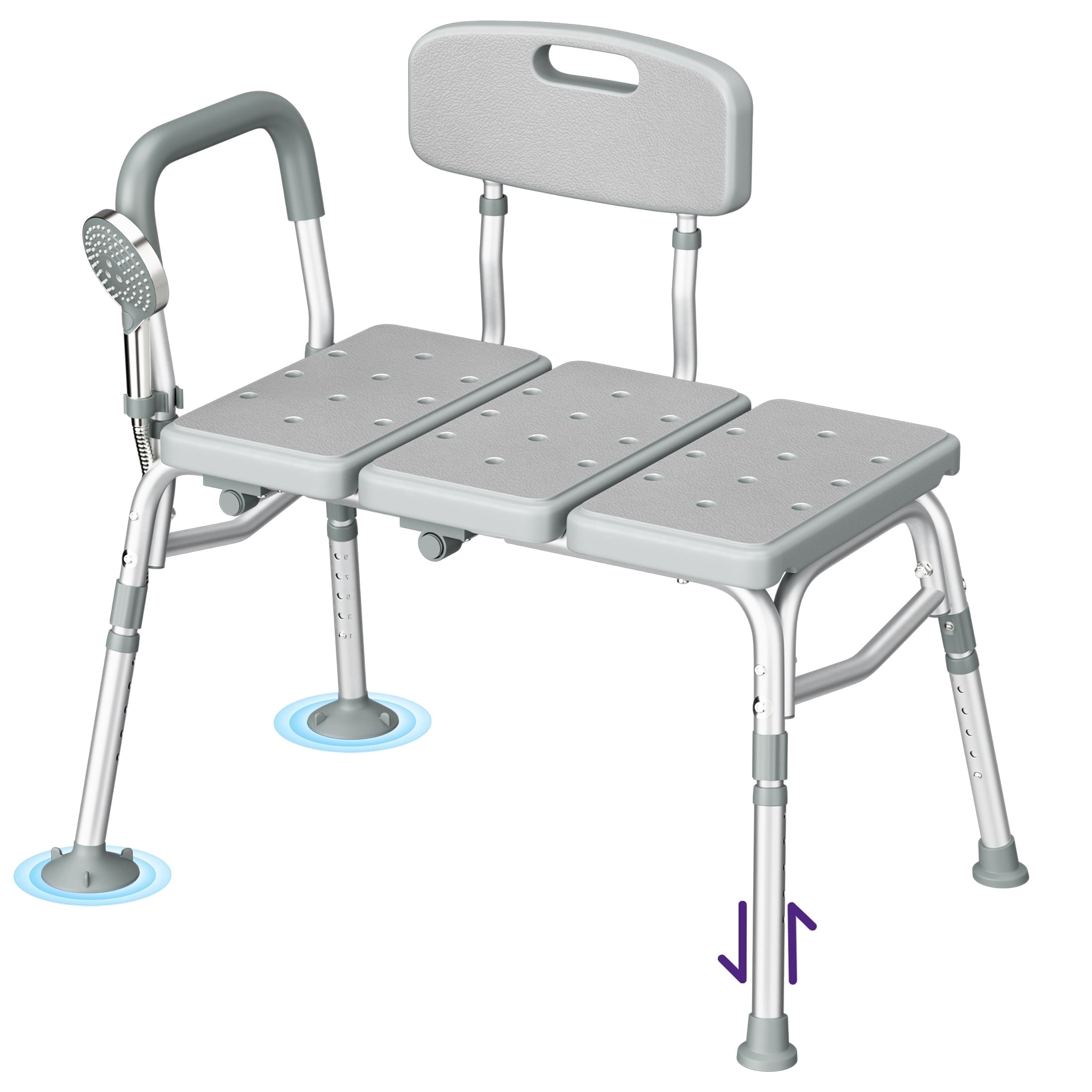
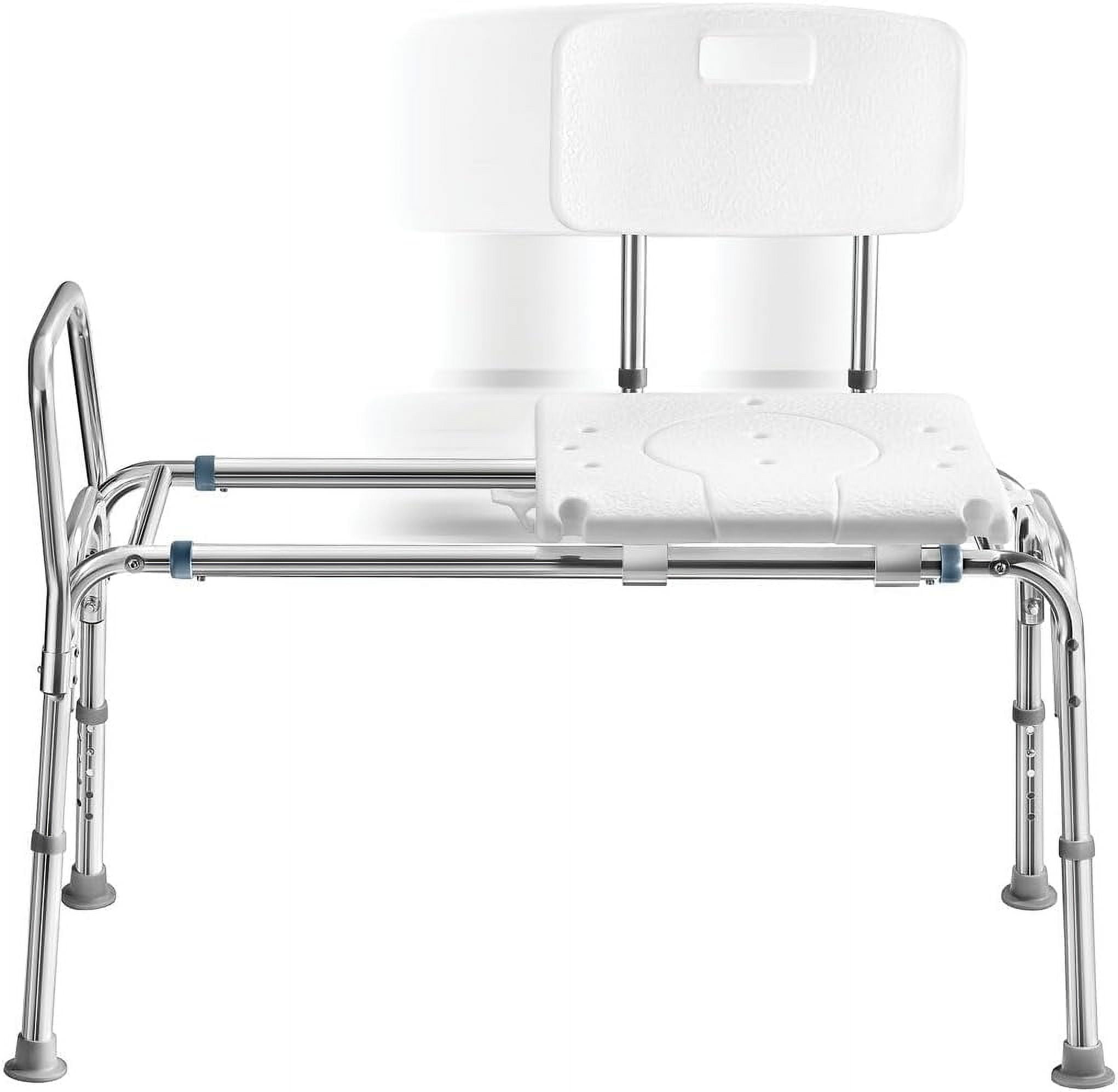
A shower chair is not the same as a tub transfer bench. A shower chair sits inside the tub. A transfer bench extends from outside the tub to inside it and can be better for someone who cannot safely step over the tub wall.
Measure the tub first
Measure the inside length and width of the tub floor. Then measure the height of the tub wall from the bathroom floor to the top edge. Check the chair’s full width, leg spread, and height range.
The chair must sit fully inside the tub. Its legs should not rest on the curved sides of the tub. If the chair is too wide, it may catch on the tub walls or sit at an angle.
Check the user’s needs
think about more than body weight. A person may have enough leg strength to stand but not enough balance to turn. Arthritis may make small knobs hard to use. Low vision may make a white chair difficult to see against a pale tub.
| Need or concern | Helpful feature |
|---|---|
| Weak legs or poor balance | Backrest, armrests, and stable legs |
| Arthritis or weak grip | Large, easy-turn controls and padded arms |
| Larger body size | Wide seat and higher weight capacity |
| Low vision | High-contrast chair and controls |
| Trouble stepping over the tub wall | Tub transfer bench |
| Mild memory changes | Simple setup and clear routines |
Choose features that solve a real problem. Extra parts can add cost, cleaning work, and confusion.
💡 Pro Tip: Take photos and measurements of the tub before shopping. Include the distance from the tub to the toilet, sink, and nearest wall. This can reveal tight spaces that are easy to miss.
Safety and preparation before using a shower chair
Safe bathing starts before the user sits down. Remove clutter from the floor, dry wet spots, and make sure the chair does not block the path into the bathroom.

A bathroom can become slippery from only a small amount of water. Keep the floor outside the tub as dry as possible. Place a flat, non-slip mat outside the tub, but avoid mats with curled corners or loose backing.
Inspect the chair
Look at the seat, legs, screws, rubber tips, and backrest before each use. The chair should not wobble, crack, or lean. Rubber feet should be present and in good condition.
If the chair has adjustable legs, make sure every leg is set to the same height. Uneven legs can make the seat tilt. Some models use push buttons; others use twist locks. Confirm that each button or lock is fully engaged.
Prepare the bathroom
Use bright, even lighting. A night-light can help with evening or early morning bathing. Make sure the light switch is easy to reach before the user enters the tub.
Set soap, shampoo, washcloths, towels, and clean clothes within reach. Do not place items on the far side of the tub. Reaching and twisting can shift the body and increase the chance of a slip.
Use stable support
A professionally installed grab bar can support a person during a transfer. The bar should attach to wall studs or use a suitable mounting system. A suction grab bar may be useful for balance feedback on some surfaces, but it should not be treated as a weight-bearing device unless the manufacturer clearly allows that use.
⚠️ Safety Warning: Never use a towel bar, shower curtain rod, sink edge, or rolling walker as a support during a tub transfer. These items may pull loose or move without warning.
Consider water temperature
Older adults may be less aware of very hot water. Test the water before entering. A caregiver can check it with the inside of the wrist, but a safer long-term option is a properly set anti-scald valve.
Do not leave a person alone if they cannot call for help, have a history of falls, become confused in the bathroom, or need hands-on assistance to transfer.
How to use a shower chair in a bathtub
The safest method depends on the person’s strength and balance. The steps below describe a common transfer for someone who can stand briefly and step over the tub wall with support. A transfer bench is usually safer for someone who cannot do this.

1. Set the chair at the correct height
Place the chair inside the empty tub. Adjust it so both feet rest flat on the tub floor. When seated, the user’s hips should be level with or slightly higher than the knees.
A chair that is too low can make standing hard. A chair that is too high can make the feet dangle or make the transfer unstable. The correct height may vary with leg length and joint movement.
If the chair has a backrest, place the back toward the wall. If it has armrests, make sure they do not hit the tub walls. Some armrests can make side transfers harder, so check the user’s movement before choosing them.

2. Place the chair away from the faucet
Position the seat where the user can sit without leaning across the tub. Keep enough room for the person to turn their body. The chair should not touch the curved edge of the tub.
Place the handheld showerhead on its holder or within reach. Do not let the hose lie where it can wrap around the user’s feet.

3. Dry the feet and floor
Dry the user’s feet before the transfer. Water on the soles can reduce traction. Dry the bathroom floor outside the tub as well.
If the user wears shoes or slippers, use only footwear approved for wet areas. Do not use loose socks on a wet floor.
4. Stand close to the tub
The user should face the tub and stand close to the edge. Keep the stronger leg in the position that makes stepping easier, if a therapist has taught a specific transfer method.
Do not rush. Pause after standing if the person feels lightheaded. Sit back down and ask a health professional about the symptom if it happens often.

5. Hold a fixed support
Use a properly installed grab bar for support. Place one hand on the bar and use the other hand to reach for the chair only when the body is close enough.
Do not pull hard on the shower chair unless the chair is designed for that purpose. A light plastic chair can slide or tip if used as a handhold.

6. Step over the tub wall
Lift one leg over the tub wall at a time. Move slowly. Keep the body facing the tub or grab bar, based on the transfer method taught by a therapist.
Some people find it easier to sit on the edge of a tub transfer bench first. Others need a transfer pole or a different layout. There is no single method that works for every person.

7. Turn toward the chair
Once both legs are inside the tub, turn slowly until the back of the legs touch the chair. Keep one hand on the grab bar and reach for the armrest or seat with the other hand.
Avoid twisting while stepping. Take small steps. A caregiver should not twist or pull the user by the arm.

8. Sit down slowly
Lower the body in a controlled way. Keep the weight centered over the chair. Do not drop into the seat.
If the chair moves, stop using it. Check the feet, the leg locks, and the tub surface. A chair that shifts during sitting may not be the right model for that tub.

9. Test the chair before turning on the water
Once seated, place both feet on the tub floor. Check that the back and hips feel supported. Make sure the water controls and showerhead are within easy reach.
Turn on the water only after the user is stable. Aim the spray away from the face until the temperature is set.

10. Bathe in a steady order
A simple routine reduces reaching and memory demands. Many people start with the face, then wash the upper body, lower body, and feet. Use a long-handled sponge for areas that are hard to reach.
Keep soap on a shelf or holder near the chair. Do not place a bar of soap on the tub floor. It can become a slip hazard.
11. Turn off the water and dry while seated
Turn off the water before standing. Use a towel within reach to dry the upper body and feet as much as possible while seated.
Water can collect on the chair, tub floor, and feet. Take time to dry the soles before starting the transfer out.
12. Stand and exit with support
Move to the front of the chair. Place both feet firmly on the tub floor. Lean forward slightly, press through the legs, and use the grab bar for support.
Do not pull up from the chair arms unless the chair is built and rated for that action. Step over the tub wall one leg at a time. Keep the path outside the tub clear.
13. Sit or rest after exiting
If the bathroom has a stable seat outside the tub, sit down to finish drying and dressing. Do not walk across a wet floor while trying to put on clothing.
A caregiver should remain nearby until the person is steady. The amount of help needed may change from day to day.
Choosing the right chair for a bathtub
The best shower chair for a bathtub is the one that fits the tub and matches the user’s transfer ability. A lightweight stool may suit a person with good balance. A person who needs more support may need a chair with a back, arms, or a transfer bench.
Shower stool
A shower stool has a seat and legs but no back. It takes up less space and may work in a small tub. It is often easier to move and clean.
The downside is less back and side support. A stool may not suit someone who leans, tires quickly, or has poor trunk balance.
Shower chair with a back
A chair with a back gives more support while washing. It may feel more secure for older adults who tire while standing or sitting.
Check the chair’s depth. A deep seat can make it hard for a person with short legs to place both feet flat. A backrest can also reduce the room available for turning.
Chair with armrests
Armrests can help some users sit and rise. They may help people with weak legs or limited balance.
Armrests can also block a side transfer. If the user needs to slide from a bench or wheelchair, a removable or flip-up arm may work better.
Tub transfer bench
A tub transfer bench bridges the tub wall. The user sits outside the tub, then slides across the bench and brings the legs over the wall.
This design may be the better choice for someone who cannot safely step into the tub. It takes more space and may need careful height adjustment so the bench is level and stable.
Bariatric shower chair
A bariatric chair is designed for higher weight capacities and often has a wider seat. Check the exact capacity on the current product listing. Do not assume that a wide chair fits every tub.
The chair must support the user, clothing, and any movement during sitting. Stay below the listed maximum weight. A higher capacity does not always mean better stability in a small tub.
| Chair type | Often suits | Main limit |
|---|---|---|
| Shower stool | Good balance and small tubs | Little back support |
| Chair with back | Users who tire or need trunk support | Takes more room |
| Chair with arms | Weak legs or hard sit-to-stand movement | May block transfers |
| Tub transfer bench | Trouble stepping over the tub wall | Needs more space |
| Bariatric chair | Larger body size or higher capacity need | May not fit narrow tubs |
Measure before buying. A chair that works well in a walk-in shower may not fit inside a standard bathtub.
Features that matter for comfort and safety
A shower chair should be stable, easy to clean, and simple to use. The most important features depend on the user’s body and home.
Weight capacity and size
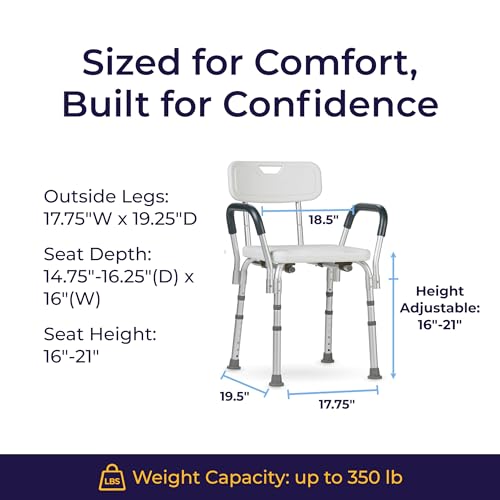
Check the manufacturer’s stated weight capacity. Compare it with the user’s current weight, and leave a safety margin. The seat should be wide enough for comfort but not so wide that the user cannot reach the controls or keep the feet centered.
Look at seat height, seat depth, and total width. A number such as “adjustable height” does not tell you whether the lowest or highest setting fits your tub.
Rubber feet and non-slip surfaces
Rubber tips can improve grip on the tub floor. They do not guarantee that a chair cannot move. Soap, body oils, and standing water can reduce traction.
Inspect the feet often. Replace worn or cracked tips with the correct parts. Do not place a loose bath mat under the chair unless the chair maker permits it.
Seat holes and drainage
Drainage holes help water run through the seat. This can reduce pooling and make cleaning easier. Large holes may feel uncomfortable for some users, while small holes may drain less well.
A padded seat can feel more comfortable but may take longer to dry. Follow the cleaning instructions for the material.
Armrests and backrests
Armrests may help with balance and rising. A backrest can support the trunk. Neither feature replaces a grab bar during entry or exit.
For users with limited shoulder movement, check whether the arms make it hard to turn. For users with low vision, use contrast between the seat and the tub when possible.
Handheld showerhead
A handheld showerhead reduces the need to reach or turn. Choose controls that are easy to see and grip. Large buttons or a lever may work better than a small twist knob for someone with arthritis or hand tremors.
Keep the showerhead holder at a height the user can reach while seated. Avoid placing it high on the wall if the user must stand to retrieve it.
Materials and cleaning
Plastic and aluminum are common materials. Aluminum can be light, but it may corrode if damaged or poorly maintained. Plastic is often easy to clean but may flex under load if the design is weak.
Clean the chair as directed. Rinse away soap after each use and let the chair dry. Do not mix bleach with other cleaners.
A simple pros and cons review
No shower chair solves every bathing problem. The table below shows the common trade-offs.
| Pros | Cons |
|---|---|
| Allows seated bathing | Takes up space in the tub |
| Can reduce standing time | Does not solve an unsafe transfer |
| May help conserve energy | Needs regular inspection |
| Often costs less than remodeling | May not fit every tub |
| Can support aging in place | Some models are hard to move |
| Works with a handheld showerhead | May need caregiver help |
A shower chair can be worth the money when standing in the shower is tiring or unsafe. It may not be enough when the main problem is stepping over the tub wall.
Common mistakes and how to fix them
Many problems come from a poor fit or rushed use. Small changes can improve the setup, but some problems mean the chair should be replaced.
| Problem | Likely cause | Safer response |
|---|---|---|
| Chair rocks | Uneven legs or damaged feet | Adjust legs or replace feet |
| Chair slides | Wet surface or worn tips | Stop use and inspect the setup |
| Feet do not reach the floor | Seat is too high | Lower the chair |
| Knees are too high | Seat is too low | Raise the chair if safe |
| User cannot turn | Chair is too large or arms block movement | Try a different model |
| Water controls are hard to reach | Chair is poorly placed | Move controls or use a handheld shower |
| User pulls on chair | No fixed support nearby | Install a proper grab bar |
| Chair has mold or odor | Poor drying or blocked drainage | Clean, rinse, and air-dry |
Do not try to fix a cracked seat with tape. Do not drill new holes into the chair unless the manufacturer provides instructions. A homemade repair may change the chair’s strength.
🔧 Quick Fix: If the chair feels unstable, remove it from use. Check that all four legs touch the tub floor, then inspect each rubber tip. If the tub floor is curved or textured, ask the maker whether the chair is approved for that surface.
Using a shower chair with arthritis, low vision, or memory changes
A chair can be easy or hard to use based on the person’s abilities. Design choices matter for grip, sight, hearing, and memory.
Arthritis or weak hands
Look for large buttons, broad handles, and controls that need little twisting. A handheld showerhead with a lever may be easier than one with a small round dial.
Avoid tight caps on shampoo bottles. Pump bottles or wall dispensers may reduce strain. A long-handled sponge can help with the back and lower legs.
Low vision
Use strong color contrast. A dark chair may be easier to see in a light tub. Add bright, even lighting without glare.
Mark hot and cold controls with clear labels. Large-print labels can help. Keep products in the same place each time.
Hearing loss
A shower chair does not solve hearing problems, but a simple routine can help. A caregiver should face the person when speaking and use short instructions.
Do not rely only on a voice from outside the bathroom. Water noise can hide speech. A visual check-in plan or medical alert system may add support for someone who lives alone.
Mild memory changes
Use the same bathing order each time. Keep only the needed products in the tub area. Picture labels or large-print labels may help.
A caregiver can write a short checklist such as “sit, test water, wash, turn off water, dry, stand.” The person should still receive a professional safety review if memory changes affect judgment or transfers.
👪 Caregiver Note: Ask, “What part feels hardest?” rather than taking over at once. The answer may reveal whether the real need is a grab bar, a transfer bench, better lighting, or a simpler shower control.
Tips for caregivers helping with a tub transfer
Caregivers should protect their own backs and avoid unsafe lifting. A shower chair is not a lifting device.
Give clear directions
Use one short step at a time. For example, say, “Move closer,” then pause. Avoid giving many instructions while the person is turning.
Ask before touching. Tell the person where your hands will go. Respect privacy by using a robe or towel when possible.
Stand in a safe position
Stay close enough to help, but do not block the user’s feet. Keep your own feet apart and your back straight. Do not twist while holding the person.
If the user begins to fall, do not try to catch the full body. Follow any transfer plan taught by an occupational therapist or physical therapist.
Know when hands-on help is not enough
If the person cannot bear weight, becomes dizzy, cannot follow steps, or needs lifting, a basic shower chair may be unsafe. A transfer device, more than one caregiver, or a different bathing setup may be needed.
A home-safety assessment can identify risks that are hard to see during a quick visit. This is especially useful for parents who live alone.
How to clean and maintain a shower chair
Regular cleaning helps the chair stay dry, firm, and easier to inspect. Follow the product instructions because materials differ.
| Task | How often | What to do |
|---|---|---|
| Rinse soap away | After each use | Rinse seat, legs, and feet |
| Dry the chair | After each use | Wipe or air-dry with space around it |
| Check screws and locks | Weekly | Tighten only as directed |
| Inspect rubber tips | Weekly | Look for cracks, flattening, or missing parts |
| Deep clean | Weekly or as needed | Use the approved cleaner |
| Check weight and fit | Every few months | Confirm the chair still suits the user |
Replace the chair if the frame bends, the seat cracks, the legs cannot lock, or replacement feet are unavailable. Also replace it if the user’s size, strength, or transfer ability changes.
How long does a shower chair last?
A shower chair may last for years, but there is no safe fixed lifespan for every model. Moisture, cleaning products, weight, use frequency, and storage all affect wear.
Inspect it more often if it is used every day or by a person near the weight limit. Keep the receipt and model number so you can find replacement parts.
Cost, Medicare, and insurance questions
Shower chair prices vary by design and materials. A basic stool often costs less than a transfer bench or heavy-duty chair. Current pricing ranges from budget models to higher-cost chairs with wider seats, padded surfaces, or advanced transfer features.
| Price level | Usually includes | May suit |
|---|---|---|
| Budget | Basic stool or simple chair | Short-term or low-support needs |
| Mid-range | Back, arms, adjustable legs | Regular home use |
| Premium | Transfer design or higher capacity | Complex transfer or comfort needs |
Check the current price on Amazon or another retailer before buying. Do not judge value by price alone. A low-cost chair that does not fit the tub can create more risk and expense.
Traditional Medicare often does not cover standard bathroom safety items such as shower chairs because they may be viewed as convenience or safety equipment rather than durable medical equipment. Medicare Advantage plans, Medicaid programs, veterans’ benefits, or private insurance may have different rules.
Ask the plan directly about coverage, prior authorization, approved suppliers, and required medical documentation. An occupational therapist or doctor may help explain the need, but coverage is never guaranteed.
When to ask an occupational therapist
Ask an occupational therapist for a home assessment when the transfer feels uncertain or the bathroom has limited space. An occupational therapist can assess movement, reach, balance, vision, and the full path into the tub.
Professional help is especially useful when:
- The person has fallen or nearly fallen in the bathroom.
- The person cannot step over the tub wall safely.
- The user needs to slide or transfer from a wheelchair.
- The chair moves, even after correct setup.
- The person cannot bear weight through one leg.
- Dizziness or weakness occurs during transfers.
- A caregiver must lift or catch the user.
- The bathroom needs grab bars or other changes.
A physical therapist may help with strength, balance, and transfer practice. A doctor should review new dizziness, fainting, severe weakness, or sudden changes in walking.
🩺 Ask Your Doctor or Therapist: If you are unsure whether a shower chair, transfer bench, or walk-in shower is right for you, ask for a home-based assessment. The safest choice depends on your body, movement, and tub layout.
How to talk with a parent about using one
Some parents see a shower chair as a sign that they are losing independence. A respectful talk can keep the focus on comfort and control.
Choose a calm time, not right after a fall. Say, “I want bathing to feel easier and less tiring,” instead of, “You are not safe.”
Offer choices. Let your parent compare a stool, chair with a back, or transfer bench. Ask what matters most: privacy, comfort, speed, appearance, or staying in the same bathroom.
A trial can help. Set up the chair when the tub is dry. Let the person sit and adjust the height. If the chair feels awkward, treat that as useful information rather than resistance.
For parents who live alone, discuss a check-in plan. A phone, medical alert system, or senior-friendly device may add a way to call for help. Keep the device outside the splash zone unless it is made for wet areas.
Alternatives to a shower chair
A shower chair is not the only option. The right choice depends on the transfer problem.
Tub transfer bench
Choose a transfer bench when stepping over the tub wall is the main challenge. It provides a seated way to move the legs over the wall.
Walk-in shower conversion
A walk-in shower removes the tub wall but can cost much more. It still needs a shower seat, grab bars, good drainage, and a non-slip surface.
Tub cutout
A tub cutout creates a lower opening in the tub wall. It may cost less than a full conversion, but it changes the tub and may limit future use.
Bath lift
A powered bath lift lowers and raises a person in a bathtub. It may suit someone who wants to soak but cannot lower or rise from the tub floor. Check battery charging, seat size, transfer needs, and emergency lowering features.
Sponge bathing
Sponge bathing can be a short-term option after illness, injury, or a bathroom change. It does not replace bathing forever, but it may reduce transfer demands while a safer plan is arranged.
Frequently asked questions
Can you put a shower chair directly in a bathtub?
Yes, if the chair is designed for wet areas and fits fully inside the tub. All legs must sit flat on the tub floor. Check the width, height range, weight capacity, and manufacturer instructions before use.
Should a shower chair touch the side of the tub?
Usually, the chair should not be wedged against the tub wall. It should sit level with enough room for the user to sit and turn. Follow the chair’s instructions because some models have specific placement rules.
Can a shower chair slide in a bathtub?
It can slide if the rubber feet are worn, the tub is soapy, the chair is too light, or the surface does not suit the chair. Stop using it if it moves. Clean the tub, inspect the feet, and check the setup.
Is a shower chair safe for someone who cannot stand?
A basic shower chair may not be safe for someone who cannot stand or transfer without lifting. A tub transfer bench, bath lift, or professional transfer plan may be more suitable.
Should a shower chair have arms?
Armrests can help a person sit and stand, but they can block a side transfer. Choose arms based on how the user enters and exits the tub.
How high should a shower chair be?
Set the height so the user’s feet rest flat on the tub floor and the hips are level with or slightly above the knees. The user should be able to sit and rise without dropping or pulling hard.
Do you need a grab bar with a shower chair?
A grab bar is often helpful for entering and leaving the tub, but it must be installed securely. The chair itself should not be used as the main handhold unless the manufacturer says it is designed for that purpose.
Can you use a shower chair on a bath mat?
Do not place a loose bath mat under the chair unless the chair maker approves it. A mat can fold, compress, or reduce stability. A chair should usually rest directly on a clean, suitable tub floor.
What is better: a shower chair or a transfer bench?
The main difference is the tub wall. A shower chair suits someone who can step over it safely. A transfer bench suits someone who needs to sit outside the tub and slide across.
Are shower chairs covered by Medicare?
Original Medicare often does not cover standard shower chairs. Medicare Advantage, Medicaid, veterans’ programs, and private plans may have different benefits. Ask the plan about its current rules and approved suppliers.
How often should you replace a shower chair?
Replace it when the frame, seat, legs, locks, or rubber feet are damaged or no longer stable. There is no single replacement date for every chair. Inspect it often, especially with daily use.
Can a caregiver lift someone into a shower chair?
Caregivers should not lift a person into a tub unless trained and equipped to do so. Lifting can injure both people. Ask an occupational therapist or physical therapist for a safer transfer plan.
Is a shower chair useful for aging in place?
It can support aging in place by making seated bathing possible in the current bathroom. It works best with secure support, good lighting, non-slip surfaces, and a transfer method that matches the user’s ability.
Conclusion: Make the transfer the first priority
The safest way to use a shower chair in a bathtub is to plan the transfer before turning on the water. Measure the tub, choose a chair with the right size and weight capacity, adjust every leg, and use stable support for entry and exit.
A shower chair can support independence, but it cannot fix every bathroom risk. If stepping over the tub is hard, consider a transfer bench. If the user needs lifting or cannot bear weight, ask an occupational therapist or physical therapist for a full plan.
Keep the setup simple. Place supplies within reach, use a handheld showerhead, dry the floor, inspect the chair, and allow plenty of time. Safe bathing should feel steady and respectful—not rushed.

Michael Reynolds is a senior contributor at RetirementGazette.com, where he focuses on helping readers navigate the journey toward a secure and fulfilling retirement. With over a decade of experience in personal finance, retirement planning, and lifestyle writing, Michael combines practical strategies with easy-to-understand guidance tailored for both pre-retirees and those already enjoying their golden years.