The Older Americans Act was created to protect older adults from poverty, hunger, isolation, and unfair access to vital services.
To understand why was the Older Americans Act created, it helps to look at life for older Americans in the 1960s. Many faced low income, poor housing, limited health care, and few local support programs. This article explains the law’s history, goals, major programs, lasting impact, and limits in clear terms.
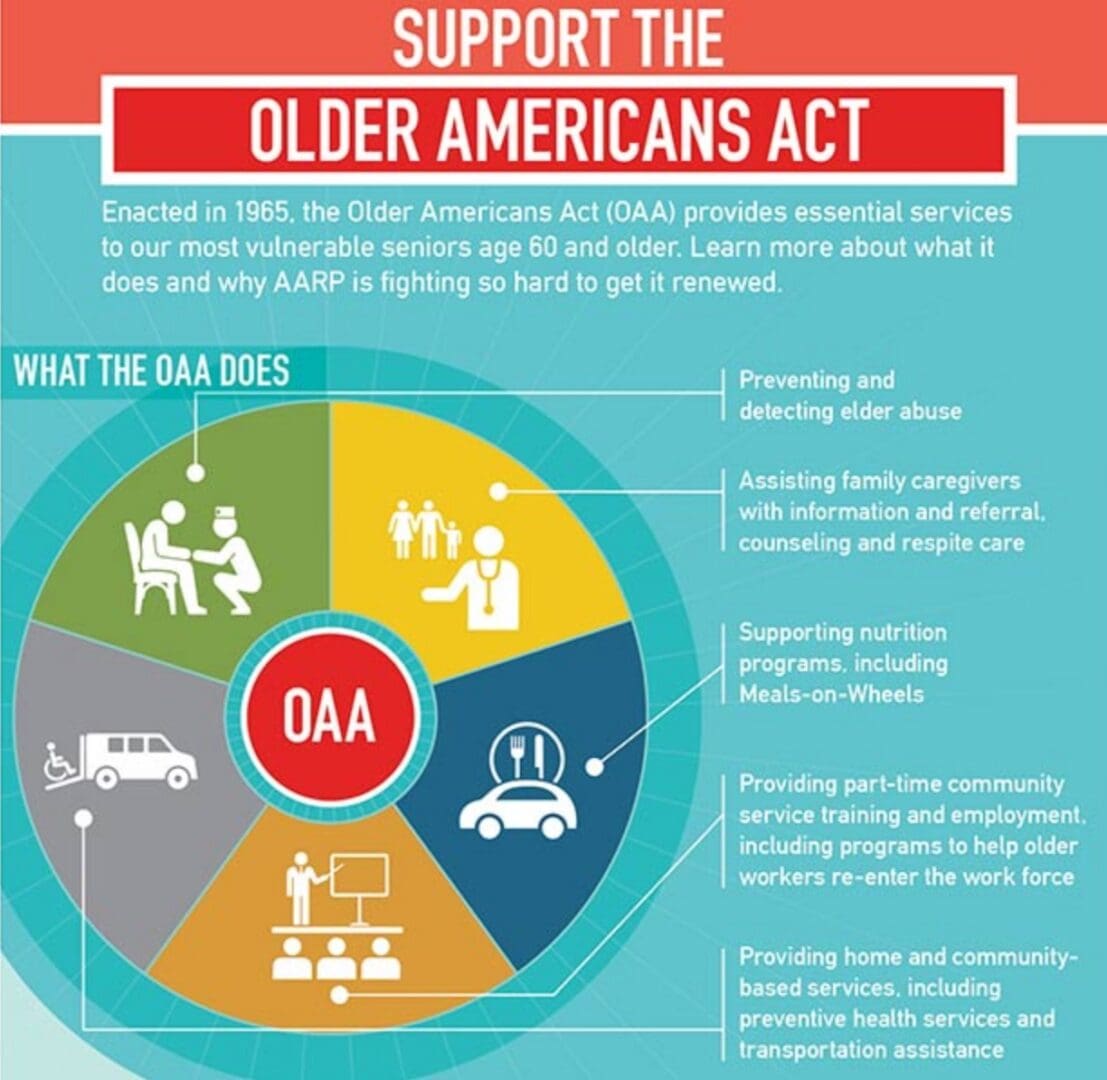
Why was the Older Americans Act created?
Why was the Older Americans Act created? Congress passed it in 1965 because many older adults lacked the income, food, health support, and community services needed for a safe and dignified life.
The law was part of President Lyndon B. Johnson’s Great Society. It recognized that aging was not only a private family matter. It was also a public concern that required federal leadership and local action.
Before 1965, help for older adults was often scattered. Some communities had strong charities or local programs, while others had very little. This created a patchwork system where a person’s support depended heavily on where they lived.
The law aimed to build a national framework without taking all decisions away from states and communities. It helped create a system through which local agencies could identify needs and deliver services close to home.
What problems did older Americans face in the 1960s?
To fully answer why was the Older Americans Act created, we need to understand the social conditions of the time. Many older adults lived on fixed incomes, and a small financial setback could quickly lead to hunger, unsafe housing, or untreated illness.
Several problems stood out:
- High poverty rates among adults age 65 and older
- Limited access to affordable medical care
- Social isolation after retirement or the loss of a spouse
- Poor transportation options
- Lack of legal help and consumer protection
- Few nutritious meal programs
- Unequal services in rural areas and low-income communities
- Age discrimination in jobs and public life
The federal government had already taken steps through Social Security and other programs. However, those programs did not cover every daily need. A monthly benefit could provide income, but it could not drive someone to a doctor, deliver a hot meal, or help with a housing dispute.
Research and public reports showed that older adults needed more than financial assistance. They needed a connected network of nutrition, transportation, information, health promotion, and protection services.
The 1960 White House Conference on Aging also helped draw attention to these needs. It encouraged policymakers to treat aging as a major national issue rather than an afterthought.

How did the Older Americans Act begin?
The Older Americans Act became law on July 14, 1965. President Johnson signed it during a period when Congress was passing major laws on health care, civil rights, education, and poverty.
The law created the Administration on Aging, now part of the U.S. Department of Health and Human Services. This agency became the main federal voice for aging policy and helped guide programs across the country.
A key feature was the use of grants to states and communities. The federal government provided funding and broad direction, while state and local agencies planned services based on local needs.
This design mattered because aging looks different in different places. An older adult in a rural county may need transportation and home-delivered meals. Someone in a large city may need housing support, caregiver help, or protection from financial abuse.
The original law focused on several broad aims:
- Help older adults live with dignity and independence.
- Support services that allow people to remain in their homes.
- Reduce hunger and poor nutrition.
- Improve access to information and assistance.
- Encourage older adults to take part in community life.
- Protect the rights and welfare of vulnerable adults.

What are the main goals of the Older Americans Act?
The central goal of the Older Americans Act is to support healthy, independent aging. It does not view older adults only as people who need care. It also recognizes their skills, choices, experience, and role in the community.
The law supports a range of services, including:
Nutrition services
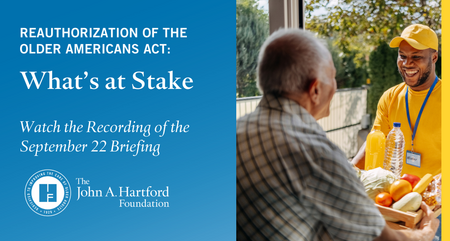
The act supports both group meals and home-delivered meals. Group meals can reduce loneliness because people eat and talk together. Home-delivered meals can help people who cannot safely travel or prepare food.
Nutrition programs also offer more than calories. They may connect a person with a social worker, health referral, wellness class, or safety check.
Transportation
Transportation programs help older adults reach medical visits, grocery stores, senior centers, and social events. A missed ride can lead to a missed appointment, so transportation is often a vital health service.
Information and referral
Many people do not know which benefits or services they qualify for. Aging agencies help residents find local assistance, compare options, and contact the right office.
Legal assistance
Older adults may need help with housing, benefits, guardianship, debt, elder abuse, or consumer fraud. Legal services can help protect rights before a problem becomes a crisis.
Support for caregivers
Family caregivers often provide many hours of unpaid help. The act supports information, counseling, respite care, training, and other services that can reduce caregiver stress.
Health promotion
Programs may include exercise classes, chronic disease workshops, fall prevention, medication education, and other tools that support safer daily living.
Elder abuse prevention
The act supports efforts to prevent neglect, exploitation, and abuse. This work can include public education, reporting systems, protective services, and coordination with law enforcement.
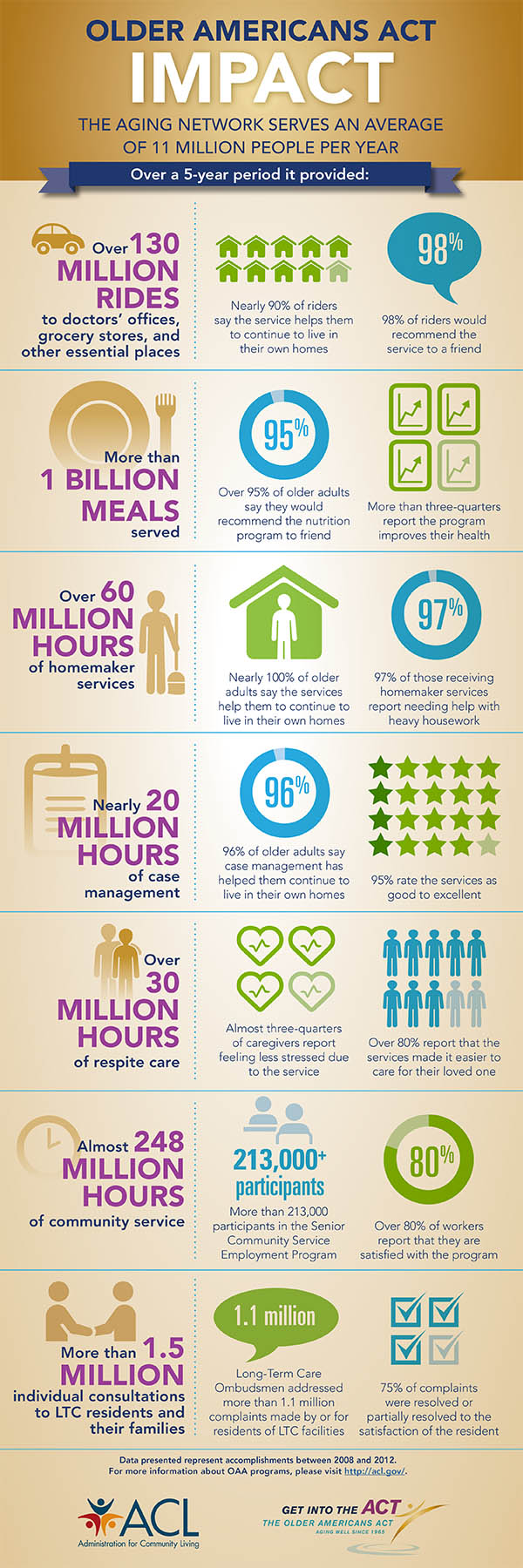
How does the Older Americans Act work today?
Why was the Older Americans Act created is only part of the story. Its lasting value comes from the service network it built and continues to support.
The system generally operates through several levels:
- The Administration on Aging provides federal leadership, guidance, and funding.
- State Units on Aging plan and coordinate programs across each state.
- Area Agencies on Aging organize services for local regions.
- Tribal organizations serve older adults in American Indian and Alaska Native communities.
- Local providers deliver meals, transportation, legal aid, caregiver support, and other services.
Area Agencies on Aging are especially important. They often act as a front door to local help. A person may call one agency and learn about meal delivery, Medicare counseling, transportation, home care, or caregiver resources.
The act also encourages states and local agencies to focus on people with the greatest social and economic need. This includes older adults with low incomes, disabilities, limited English skills, or rural isolation.
Funding is usually limited, so programs may use eligibility rules, waiting lists, or suggested donations. Services can vary greatly from one county to another. That difference is a practical limitation readers should keep in mind.
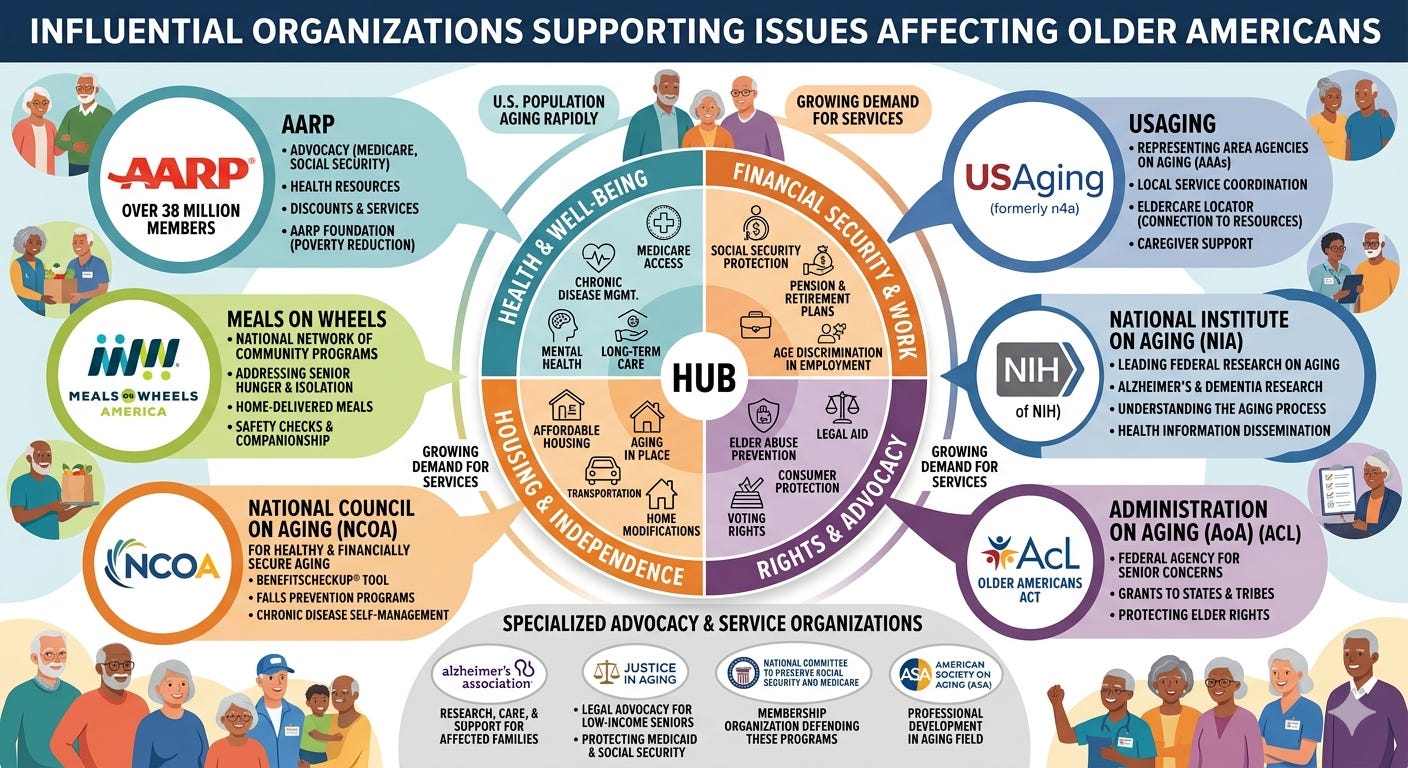
What major programs came from the act?
Over time, Congress amended the law to respond to new challenges. These changes expanded the act beyond its original structure.
Important program areas include:
Older Americans Act nutrition programs
The nutrition program began in the 1970s. It supports meals served in community settings and meals delivered to homes.
These meals can help prevent food insecurity and support regular contact with the outside world. For someone living alone, a delivery visit may also provide an important safety check.
Area Agencies on Aging
The 1973 amendments helped establish the modern network of Area Agencies on Aging. These agencies plan services based on local needs and work with public, nonprofit, and private organizations.
Senior Community Service Employment Program
This program helps some older workers gain training and part-time community service employment. It is designed especially for unemployed adults with low incomes who face barriers to finding work.
Long-term care ombudsman programs
Long-term care ombudsman programs advocate for residents of nursing homes and other long-term care settings. They investigate complaints and help residents understand their rights.
National Family Caregiver Support Program
This program recognizes that family caregivers need support, too. Assistance may include education, counseling, respite care, and help finding local resources.
Preventive health programs
These services encourage healthy habits and help older adults manage chronic conditions. They may support fall prevention, physical activity, nutrition education, and self-management skills.

What did the Older Americans Act change?
Why was the Older Americans Act created becomes clearer when we examine its broader impact. The law changed the way the United States viewed aging policy.
Before the act, services were often treated as charity. The act helped establish aging services as a public responsibility and a matter of rights, dignity, and access.
Its impact includes:
- A stronger national focus on the needs of older adults
- More coordinated local services
- Better access to meals and transportation
- Greater support for family caregivers
- More legal assistance for vulnerable adults
- Increased attention to elder abuse
- Stronger advocacy for older adults in long-term care
- More opportunities for healthy and active aging
The act also promoted the idea that older adults should have a voice in the programs designed for them. Many local planning processes seek input from residents, service providers, and community groups.
This approach is similar to building a neighborhood map with the people who actually live there. Local knowledge can reveal needs that national statistics miss.
What the Older Americans Act does not do
A common mistake is to assume that the Older Americans Act is a direct cash benefit program. It is not the same as Social Security, Medicare, Medicaid, or Supplemental Security Income.
The act generally supports services rather than monthly payments. It may help someone receive a meal, find transportation, or speak with a legal advocate, but it does not replace income support or health insurance.
It also does not guarantee every service to every older adult. Programs depend on federal funding, state plans, local capacity, and available providers.
Other limits include:
- Funding may not meet the full level of community need.
- Rural areas may have fewer providers and longer travel distances.
- Waiting lists may exist for popular services.
- Local eligibility rules can differ.
- Some services rely on volunteers.
- Awareness remains uneven, so eligible people may never apply.
These limits do not erase the law’s value. They show why ongoing funding, evaluation, and public awareness remain important.
Why does the Older Americans Act still matter?
The population of older adults continues to grow, and many people want to age in their own homes. That goal can be difficult without transportation, food, social contact, caregiver support, and reliable information.
The act remains relevant because it supports the basic conditions that make independence possible. Independence does not mean doing everything alone. It often means having the right support at the right time.
For example, a weekly meal delivery may help a person stay nourished. A ride to a doctor may prevent a health problem from becoming worse. A caregiver support group may help a family avoid burnout.
The act also matters because older adults are not one uniform group. Needs can differ by income, race, disability, language, location, sexual orientation, and family support. Local planning helps programs respond to that diversity.
From a practical standpoint, one of the best lessons is to ask for help early. Many people wait until a crisis occurs, but aging agencies can often provide better options when contacted before an emergency.
How to find help through Older Americans Act programs
If you or someone you know needs support, begin with the local Area Agency on Aging. You can search online, contact a city or county aging office, or call the national aging information line at 1-800-677-1116.
When calling, prepare a short list of needs:
- What kind of help is needed?
- Is the need urgent?
- Does the person live alone?
- Are there mobility or language barriers?
- Is income limited?
- Does a family caregiver need relief?
- Is there a concern about abuse, neglect, or exploitation?
Ask whether the agency provides the service directly or refers callers to another organization. Also ask about fees, donations, waiting lists, transportation limits, and eligibility rules.
A useful practical tip is to write down the worker’s name, phone number, and next steps. Keeping these details in one place can save time, especially when several agencies are involved.
If there is immediate danger, call 911. For suspected elder abuse, contact local adult protective services or the appropriate state reporting agency.
Common misunderstandings about the law
Some misunderstandings make it harder for older adults to use available services.
First, the act is not only for people in nursing homes. Many programs support people who live independently in private homes, apartments, assisted living settings, or rural communities.
Second, asking for help does not mean a person is giving up independence. In many cases, support helps people remain at home longer and avoid unnecessary hospitalization or institutional care.
Third, services are not always automatic. A person may need to complete an intake process, provide basic information, or join a waiting list.
Finally, older adults should not assume they are “too well” to ask questions. Information and prevention services can be useful before a serious problem develops.
Frequently Asked Questions
Why was the Older Americans Act created in 1965?
Why was the Older Americans Act created in 1965? Congress wanted to respond to poverty, hunger, poor health access, isolation, and limited community services among older adults. The law created a national framework for supporting dignity, independence, and well-being.
Who signed the Older Americans Act?
President Lyndon B. Johnson signed the Older Americans Act on July 14, 1965. It was part of his Great Society effort to address poverty and expand public services.
Does the Older Americans Act provide monthly money?
No. The law mainly funds and coordinates services such as meals, transportation, caregiver support, legal assistance, and health programs. Social Security and Supplemental Security Income are separate programs that provide income support.
Who can receive services under the Older Americans Act?
Many services are designed for adults age 60 and older, but exact rules vary by program and location. Priority often goes to people with the greatest economic or social needs, including those with low incomes, disabilities, or limited support.
What agency helps people access these programs?
Area Agencies on Aging are a major local entry point. They can explain available services and connect people with meal programs, transportation, caregiver help, legal assistance, and other resources.
Is the Older Americans Act still active?
Yes. Congress has reauthorized and amended the law several times since 1965. It continues to support the national aging services network, although funding and services vary by location.
Conclusion
The answer to why was the Older Americans Act created is rooted in a simple concern: older adults should not face hunger, isolation, poor care, or loss of dignity without support. Passed in 1965, the law created a lasting network of federal, state, local, and tribal programs.
Its services help people eat well, stay connected, protect their rights, support family caregivers, and remain independent. The law has limits, but it continues to fill gaps that income programs and health insurance alone cannot solve.
If you or someone you care about needs help, contact a local Area Agency on Aging and ask what services are available. Share this guide with a family member, caregiver, or neighbor who may benefit from learning more.

Michael Reynolds is a senior contributor at RetirementGazette.com, where he focuses on helping readers navigate the journey toward a secure and fulfilling retirement. With over a decade of experience in personal finance, retirement planning, and lifestyle writing, Michael combines practical strategies with easy-to-understand guidance tailored for both pre-retirees and those already enjoying their golden years.