
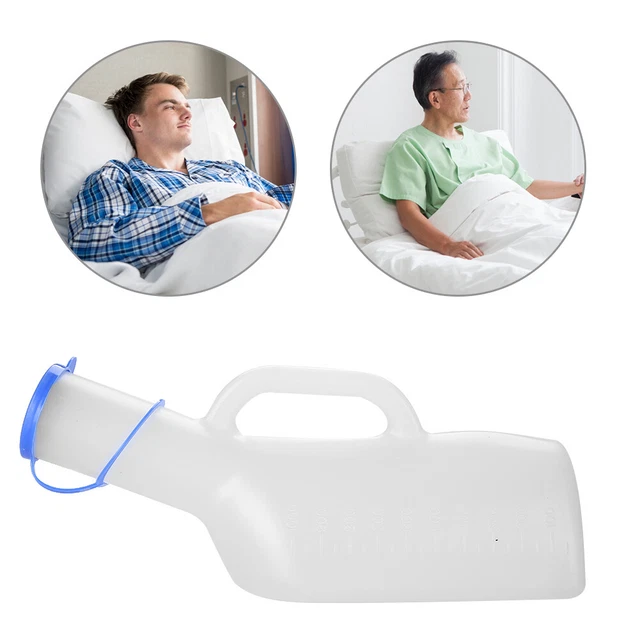
A male urinal bottle lets you urinate without walking to a bathroom. In the United States, hospitals, home-care services, and caregivers often use them for people who are weak, injured, dizzy, recovering from surgery, or on bed rest. To use one safely, keep the bottle within reach, position the opening firmly against the penis, urinate slowly, seal the bottle, and clean your hands and the container afterward.
A urinal bottle is simple to use, but spills, skin irritation, odor, and infection can occur if it is placed at the wrong angle or left unclean. The steps below explain how to use a male urinal bottle in bed with less mess and better comfort.

What You Need Before Using a Male Urinal Bottle
Gather the bottle, toilet tissue, disposable gloves if a caregiver is helping, a towel or absorbent pad, and cleaning supplies. Choose a bottle with a handle if possible. A handle gives you more control when your hands are weak or movement is limited.
Before use, check the following:
- The bottle is clean and dry.
- The cap is removed or loosened before you begin.
- The bottle is large enough for the amount of urine expected.
- The opening is not cracked or damaged.
- The measuring marks are easy to read if urine output must be recorded.
- A towel or waterproof pad protects the bed.
- A safe place is ready for the bottle after use.
Most male urinal bottles have a wide opening, a handle, and a cap. Some are disposable. Others are reusable plastic bottles that must be emptied and washed after each use.
If a nurse or doctor has asked you to measure urine, use the marked scale on the bottle. Record the amount and time only as instructed. Do not guess the volume from how full the bottle looks.

How to Use a Urinal Bottle in Bed
Use the following steps. Move slowly, especially if you have pain, weakness, dizziness, or recent surgery.
1. Protect the bed
Place an absorbent pad or folded towel under your hips. This can catch small leaks. A waterproof bed pad may be useful for people who need a urinal often.
Keep the bottle, tissue, and hand-cleaning supplies close to you. You should not need to stretch, twist, or stand to reach them.
2. Get into a safe position
If you can, raise the head of the bed or sit in a semi-upright position. This position usually gives better control than lying completely flat.
Bend your knees slightly if that is comfortable. Keep your legs relaxed. If you cannot change position without help, ask a caregiver to assist you.
Do not stand up quickly after lying down. Weakness, dehydration, pain medicine, and illness can raise the risk of dizziness and falls.
3. Hold the bottle correctly
Hold the urinal by its handle. Keep the bottle upright or tilted only as much as needed to place the opening comfortably against the penis.
The opening should form a close seal around the penis without pressing hard. The penis should point into the bottle, not over the edge. Keep the bottle below the level of the penis so urine flows into it.
Do not force the opening against the skin. pressure can cause pain, skin marks, or leakage.
4. Urinate slowly
Relax and allow the urine to flow into the bottle. Keep the bottle steady until the stream stops.
If you need to cough, shift, or change position, pause if possible. Sudden movement can cause a spill. If the bottle begins to fill, stop and replace the cap before getting another container.
Do not continue using a bottle that is close to overflowing. A bottle can tip even when it is not completely full.
5. Remove the bottle carefully
When you finish, keep the bottle upright. Move it away from your body slowly. Check the opening and surrounding skin for drops of urine.
Use toilet tissue to dry the penis and nearby skin. Dry skin helps reduce irritation, especially when a person uses a urinal several times each day.
6. Close, empty, or store the bottle
Replace the cap firmly if the bottle will be emptied later. Keep it upright on a stable surface. Do not place it on the bed, near food, or on a bedside table used for medicines.
If you can safely walk to a toilet or sink, empty the urine there. If you cannot, ask a caregiver for help. A caregiver should use gloves when handling urine or a soiled bottle.
7. Clean your hands
Wash your hands with soap and water. If soap and water are not available, use an alcohol-based hand sanitizer, then wash with soap and water when possible.
Caregivers should remove gloves carefully and clean their hands after handling the bottle. The Centers for Disease Control and Prevention provides general hand hygiene guidance at CDC.gov.
How to Use a Urinal Bottle While Lying Down
A person can use a male urinal bottle while lying down, but the risk of leaks is higher. The safest position is usually semi-reclined, with the upper body raised as far as comfortably possible.
If you must remain flat:
- Place an absorbent pad beneath your hips.
- Keep the bottle close and upright.
- Ask for help if you cannot lift or position your penis.
- Place the bottle opening against the penis before starting to urinate.
- Keep the bottle steady and do not roll away from it.
- Remove the bottle slowly after the stream ends.
- Check the bedding and skin for wetness.
A bedpan or bedside commode may work better if you cannot hold the bottle or keep a seal. A nurse, occupational therapist, or home-health professional can suggest equipment based on your strength and movement.
How to Prevent Spills and Leaks
Most leaks happen because the bottle is too low, tilted too far, too full, or not held close enough to the body. The bottle should remain upright enough to hold the urine and low enough for urine to flow into it.
Try these adjustments:
- Raise the head of the bed.
- Use the bottle’s handle instead of gripping the body.
- Place a towel under the hips before starting.
- Keep the penis centered inside the opening.
- Hold the bottle in place until urination ends.
- Empty the bottle before it becomes nearly full.
- Use a larger bottle if the current one fills too quickly.
- Ask for help if your hands shake or your grip is weak.
If the bottle leaks repeatedly, check whether the opening is the right size and shape. Some bottles are designed for men who can sit up. Others have a wider opening or a different shape for use while lying down. Follow the product instructions because designs differ.

How to Clean and Disinfect a Reusable Urinal Bottle
Clean a reusable urinal after every use. Urine left in the bottle can cause odor, stains, and germ growth. Follow the manufacturer’s cleaning instructions first because some plastics can be damaged by strong chemicals or high heat.
A basic cleaning routine is:
- Put on disposable gloves if you are helping another person.
- Empty the urine into the toilet.
- Rinse the bottle with warm water.
- Wash the inside and outside with liquid soap and a bottle brush if needed.
- Rinse away all soap.
- Apply the disinfectant approved for that bottle, if required.
- Follow the product’s stated contact time.
- Rinse if the label says rinsing is needed.
- Leave the bottle open to air-dry.
- Store it upright in a clean, dry place.
Do not mix bleach with ammonia, vinegar, toilet cleaner, or other chemicals. Mixing cleaners can create dangerous fumes.
A disposable urinal should be discarded according to the product directions and local facility rules. Do not reuse a disposable container unless the manufacturer clearly says it is reusable.
A urinal used by one person should not be shared without proper cleaning and disinfection. In a hospital or care facility, staff should follow that facility’s infection-control policy.

How to Protect the Skin
Urine can irritate skin when it stays wet. This is more likely in people who have diabetes, limited movement, incontinence, fragile skin, or frequent leakage.
After each use:
- Gently wipe away urine.
- Pat the skin dry instead of rubbing it.
- Change wet clothing, pads, or sheets.
- Check the penis, groin, buttocks, and upper thighs for redness.
- Use a barrier product only if a clinician recommends it or the product label supports its use.
Contact a health professional if redness lasts, the skin breaks, pain increases, or a rash spreads. Do not apply household creams, powders, or antiseptics to damaged skin unless a clinician advises you to do so.

What to Do if the Urinal Bottle Does Not Work
The bottle spills
Check the angle, seal, and fill level. Raise the upper body, keep the bottle upright, and hold the opening close to the penis. Use a towel or waterproof pad while you adjust the technique.
The penis does not fit comfortably
Do not force the opening. Try a different male urinal design or ask a nurse, doctor, or medical equipment professional for help. Pain, swelling, or a new change in shape should be discussed with a clinician.
The bottle smells bad
Empty it after each use and clean it promptly. Odor may remain if the bottle has scratches, a damaged cap, or buildup that normal washing does not remove. Replace it if it cannot be cleaned fully.
Urine leaks onto the skin or bed
Check that the penis is inside the opening before urination begins. Make sure the bottle is not full and that the person is not shifting position. If leakage continues, a bedside commode, bedpan, absorbent product, or other equipment may be more suitable.
The person cannot hold the bottle
Ask for assistance. Do not place a heavy or unstable object on the penis or rely on a bottle balanced without support. A caregiver can help position the bottle while protecting privacy and dignity.
The person cannot urinate
Do not keep straining. Seek medical advice if there is a strong urge to urinate but little or no urine comes out, especially with lower abdominal pain or swelling. Urinary retention can require prompt treatment.

When to Call a Health Professional
Call a health professional about:
- Burning or pain during urination
- Blood in the urine
- Fever or chills
- New confusion or unusual sleepiness
- Pain in the back or side
- Strong lower abdominal pain
- Very little urine despite drinking normally
- Inability to urinate
- New swelling, sores, or bleeding of the penis
- Repeated leaks that prevent clean, dry skin
Seek urgent care for severe pain, heavy blood in the urine, fainting, trouble breathing, or inability to urinate with severe discomfort.
People with a urinary catheter should not disconnect or change the catheter just to use a urinal bottle unless a clinician has given clear instructions. A catheter drainage system has specific handling rules. The National Institute of Diabetes and Digestive and Kidney Diseases provides information about urinary retention and related concerns.

Choosing Between a Urinal Bottle, Bedpan, and Bedside Commode
The right option depends on movement, privacy, balance, and how often the person needs to urinate.
| Option | Often suits | Main limitation |
|---|---|---|
| Male urinal bottle | A man who can hold or position the penis and control the bottle | Can leak if the seal or angle is poor |
| Bedpan | A person who cannot stand or use a bottle | May be uncomfortable and harder to position |
| Bedside commode | A person who can transfer with little or safe assistance | Requires balance, strength, and fall precautions |
| Toilet | A person who can walk or transfer safely | May be unsafe during weakness or dizziness |
This is a practical comparison, not a diagnosis. A physical therapist, occupational therapist, nurse, or doctor can assess transfers and recommend equipment after surgery, injury, or illness.

Frequently Asked Questions
Can a man use a urinal bottle while sitting in bed?
Yes. Sitting or sitting partly upright often makes it easier to control the bottle and reduce spills. Keep the bottle below the penis, hold it by the handle, and keep the opening close until urination ends.
Can a male urinal bottle be used overnight?
Yes, if it is placed within safe reach and emptied regularly. Do not leave a full bottle beside the bed. Use a night-light, call button, or caregiver assistance if getting up or reaching for the bottle could cause a fall.
How often should a reusable urinal bottle be cleaned?
Clean it after every use. Empty and rinse it promptly, then wash and disinfect it according to the manufacturer’s instructions.
Can a caregiver hold the urinal bottle?
Yes. The caregiver should explain each step, protect the person’s privacy, wear gloves when handling urine, keep the bottle steady, and wash their hands afterward. The person should be moved only as far as is safe.
What is better for someone who cannot control their bladder?
A urinal bottle may not work well for frequent leakage or loss of bladder control. Absorbent products, scheduled toileting, a bedside commode, or other equipment may be more appropriate. A clinician can help identify the cause and select a safe option.

Key Takeaways
- Raise the head of the bed when possible.
- Place the penis fully inside the bottle opening.
- Keep the bottle upright and below the penis.
- Use a towel or absorbent pad to protect the bed.
- Empty and clean a reusable bottle after every use.
- Dry the skin after urination.
- Ask for help if weakness, pain, dizziness, or poor grip makes use unsafe.
- Seek medical care for pain, blood, fever, severe leakage, or inability to urinate.
Conclusion
Using a male urinal bottle in bed is safest when the person is supported, the bottle is held firmly, and the skin and bedding stay dry. A semi-upright position, careful placement, slow movement, and prompt cleaning prevent most common problems. If the bottle is uncomfortable, spills often, or cannot be used without help, a bedside commode, bedpan, or professional assessment may be a better choice.

Michael Reynolds is a senior contributor at RetirementGazette.com, where he focuses on helping readers navigate the journey toward a secure and fulfilling retirement. With over a decade of experience in personal finance, retirement planning, and lifestyle writing, Michael combines practical strategies with easy-to-understand guidance tailored for both pre-retirees and those already enjoying their golden years.