
A shower chair usually costs $30 to $300 in the United States. Basic plastic stools may cost $25 to $60, while adjustable chairs with backs and arms often cost $60 to $150. Heavy-duty, rolling, reclining, or transfer shower chairs can cost $150 to more than $1,000.
Your final cost depends on the chair type, weight limit, bathroom size, shipping, assembly, and whether insurance helps pay. Medicare often does not cover standard shower chairs, but Medicaid, Medicare Advantage plans, workers’ compensation, or private insurance may have different rules.

Average Shower Chair Prices in the United States
The table below gives common U.S. planning ranges. These are general retail ranges, not fixed prices. Brand, materials, features, and sales can change the price.
| Shower chair type | Typical U.S. price | Best for |
|---|---|---|
| Basic shower stool | $25–$60 | People who need a small seated rest |
| Shower chair with back | $40–$100 | People who want more support |
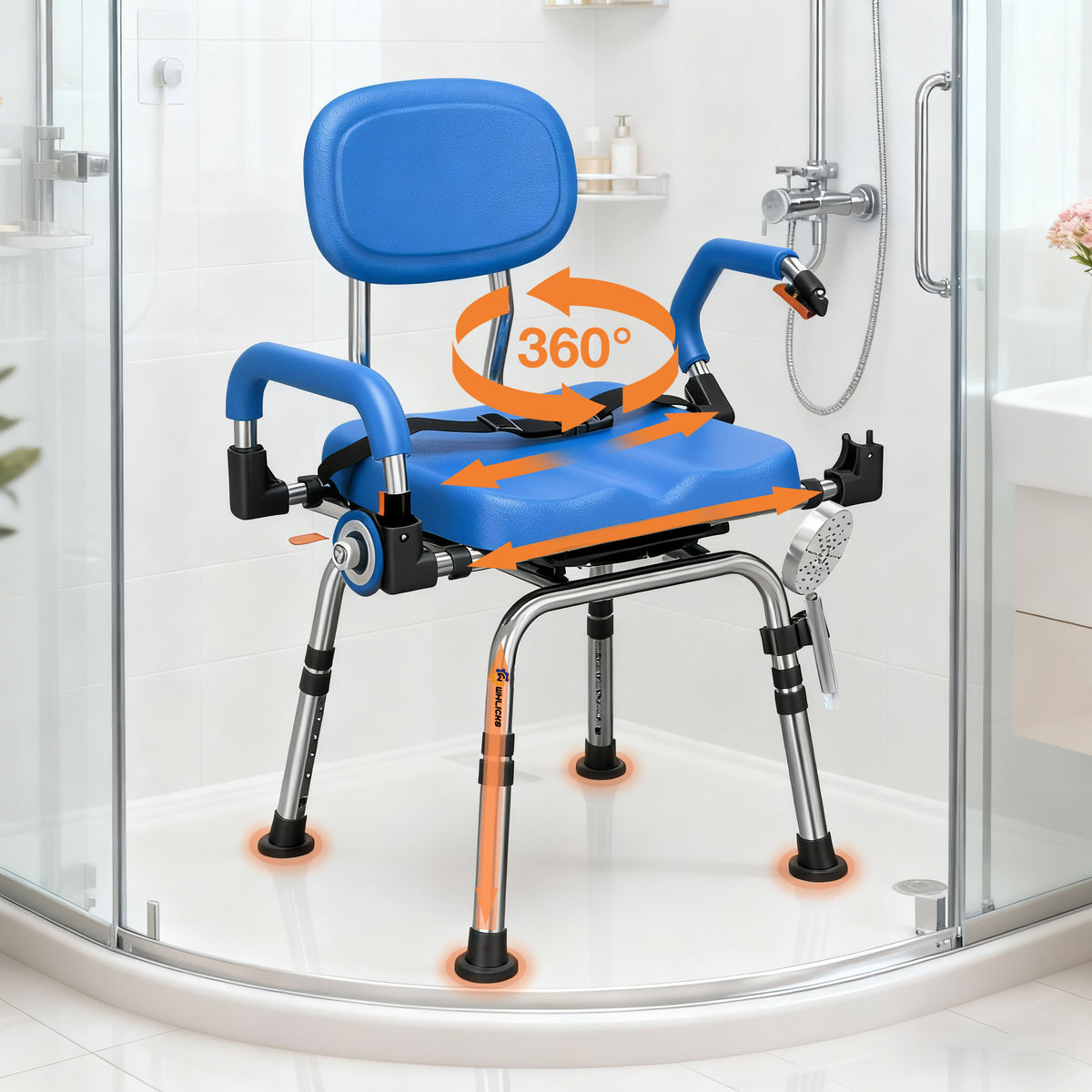
| Chair with back and arms | $60–$150 | People who need help sitting or standing |
| Bariatric shower chair | $100–$300 | Users who need a higher weight capacity |
| Transfer bench | $80–$250 | Moving from outside the tub to inside |
| Rolling shower or commode chair | $150–$600 | Caregivers who need to move a seated user |
| Reclining or tilt-in-space chair | $500–$1,500 or more | Users with complex mobility or postural needs |
| Built-in or fold-down shower seat | $150–$1,000 or more | Permanent bathroom installations |
A low-cost stool may meet a simple need, but it may not provide enough stability for someone with weak balance. A more expensive chair can be a better value if it reduces transfer strain, fits the shower correctly, and supports safe use over time.
Prices listed by medical supply stores may also exclude delivery, assembly, installation, or accessories. Check the full checkout price before comparing products.
What Changes the Price of a Shower Chair?
The main price drivers are support, size, materials, movement, and installation. A chair with more parts and a higher weight rating usually costs more.
Weight capacity
Many standard shower chairs support about 250 to 300 pounds. Heavy-duty models may support 350 to 500 pounds or more, depending on the model.
Do not choose a chair based only on the user’s current weight. Consider clothing, movement, and the force placed on the chair during sitting and standing. Follow the exact weight limit in the product manual.
A higher weight limit does not automatically mean a chair will fit better. Heavy-duty models can be wider and may not work in a narrow tub or stall.
Back and armrests
A stool without a back is often the least expensive option. It takes up less space but offers less support.
A backrest may improve comfort during a longer shower. Armrests can give the user a place to push when sitting down or standing up. They may also make the chair wider, so measure the shower first.
Height adjustment
Adjustable legs help place the user’s feet flat on the floor. This can support a steadier sitting and standing position.
A fixed-height chair may cost less, but it may not suit every user. A seat that is too low can make standing harder. A seat that is too high can make the feet dangle or reduce stability.
Transfer features
A transfer bench extends from outside the tub into the bathing area. The user sits down outside the tub and moves across the bench instead of stepping over the tub wall.
Transfer benches often cost more than simple chairs because they are longer and need careful placement. Some include sliding seats, swivel seats, or transfer handles.
Rolling and commode functions
A rolling shower chair can help a caregiver move a person who cannot walk safely to the bathroom. Some models also work as a commode chair.
These products may need larger bathroom clearances. Locking casters are essential, but the caregiver must still follow the manufacturer’s instructions and lock the wheels before transfers.
Installation
A portable shower chair needs little or no installation. A fold-down or built-in seat may require wall reinforcement and professional installation.
The chair must attach to a structure that can support the user. Do not assume that any wall is strong enough. Tile, drywall, studs, waterproofing, and plumbing can affect the installation.

How Much Does a Shower Chair Cost by Type?
The best price depends on the problem the chair must solve. Start with the user’s transfer needs, not the product’s appearance.
Basic shower stool: $25 to $60
A basic stool usually has a molded seat and adjustable legs. Some models include drainage holes and rubber feet.
This type may work for someone who can sit and stand without help and only needs a place to rest while bathing. It is less suitable for a person who leans heavily, has poor balance, or needs arm support.
Shower chair with a back: $40 to $100
A chair with a backrest gives more support than a stool. It can be useful for people who tire easily or feel less secure while sitting.
Look for a stable frame, non-slip feet, and a seat that fits the shower. A backrest should not force the user to lean too far forward or backward.
Shower chair with arms: $60 to $150
Armrests can help with controlled transfers. They may also improve comfort during a shower.
Check whether the armrests are fixed, removable, or padded. Removable arms can make transfers easier in some bathrooms. Fixed arms may provide more support but can block a caregiver or make side transfers harder.
Bariatric shower chair: $100 to $300
A bariatric chair is designed for a higher stated weight capacity and often has a wider frame. Some include reinforced steel or aluminum construction.
Measure the seat width and the clear space between bathroom walls. A chair can meet the weight requirement and still be too large for the shower.
Transfer bench: $80 to $250
A transfer bench is designed for a bathtub or shower entry that is hard to step over. It usually has two sets of legs: one outside the tub and one inside.
Some benches include a cutout for personal care, a backrest, or a sliding seat. These features can raise the price but may reduce the effort needed for a transfer.
Rolling shower chair: $150 to $600
A rolling model may help when a person cannot walk from a wheelchair or bed to the shower. It normally requires caregiver assistance.
The bathroom must have enough room for turning. The shower threshold, door width, toilet position, and floor surface all matter.
Reclining or specialty chair: $500 to $1,500 or more
Reclining and tilt-in-space chairs are for users who need added positioning support. They may include headrests, pressure-relief surfaces, footrests, or specialized frames.
These chairs should be selected with help from a qualified occupational therapist, physical therapist, nurse, or durable medical equipment specialist. A high price alone does not show that a chair is right for a specific medical need.

How to Choose a Shower Chair Without Overpaying
Measure the bathroom and identify the user’s safest transfer method before looking at prices. This prevents a common mistake: buying a chair that is affordable but cannot fit or be used safely.
1. Measure the shower or tub
Record these measurements:
- Door or entry width
- Inside shower width
- Floor depth
- Tub wall height
- Distance from the shower floor to the top of the tub
- Space beside the toilet or other fixtures
- Available turning space for a caregiver
Compare these measurements with the chair’s full dimensions, not only its seat size.
2. Check the user’s transfer ability
Ask whether the user can:
- Walk into the shower
- Step over a tub wall
- Sit down without falling
- Stand up without pulling on an unstable object
- Turn around in a small space
- Move from a wheelchair to the chair
- Remain seated without sliding or leaning
If the user cannot safely answer these tasks, a basic stool may not be enough. A transfer bench or professional assessment may be more appropriate.
3. Select the right seat height
The user’s feet should rest firmly on the shower floor when seated. The knees should not be forced into an awkward position.
Adjustable legs help, but they must be locked at the same height. Uneven legs can make the chair rock.
4. Compare the weight rating
Use the manufacturer’s stated weight limit. Do not rely on a seller’s short description when the manual lists a different limit.
Also check whether the weight limit applies to the chair alone or includes movement, leaning, or transfers. If the documentation is unclear, contact the manufacturer before purchase.
5. Check the feet and frame
Rubber tips should sit flat on the floor. The frame should not wobble when gently tested before use.
Aluminum frames are often light and resist rust. Steel frames may feel sturdy but can be heavier. The material matters less than the complete design, condition, and stated capacity.
6. Decide which features have real value
Useful features may include:
- Adjustable legs
- Back support
- Armrests
- A transfer cutout
- A sliding seat
- Locking casters
- A padded or contoured seat
- A removable back or arms
- Replaceable rubber tips
Avoid paying more for features that make transfers harder or prevent the chair from fitting the bathroom.

Does Insurance or Medicare Pay for a Shower Chair?
Standard shower chairs are often paid for out of pocket in the United States. Original Medicare generally does not cover ordinary bathroom safety equipment such as shower chairs, because these items are usually not classified as covered durable medical equipment under Medicare’s standard benefit.
You can check current Medicare rules through the official Medicare coverage information. Medicare Advantage plans may offer extra benefits, but those benefits vary by plan and location.
Other possible sources of help include:
- Medicaid state programs
- Veterans Affairs benefits
- Workers’ compensation
- Private health insurance
- Long-term care insurance
- Hospital or rehabilitation loan programs
- Local aging and disability resource agencies
- Community medical equipment exchange programs
Coverage often requires a prescription, medical-necessity statement, approved supplier, or prior authorization. Ask the insurer:
- Is a shower chair covered?
- Is a transfer bench covered?
- Must I use a specific supplier?
- Is prior authorization required?
- What documentation does the clinician need?
- Will the plan rent or purchase the equipment?
- What copay, deductible, or delivery charge applies?
Do not buy first and assume reimbursement will follow. Get the coverage rules in writing when possible.

Extra Costs to Include in Your Shower Chair Budget
The chair price is only part of the total cost. A realistic budget may also include accessories, delivery, installation, and replacement parts.
Delivery and assembly
Large transfer benches and rolling chairs may cost more to ship. Some sellers include basic assembly, while others do not.
Check whether the package includes all hardware and whether the chair arrives ready to use.
Accessories
Possible extra costs include:
- Replacement rubber tips
- Padded seats
- Backrests
- Armrests
- Transfer handles
- Sliding-seat parts
- Positioning belts
- Footrests
- Shower sprayers
- Wall grab bars
A grab bar is not a substitute for a shower chair, and a shower chair is not a substitute for a properly installed grab bar. They serve different purposes.
Professional installation
A wall-mounted seat may need a contractor. A licensed professional can assess wall support, waterproofing, and the location of studs or other structural members.
Do not attach a fold-down seat only to drywall unless the manufacturer and installer confirm that the mounting system is designed for it.
Replacement and maintenance
Inspect the chair often. Replace worn rubber tips, cracked seats, loose bolts, or damaged frames.
A low-cost chair that needs frequent replacement may cost more over time than a better-built model with available replacement parts.

Safety Checks Before Using a Shower Chair
A shower chair can reduce standing time, but it does not remove all fall risk. Wet floors, poor transfers, and loose equipment can still cause serious injuries.
Before each use:
- Place the chair on a level surface.
- Confirm that all legs are set to the same height.
- Check that adjustment pins are fully engaged.
- Make sure rubber tips are present and not worn smooth.
- Test for rocking or movement.
- Lock casters before sitting or transferring.
- Keep soap, towels, and controls within safe reach.
- Use a handheld showerhead if reaching creates a balance risk.
- Keep the floor clear of loose mats and clutter.
Never use a chair that is cracked, bent, unstable, or above its weight limit. A caregiver should not pull a seated person by the arms or use a rolling chair as a transport device unless the product instructions allow it.
Ask a physical therapist or occupational therapist for help if the user has frequent falls, severe weakness, dizziness, confusion, paralysis, or trouble transferring. A professional can assess the bathroom and recommend equipment that matches the person’s strength and movement.
Common Mistakes When Buying a Shower Chair
The most common buying mistakes involve fit and transfer safety, not price.
Buying the cheapest chair without checking dimensions
A chair that does not fit the shower can block the door or prevent a caregiver from helping. Measure first.
Choosing a weight limit that is too close to the user’s weight
Leave a reasonable margin and follow the manufacturer’s limits. Consider the forces created when the user sits, stands, or leans.
Using a transfer bench in the wrong tub
Some benches need one pair of legs inside the tub and another pair outside. The tub height, wall shape, and floor level must match the bench’s adjustment range.
Treating a shower chair as a medical diagnosis
A chair may help with bathing, but it does not explain why someone is weak, dizzy, or falling. New or worsening balance problems need medical attention.
Skipping the return policy
Bathroom equipment is hard to judge from a photo. Confirm the return window, restocking fee, shipping cost, and hygiene-item restrictions before ordering.

Quick takeaway: Plan on $30 to $150 for most basic shower chairs, $80 to $250 for transfer benches, and $150 or more for rolling or specialty models. The safest low-cost choice is the model that fits the bathroom, supports the user’s weight, and matches the person’s transfer ability.
Frequently Asked Questions
Is $50 enough for a shower chair?
Often, yes. Around $50 may buy a basic stool or a simple chair with a back. It may not cover a heavy-duty chair, transfer bench, rolling model, or chair with advanced positioning features.
What is the difference between a shower stool and a shower chair?
A shower stool usually has no back or arms and takes up less space. A shower chair normally has a backrest and may include arms. The chair costs more but can offer greater seated support.
Is a transfer bench better than a shower chair?
A transfer bench is better when stepping over a tub wall is unsafe or difficult. A standard shower chair may be better for a walk-in shower where the user can enter safely and sit down inside.
Can I use a shower chair in a bathtub?
Some shower chairs fit inside a bathtub, but a transfer bench may be safer when the user must cross the tub wall. Check the chair’s dimensions, leg adjustment range, and the tub’s shape before buying.
Does a shower chair need to be installed?
Most portable chairs do not need permanent installation. Wall-mounted seats do. A mounted seat should attach to adequate structural support and be installed according to the manufacturer’s instructions.
Where can I get a low-cost or free shower chair?
Try Medicaid, the Department of Veterans Affairs, local aging and disability resource agencies, hospital loan closets, nonprofit equipment exchanges, and community reuse programs. Availability and eligibility vary by state and program.
Final Answer: How Much Should You Budget?
For most U.S. shoppers, a practical shower chair budget is $50 to $150. Choose the lower end for a simple stool or basic chair. Choose the higher end for adjustable height, a backrest, arms, or a wider frame.
Budget $100 to $300 for many transfer benches or bariatric models. Rolling, reclining, and specialized chairs can cost $500 to $1,500 or more.
Before paying, measure the bathroom, check the weight limit, confirm the return policy, and ask whether insurance or a local assistance program can help. If the user has trouble standing, transferring, or staying balanced, seek an occupational or physical therapy assessment rather than choosing by price alone.

Michael Reynolds is a senior contributor at RetirementGazette.com, where he focuses on helping readers navigate the journey toward a secure and fulfilling retirement. With over a decade of experience in personal finance, retirement planning, and lifestyle writing, Michael combines practical strategies with easy-to-understand guidance tailored for both pre-retirees and those already enjoying their golden years.