
Medicare typically pays 80% of an approved rollator walker after the Part B deductible is met.
I’ve helped many patients and family members navigate Medicare to get the right mobility aid. This article explains how much Medicare pays for a rollator walker, what steps you must take, real cost examples, and practical tips to maximize coverage. You’ll get clear guidance on eligibility, paperwork, supplier rules, and the common pitfalls I’ve seen — all in plain language so you can act with confidence.

Understanding Medicare coverage for rollator walkers
Medicare treats rollator walkers as durable medical equipment. That means coverage falls under Medicare Part B when a doctor documents medical necessity. Knowing the basic rules saves time and money.
Key points to know
- Medicare Part B covers DME if it’s medically necessary for home use.
- You need a doctor’s order or prescription that states why you need the rollator walker.
- The supplier must be enrolled in Medicare and accept assignment for full coverage.
How this affects you
- If criteria are met, Medicare pays its share of the approved cost.
- You still may owe 20% coinsurance and any Part B deductible that applies.
- If the supplier charges more than the Medicare-approved amount, you may pay the difference.

How Medicare pays for a rollator walker
Medicare uses a simple model for DME payments. It covers a percentage of the Medicare-approved price. You’ll usually pay the rest.
Payment basics
- Medicare-approved amount — the price Medicare recognizes for the item.
- Medicare pays 80% of that approved amount after you meet the Part B deductible.
- You are responsible for the 20% coinsurance and any balance above the approved amount.
Practical example
- If the Medicare-approved amount for a rollator walker is $100, Medicare pays $80 and you pay $20.
- If the supplier’s price is $140 and they do not accept assignment, you could owe $60 plus the 20% of the approved $100.
- Medicare Advantage plans may cover rollator walkers differently; they can offer additional benefits or different cost sharing.
Note on the Part B deductible
- The Part B deductible applies before Medicare pays. The deductible can change year to year. For planning, check the current deductible for the year you buy or receive the rollator walker.

Steps to get Medicare to pay for a rollator walker
Getting coverage usually follows a straightforward path. Follow these steps to reduce delays and surprise bills.
Step-by-step
- Get a doctor’s order that states the medical need and how the rollator walker helps.
- Ask the doctor to include diagnoses and functional limits that require the rollator walker.
- Find a Medicare-enrolled supplier that accepts assignment.
- Submit or confirm that the supplier files a claim to Medicare.
Tips from my experience
- Call the supplier ahead and confirm they accept assignment. This avoids extra balance billing.
- Keep all paperwork: prescriptions, notes, and supplier receipts. They help if a claim is denied.
- If Medicare Advantage is your plan, call the plan first to learn their rules and preferred suppliers.

Which rollator walkers are covered and eligibility criteria
Not every mobility aid qualifies. Medicare looks for medical necessity and proper documentation.
Covered items typically include
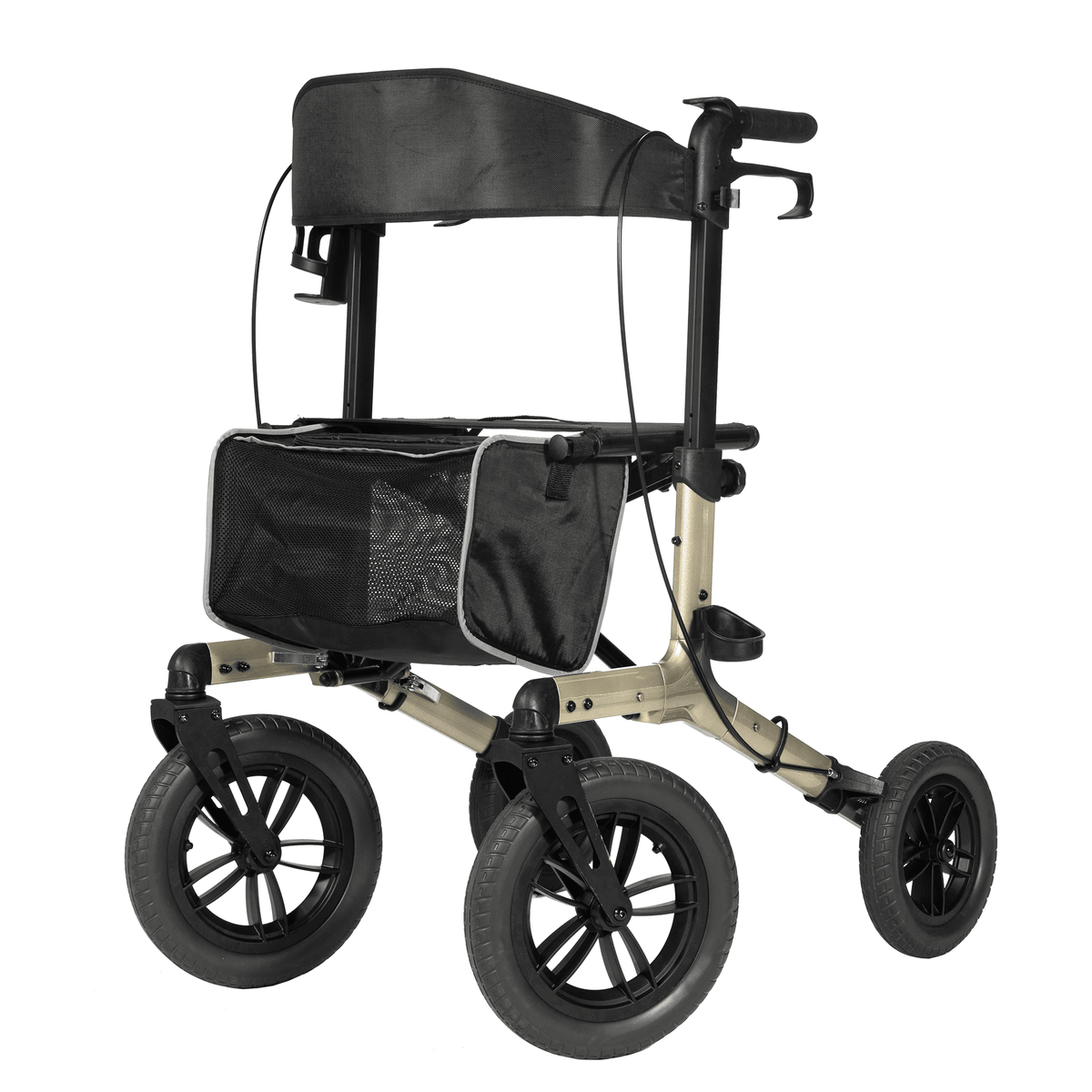
- Standard four-wheel rollator walkers used for mobility at home.
- Rollators prescribed when a cane or standard walker is not sufficient.
- Accessories that are medically necessary and listed on the prescription.
Eligibility checklist
- You must have a condition that substantially limits mobility.
- The rollator walker must be needed for use in the home.
- A qualified physician or non-physician practitioner must document medical necessity.
What is not covered
- Items primarily for convenience or comfort are usually not covered.
- Fancy add-ons not needed for mobility can be denied or not covered.

Costs, examples, and common real-life scenarios
Real numbers help you plan. Rollator walker prices vary. Medicare rules determine what you pay.
Price ranges and coverage
- Low-cost rollators commonly run $50 to $150 retail.
- Mid-range, more durable models run $150 to $300.
- High-end rollators with advanced features may exceed $300.
Example scenarios
- Scenario 1: Medicare-approved amount $120, supplier accepts assignment. Medicare pays $96; you pay $24 plus any unmet Part B deductible.
- Scenario 2: Supplier charges $180 and does not accept assignment. Medicare-approved amount is $120. Medicare pays $96; you pay the $24 coinsurance plus the $60 balance = $84 out of pocket.
- Scenario 3: You have Medicare Advantage. The plan pays according to its rules; you might pay less or more depending on plan benefits and preferred suppliers.
Common billing pitfalls
- Buying from a non-Medicare supplier can increase costs.
- Lack of a clear doctor’s order often leads to denied claims.
- Not checking assignment status causes surprise balance billing.

Personal experience: lessons I’ve learned helping others
I helped my neighbor get a rollator covered after a hip surgery. We learned several practical lessons the hard way.
What I did
- I asked the doctor for a specific prescription that explained why a cane wouldn’t work.
- I called two Medicare-enrolled suppliers to compare prices and verify assignment status.
- I kept copies of every form and followed up until the claim processed.
Lessons learned
- Be proactive: confirmations by phone and email save you from denials.
- Use suppliers who accept assignment to limit unexpected charges.
- Document everything; a short note from the doctor often makes the claim smoother.
How this helps you
- These simple steps reduce hassle and save money.
- You can use the same checklist I used to protect yourself from surprise bills.
What to do if Medicare denies coverage
Denials happen. Don’t panic. There is a clear appeals process and practical steps to take.
Steps after denial
- Request an itemized explanation of benefits and the supplier’s bill.
- Ask your doctor to provide more documentation showing medical necessity.
- File an appeal following Medicare’s appeal instructions and timelines.
Tips to strengthen appeals
- Add detailed functional notes from the doctor.
- Include photos or videos if they show mobility limits.
- Keep calm and follow deadlines; many appeals succeed with simple added documentation.

How Medicare Advantage plans differ
If you have a Medicare Advantage plan, rules can vary. Always check plan-specific rules before you buy.
What to expect
- Some plans cover rollators fully or with lower cost sharing.
- Others require you to use in-network suppliers.
- Prior authorization may be required in some plans.
My tip
- Call your plan’s member services and ask for written guidance on rollator coverage before filling any prescription.
PAA-style quick questions
Q: Can Medicare pay for any rollator walker?
A: Medicare will pay only if a doctor documents medical necessity and a Medicare-enrolled supplier provides the item. Fancy or convenience features may not be covered.
Q: Does Medicare cover rollator repairs or parts?
A: Repairs and replacement parts may not be covered under Part B; ask your supplier and check Medicare Advantage benefits for additional coverage.
Q: Do I have to use a specific supplier?
A: You should use a Medicare-enrolled supplier that accepts assignment to minimize out-of-pocket costs and avoid balance billing.
Q: Will Medicare rent a rollator walker?
A: Rental is rare for rollators; most rollators are purchased. Medicare may rent some DME in different situations.
Q: What documentation is required?
A: A doctor’s order with diagnoses and functional limits is required. Keep this and supplier receipts to support claims.
Frequently Asked Questions of How much does Medicare pay for a rollator walker
How much does Medicare pay for a rollator walker if I meet the rules?
Medicare typically pays 80% of the Medicare-approved amount after your Part B deductible is met. You pay the 20% coinsurance and any amount above the approved amount if the supplier charges more.
How do I find a supplier that accepts Medicare for rollator walkers?
Call your local medical supply stores and ask if they are Medicare-enrolled and accept assignment. You can also call Medicare or check your plan resources to find enrolled suppliers.
Will Medicare Advantage plans pay differently for rollator walkers?
Yes. Medicare Advantage plans may have different coverage rules, network suppliers, or prior authorization requirements. Always contact your plan before buying.
What paperwork do I need for Medicare to pay for a rollator walker?
You need a doctor’s order or prescription stating medical necessity, the supplier’s claim to Medicare, and your Medicare information. Keep copies of all documents.
Can I appeal if Medicare denies payment for my rollator walker?
Yes. You have the right to appeal denials. Provide added medical documentation and follow Medicare’s appeal process and deadlines.
Conclusion
You can secure Medicare coverage for a rollator walker when you follow the rules: get a clear doctor’s order, use a Medicare-enrolled supplier, and confirm assignment. Knowing how much Medicare pays for a rollator walker helps you avoid surprise bills and choose the right supplier. Take action now: speak with your doctor about medical necessity, call your plan or supplier to confirm coverage, and keep records of every step. If this helped, share your questions or experiences in the comments or subscribe for more practical guides on Medicare and mobility aids.

Michael Reynolds is a senior contributor at RetirementGazette.com, where he focuses on helping readers navigate the journey toward a secure and fulfilling retirement. With over a decade of experience in personal finance, retirement planning, and lifestyle writing, Michael combines practical strategies with easy-to-understand guidance tailored for both pre-retirees and those already enjoying their golden years.