The different levels of senior living range from independent living to assisted care, memory care, and skilled nursing.
Choosing senior housing can feel like planning a road trip without knowing every stop. The different levels of senior living help families match daily support, medical needs, safety, and lifestyle goals with the right setting. This guide explains each option in plain language, including costs, care services, warning signs, and questions to ask before making a decision.
What Are the Different Levels of Senior Living?
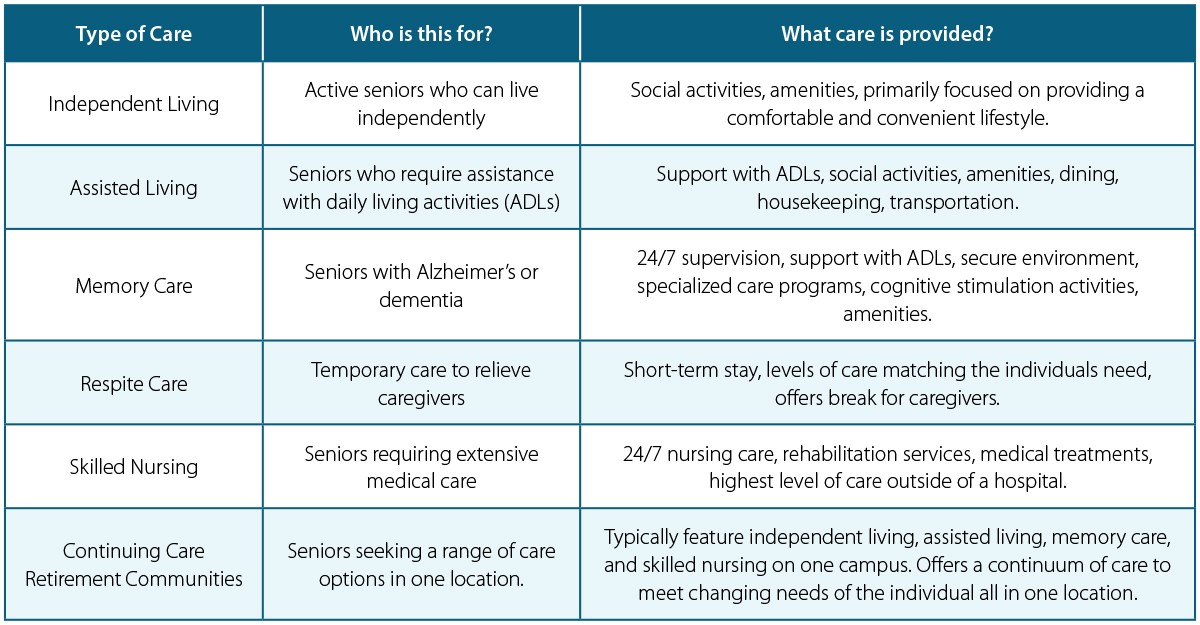
The different levels of senior living describe the amount of help, supervision, and medical care a community provides. The main options are:
• Independent living for older adults who want a social, maintenance-free lifestyle
• Assisted living for people who need help with daily tasks
• Memory care for people with Alzheimer’s disease or other forms of dementia
• Skilled nursing care for people who need ongoing medical treatment or rehabilitation
• Continuing care retirement communities for people who want several care levels on one campus
These categories are useful, but they are not identical across the United States. Each state sets its own rules for licensing, staffing, services, and safety. A community called “assisted living” in one state may offer more or less support than a community with the same name elsewhere.
Independent Living
Independent living is usually the least intensive level of senior living. It is designed for older adults who can manage personal care and household tasks but want fewer chores, more activities, and a stronger social network.
Residents may live in apartments, cottages, or townhomes. Services often include:
• Dining rooms or meal plans
• Housekeeping and laundry
• Transportation
• Fitness rooms and wellness programs
• Social events and clubs
• Maintenance and yard care
Independent living usually does not provide hands-on medical care. Some communities may help arrange home health, private caregivers, or transportation to medical visits, but these services may cost extra.
Who Is a Good Fit for Independent Living?
Independent living may work well if a person can safely:
• Bathe, dress, and use the toilet without regular help
• Take medicines correctly or manage a medication system
• Prepare food or access meals
• Move around the home without major safety risks
• Call for help during an emergency
For example, an older adult may be tired of maintaining a large home but still drive, shop, exercise, and manage personal care. Independent living can provide a simpler home without making the person feel as if they have lost control.
A common mistake is choosing independent living based only on the apartment or price. Ask what happens if needs change. Some communities have home care partners, while others require residents to move when they need daily assistance.

Assisted Living
Assisted living supports older adults who need help with some daily activities but do not require 24-hour skilled nursing care. It often offers a private or shared apartment, meals, activities, transportation, and personal care.
Help may include:
• Bathing and grooming
• Dressing
• Toileting
• Walking or transferring
• Eating
• Medication reminders or medication management
• Housekeeping and laundry
These daily tasks are often called activities of daily living, or ADLs. More complex tasks, such as cooking, shopping, paying bills, and managing transportation, are called instrumental activities of daily living, or IADLs.
Assisted living is not the same as a hospital or nursing home. Staff can support daily routines, but the community may have limits on complex medical care. A nurse may be available, but the level of nursing coverage differs by location.
Signs Assisted Living May Be Helpful
Families often begin exploring assisted living after noticing changes such as:
• Missed medications or repeated prescription mistakes
• Unpaid bills or unopened mail
• Frequent falls or near falls
• Poor nutrition or unexplained weight loss
• Trouble keeping up with bathing or laundry
• Loneliness, isolation, or loss of interest in normal activities
• Unsafe driving or confusion about familiar routes
One practical lesson is to focus on patterns, not one bad day. Everyone forgets an appointment or skips a meal. Repeated problems, especially when they affect safety, may signal a need for more support.
How Assisted Living Costs Work
Assisted living costs vary by state, location, apartment size, and care plan. Many communities charge a base monthly fee plus additional fees for personal care, medication help, transportation, or special services.
Medicare generally does not pay for room and board or most long-term custodial care in assisted living. Medicaid may help eligible residents in some states, but rules and covered services differ. Long-term care insurance, veterans’ benefits, personal savings, and family support may also play a role.
Ask for a complete fee sheet. A low base price can become expensive when every service carries a separate charge.

Memory Care
Memory care is designed for people living with Alzheimer’s disease, dementia, or another condition that affects memory, judgment, communication, or safety. It may be offered in a separate wing of an assisted living community or in a dedicated memory care residence.
Memory care often includes:
• Secure entrances and exits
• Staff trained in dementia care
• Structured daily routines
• Support with bathing, dressing, eating, and medications
• Activities suited to different abilities
• Help with wandering, agitation, or confusion
• Family updates and care planning
A secure setting can reduce the risk of wandering, but it does not remove all risk. Families should ask how the community handles falls, nighttime confusion, aggressive behavior, emergency visits, and changes in health.
How Memory Care Differs From Assisted Living
Assisted living may support people with mild memory loss, especially when they can still make safe choices. Memory care usually provides closer supervision and a more controlled environment.
The right setting depends on the person, not only the diagnosis. A person with dementia who is calm, mobile, and safe may do well in assisted living for a time. Another person with the same diagnosis may need memory care because of wandering, severe confusion, or unsafe behavior.
Ask whether staff use person-centered dementia care. This approach considers a resident’s history, routines, preferences, and needs instead of treating every behavior as a problem.
Skilled Nursing Care
Skilled nursing care, often called a nursing home, provides 24-hour nursing support and medical oversight. It is one of the most medically intensive levels of senior living.
Residents may need skilled nursing because of:
• Recovery after surgery or a serious illness
• Stroke rehabilitation
• Complex medication needs
• Wound care
• Feeding tubes
• Severe mobility problems
• Ongoing care for multiple chronic conditions
Some people stay in a skilled nursing facility for short-term rehabilitation. Others need long-term care because they cannot safely live in a less supportive setting.
Short-Term Rehabilitation Versus Long-Term Care
Short-term rehabilitation aims to help a person regain strength and return home or move to a lower level of care. Services may include physical therapy, occupational therapy, and speech therapy.
Long-term nursing care supports people who need ongoing help with health needs and daily activities. The care plan may include nursing visits, personal care, meals, therapy, and help with mobility.
Medicare may cover certain short-term skilled services after qualifying hospital care, but coverage has strict rules and limits. It usually does not cover unlimited long-term custodial care. Confirm coverage with Medicare, Medicaid, the facility, and the person’s insurance plan before admission.

Continuing Care Retirement Communities
A continuing care retirement community, or CCRC, offers several levels of senior living on one campus. A resident may begin in independent living and later move to assisted living, memory care, or skilled nursing as needs change.
This model can reduce the stress of moving to a completely new town or community. Residents may already know the staff, neighbors, dining areas, and campus routines.
Common contract types include:
• Life-care contracts, which may offer predictable future care costs
• Modified contracts, which provide some services at a set rate and charge more for other care
• Fee-for-service contracts, which charge based on the level of care used
CCRC contracts can be complex. Review entrance fees, refund rules, monthly charges, healthcare costs, financial reserves, and what happens if a resident runs out of money. An elder law attorney or financial advisor can help explain the agreement.
A CCRC is not automatically the best option. It may require a large entrance fee and may be less flexible for families who expect to move closer to relatives later.

How to Choose the Right Level of Senior Living
The best choice begins with a care assessment, not a tour. A primary care provider, geriatrician, occupational therapist, or licensed social worker can help identify physical, cognitive, emotional, and medication-related needs.
Use this process:
-
List the help needed each day. Note bathing, dressing, walking, eating, toileting, medication, and communication.
-
Track safety concerns. Record falls, wandering, stove accidents, driving problems, or missed medical care.
-
Review health needs. Include diabetes, heart disease, oxygen use, wounds, therapy, and mental health concerns.
-
Set a realistic budget. Include rent, care fees, medication, transportation, furniture, deposits, and possible increases.
-
Visit several communities. Go during meals and busy times, not only during a scheduled tour.
-
Read the contract carefully. Look for care limits, discharge rules, extra fees, and emergency procedures.
-
Plan for future needs. Ask where the resident would go if mobility or memory declines.
Questions to Ask During a Tour
Ask direct questions and request written answers when possible:
• What care services are included in the monthly fee?
• How many staff members work on each shift?
• Is a licensed nurse present at night?
• How are medications stored and given?
• What happens after a fall?
• How does the community handle residents who wander?
• How often do care plans change?
• What training does staff receive?
• Can residents bring outside caregivers?
• What conditions require a resident to move out?
• How are families notified about health changes?
• Is the community licensed and in good standing with the state?
The Centers for Medicare & Medicaid Services provides a Care Compare tool for reviewing nursing homes. State health departments and long-term care ombudsman programs can also provide information about complaints, inspections, and resident rights.

Comparing the Different Levels of Senior Living
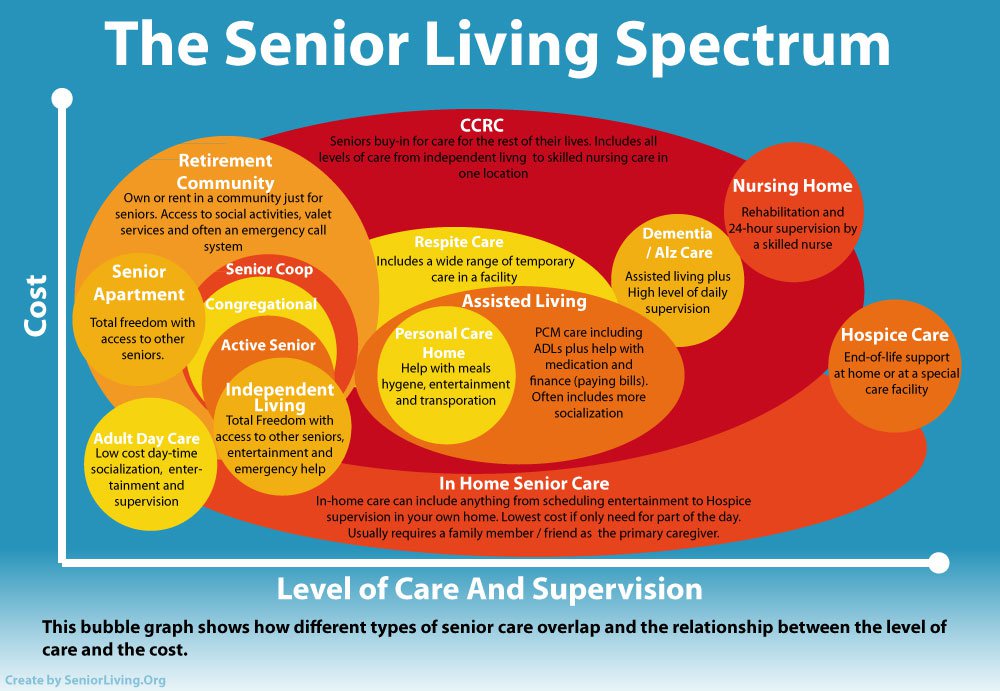
The different levels of senior living can be easier to compare when you look at care intensity.
| Level of care | Typical support | Best suited for |
|---|---|---|
| Independent living | Meals, activities, transportation, maintenance | Adults who manage personal care |
| Assisted living | Personal care, medications, meals, supervision | Adults who need help with daily tasks |
| Memory care | Secure setting, dementia support, structured routines | Adults with significant memory or safety needs |
| Skilled nursing | 24-hour nursing and medical care | Adults with complex or ongoing health needs |
| Continuing care community | Several levels on one campus | Adults planning for changing needs |
These levels are not a straight ladder. A person may move from independent living to assisted living, while another may receive home care and never move into a community. Someone recovering from surgery may need skilled nursing for a short time and then return home.
The most important question is not, “Which level is best?” It is, “What support will keep this person safe, comfortable, and as independent as possible?”

Costs, Payment, and Financial Planning
Senior living prices depend on geography, housing type, staffing, care needs, and amenities. Urban areas often cost more than rural areas, but local prices can vary widely.
Create a monthly estimate that includes:
• Base rent or room charge
• Care fees
• Meals
• Medication management
• Transportation
• Incontinence supplies
• Medical equipment
• Personal spending
• Therapy or home health
• Family travel and support
Medicare is mainly designed for medical care and does not usually pay for long-term room, board, or custodial assistance. Medicaid may cover certain services for people who meet financial and medical requirements. Veterans and surviving spouses may qualify for Aid and Attendance benefits in some situations.
Do not spend retirement funds based on a verbal estimate. Request a written contract and ask how often fees increase. A financial planner familiar with aging and long-term care can help compare private pay, insurance, Medicaid planning, and home care costs.

Common Mistakes Families Should Avoid
Choosing senior living is emotional, and rushed decisions are common. A few mistakes can create stress later.
• Waiting for a crisis. Touring communities before an emergency gives you more choices.
• Focusing only on appearance. A beautiful lobby does not prove strong care.
• Ignoring staff turnover. Frequent turnover may affect consistency and trust.
• Assuming all care is included. Extra charges can be substantial.
• Choosing based on distance alone. A nearby community may still be a poor fit.
• Forgetting the resident’s voice. Older adults should take part in decisions whenever possible.
• Failing to plan for decline. Ask what happens when needs increase.
• Skipping the contract review. Legal and financial details matter as much as the apartment.
One useful approach is to create a care notebook. Keep medication lists, doctor contacts, fall records, preferences, legal documents, and questions in one place. This makes conversations with providers clearer and helps families notice changes early.
Frequently Asked Questions About the Different Levels of Senior Living
What are the main levels of senior living?
The main levels are independent living, assisted living, memory care, and skilled nursing care. Continuing care retirement communities may offer several of these options on one campus.
What is the difference between assisted living and skilled nursing?
Assisted living helps with daily activities, such as bathing, dressing, meals, and medications. Skilled nursing provides 24-hour nursing and medical care for people with more complex or ongoing health needs.
Is memory care more intensive than assisted living?
Memory care usually provides more supervision, security, and dementia-focused support than standard assisted living. However, services vary by state and community, so families should compare staffing, safety systems, and care limits.
Does Medicare pay for senior living?
Medicare generally does not pay for long-term room, board, or custodial care in independent living, assisted living, or nursing homes. It may cover certain medical services and short-term skilled rehabilitation when eligibility rules are met.
Can a person move between different levels of senior living?
Yes. Many communities allow residents to move from independent living to assisted living, memory care, or skilled nursing as needs change. The rules, availability, and extra costs should be included in the contract.
How do I know which level of senior living my parent needs?
Start with a professional care assessment and a list of daily support needs, medical concerns, and safety risks. Then compare communities that can provide current care and likely future care.
Conclusion
The different levels of senior living range from maintenance-free independent living to assisted living, memory care, skilled nursing, and continuing care communities. Each level serves a different mix of lifestyle, safety, personal care, and medical needs.
Start early, involve the older adult, compare real costs, and ask how care will change over time. Visit several communities, review inspection information, and have a qualified professional examine the contract before signing. Use this guide as a starting point, explore local resources, and share your questions or experiences with others making the same decision.

Michael Reynolds is a senior contributor at RetirementGazette.com, where he focuses on helping readers navigate the journey toward a secure and fulfilling retirement. With over a decade of experience in personal finance, retirement planning, and lifestyle writing, Michael combines practical strategies with easy-to-understand guidance tailored for both pre-retirees and those already enjoying their golden years.