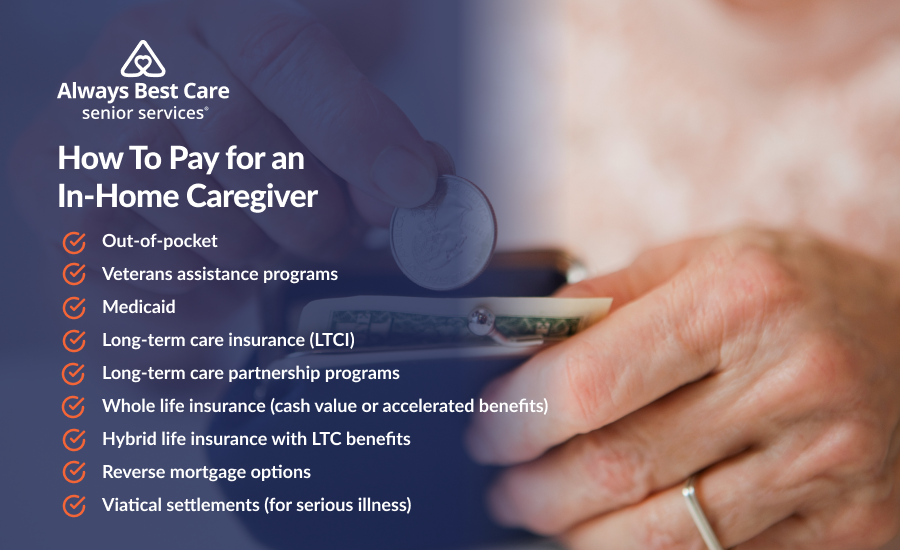
Families often combine personal savings, benefits, insurance, and public programs to pay for in-home senior care.
Learning how to pay for in-home senior care can feel like solving a puzzle while managing a loved one’s changing needs. The right plan may include Medicare, Medicaid, veterans benefits, long-term care insurance, family funds, or a mix of several options. This guide explains each path, what it covers, and how to avoid common payment mistakes.

What In-Home Senior Care Includes
In-home senior care is support provided in a person’s home instead of a nursing home or assisted living community. Care may be part-time, full-time, short-term, or ongoing.
The type of care matters because each payment source has different rules. Services may include:
• Personal care, such as bathing, dressing, grooming, and toileting
• Homemaker help, such as cooking, laundry, and light cleaning
• Companionship and supervision
• Medication reminders
• Respite care for family caregivers
• Skilled nursing from a licensed nurse
• Physical, occupational, or speech therapy
• Medical social services
Many families first ask how to pay for in-home senior care before defining the care their loved one needs. It is usually better to reverse those steps. Start with a care assessment, then match the care plan to suitable funding sources.
For example, Medicare may help with short-term skilled care after an illness. It usually does not pay for long-term help with bathing, meals, or supervision alone. This difference often surprises families.

How Much Does In-Home Senior Care Cost?
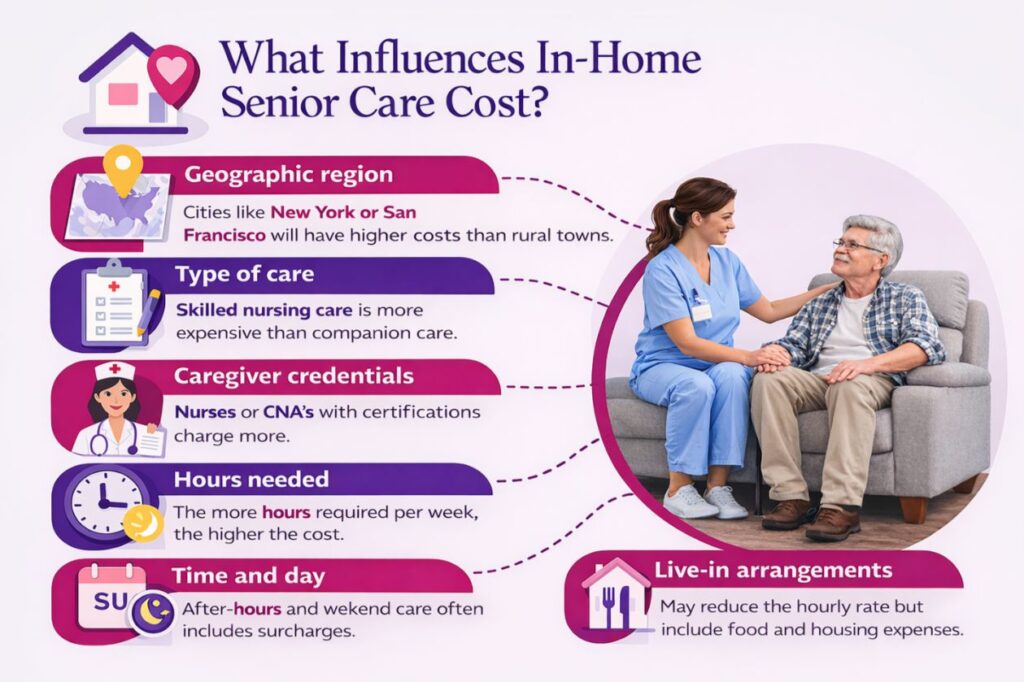
The cost of in-home senior care depends on location, hours, services, and the caregiver’s training. A few hours of homemaker help each week costs far less than 24-hour supervision.
National cost surveys often report hourly rates for home health aides in the mid-$20s to mid-$30s range. Rates can be higher in large cities and lower in rural areas. Agency care may cost more than hiring an independent caregiver because agencies handle screening, payroll, insurance, training, and backup coverage.
A simple monthly estimate can help:
- Multiply the hourly rate by the number of care hours each week.
- Multiply that amount by 4.33, the average number of weeks in a month.
- Add possible costs for supplies, transportation, nursing visits, or care management.
For example, 20 hours per week at $30 per hour equals about $2,600 per month. The final bill may change if the caregiver works on weekends, provides skilled care, or charges a holiday rate.
Ask each provider for a written care plan and fee schedule. Check whether the quote includes:
• Caregiver wages
• Agency fees
• Payroll taxes
• Travel charges
• Minimum shift rules
• Holiday rates
• Overtime
• Care supervision
• Replacement care when the regular caregiver is absent
Understanding the full cost is a key part of learning how to pay for in-home senior care. It also helps families compare agency care, private hiring, adult day care, and other options.
Use Medicare for Short-Term Skilled Home Health Care
Medicare can cover certain home health services, but its rules are strict. A person generally must be under a doctor’s care, need skilled services, be homebound, and use a Medicare-certified provider.
Covered services may include:
• Intermittent skilled nursing
• Physical therapy
• Occupational therapy
• Speech-language therapy
• Medical social services
• Limited home health aide care when skilled care is also being provided
Medicare does not usually cover full-time home care, meal preparation, shopping, long-term supervision, or personal care when those are the only services needed. It is designed mainly for medical recovery and skilled treatment, not ongoing custodial care.
Ask the doctor to explain why home health is needed and how long it may last. Confirm that the agency accepts Medicare before services begin. Also ask what happens when the skilled benefit ends.
Medicare Advantage plans may offer extra benefits, but these vary by plan and region. Some plans provide limited in-home support, meal delivery, caregiver help, or personal care. Review the plan’s Evidence of Coverage instead of relying on a general advertisement.
Medicare is often one piece of how to pay for in-home senior care, not the entire solution.

Check Medicaid Eligibility and Home Care Waivers
Medicaid is one of the most important ways to pay for in-home senior care for people who qualify. Unlike Medicare, Medicaid may cover long-term personal care and home-based support.
Eligibility rules differ by state. They may consider:
• Monthly income
• Countable assets
• Age
• Disability status
• Medical needs
• Level of care
• Citizenship or qualified immigration status
Many states offer Home and Community-Based Services waivers. These programs may pay for personal care attendants, respite care, homemaker services, adult day care, transportation, or assistive equipment.
Medicaid programs often have waiting lists. Apply early, even if care needs seem manageable today. A local Area Agency on Aging, Medicaid office, or elder law attorney can explain state rules.
Do not give away money or transfer property simply to qualify. Medicaid has a look-back period in many cases, and improper transfers can lead to a period of ineligibility. Get advice from a qualified elder law professional before making major financial changes.
One lesson I have learned from helping families is that waiting until a crisis can limit choices. Early paperwork gives families more time to gather records, appeal a decision, or find a waiver with available funding.
Explore Veterans Benefits and VA Programs
Veterans and surviving spouses may qualify for help through the Department of Veterans Affairs. The Aid and Attendance benefit can provide extra monthly payments to some eligible veterans or survivors who need help with daily activities.
Eligibility may depend on:
• Military service requirements
• Discharge status
• Age or disability
• Income and net worth
• A need for assistance with daily living
• Enrollment in certain benefit programs
The VA may also offer homemaker and home health aide services, respite care, skilled home health, adult day health care, and caregiver support. Availability depends on clinical need, enrollment, location, and VA capacity.
Contact an accredited veterans service officer before paying a private company to prepare a claim. Some firms charge high fees for help that may be available through an accredited representative at no cost.
Keep service records, medical notes, household income documents, and care evaluations together. Good records can make the application process easier.
For eligible families, veterans benefits can significantly change how to pay for in-home senior care.

Use Long-Term Care Insurance
Long-term care insurance may cover in-home care if the policy includes home care benefits. Policies differ widely, so read the contract carefully.
Check these details:
• Daily or monthly benefit amount
• Total benefit pool
• Elimination period
• Covered caregiver types
• Benefit triggers
• Inflation protection
• Reimbursement rules
• Care coordination requirements
• Exclusions and limits
A benefit trigger may require the policyholder to need help with a set number of activities of daily living. These activities often include bathing, dressing, eating, toileting, transferring, and continence care. Cognitive impairment may also qualify under some policies.
Some plans reimburse expenses after the care is provided. Others pay a cash benefit. Ask whether the policy requires an approved agency or allows a family member to provide care.
Submit a claim before the family’s savings are nearly gone. Insurers may require a doctor’s certification, a plan of care, and specific forms. Keep copies of every document and record the date of each call.
If the policy is old, a professional who understands long-term care contracts can help interpret its terms. Do not assume that “home care” means unlimited daily assistance.

Consider Personal Savings and Retirement Income
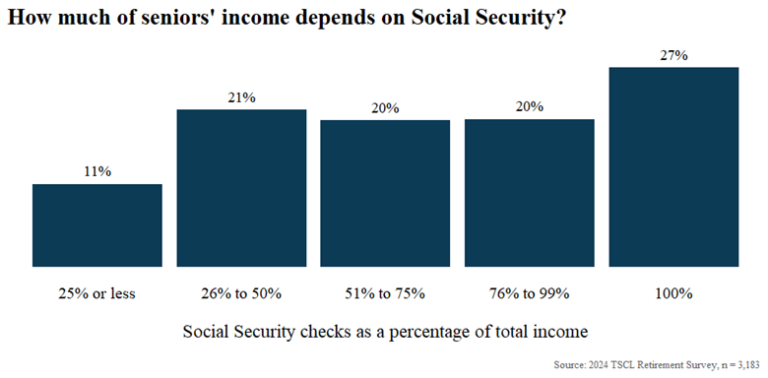
Personal funds often provide the fastest way to begin care. Savings accounts, pension income, Social Security, investment withdrawals, and required retirement distributions may all play a role.
Create a care budget that separates essential needs from optional services. Essential needs might include bathing, fall prevention, medication support, and meals. Optional services may include extra companionship, errands, or home organization.
A useful budget should show:
• Monthly income
• Regular household bills
• Medical costs
• Current care expenses
• Emergency savings
• Expected care increases
• Taxes and investment fees
Avoid spending every dollar on care without keeping an emergency reserve. Home repairs, hospital stays, dental treatment, and caregiver gaps can create sudden costs.
A financial planner can compare orderly withdrawals from taxable accounts, retirement plans, and cash savings. Tax results vary, so ask a tax professional before selling investments or taking a large retirement distribution.
In many families, personal savings bridge the gap while Medicaid, veterans benefits, or an insurance claim is pending. This makes a written timeline very useful.
Use a Health Savings Account or Flexible Spending Account
A Health Savings Account may help pay for qualified medical expenses, including some long-term care services. The expense must meet tax rules, and personal care may not always qualify.
A Flexible Spending Account may also cover certain eligible medical costs. Employer plans control the details, and unused funds may be subject to deadlines or limits.
Keep receipts, invoices, care plans, and proof of payment. Do not assume that every in-home caregiver expense is tax-free or eligible for reimbursement.
A tax adviser can explain whether a service qualifies as a medical expense. This is especially important when care includes both personal support and skilled treatment.
Look Into Tax Deductions and Tax Credits
Some families may deduct qualified medical and long-term care expenses when they itemize deductions. The rules can depend on the amount spent, the taxpayer’s income, the dependent relationship, and who paid the bill.
A senior may also qualify for certain credits or deductions based on disability, dependency, or caregiver status. These rules change, so use current tax guidance.
Caregiver payments can create payroll responsibilities. If a family hires a caregiver directly, the family may need to handle:
• Employment taxes
• Workers’ compensation rules
• Background checks
• Wage and hour laws
• State registration
An agency usually handles these tasks, though the family still needs to review the contract. Paying a caregiver “under the table” can create tax penalties and remove important protections.
Tax benefits rarely pay the full cost of care, but they may reduce the after-tax burden. They are one part of how to pay for in-home senior care.
Compare Agency Care With Private Hiring
Families often compare a home care agency with a privately hired caregiver. Both options have benefits and risks.
An agency may provide:
• Background checks
• Bonding and insurance
• Caregiver supervision
• Backup staff
• Payroll services
• Care plans and visit records
Private hiring may cost less per hour. However, the family may become the employer and must manage schedules, payroll, taxes, training, and replacement care.
Ask a private caregiver for references and verify credentials. Use a written agreement that explains duties, pay, hours, sick time, privacy, and termination rules.
Ask an agency:
• Is the agency licensed in this state?
• Are caregivers employees or contractors?
• Is the agency insured?
• How are caregivers screened?
• What happens if a caregiver does not show up?
• Can the agency provide a care supervisor?
• Are there minimum hours per visit?
The cheapest hourly rate is not always the lowest total cost. A missed shift can lead to a fall, hospital visit, or family member missing work.
Use Home Equity Carefully
A home may provide another way to fund care. Options can include a home equity loan, home equity line of credit, sale of the home, or a reverse mortgage.
Each option carries risk. A loan creates monthly payments and may require good credit and enough income. A reverse mortgage can reduce home equity, affect heirs, and require the borrower to keep paying property taxes, insurance, and home repairs.
Before using home equity:
- Confirm the full interest rate and fees.
- Check how the option affects Medicaid eligibility.
- Review the effect on a spouse or co-owner.
- Make sure property taxes and insurance remain affordable.
- Speak with a housing counselor or financial adviser.
Never sign a home-related financial contract under pressure. If a salesperson promises guaranteed government money or demands an upfront fee, slow down and seek independent advice.
Home equity can support how to pay for in-home senior care, but it should not be the first choice without a clear long-term plan.
Ask Family Members to Share the Cost or Care
Family support may include money, transportation, meal preparation, or direct caregiving. A family meeting can prevent one person from carrying the entire burden.
Discuss:
• The senior’s wishes
• The care schedule
• Each person’s time and budget
• Who handles bills and records
• Emergency backup plans
• How decisions will be made
If one family member provides regular care, consider a written personal care agreement. It should describe duties, hours, pay, and payment records. An elder law attorney can help make sure the agreement follows state and Medicaid rules.
Money discussions can feel awkward, but silence often creates resentment. Treat the care budget like a shared household project, not a test of love.
One practical mistake I often warn families about is making informal promises. A clear schedule and written plan protect both the older adult and the family caregiver.
Build a Step-by-Step Payment Plan
Knowing how to pay for in-home senior care becomes easier when the family follows a set process.
- Get a professional care assessment.
- List the exact services and weekly hours needed.
- Request written prices from several providers.
- Review Medicare and Medicare Advantage benefits.
- Apply for Medicaid or a home care waiver if appropriate.
- Check veterans benefits.
- Review long-term care insurance.
- Calculate available income and savings.
- Ask a tax professional about eligible expenses.
- Create a backup plan for a higher level of care.
Keep a care folder with medical records, insurance policies, benefit letters, bills, tax forms, and contact names. Digital copies can help, but protect private information with a secure password.
Review the plan every three months. A senior’s needs can change after a fall, hospital stay, dementia diagnosis, or loss of a caregiver.
Common Mistakes That Increase Care Costs
Families can avoid many financial problems with early planning.
Common mistakes include:
• Assuming Medicare pays for all home care
• Waiting until savings are almost gone to apply for Medicaid
• Choosing a caregiver without checking references
• Failing to ask about agency minimum hours
• Paying cash without keeping records
• Ignoring tax and employment rules
• Buying long-term care insurance without reading exclusions
• Using a reverse mortgage without independent advice
• Paying a claims company before checking its credentials
• Failing to plan for caregiver absence
Ask questions in writing and keep every answer. If an agency changes its price, request a written explanation before accepting the new rate.
When a claim or benefit application is denied, ask for the reason and appeal deadline. A denial is not always the final answer.
How to Choose Reliable Financial and Care Support
The best advice often comes from several professionals, not one person selling a single product. Consider speaking with:
• A doctor or licensed care assessor
• An Area Agency on Aging representative
• A Medicaid eligibility worker
• A VA-accredited representative
• A certified financial planner
• A tax professional
• An elder law attorney
Check licenses and credentials through official state or professional databases. Be cautious when someone promises quick approval, guaranteed benefits, or a plan that sounds too good to be true.
Ask advisers how they are paid. A transparent fee structure makes it easier to understand possible conflicts of interest.
Care planning is both a health decision and a financial decision. Good advice should respect the senior’s preferences, protect the family’s resources, and explain the limits of each funding source.
Frequently Asked Questions About How to Pay for In-Home Senior Care
Does Medicare pay for in-home senior care?
Medicare may cover short-term skilled home health care when eligibility rules are met. It usually does not cover ongoing personal care, housekeeping, meals, or supervision when those are the only services needed.
Will Medicaid pay for a caregiver at home?
Medicaid may pay for personal care and other home-based services for eligible people. Coverage, income rules, asset rules, and waiting lists vary by state.
Can Social Security pay for home care?
Social Security benefits can help a senior pay bills, but Social Security does not directly cover in-home care services. The money may be combined with savings, insurance, Medicaid, or veterans benefits.
Can a family member get paid to care for an older adult?
Some Medicaid programs, veterans programs, and long-term care insurance policies allow payment to a family caregiver. The caregiver may need to meet specific rules, complete training, and follow a written care plan.
Does long-term care insurance cover in-home care?
Many long-term care policies cover home care, but benefits depend on the contract. Check the benefit amount, elimination period, required level of impairment, caregiver rules, and claim process.
Can veterans receive help paying for in-home care?
Eligible veterans and surviving spouses may qualify for Aid and Attendance or VA home care services. Eligibility depends on service history, financial factors, health needs, and program availability.
Is in-home care tax deductible?
Some qualified medical and long-term care expenses may be deductible under federal tax rules. Eligibility depends on the type of care, the taxpayer’s situation, and whether the person itemizes deductions.
Conclusion
Paying for in-home senior care often takes more than one solution. Medicare may help with short-term skilled care, while Medicaid, veterans benefits, long-term care insurance, personal funds, tax benefits, and family support may help cover ongoing needs.
Start with a care assessment and a realistic monthly budget. Then check every possible benefit before spending down savings or borrowing against a home. Keep good records, ask for written terms, and seek trusted professional advice when rules become complex.
A thoughtful plan can protect both your loved one’s comfort and your family’s financial future. Begin by contacting your local Area Agency on Aging, reviewing available insurance, and comparing qualified home care providers.

Michael Reynolds is a senior contributor at RetirementGazette.com, where he focuses on helping readers navigate the journey toward a secure and fulfilling retirement. With over a decade of experience in personal finance, retirement planning, and lifestyle writing, Michael combines practical strategies with easy-to-understand guidance tailored for both pre-retirees and those already enjoying their golden years.