Bathrooms are one of the most common places for slips and falls in American homes. Water, soap, smooth surfaces, poor lighting, and hard edges can create risk within seconds. The safest approach is to control the floor, add stable support, improve visibility, and change habits that make falls more likely.
This guide explains how to prevent bathroom slips, what safety products help, which fixes can fail, and when to seek medical care after a fall.
Introduction
To avoid slipping in a U.S. bathroom, keep floors dry, use a secure non-slip surface in the tub or shower, install properly anchored grab bars, improve lighting, remove clutter, and avoid rushing. People with limited balance should also consider a shower chair, handheld showerhead, and professional home safety review.
Older adults face a higher risk of serious injury from falls, but bathroom falls can affect people of any age. Children, pregnant people, people recovering from surgery, and anyone with weak muscles, dizziness, vision problems, or medication side effects may need extra support.
The goal is not to make the bathroom look safer. The goal is to make it harder to lose balance and easier to recover if balance shifts.

Why Bathroom Floors Become Slippery
Bathroom slips usually happen when water or another substance reduces the grip between a foot and the floor. Smooth tile, porcelain, fiberglass, and acrylic surfaces can become especially slick when wet.
Common causes include:
- Water left on the floor after a shower or bath
- Soap, shampoo, conditioner, or body oil on the tub floor
- Loose bath mats or curled rug edges
- Poor lighting and glare
- Clutter near the toilet, tub, or sink
- Stepping over a tub wall
- standing on one foot while dressing
- Reaching, twisting, or bending on a wet surface
- Walking in socks or smooth-soled slippers
- Dizziness caused by illness, dehydration, or medicine
- Weakness or poor balance
A bathroom can also become unsafe when a person tries to use an unstable object for support. Towel bars, shower doors, glass panels, sink rims, and rolling carts are not designed to stop a fall.
A non-slip bath mat can help outside the tub or shower. It should have a strong rubber or latex-free backing, lie flat, and stay in place when stepped on. A regular decorative rug may slide across tile even if it looks heavy.
The best solution depends on where the risk occurs. A mat may help with water near the shower. It will not replace a grab bar or solve a slippery tub floor.
How to Make a Shower or Tub Safer
Start with the wettest and most difficult area: the inside of the tub or shower. Use a secure, slip-resistant surface and stable support.
1. Add traction to the floor
Choose one of these options:
- A textured tub or shower floor
- Slip-resistant adhesive strips made for wet areas
- A properly fitted rubber or vinyl shower mat with drainage holes
- A professionally applied anti-slip treatment designed for the specific surface
Follow the product instructions. Clean and dry the surface before applying adhesive strips. Replace strips or mats when they peel, crack, curl, lose grip, or collect mold.
Do not cover a drain. Standing water can make the surface more slippery and may create another fall risk.
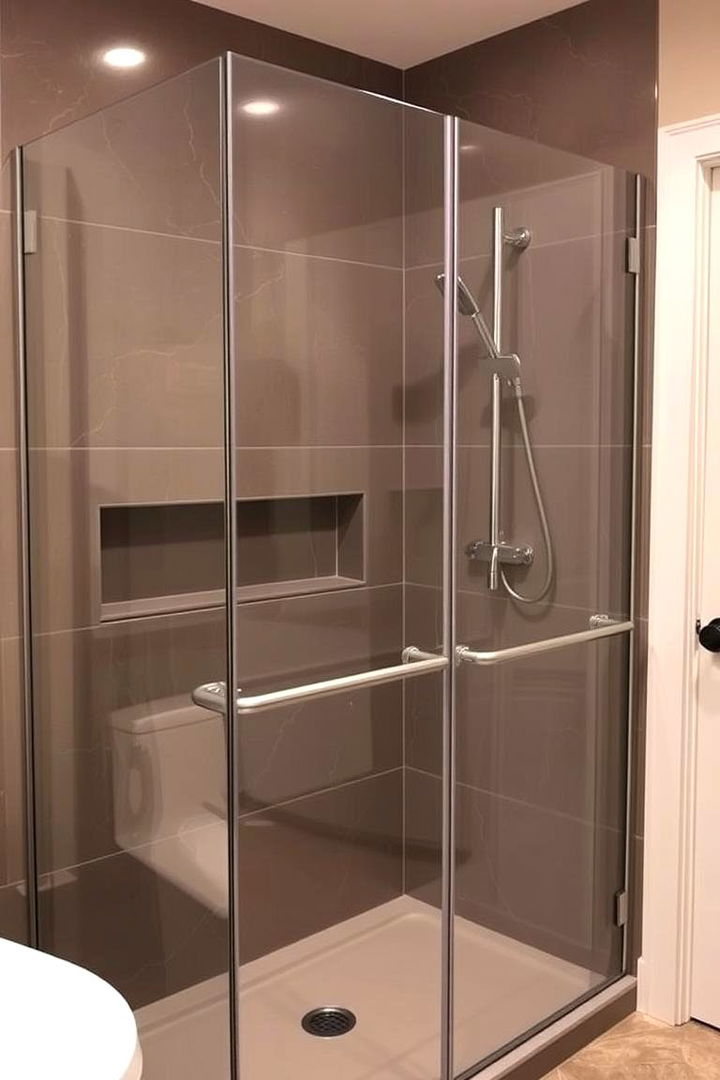
2. Install grab bars that support body weight
A grab bar should be anchored to wall framing or installed with a mounting system rated for the intended load. A towel bar is not a safe substitute.
Useful locations may include:
- At the shower entrance
- On the long wall inside the shower
- On the side wall near the shower controls
- Beside the toilet
- Near the tub edge for entry and exit
The Americans with Disabilities Act, or ADA, provides detailed grab-bar specifications for covered public and commercial facilities. Residential bathrooms may have different design needs, so use ADA guidance as a reference rather than assuming every home installation must follow public-building rules.
A licensed contractor, occupational therapist, or qualified home modification professional can help select the location and mounting method. Poor placement can force a person to twist or reach, which may increase risk.
3. Use a shower chair when standing is difficult
A shower chair or bath bench can reduce the need to stand on a wet floor. Select one with:
- Non-slip rubber feet
- A stable, wide base
- A weight rating above the user’s weight
- Drainage holes
- A height that allows the user to sit with feet supported
Check the chair often. Tighten hardware and replace it if the frame bends, cracks, or rocks.
A shower chair does not remove every risk. Getting into or out of the chair can still require a grab bar and a clear path.
4. Consider a handheld showerhead
A handheld showerhead lets a person wash while seated. It can also reduce reaching and turning.
Keep the hose where it will not create a trip hazard. After use, place it in a holder or mount. Do not leave the hose stretched across the floor.
5. Reduce the step over the tub
Stepping over a high tub wall is difficult for many people. It combines balance, leg strength, and weight transfer.
Possible solutions include:
- A transfer bench
- A properly installed tub rail
- A walk-in shower conversion
- A low-threshold shower
- Supervision or assistance when needed
A tub rail can help with balance, but it must fit the tub correctly and lock securely. It should not be treated as a replacement for a professionally anchored grab bar.
How to Keep Bathroom Floors Dry and Clear
Dry floors provide more grip than wet floors. Make drying part of the normal bathroom routine.
Use these steps:
- Place a non-slip mat directly outside the tub or shower.
- Make sure the mat lies flat and does not move underfoot.
- Wipe up puddles as soon as you see them.
- Keep a squeegee near the shower if water collects on walls or floors.
- Repair leaking faucets, showerheads, toilets, and supply lines.
- Keep towels and clothing off the floor.
- Store bottles in a shelf or caddy instead of leaving them underfoot.
- Keep the path from the door to the toilet and sink open.
- Dry wet feet before walking on tile.
- Replace mats that remain damp, smell musty, or show mold.
Do not place a loose towel on the floor as a makeshift bath mat. It can bunch up, slide, or catch a toe.
Check the floor after children bathe, after a pet is washed, and after a person uses a shower with a curtain that allows water to escape. Small amounts of water can still create a serious hazard when they sit near the toilet or doorway.
If the floor remains slick after cleaning, residue may be the problem. Follow the flooring manufacturer’s care instructions. Avoid mixing cleaning chemicals, and never combine bleach with ammonia or acidic products.
Improve Lighting and Visibility
Good lighting helps people see water, changes in floor height, clutter, and support handles. It also helps the eyes adjust when moving from a darker bedroom into a bright bathroom.
Use:
- A bright ceiling light
- A switch that is easy to reach before entering
- A night-light for nighttime trips
- Low-glare bulbs or fixtures
- Extra lighting near steps, the tub, and the toilet
- Contrast between the floor, walls, and grab bars when vision is limited
Motion-sensor lights can help, but they should not be the only light source. A sensor may fail to detect a person sitting still or may turn off too soon.
Keep light switches dry and easy to reach. If someone must walk across a dark room to turn on the light, place a night-light along the route or use a switch that can be reached from the doorway.
People with reduced vision may benefit from an occupational therapy assessment. A professional can identify glare, contrast, and layout problems that are easy to miss during a quick inspection.
Choose Safer Bathroom Habits
Small changes in movement can lower risk. Stand still for a moment after sitting or lying down, especially if you sometimes feel lightheaded. Move slowly when turning, stepping over a tub edge, or reaching for a towel.
Follow these habits:
- Use the grab bar when entering and leaving the shower.
- Sit down to wash or dress if standing feels unsteady.
- Keep both feet planted before reaching.
- Do not climb on the toilet, sink, or tub edge.
- Avoid rushing to answer the phone or door.
- Keep a phone or emergency call device within reach, but not where it can create clutter.
- Wear well-fitting footwear with a firm, textured sole outside the shower.
- Avoid walking in socks on wet tile.
- Ask for help when you feel weak, dizzy, or ill.
Do not hold a towel, bottle, or hair tool while stepping into a tub. Keep one hand free for a stable support point.
If you take medicines that may cause sleepiness, dizziness, or low blood pressure, ask a doctor or pharmacist whether they could affect fall risk. Do not stop a prescribed medicine without medical advice.
Bathroom Safety for Older Adults and People With Limited Mobility
People with balance or mobility problems may need more than a non-slip mat. The safest plan reduces the number of difficult movements required.
Consider these changes:
| Risk or task | Helpful change | Main limitation |
|---|---|---|
| Stepping over a tub wall | Transfer bench or low-entry shower | May require remodeling or training |
| Standing during a shower | Shower chair or bench | Transfers still need stable support |
| Sitting down or standing up from the toilet | Properly placed grab bars or raised toilet seat | Fit and placement matter |
| Reaching for controls | Handheld showerhead and reachable controls | Hoses must stay out of the walking path |
| Nighttime trips | Night-light and clear route | Light must be visible without glare |
| Weak grip or poor balance | Anchored grab bars | Suction bars may release without warning |
| Forgetting to use support | Simple layout and routine | Supervision may still be needed |
A physical therapist or occupational therapist can assess walking, transfers, strength, and bathroom layout. This is especially useful after a fall, hospital stay, joint replacement, stroke, or change in mobility.
Caregivers should avoid pulling a person by the arm. That can cause injury or make the person lose balance. Use approved transfer methods and ask a clinician or therapist for training when hands-on help is needed.
What Not to Use for Fall Protection
Some common bathroom items look useful but may fail during a fall.
Avoid relying on suction-cup grab bars
Suction grab bars may be useful for limited, temporary assistance only when the manufacturer allows that use. They should not be treated as permanent fall protection unless the product is specifically designed, installed, and maintained for the intended load and setting.
Many suction devices can lose their seal because of tile texture, grout lines, soap, age, or improper installation.
Do not use towel bars as grab bars
Towel bars can pull out of the wall or bend. They are designed to hold towels, not body weight.
Do not use shower doors for support
Glass doors and frames may break or shift. Use an anchored grab bar instead.
Do not layer loose mats
One mat placed on top of another can slide and create a raised edge. Use one stable mat with a backing that suits the floor.
Do not assume “waterproof” means “slip-resistant”
A waterproof surface can still be slick. Look for a product’s slip-resistance information and follow the surface manufacturer’s care instructions. Avoid claims that use vague terms without explaining the test or conditions.
A Simple Bathroom Slip-Risk Inspection
Walk through the bathroom during the day and at night. Check the room in the same order that a person uses it.
At the doorway
- Can the person turn on the light before stepping inside?
- Is the floor dry?
- Does the door swing into the walking path?
- Is there a raised threshold?
At the tub or shower
- Is the entry step easy to see?
- Is there a stable handhold?
- Does the floor stay secure when wet?
- Can the person reach soap without bending or twisting?
- Is a chair needed?
Around the toilet
- Is there enough room to sit and stand?
- Is the floor clear?
- Is the toilet the right height for the user?
- Is a grab bar needed on one or both sides?
At the sink
- Are cords, bottles, or towels on the floor?
- Does the person need to lean far forward?
- Is the floor wet from splashing?
- Can the person reach the counter without stepping onto a loose rug?
Signs that the fix is working
A bathroom setup is more useful when the person can:
- Enter and leave without rushing
- Keep at least one hand on a stable support when needed
- Sit and stand without pulling on a towel bar
- Shower without standing on a wet, unstable surface
- See the floor and water clearly
- Reach needed items without twisting or stretching
- Walk through the room without stepping over clutter
If a change creates a new problem, remove it and reassess. For example, a bath mat that blocks the door or curls at the edge is not a successful safety fix.
What to Do After a Bathroom Fall
Do not rush to stand after a fall. Check for severe pain, bleeding, head injury, trouble breathing, weakness, confusion, or loss of consciousness.
Call 911 in the United States for an emergency, especially after a head injury, neck or back pain, severe bleeding, chest pain, trouble breathing, or inability to stand safely. If the person takes blood thinners, medical evaluation may be important after a head impact even when the injury seems minor.
If there is no immediate emergency:
- Stay still for a moment and assess pain.
- Call for help or use an emergency call device.
- Do not pull up on a towel bar, shower door, or sink.
- If able, move toward a stable surface or low position.
- Have another person help only if they know how to assist safely.
- Contact a health care professional after an unexplained fall, repeated fall, or injury.
Report symptoms such as increasing headache, vomiting, unusual sleepiness, confusion, weakness, numbness, severe swelling, or worsening pain. These symptoms can require urgent evaluation.
After the event, find the cause before returning to normal use. Look for water, residue, poor lighting, a loose mat, dizziness, medication effects, or a difficult transfer.
Frequently Asked Questions
What is the best thing to put on a slippery bathroom floor?
For the floor outside a tub or shower, use a flat, non-slip mat with a secure backing. For the inside of a tub or shower, use a textured surface, properly installed adhesive strips, or a fitted shower mat made for wet areas. No mat removes the need to wipe up standing water.
Are suction grab bars safe?
Suction grab bars can lose their seal and should not be the main support for someone at risk of falling. For dependable support, use a grab bar anchored to wall framing or installed with a rated mounting system.
How do I make a bathroom safe for an older adult?
Start with dry, clear floors; strong lighting; anchored grab bars; a secure shower surface; and a shower chair if standing is difficult. An occupational therapist can provide a more complete home safety assessment after a fall or mobility change.
Is a bath mat better than a shower mat?
They serve different locations. A bath mat belongs outside the tub or shower and helps absorb water. A shower mat is designed for use inside the wet area and should have drainage and a secure fit. Using the wrong type in the wrong place can increase risk.
Should I use a shower chair if I can still stand?
A shower chair may help if standing causes fatigue, weakness, pain, or unsteadiness. It is not required for everyone, but it can reduce the time spent standing on a wet surface. Use a stable chair and make sure transfers are safe.
Conclusion
The most effective way to prevent bathroom slips is to use several layers of protection: keep floors dry, add traction inside the shower, install stable grab bars, improve lighting, remove clutter, and slow down during transfers.
Start with the highest-risk area. If the tub or shower floor is slippery, fix that first. If a person feels dizzy or cannot stand safely, involve a health care professional, physical therapist, occupational therapist, or qualified contractor before making major changes.
A safer bathroom is one that supports normal movement without forcing a person to reach, twist, rush, or rely on objects that were never built to hold body weight.
Sources for further guidance
- CDC: Important Facts About Falls
- CDC STEADI: Older Adult Fall Prevention
- U.S. Consumer Product Safety Commission: Bathroom Safety
- U.S. Department of Justice: 2010 ADA Standards for Accessible Design
- National Institute on Aging: Fall-Proofing Your Home

Michael Reynolds is a senior contributor at RetirementGazette.com, where he focuses on helping readers navigate the journey toward a secure and fulfilling retirement. With over a decade of experience in personal finance, retirement planning, and lifestyle writing, Michael combines practical strategies with easy-to-understand guidance tailored for both pre-retirees and those already enjoying their golden years.