NJ Senior Freeze reimburses eligible New Jersey seniors for qualifying property tax increases above a base-year amount.
Understanding how does NJ Senior Freeze work can make a major difference for older homeowners planning a fixed-income budget. The program does not erase your property tax bill or stop future increases. Instead, New Jersey sends an annual reimbursement when you meet the age, income, residency, ownership, and tax payment rules. This guide explains the process, the formula, common mistakes, and ways to check your eligibility.

What Is the New Jersey Senior Freeze Program?
The NJ Senior Freeze is the common name for New Jersey’s Property Tax Reimbursement program. It helps eligible seniors and people with disabilities manage rising property taxes.
The program compares your current property taxes with the taxes from your base year. If your current taxes are higher, the state may reimburse the difference, subject to program rules and limits.
In simple terms, the program works like this:
- You establish a base year.
- You keep living in your New Jersey home.
- You pay your property taxes on time.
- You file an application with income and property information.
- New Jersey calculates the qualifying increase.
- The state sends a reimbursement if you qualify.
A key point about how does NJ Senior Freeze work is that it is a reimbursement program. Your town will not lower your tax bill because you qualify. You normally pay the bill first, then apply for the state benefit.
The program is managed through New Jersey’s tax administration system. Rules, income limits, filing dates, and payment schedules can change, so always confirm the current details with the New Jersey Division of Taxation.
How Does NJ Senior Freeze Work Step by Step?
Many people find the program confusing because the name sounds like a permanent tax freeze. It is better to think of it as a yearly refund for a qualifying increase.
Step 1: You establish a base year
Your base year is the first year you meet the program’s requirements and qualify for a Senior Freeze benefit. The state uses the property tax from that year as a comparison point.
For example:
• Your base-year property tax was $7,000.
• Your current property tax is $8,200.
• The difference is $1,200.
If you meet every other rule, your potential reimbursement may be based on that $1,200 increase. The final amount can differ because of state rules, caps, changes in ownership, or other adjustments.
Step 2: You keep the same qualified home
You generally need to own and occupy the same New Jersey home for the required period. The home may be a house, condominium, cooperative unit, or qualifying mobile home.
Moving can affect your base year. If you sell your home and buy another one, you may need to establish a new base year. Do not assume your old tax history automatically transfers to the new property.
Step 3: You pay the property taxes
You must generally pay the property taxes due on your home. A bill that remains unpaid may cause a denial or delay.
Keep proof of payment. Useful records may include:
• Municipal tax receipts
• Mortgage escrow statements
• Canceled checks
• Bank statements
• Online payment confirmations
• A tax collector statement
One practical lesson is to avoid relying only on memory. Mortgage companies often pay taxes from escrow, but you still need to confirm that the payments were made and properly credited.
Step 4: You report your income
The application asks for total income under the program’s definition. This may include wages, Social Security, pensions, interest, dividends, rental income, and other sources.
Do not look only at your taxable income from a federal tax return. The Senior Freeze income rules may use a different calculation. Always read the current application instructions carefully.
Step 5: You file by the deadline
New Jersey sets a filing deadline for each program year. Late applications may not be accepted unless the state provides an extension or special relief.
The deadline can change from year to year. Check the current instructions before mailing or submitting your application. Filing early also gives you time to fix missing documents.

Who Qualifies for the NJ Senior Freeze?
Eligibility depends on several requirements. Meeting one rule is not enough. You must satisfy all required conditions for the program year.
Age or disability requirement
You may qualify if you are:
• At least 65 years old by the required date for the program year
• Receiving Social Security disability benefits and meeting the program’s disability rules
The age cutoff and qualifying dates can vary. Read the current application instead of relying on an older form.
New Jersey residency
You generally must have lived in New Jersey continuously for the required period. The state may also require that you own and occupy the property as your principal residence.
A vacation home, rental property, or second home usually does not qualify as your principal residence.
Home ownership
The home must usually be owned and occupied by the applicant. Eligible property types may include:
• A single-family home
• A condominium
• A cooperative unit
• A manufactured or mobile home
Mobile home owners may need to provide different tax or site-fee information. The rules can also depend on whether you own the land or rent the lot.
Property tax payment
You must generally pay the property taxes on the qualified home. If taxes are paid through mortgage escrow, confirm the mortgage company sent the payments by the required dates.
This is one of the most common areas where paperwork problems occur. A homeowner may believe the bill was paid, while the municipality shows a balance or late payment.
Income limit
The state sets an annual income limit for the Senior Freeze. That limit can change through legislation or the state budget process.
Income may include more than wages. It can include:
• Social Security benefits
• Pension payments
• IRA withdrawals
• Interest and dividends
• Capital gains
• Business income
• Rental income
• Tax-exempt interest
• Other taxable or nontaxable income listed in the instructions
Use the income figure requested by the application. Do not guess based on the amount of money left in your bank account.

How Is the Senior Freeze Reimbursement Calculated?
The basic calculation compares your current property tax with the property tax in your base year.
A simplified example looks like this:
Current-year property tax: $9,400
Base-year property tax: $8,000
Potential increase: $1,400
The possible reimbursement is the difference, not the entire property tax bill. You still remain responsible for paying the current bill to your municipality.
The actual calculation may include special rules for:
• Property tax increases
• Eligible tax amounts
• Multiple owners
• Life estates
• Cooperative housing
• Mobile home locations
• Changes in ownership
• Changes in property use
• State payment limits
This explains why two neighbors with similar homes may receive different amounts. Their base years, income, ownership details, and tax histories may not be the same.
What is the base year?
The base year is the comparison year used to measure your property tax increase. It is not always the year you bought the home. It generally relates to the first year you qualified under the program.
If you qualified in one year but did not file, that may affect your base-year history. Contact the state if you are unsure which year applies to you.
What happens after a move?
If you move, the new property may not use the old property’s tax amount as its base. You may need to qualify again and establish a new base year.
Before selling, ask the New Jersey Division of Taxation how the move could affect your benefit. A short conversation can prevent an unpleasant surprise later.

What the NJ Senior Freeze Does Not Do
Knowing what the program does not do is just as important as knowing how does NJ Senior Freeze work.
The program usually does not:
• Freeze your municipal property tax bill
• Prevent your town from raising taxes
• Cancel current property taxes
• Pay your tax bill before it is due
• Guarantee the same reimbursement every year
• Cover every type of housing cost
• Automatically transfer when you move
• Replace other tax relief programs
Your town will still send a normal property tax bill. You must pay it according to the local payment schedule.
The Senior Freeze also does not mean your total housing costs will stay flat. Homeowners still need to budget for insurance, utilities, repairs, association fees, and possible special assessments.

Senior Freeze Compared With ANCHOR
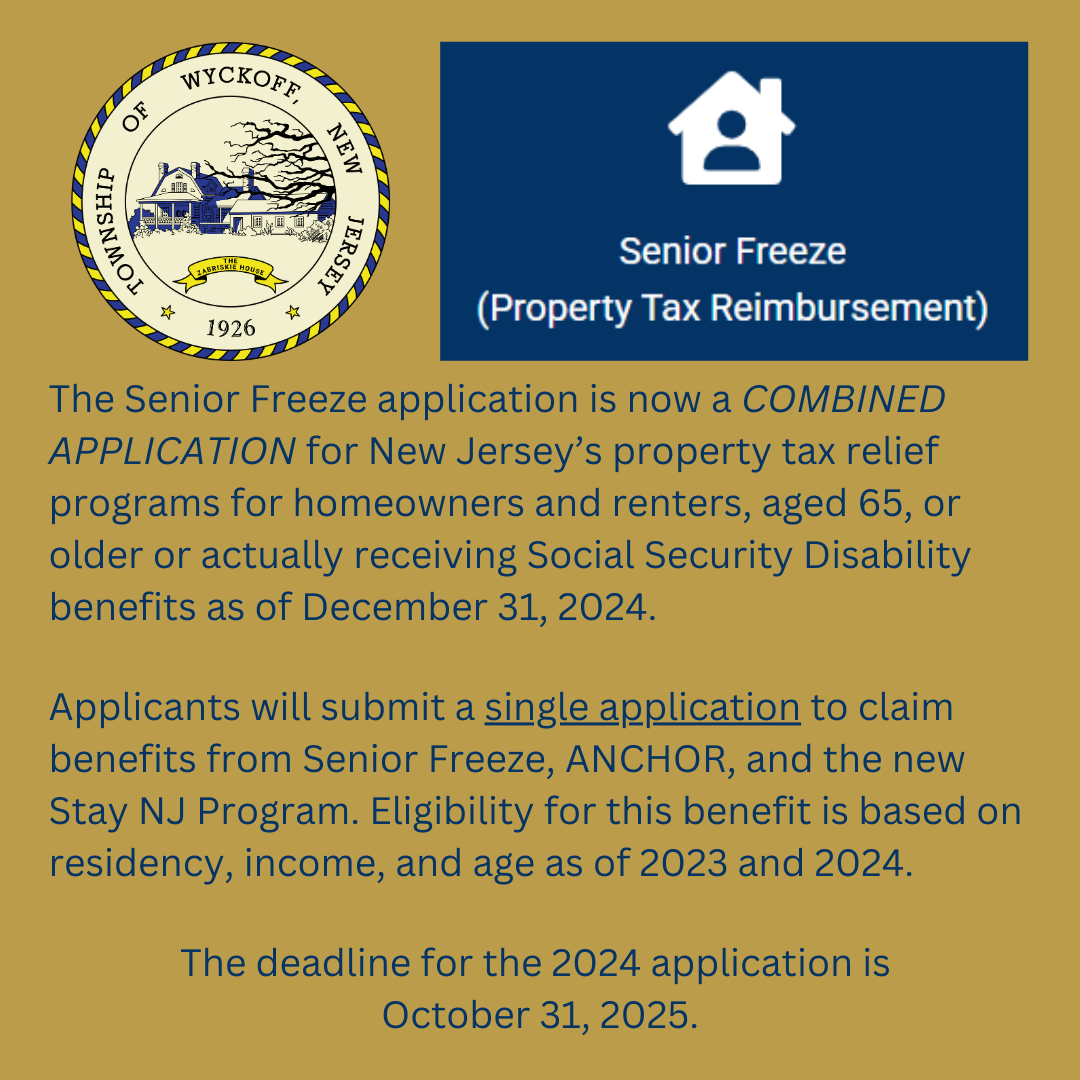
New Jersey offers more than one property tax relief program. The Senior Freeze and ANCHOR program are not the same.
The Senior Freeze is mainly designed to reimburse qualifying property tax increases for eligible seniors and people with disabilities. ANCHOR may provide a separate benefit based on residence, income, age, and homeownership or rental status.
Some people may qualify for both programs, while others may qualify for only one. Eligibility for one program does not automatically guarantee eligibility for the other.
A simple comparison:
| Program | Main purpose | Common applicants |
|---|---|---|
| Senior Freeze | Reimburses qualifying property tax increases | Eligible senior homeowners and people with disabilities |
| ANCHOR | Provides a separate property tax relief benefit | Eligible homeowners and renters |
| Property Tax Deduction or Credit | May reduce state income tax liability | Taxpayers meeting tax filing rules |
Program names and requirements can change. Review the latest state instructions before deciding whether to apply.
How to Apply for the NJ Senior Freeze
The application process is easier when you gather records first.
Prepare your documents
You may need:
• Your Social Security number
• Your spouse’s or partner’s information, if applicable
• Proof of age or disability
• Property tax information
• Proof of property tax payment
• Income records
• Mortgage escrow information
• Prior Senior Freeze information
• Proof of New Jersey residency
The exact documents depend on your situation and the current application form.
Review your income carefully
Make a list of every income source before completing the form. Check bank statements, pension records, brokerage statements, and retirement withdrawal records.
A frequent mistake is leaving out a small pension, interest payment, or retirement distribution. Another mistake is reporting only federal adjusted gross income when the state form asks for additional income.
Confirm your property details
Check that the address, ownership percentage, property type, and tax amounts match municipal records. If you own the home with another person, read the instructions about ownership and occupancy.
Submit the application correctly
Follow the current instructions for online or paper filing. Save a copy of everything you submit.
If you mail the form, consider using a delivery method that provides tracking. If you apply online, save the confirmation number or screenshot.
Watch for state notices
The state may request more information. Respond by the deadline shown in the notice.
If your application is denied, read the reason carefully. Some denials result from missing documents rather than permanent ineligibility. You may have appeal or correction rights, depending on the issue and the applicable rules.
Common Mistakes That Delay or Reduce Payment
Understanding how does NJ Senior Freeze work also means knowing where applications fail.
Assuming the program freezes the tax bill
This is the biggest misunderstanding. You still need to pay your full property tax bill on time.
Using the wrong income amount
Applicants sometimes report only wages or only taxable income. The program may count several types of income.
Forgetting escrow payments
If your lender pays taxes, verify the payment. A mortgage statement alone may not show whether the municipality received the money on time.
Missing the deadline
A late form can create serious problems. Put the filing date on your calendar and apply early.
Reporting the wrong base year
Old application forms and tax records can be confusing. If your calculated reimbursement seems wrong, ask the state to confirm your base year.
Failing to report a move
Selling or buying a home may change your eligibility. Report the change and ask how it affects your claim.
Mixing up Senior Freeze and ANCHOR
These programs have different rules and forms. Make sure you are completing the correct application for the correct benefit year.
Practical Tips for a Smooth Application
Here are simple steps that can make the process less stressful:
-
Create a yearly property tax folder, either paper or digital.
-
Save every municipal tax bill and payment confirmation.
-
Keep pension, Social Security, investment, and retirement records together.
-
Check the state’s current income limit and deadline each year.
-
Ask your mortgage company for an escrow payment history.
-
Compare your base-year tax with your current tax before filing.
-
Make a copy of the completed application.
-
Respond quickly to any state request for documents.
-
Ask for help from a trusted tax professional if ownership or income is complex.
-
Never pay a third party simply because it promises guaranteed approval.
In practical case reviews, the hardest part is often not the form itself. It is finding accurate records from several years ago. Keeping a simple file each year can save hours later.
How Long Does a Senior Freeze Payment Take?
Payment timing depends on the program year, application volume, review process, and whether the state needs more information.
Some applications are processed quickly. Others take longer because of missing documents, income questions, property records, or payment verification.
You can reduce delays by:
• Filing early
• Answering every question
• Using the correct tax year
• Including requested proof
• Checking that your mailing address is current
• Keeping your confirmation number
If you have not received a payment or notice, contact the official New Jersey program office. Avoid sharing your Social Security number with unofficial websites or callers.
Frequently Asked Questions About How Does NJ Senior Freeze Work
Does the NJ Senior Freeze stop my property taxes from increasing?
No. The Senior Freeze does not stop your municipality from raising property taxes. It may reimburse an eligible increase after you pay the current bill and meet all program rules.
Do I have to pay my property taxes before applying?
You generally must pay the required property taxes to qualify. Keep proof of payment, especially when taxes are paid through a mortgage escrow account.
Can renters receive the Senior Freeze?
The Senior Freeze is generally aimed at eligible homeowners and qualifying mobile home owners. Renters should review ANCHOR and other New Jersey relief programs because those programs may have separate rental benefits.
Does the Senior Freeze cover my entire property tax bill?
No. It normally covers the qualifying increase above your base-year property tax, not the full current bill. The final benefit may also be affected by program limits and eligibility rules.
What happens if I move to another New Jersey home?
Moving may change your base year and eligibility. Contact the New Jersey Division of Taxation before or after the move so you understand how the new property will be treated.
Can I qualify for both Senior Freeze and ANCHOR?
Possibly. The programs have separate requirements, and qualifying for one does not automatically qualify you for the other. Review the current rules for both programs before filing.
What income counts for the Senior Freeze?
Income can include Social Security, pensions, wages, interest, dividends, rental income, retirement withdrawals, and other amounts listed in the application instructions. Use the state’s definition rather than relying only on your federal tax return.
Where can I check the current Senior Freeze deadline?
Check the official New Jersey Division of Taxation or New Jersey Treasury information for the current program year. Deadlines, income limits, and filing methods may change.
Conclusion
The answer to how does NJ Senior Freeze work is straightforward: eligible New Jersey seniors and people with qualifying disabilities may receive a reimbursement for property tax increases above a base-year amount. You must usually meet age or disability, residency, ownership, income, property tax payment, and filing deadline requirements.
The benefit does not freeze your bill, so continue paying your taxes on time. Gather your records, confirm your base year, review the latest state rules, and apply early. For current forms and official updates, explore New Jersey’s tax relief resources and consider sharing your questions or experience with others who may benefit.

Michael Reynolds is a senior contributor at RetirementGazette.com, where he focuses on helping readers navigate the journey toward a secure and fulfilling retirement. With over a decade of experience in personal finance, retirement planning, and lifestyle writing, Michael combines practical strategies with easy-to-understand guidance tailored for both pre-retirees and those already enjoying their golden years.