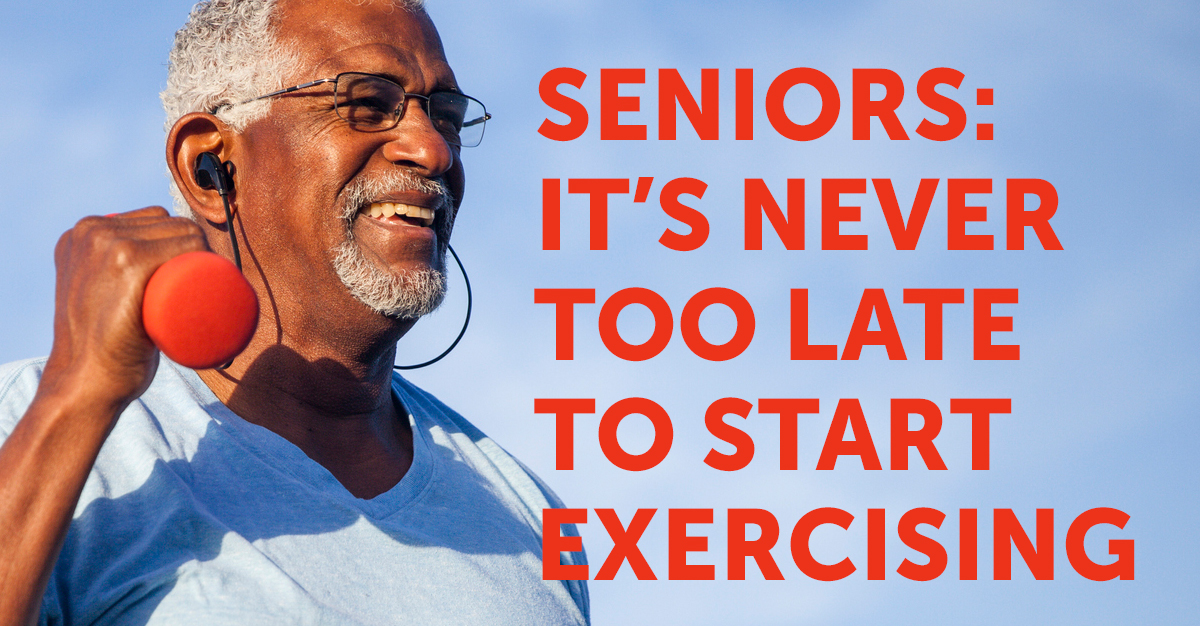
Seniors should begin with gentle, low-impact exercise, then build time, strength, and balance slowly.
Learning how to start exercising for seniors does not mean joining a hard workout class or pushing through pain. It means choosing safe movements that fit your health, energy, goals, and daily life. With a simple plan, regular activity can support stronger muscles, better balance, improved mood, and more independence.
Why Exercise Matters for Older Adults
Regular exercise can help seniors stay active and enjoy everyday tasks. Simple movements may make it easier to climb stairs, carry groceries, rise from a chair, or play with grandchildren.
Physical activity also supports heart health, joint movement, sleep, and mental well-being. It may lower the risk of falls and help manage health concerns such as high blood pressure, type 2 diabetes, arthritis, and weak muscles.
The best exercise plan is not the hardest one. It is the one you can do often and safely.
For many older adults, the main goals include:
• Building strength for daily tasks
• Improving balance and coordination
• Keeping joints flexible
• Supporting heart and lung health
• Reducing stiffness and discomfort
• Maintaining independence
• Improving mood and confidence
Older adults do not need to become athletes. Think of exercise as daily maintenance for the body. Just as a car runs better with regular care, the body often moves better when it receives regular, gentle activity.
<figcaption style=”font-size: 14px; color: #555; margin-top: 8px;”>
Source: ptandme.com
Talk With a Health Care Professional First
Many seniors can begin light exercise safely. However, speaking with a doctor or physical therapist is wise if you have a long-term health condition, recent surgery, chest pain, severe dizziness, or a history of falls.
Ask about the best type and amount of activity for your situation. A health professional may suggest exercises that protect your joints, spine, heart, or surgical area.
Medical advice is especially important if you have:
• Heart or lung disease
• Uncontrolled blood pressure
• Severe arthritis
• Osteoporosis
• Balance problems
• Recent surgery or injury
• Severe weakness
• Frequent dizziness or fainting
• Chest pain during activity
A doctor may not need to “approve” every short walk. Still, a quick check can prevent avoidable problems and give you confidence. When learning how to start exercising for seniors, safety should come before speed.
Stop exercising and seek medical help for chest pressure, serious shortness of breath, fainting, sudden weakness, or sharp pain. Mild muscle tiredness can be normal, but strong or lasting pain is not something to ignore.
Start With a Simple Exercise Check
Before creating a workout plan, look at your current habits. You do not need special equipment or a fitness test.
Ask yourself:
• Can I walk for five to ten minutes without severe discomfort?
• Can I stand up from a chair without using my hands?
• Do I feel steady when I turn or change direction?
• Which joints or muscles feel stiff?
• What time of day gives me the most energy?
• Do I prefer walking, music, water exercise, or home workouts?
Your answers can guide your first steps. Someone who sits most of the day may begin with short walks and chair exercises. Someone who already walks often may add light strength and balance work.
A useful rule is to begin below your maximum effort. You should feel active, but you should still be able to speak in short sentences. This is often called moderate intensity.
The “talk test” is a simple guide:
• Easy effort: You can talk and sing.
• Moderate effort: You can talk, but singing is hard.
• Hard effort: You can say only a few words.
Most beginners should spend more time at an easy or moderate level.

Follow the Four Main Types of Exercise
A complete senior exercise plan includes four types of movement. You do not need to do all four in one session.
Aerobic activity
Aerobic exercise raises your heart rate and makes you breathe faster. Good low-impact choices include:
• Walking
• Water aerobics
• Stationary cycling
• Dancing
• Gentle hiking
• Chair aerobics
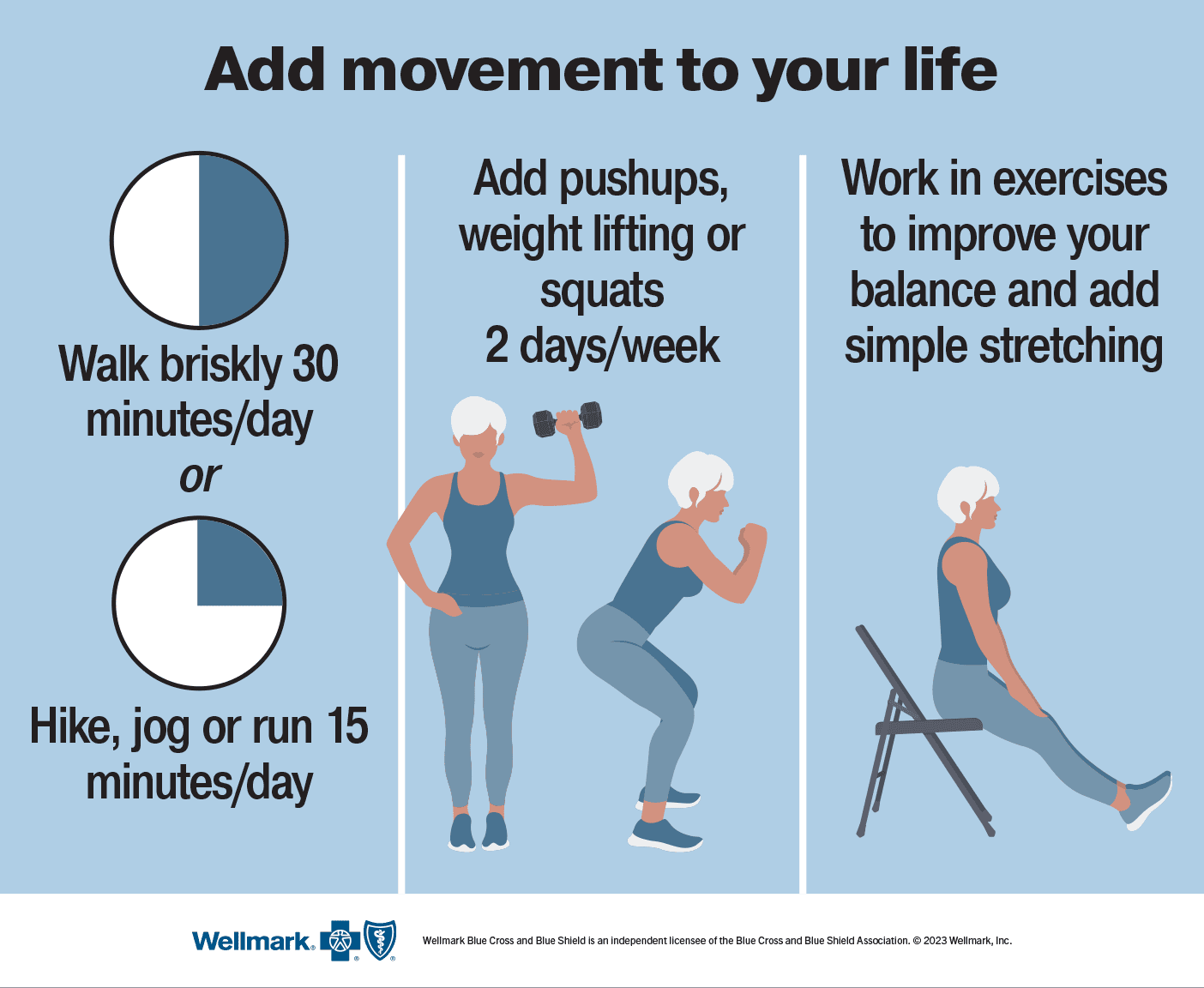
The general goal for older adults is about 150 minutes of moderate aerobic activity each week. You can divide this into small sessions, such as 10 or 15 minutes at a time.
Strength training
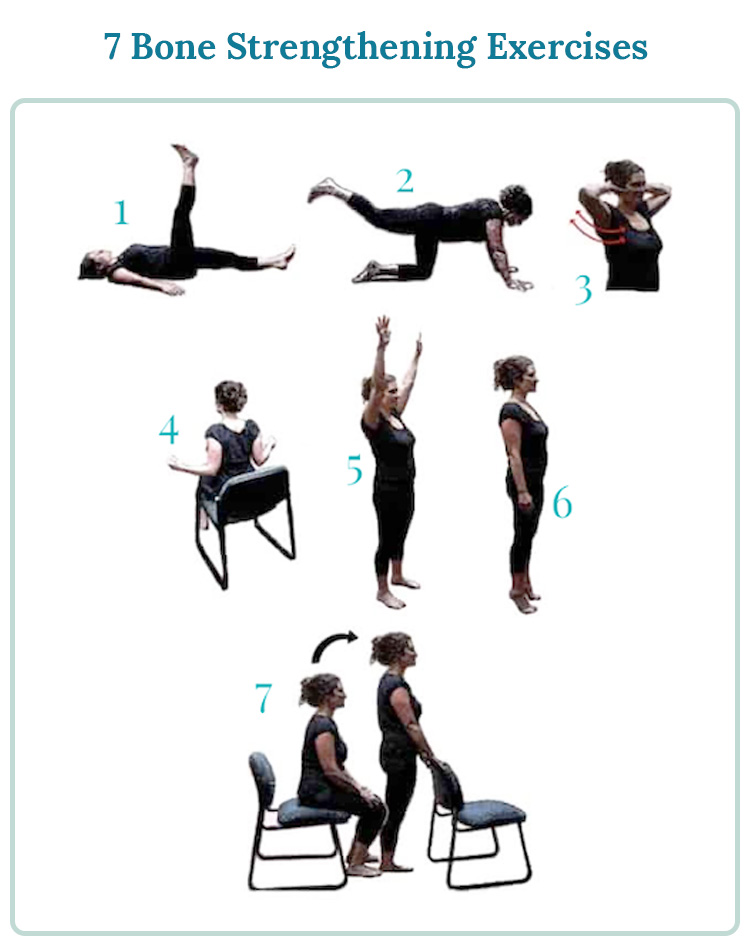
Strength exercise helps protect muscles, bones, joints, and independence. It can include:
• Standing from a chair
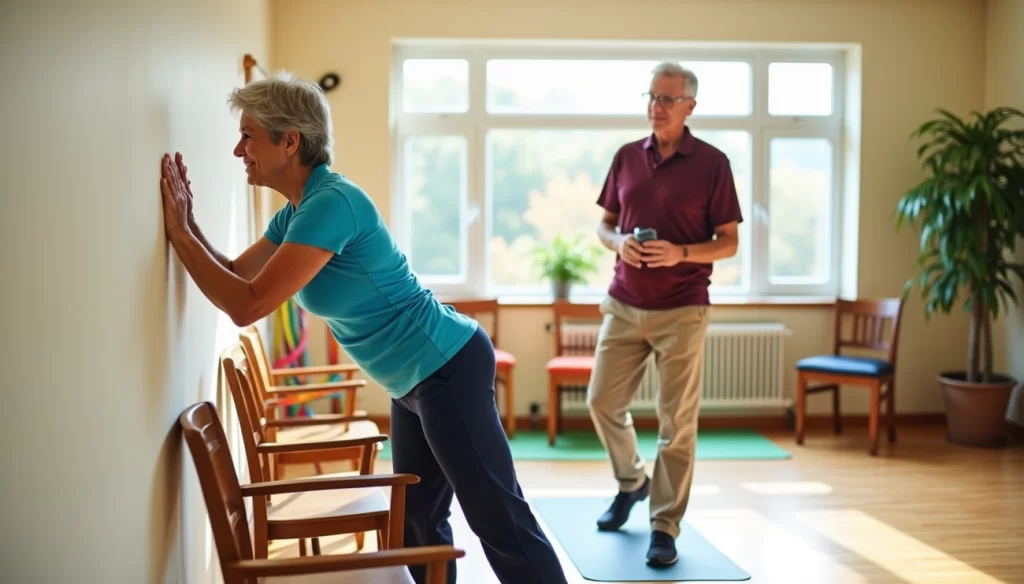
• Wall pushups
• Lifting light hand weights
• Using resistance bands
• Carrying light grocery bags
• Leg lifts
Start with one set of 8 to 12 controlled repetitions. As you grow stronger, work toward two days of strength exercise each week.
Balance training
Balance practice can reduce the risk of falls. Try:
• Standing near a kitchen counter
• Walking heel to toe
• Shifting weight from one foot to the other
• Standing on one foot while holding a stable surface
• Practicing safe turns
Never practice challenging balance exercises near stairs, slippery floors, or sharp furniture.
Flexibility exercises
Stretching can help you move with less stiffness. Stretch after your muscles are warm, not when your body is cold.
Hold a gentle stretch for about 10 to 30 seconds. Do not bounce or force a joint. Stretching should feel mild, not painful.

How to Start Exercising for Seniors: A Safe Four-Week Plan
A gradual plan makes starting less stressful. The following example suits many beginners, but your doctor or therapist may suggest changes.
Week one: Create the habit
Focus on showing up, not working hard.
• Walk for 5 to 10 minutes on three days.
• Do five chair stands on two days.
• Practice gentle balance while holding a counter.
• Stretch your calves, shoulders, and legs.
Week two: Add a little time
If week one felt comfortable, increase activity slightly.
• Walk for 10 to 15 minutes on three or four days.
• Do one set of simple strength exercises twice.
• Practice balance for two to three minutes.
• Add gentle stretches after walking.
Week three: Add strength
Now include more movements for the whole body.
• Walk for 15 to 20 minutes on four days.
• Do chair stands, wall pushups, and heel raises.
• Practice balance near a stable surface.
• Take one rest day between harder sessions.
Week four: Build a steady routine
Keep the plan comfortable and repeatable.
• Walk for 20 to 25 minutes on four or five days.
• Complete strength exercises twice each week.
• Practice balance most days for a few minutes.
• Add time only when your body feels ready.
Increase only one thing at a time. Add minutes first, then days, then resistance. Do not increase everything in the same week.
This gradual method is one of the safest answers to how to start exercising for seniors. It gives your muscles, joints, and heart time to adapt.
Choose Senior-Friendly Exercises
The best exercises are safe, enjoyable, and easy to repeat. If an activity feels like punishment, it may not become a lasting habit.
Walking
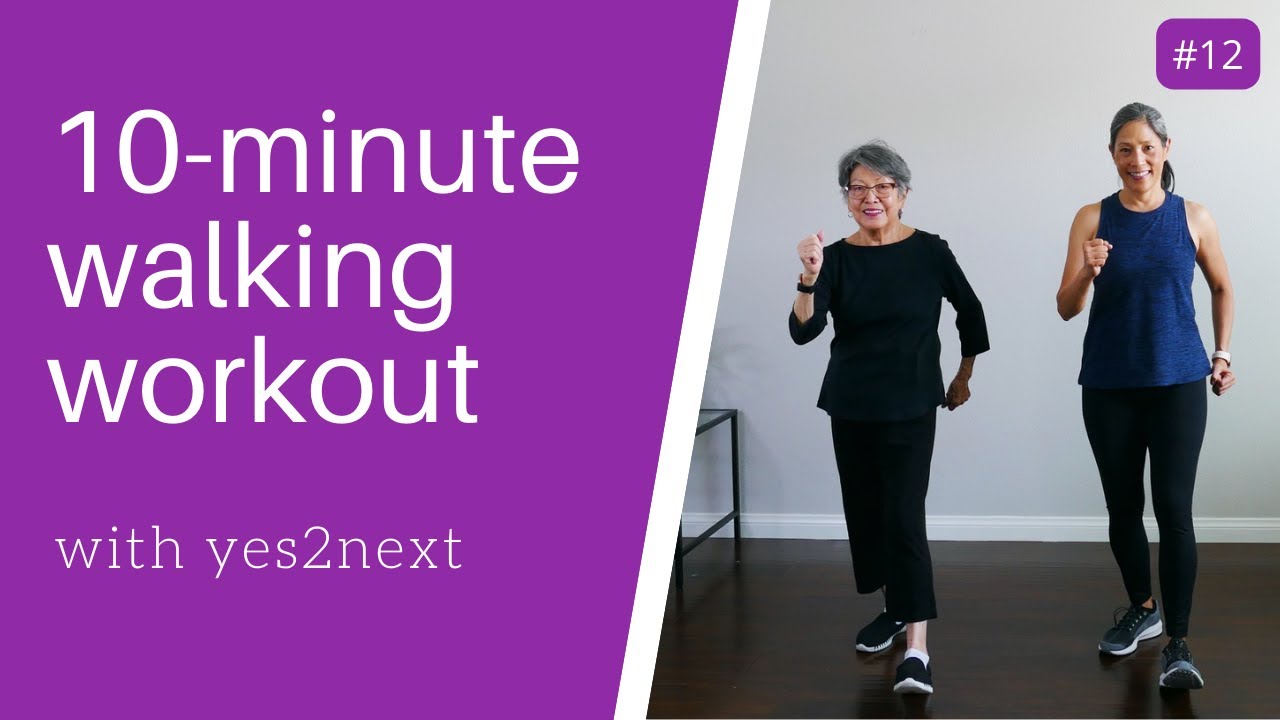
Walking is one of the simplest ways to begin. Use a flat route, supportive shoes, and a pace that allows conversation.
Start inside a home, mall, or community center if outdoor weather or uneven ground is a concern. You can also walk for five minutes in the morning and five minutes later in the day.
Chair exercises
Chair workouts are useful for people with low stamina or balance concerns. Use a strong, stable chair without wheels.
Try:
• Seated marching
• Ankle circles
• Seated knee extensions
• Arm raises
• Seated side bends
• Sit-to-stand movements
Keep your back tall and move slowly. A chair can provide support, but it should not be used as a reason to rush.
Water exercise
Water supports much of your body weight and may reduce stress on painful joints. Water walking and aquatic classes can be helpful for people with arthritis.
Choose a pool with safe steps, handrails, and trained staff. Be careful on wet floors.
Cycling
A stationary bike can offer a low-impact cardio workout. Begin with low resistance and a short session.
Adjust the seat so your knee remains slightly bent when the pedal is at its lowest point. Stop if you feel knee pain, dizziness, or unusual breathlessness.
Strength exercises at home
You can build strength without a gym. Try:
• Wall pushups
• Chair stands
• Calf raises
• Side leg lifts
• Biceps curls with small weights
• Resistance band rows
Move through each exercise with control. Good form matters more than heavy weight.
Warm Up, Cool Down, and Breathe
A warm-up prepares your body for movement. It can reduce stiffness and help you feel more comfortable.
Spend five minutes doing easy movements such as:
• Slow walking
• Shoulder rolls
• Gentle marching
• Ankle movements
• Easy arm swings
After exercise, slow down for several minutes. Do not stop suddenly after a brisk walk if you feel very warm or breathless.
Breathe in a relaxed way. Avoid holding your breath during strength exercises. A simple pattern is to breathe out while lifting or pushing and breathe in while lowering.
A warm-up does not need to be complicated. The goal is to move the body gently before asking it to work harder.
Make Exercise Safer and More Comfortable
Safety is a key part of how to start exercising for seniors. Small changes can prevent slips, trips, and unnecessary strain.
Use these practical tips:
• Wear shoes with good support and a firm grip.
• Exercise in a bright area with clear floors.
• Keep water nearby.
• Avoid exercising outdoors during extreme heat or icy weather.
• Hold a stable surface during balance work.
• Keep your phone close if you exercise alone.
• Exercise with a friend when possible.
• Choose clothes that allow easy movement.
• Rest before you feel exhausted.
Pain needs careful attention. Joint stiffness that improves as you move may be manageable, but sharp pain, swelling, or pain that continues after exercise needs medical advice.
If you use a cane, walker, brace, or other device, ask a professional how to exercise with it safely. Do not copy a workout designed for someone with different abilities.

How to Stay Motivated
Starting is often easier than staying consistent. Motivation can fade when results are hard to see.
Set small goals that you can measure. For example, aim to walk for 10 minutes three times this week. After that becomes easy, add five minutes or one extra day.
Helpful habits include:
• Put exercise on your calendar.
• Walk at the same time each day.
• Keep resistance bands near your chair.
• Listen to music, a podcast, or an audiobook.
• Invite a friend or family member.
• Join a senior center or community class.
• Record your activity in a notebook.
• Celebrate consistency, not perfection.
A missed day does not erase your progress. Simply return to your plan at the next safe opportunity.
Many people wait to feel motivated before moving. In practice, movement often creates motivation. Treat exercise like brushing your teeth: important, regular, and not dependent on your mood.
Common Mistakes to Avoid
Knowing what not to do is just as important as knowing how to begin.
Doing too much too soon
A long walk may feel fine during the activity but cause soreness the next day. Increase slowly and give your body time to recover.
Ignoring balance work
Walking helps fitness, but it does not fully train balance. Add simple balance practice several times a week.
Using poor form
Fast or jerky movements can place extra stress on joints. Move slowly and use a mirror, trainer, or physical therapist when needed.
Exercising through serious pain
Discomfort is a signal. Sharp pain, swelling, or unusual weakness should not be pushed aside.
Comparing yourself with others
Age does not determine fitness in a simple way. Two people of the same age may have very different health histories. Compare your progress with your own starting point.
Expecting instant results
Strength, balance, and stamina usually improve over weeks, not days. Regular small steps are more valuable than rare bursts of effort.
These lessons make how to start exercising for seniors safer and more realistic. A good plan should support your life, not take over your life.
Exercise and Common Health Conditions
Exercise can support many health goals, but the right approach depends on the condition.
People with arthritis may prefer warm-water exercise, cycling, or short walks. Gentle movement can reduce stiffness, but a painful flare may require rest and professional guidance.
People with diabetes should ask their health care team about exercise timing, foot care, and blood sugar changes. Supportive shoes and regular foot checks are important.
People with osteoporosis should discuss safe strength and balance exercises with a professional. Avoid sudden twisting or high-impact movement unless it has been approved for you.
People with heart or lung disease may need a supervised program. Start with the intensity and duration recommended by your care team.
Exercise is not a replacement for medication, medical treatment, or physical therapy. It is one part of a wider health plan.
How to Track Progress
Progress is more than a number on a scale. Track changes that matter in daily life.
You may notice that you can:
• Walk farther without stopping
• Stand from a chair more easily
• Carry groceries with less effort
• Sleep more comfortably
• Bend or reach with less stiffness
• Feel steadier on stairs
• Recover faster after activity
• Feel more confident leaving home
Write down the date, activity, time, and how you felt. A simple record can show progress that is easy to miss.
You can also use the one-to-ten effort scale. An effort of 3 or 4 may feel light to moderate. Beginners should usually avoid making every session a very hard effort.
Frequently Asked Questions About How to Start Exercising for Seniors
What is the best exercise for seniors who have never worked out?
Walking is often a good starting point because it is simple and easy to adjust. Chair exercises, water exercise, and gentle strength work are also useful, especially for people with pain or balance concerns.
How often should seniors exercise?
Aim for some movement most days, with aerobic activity spread across the week. Include strength exercises at least two days weekly and balance practice several times each week, as your health allows.
Can seniors exercise at home without equipment?
Yes. Chair stands, wall pushups, marching, heel raises, and walking require little or no equipment. Use a stable chair or counter for support, and remove tripping hazards before you begin.
How long should a senior beginner exercise?
Start with 5 to 10 minutes and add time slowly. Several short sessions can provide useful activity, so you do not need to complete one long workout.
Should seniors exercise if they have arthritis?
Many people with arthritis benefit from gentle movement, walking, cycling, or water exercise. Exercise should not cause sharp pain, and a health professional can help adjust the plan during a flare.
What should seniors do if they feel dizzy during exercise?
Stop, sit or lie down safely, and rest. If dizziness returns, lasts, or occurs with chest pain, fainting, severe shortness of breath, or weakness, seek medical care promptly.
Is strength training safe for older adults?
Strength training can be safe and helpful when it uses proper form, light resistance, and gradual progress. Beginners should ask a health professional for guidance if they have osteoporosis, recent surgery, severe pain, or major medical conditions.
Conclusion
Learning how to start exercising for seniors begins with small, steady steps. Start with easy walking, chair exercises, gentle strength work, balance practice, and stretching. Warm up, use safe surroundings, listen to pain signals, and increase activity slowly.
The goal is not to become perfect. The goal is to move with more comfort, confidence, and independence. Choose one simple activity today, schedule it, and build from there. Explore trusted health resources or speak with a health professional for guidance, and share your progress with someone who can support you.

Michael Reynolds is a senior contributor at RetirementGazette.com, where he focuses on helping readers navigate the journey toward a secure and fulfilling retirement. With over a decade of experience in personal finance, retirement planning, and lifestyle writing, Michael combines practical strategies with easy-to-understand guidance tailored for both pre-retirees and those already enjoying their golden years.