The best shower chairs for stroke victims combine stable support, adjustability, comfort, and easy transfers.
After a stroke, a simple shower can feel risky. Weakness on one side, poor balance, numbness, or fatigue can make standing hard. A stable shower chair gives the user a place to sit while washing. It can also reduce strain on the caregiver. I reviewed these chairs for support, height adjustment, seat comfort, transfer needs, and daily bathroom use. Still, a chair cannot replace supervision or medical advice. An occupational therapist can help match the chair to the user’s balance, transfer skill, and bathroom layout.
See the differences between my top picks at a glance.
Dr. Dunley Adjustable Bath Chair

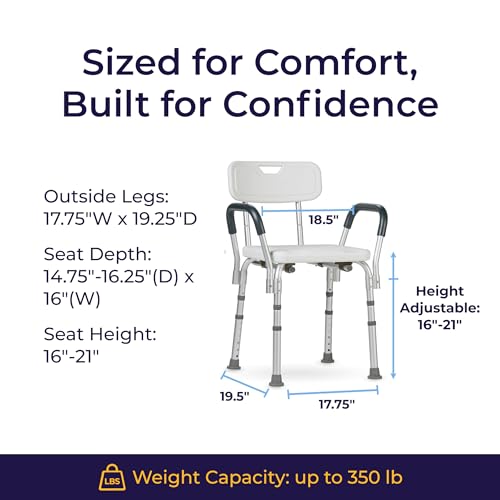
The Dr. Dunley bath chair is a practical pick for users who need a basic seat with a supportive back. Its adjustable height helps you set the seat at a safer level for sitting down and standing up. The listing states a 350-pound weight capacity. It also lists suction feet and a non-slip design for use on a bathroom floor.
This chair may suit a stroke survivor who can transfer with some control and does not need armrests. A backrest can help the user sit more upright during a shower. The feet still need careful placement on a clean, level surface. Suction feet can improve contact with the floor, but they should never serve as a substitute for grab bars or caregiver support.
Pros:
- Adjustable height supports a more suitable sitting position
- Backrest may improve comfort during longer showers
- Listed 350-pound weight capacity
- Suction feet help maintain floor contact
- Non-slip design fits the needs of a wet bathroom
- Simple form may be easy for a caregiver to clean
Cons:
- No armrests are listed, so it may offer less help during transfers
- It may not suit users who need a wide, highly supportive seat
- Careful assembly and regular foot checks remain important
What Amazon Buyers Are Saying
Buyer feedback should be checked on the live Amazon listing because reviews and stock details can change. The main points shoppers tend to assess with this type of chair are ease of assembly, height adjustment, seat stability, and comfort. Some users may prefer its simple design, while others may want armrests for extra leverage. Read recent reviews for comments about the actual fit in your tub or shower.
My Recommendation
I recommend the Dr. Dunley for a stroke survivor who needs a straightforward shower seat and can transfer without arm support. It offers useful core features at a practical level. I would choose a chair with arms instead if the user often needs to push up from the seat.
Medline Padded Armrest Shower Chair
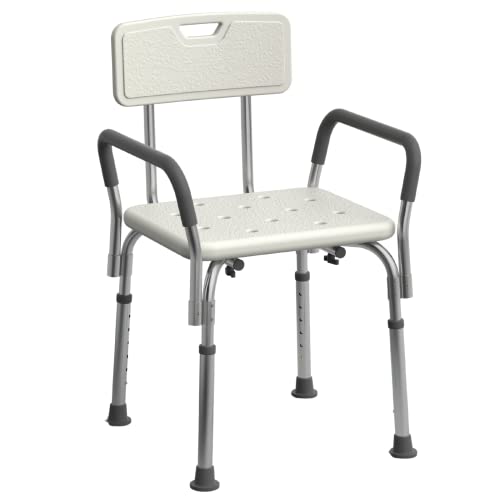
The Medline shower chair stands out because it includes padded armrests and a back. Those features matter when a stroke survivor needs more upper-body support while sitting. The listing describes adjustable height, slip-resistant features, and a 350-pound capacity. It is designed for use inside a shower or bathtub.
In my view, the armrests make this one of the strongest choices for many users in this guide. They can give the user a place to rest the arms and may help with controlled movement. They can also make side transfers harder in a narrow space. Measure the shower first, and check that the arms will not block the user or caregiver.
Pros:
- Padded armrests provide useful upper-body contact
- Backrest supports a more upright seated posture
- Adjustable height helps with leg length and transfer height
- Listed 350-pound weight capacity
- Slip-resistant design addresses wet bathroom conditions
- Padded seating may feel better during a longer shower
Cons:
- Armrests may limit side transfers in a tight shower
- A larger chair can take more bathroom space than a basic stool
- The user may still need a caregiver during every transfer
What Amazon Buyers Are Saying
When reading Amazon feedback for this model, focus on reports about armrest strength, padding, assembly, and fit. Buyers commonly use review sections to explain whether the chair feels stable, adjusts with ease, and fits a tub or walk-in shower. Look for recent comments from people with similar mobility needs. A positive comfort comment does not prove that the chair will work for a person with severe weakness or poor trunk control.
My Recommendation
I would place this near the top for a stroke survivor who benefits from arm support and can use a standard shower chair. It offers more contact points than a back-only chair. It is worth buying when the bathroom has enough room for the armrests. I rate it highly for support, but not for tight spaces.
ONSGLM Adjustable Shower Bench

The ONSGLM shower bench uses a simple bench shape for users who want a place to sit while bathing. Its listing describes a waterproof HDPE seat, non-slip features, and adjustable feet. The gray finish should blend into many bathroom styles. The product is also described for indoor and outdoor use.
This design may work well for a user who needs a stable sitting surface but does not need a backrest. A bench can allow more movement during washing and may feel less enclosed than a chair with arms. However, the lack of a listed backrest reduces support for someone with weak trunk control. I would use it only after checking the user’s balance and transfer ability.
Pros:
- Simple bench design gives the user a clear sitting area
- Waterproof HDPE material suits wet use
- Adjustable feet help with floor height differences
- Non-slip features support safer daily use
- May allow easier side access than a chair with arms
- Indoor and outdoor use adds flexibility
Cons:
- No backrest is listed, so trunk support may be limited
- The supplied product details do not state a weight capacity
- It may not suit users with poor sitting balance
What Amazon Buyers Are Saying
Check current Amazon reviews for details on foot adjustment, seat width, assembly, and movement on wet floors. These points matter more than appearance for a shower bench. Buyers may value the open design and easy cleaning, while users who need a back may find it less supportive. Review photos can also help you judge how the bench fits inside a real shower.
My Recommendation
I recommend the ONSGLM for a mobile stroke survivor who can sit upright without a backrest. It may be a useful value choice for a roomy shower. I would not make it my first choice for severe balance problems. Confirm the capacity and dimensions on the current listing before purchase.
Caring Adjustable Bath Chair

The Caring bath chair offers a useful middle ground between a simple stool and a fixed chair. Its backrest can be removed, and the listing describes adjustable height and suction feet. It also lists a 350-pound weight capacity. The design is intended for seniors and people with disabilities who need seated bathing support.
The removable backrest is the main reason to consider this model. You can keep the back in place for added support or remove it when the user needs easier access. That flexibility can help as recovery changes, but it does not turn the chair into a transfer bench. Make sure the user can safely sit and rise with the selected setup.
Pros:
- Removable backrest offers two seating configurations
- Adjustable height helps match the user and shower floor
- Listed 350-pound weight capacity
- Suction feet help create firm contact with the floor
- Non-slip design fits wet bathroom use
- May adapt as the user’s shower routine changes
Cons:
- No armrests are listed for pushing up during transfers
- Changing the backrest setup takes extra assembly work
- Suction feet require a clean, smooth, level surface
What Amazon Buyers Are Saying
On Amazon, review the latest comments about the backrest connection, foot adjustment, and day-to-day stability. Buyers often pay close attention to whether the chair feels solid after assembly and whether it fits inside a tub. Some may like the removable back, while others may want a chair with permanent arms. Give the most weight to reviews from users with similar bathroom layouts.
My Recommendation
I recommend the Caring bath chair for households that want setup flexibility. It is a sensible option when the user may prefer a backrest now but need more open access later. I would choose the Medline chair instead when arm support is a key need. Overall, this chair offers good value for moderate support needs.
VEVOR 4-in-1 Shower Wheelchair

The VEVOR is more than a standard shower chair. It is described as a 4-in-1 bedside commode, raised toilet seat, and shower wheelchair. The product includes wheels, a padded seat and backrest, flip-up footrests, and a detachable 5-liter bucket. Its listed weight capacity is 350 pounds.
This format may help a stroke survivor who cannot safely walk into the shower. A caregiver can use the chair for movement between rooms when the bathroom setup allows it. Wheels also add risk if the chair rolls during a transfer, so the brakes must be locked before the user sits or stands. This product needs more space and more caregiver skill than a basic bath chair.
Pros:
- Supports users who need seated shower mobility
- 4-in-1 design may serve several bathroom needs
- Padded seat and backrest can improve comfort
- Flip-up footrests help support the legs during movement
- Detachable bucket adds bedside commode use
- Listed 350-pound weight capacity
Cons:
- Wheels require careful brake use during every transfer
- Its larger design may not fit a small shower
- A caregiver may need to operate and guide the chair
- More parts can mean more cleaning and maintenance
What Amazon Buyers Are Saying
For this type of product, read current reviews about wheel locks, maneuvering, assembly, bucket removal, and bathroom clearance. Buyers may value the ability to move a user without a standing transfer. Others may report that a compact bathroom makes use difficult. Pay close attention to comments about doorway width and whether the chair fits over the toilet or inside the shower.
My Recommendation
I recommend the VEVOR when the stroke survivor has major mobility limits and a caregiver will handle the chair. It is the most versatile option here, but it is not the simplest. Confirm the room dimensions and transfer plan before buying. For a user who can walk and sit safely, a standard chair may be easier and better value.
How to Choose Best Shower Chairs for Stroke Victims
Choosing the best shower chairs for stroke victims starts with the person, not the product photo. A chair must match the user’s balance, strength, transfer method, and bathroom. A physical or occupational therapist can assess these needs. The American Stroke Association and other health experts stress fall prevention after stroke. A shower chair can reduce standing time, but it cannot remove every hazard.
1. Match the Chair to Transfer Ability
First, ask how the user will get onto the chair. Can the person stand, turn, and sit with one helper? Can the person use both arms? Does one side feel weak? These answers guide the choice.
A back-only chair may suit someone with good sitting balance. Armrests may help a person push up, but they can block a side transfer. A rolling shower wheelchair may work better for someone who cannot walk into the shower. It needs locked brakes and a trained caregiver.
Do not treat a shower chair as a transfer bench unless the product is made for that task. A transfer bench extends outside the tub and supports a seated slide across the tub wall. A standard chair sits inside the shower and may not solve a high tub wall.
2. Check Seat Height, Support, and Bathroom Fit
Seat height affects safety. If the seat is too low, the user may struggle to stand. If it is too high, the feet may not rest flat. Adjustable legs help, but set them on a level floor. Both feet should make firm contact when possible.
Measure the shower floor, tub width, door opening, and path from the bedroom. Check the chair’s full width, including armrests. Leave room for the caregiver to help. Also check whether the chair can turn without hitting the wall, faucet, or glass door.
Look for a supportive back when the user tires or leans. Choose armrests only when they help the user and fit the transfer plan. A padded seat can improve comfort, but padding must still allow water to drain. Avoid loose cushions that slide on a wet surface.
3. Review Safety, Cleaning, and Long-Term Value
Look for non-slip feet, solid construction, drainage holes, and easy height adjustment. Rubber tips should sit flat and remain in good condition. Check them often. Replace worn tips before the chair becomes unstable.
Never use suction feet or armrests as grab bars. Grab bars must attach to a suitable wall structure and should be installed correctly. A handheld shower head can help the user wash while seated. A non-slip bathroom mat outside the shower can reduce risk, but it must lie flat.
Clean and dry the chair often. Soap film can make surfaces slippery. For a rolling model, inspect the wheel locks and frame. For a commode chair, follow the maker’s cleaning instructions. Compare the full price with the needed features. The cheapest seat is not the best value if it does not fit the transfer plan.
Final Verdict: Which Should You Buy?
For most users, the Medline padded armrest chair is my top standard pick. The VEVOR is better for users who need caregiver-assisted mobility. The Caring chair is the best flexible option, while Dr. Dunley suits simple daily use.
The best shower chairs for stroke victims should fit the person and the bathroom. Measure first, involve a care professional when possible, and supervise transfers until safety is clear.
FAQs Of best shower chairs for stroke victims
What type of shower chair is safest after a stroke?
The safest type depends on balance and transfer ability. A chair with a back and arms may help some users, while a rolling shower wheelchair may suit someone who cannot walk into the shower.
Are shower chairs good for stroke recovery?
They can reduce standing time and help conserve energy during bathing. They do not replace therapy, supervision, grab bars, or a personal safety plan.
Should a shower chair have arms?
Arms can provide upper-body support and a place to push from. However, they may block side transfers. Choose them only if they match the user’s transfer method and bathroom space.
Can a caregiver use a rolling shower chair?
Yes, if the chair fits the bathroom and the caregiver knows how to use it. Lock the wheels before every transfer and follow the product instructions.
How do I know what shower chair height to buy?
Choose a height that lets the user sit with both feet supported and the knees in a comfortable position. Adjustable legs help, but measure the user and shower before ordering.

Michael Reynolds is a senior contributor at RetirementGazette.com, where he focuses on helping readers navigate the journey toward a secure and fulfilling retirement. With over a decade of experience in personal finance, retirement planning, and lifestyle writing, Michael combines practical strategies with easy-to-understand guidance tailored for both pre-retirees and those already enjoying their golden years.