
Document injuries, collect medical records, witness statements, and financial records as proof.
I have spent years researching elder law and guiding families through abuse claims. This article explains, step by step, how to prove elder abuse in California. I will show what counts as evidence, which reports to make, how criminal and civil cases differ, and practical tips to preserve proof. Read on to protect your loved one with clear, usable steps.
What elder abuse means in California and the legal landscape
Elder abuse covers harm or neglect of an older adult. In California, the law treats abuse of elders and dependent adults seriously. There are criminal laws that punish wrongdoing and civil paths that let victims seek money and protection. Agencies like Adult Protective Services and local law enforcement investigate reports. Knowing the difference between criminal and civil standards is key when you learn how to prove elder abuse in California.
California criminal law requires proof beyond a reasonable doubt. Civil claims need proof by a preponderance of the evidence. Both tracks rely on documentation, testimony, and expert help. Understanding these rules helps you gather the right proof early and keep it usable in court or agency hearings.

Common types and signs of elder abuse to document
Recognizing types helps you focus on what to collect. Below are main forms of elder abuse to watch for.
- Physical abuse
- Unexplained bruises, fractures, burns, or marks.
- Signs of restraint or repeated injuries.
- Emotional or psychological abuse
- Sudden withdrawal, fear of a caregiver, or confusing statements.
- Sexual abuse
- Bruising in private areas, STIs, or sudden behavioral change.
- Neglect and self-neglect
- Bedsores, dehydration, poor hygiene, or missed medical care.
- Financial abuse
- Missing money, odd bank withdrawals, forged signatures, or sudden changes in wills and trusts.
- Abandonment
- Left alone without needed care or resources.
Document signs with dates and context. For each sign, ask: who, what, when, where, and how. This habit is central to how to prove elder abuse in California.
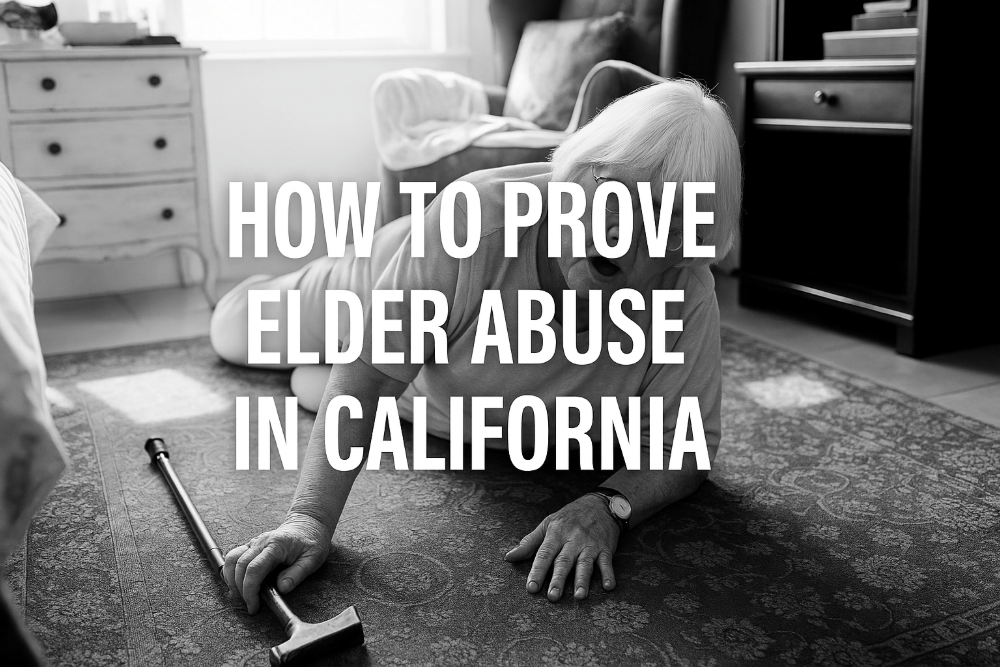
Evidence checklist: What to collect and why it matters
Proof is built from many small items. Collecting a range of evidence strengthens any claim about how to prove elder abuse in California.
- Medical records and doctor notes
- Include ER reports, imaging, and nurse notes showing injuries or neglect.
- Photographs and videos
- Time-stamped images of injuries, living conditions, or unsafe environments.
- Witness statements
- Names and short written accounts from neighbors, staff, family, or friends.
- Financial records
- Bank statements, canceled checks, credit card records, transfer records, and account change forms.
- Care logs and schedules
- Nursing home charts, staff logs, medication records, and missed-visit notes.
- Communication records
- Texts, emails, voicemails, or recorded calls showing threats, admissions, or instructions.
- Legal documents
- Copies of powers of attorney, conservatorship papers, trust or will changes, and guardianship forms.
- Expert reports
- Medical expert opinions, forensic accountant analyses, or geriatric assessments.
- Police and APS reports
- Written incident and investigation reports from law enforcement or Adult Protective Services.
Keep originals safe. Make copies and store backups offline and online. A clear chain of custody matters if evidence goes into court. This checklist explains the core of how to prove elder abuse in California.

Step-by-step: How to collect and preserve proof
Collecting proof the right way keeps it admissible and powerful.
- Take immediate photos and notes
- Photograph injuries and unsafe conditions. Note date, time, and who was present.
- Seek medical attention
- Get a full medical exam and ask for written records and the treating clinician’s observations.
- Request records quickly
- Ask the facility, bank, or doctor for copies in writing. Keep requests dated.
- Save communications
- Preserve texts, emails, and call logs. Make backups on two devices.
- Secure financial documents
- Download bank statements and request transaction histories. Flag suspicious transfers.
- Get witness statements
- Ask witnesses to write short accounts with dates and contact info. Record their statements if legal in your area.
- Contact professionals early
- Talk to a lawyer, APS, or ombudsman to learn rules for preserving evidence.
- Maintain chain of custody
- Log who handled documents and when. Avoid altering originals.
Following these steps increases the chance your evidence will be accepted when you show how to prove elder abuse in California.

Reporting: Where to send evidence and what to expect
Reporting starts investigations and helps protect the elder.
- Call 911 for emergencies
- If the elder is in immediate danger, call police right away.
- Report to Adult Protective Services (APS)
- APS accepts reports for elder abuse and neglect. They assess safety and arrange services.
- Report to local law enforcement
- Police can open criminal probes and work with prosecutors.
- Report to the Long-Term Care Ombudsman
- For abuse in a nursing home or residential facility, the ombudsman advocates for residents’ rights.
- Notify financial institutions
- Banks can freeze accounts and trace suspicious transactions.
When you report, provide copies of the evidence checklist. Expect investigators to interview victims and witnesses, review records, and sometimes seek court orders for more information. Understanding these steps helps you plan how to prove elder abuse in California effectively.
Civil vs criminal cases: Standards and outcomes
Know the difference so you can choose the right path.
- Criminal cases
- Prosecutors pursue charges for abuse under state criminal law. Conviction can bring jail time, fines, and restitution.
- Civil cases
- Victims sue for damages, restitution, or to remove an abuser from decision-making roles. Civil suits can also seek restraining orders.
- Evidence differences
- Criminal: proof beyond a reasonable doubt. Civil: preponderance of evidence. The same evidence can support both tracks.
- Strategic choices
- Sometimes pursuing a civil case is faster. Other times, criminal investigations uncover evidence needed in civil court.
Knowing both options gives families flexibility in how to prove elder abuse in California and achieve protection and accountability.
Working with professionals: Who to involve and why
You will need help. Each professional adds credibility.
- Elder law attorney
- Guides civil suits, guardianship, and protective orders. They build legal strategies.
- Criminal prosecutor or victim advocate
- Handles criminal charges, subpoenas, and witnesses.
- Adult Protective Services (APS) worker
- Evaluates safety and coordinates services.
- Long-term care ombudsman
- Investigates facility complaints and advocates for residents.
- Forensic accountant
- Traces stolen funds, identifies patterns, and prepares financial reports.
- Medical and geriatric experts
- Provide medical opinions linking injuries to abuse or neglect.
Work early with these professionals. Their documentation and testimony are often decisive in how to prove elder abuse in California.

PAA-style questions (common quick questions)
What immediate steps should I take after I suspect abuse?
- Get the elder to a safe place. Seek medical care for injuries, take photos, and save records and messages.
Should I confront the caregiver who I think is abusive?
- Avoid direct confrontation if safety is a concern. Report to APS or police and let professionals handle investigation.
Can financial abuse be reversed?
- Banks and courts can sometimes freeze assets and recover funds. Acting quickly increases chances of recovery.

Personal experience: Lessons from helping families
I once helped a family where a quiet change in spending and two small bruises were the first signs. We gathered bank statements, dated photos, and a doctor’s note. APS opened an investigation and a civil suit followed. The case shows that small, consistent evidence can build a strong case.
Lessons learned
- Act fast. Records get lost and memories fade.
- Keep simple logs. A clear timeline wins cases.
- Be patient. Investigations and court processes take time.
These real steps reflect how to prove elder abuse in California in real life.
How to prepare for court or agency hearings
Preparation makes evidence persuasive.
- Organize a timeline
- Arrange events in date order with documents attached.
- Use clear, short witness statements
- Witness accounts should be factual and succinct.
- Prepare expert reports
- Ask medical and financial experts to write focused reports that explain findings in plain language.
- Maintain originals and copies
- Bring originals to court and provide copies for the record.
- Practice testimony
- Help the elder and witnesses prepare to speak calmly and truthfully.
Good preparation turns collected items into a cohesive story of abuse. That is the heart of how to prove elder abuse in California.
Red flags and mistakes to avoid
Avoid actions that can weaken your case.
- Waiting too long to act
- Delay can destroy evidence and let financial misuse continue.
- Altering documents or photos
- Never edit images or change original paperwork.
- Ignoring safety
- Make safety the priority before gathering proof.
- Relying on memory alone
- Memory fades; document facts and get written records.
Being mindful of these pitfalls strengthens your efforts to prove abuse.
Resources and next steps
If you suspect abuse today:
- Ensure immediate safety.
- Photograph and document.
- Contact APS, local police, or an elder law attorney.
- Preserve financial and medical records.
Acting promptly and methodically is necessary when you learn how to prove elder abuse in California. Your actions can stop harm and help the elder regain safety and control.
Frequently Asked Questions of How to prove elder abuse in California
What is the easiest evidence to gather first?
Start with photos of injuries or unsafe conditions and written notes about what you saw and when. These are quick to collect and powerful in early investigations.
How do I report elder abuse in California?
Contact Adult Protective Services, local police, or the long-term care ombudsman depending on the setting. Provide what evidence you have and request an investigation.
Can I sue for elder abuse if the abuser is family?
Yes. You can file a civil suit against a family member for physical, emotional, or financial abuse. An attorney can explain the best legal route and remedies.
Will the elder have to testify in court?
Not always. Prosecutors and lawyers may use medical records, witness statements, and expert reports. However, testimony is common and sometimes needed.
How long does it take to prove elder abuse?
Timing varies. Investigations can be quick or take months depending on complexity and cooperation. Prompt documentation helps speed the process.
What if the elder refuses help or denies abuse?
Respecting autonomy is important. Continue to document concerns, seek a welfare check, and explore legal options like conservatorship if safety is compromised.
Can financial institutions help stop abuse?
Yes. Banks can flag suspicious activity, freeze accounts, and report to authorities. Provide them with clear documentation to prompt action.
Conclusion
Proving elder abuse in California requires clear steps: document injuries and conditions, secure medical and financial records, get witness accounts, and involve professionals early. Small, consistent pieces of evidence form a strong case. Start today by securing safety and preserving proof. If you suspect abuse, report it, gather what you can, and consult a professional for next steps. Share this article, subscribe for updates, or leave a comment with questions to help others protect the elders they love.

Michael Reynolds is a senior contributor at RetirementGazette.com, where he focuses on helping readers navigate the journey toward a secure and fulfilling retirement. With over a decade of experience in personal finance, retirement planning, and lifestyle writing, Michael combines practical strategies with easy-to-understand guidance tailored for both pre-retirees and those already enjoying their golden years.